Free
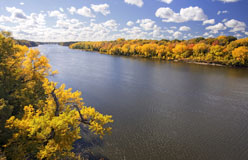
A watery—and wiggly—current wends its way right down the middle of the United States, dividing the East from the West. The Mississippi River springs to life in northern Minnesota.
It grows stronger as it courses down the length of the country—all the way to the Gulf of Mexico. As it flows, it picks up soil from fertile farmlands that line its banks and carries it south as sediment. This turns the river brown, giving it the nickname “Old Muddy.”
The Mississippi is full of surprises. Near its source at Lake Itasca, the river may be only 10 to 20 feet wide—depending on rain. People like to hop across the river on stones, telling friends that they walked across the Mississippi. Traveling downriver, the waters are so calm they can lull you to sleep. Just around the bend, though, eddies can cause even a large boat to careen wildly, submerged trees can tear holes in the bottom of the sturdiest craft, and sandbars can ground a vessel for days. Join us for an adventurous trip down the mighty Mississippi.
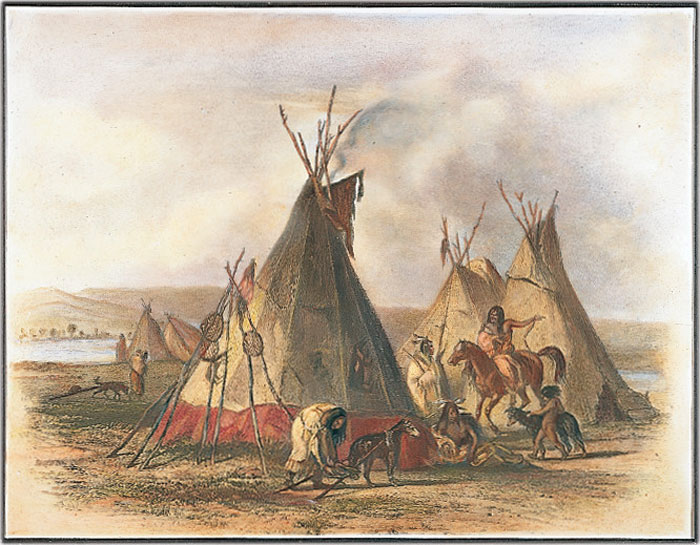
▲ Long before European explorers reached the Mississippi in the sixteenth century, the river was home to Native Americans. The Ojibwa Indians (also known as Chippewa) are credited with naming it. Mississippi is their word for “great river” or “gathering of waters.” Other tribes, including the Chickasaw and Sioux, also lived along the river and its tributaries.
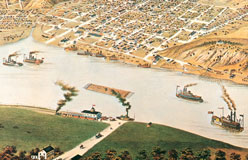
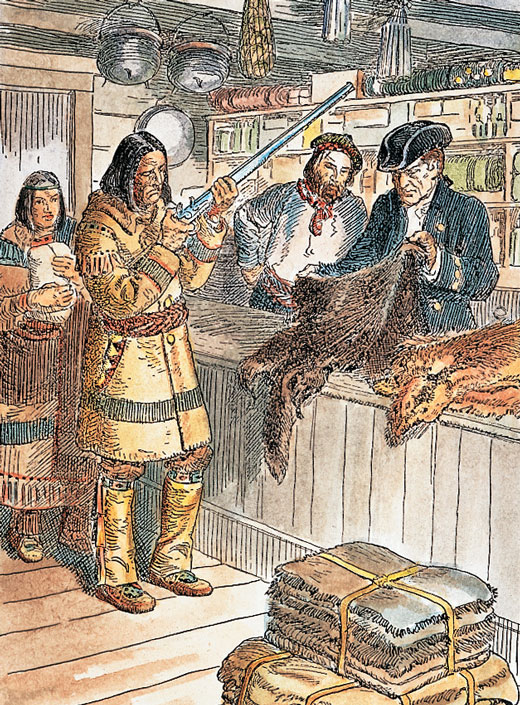
In the sixteenth century, European traders opened the Mississippi River wilderness to white settlement. They established trading posts near government forts. Native groups traded the skins of beaver, deer, and raccoon. In return, they received such objects as iron kettles, glass beads, and cloth. Millions of dollars in luxurious furs were shipped along the waterway. ▶
The Mississippi and Its Major Tributaries
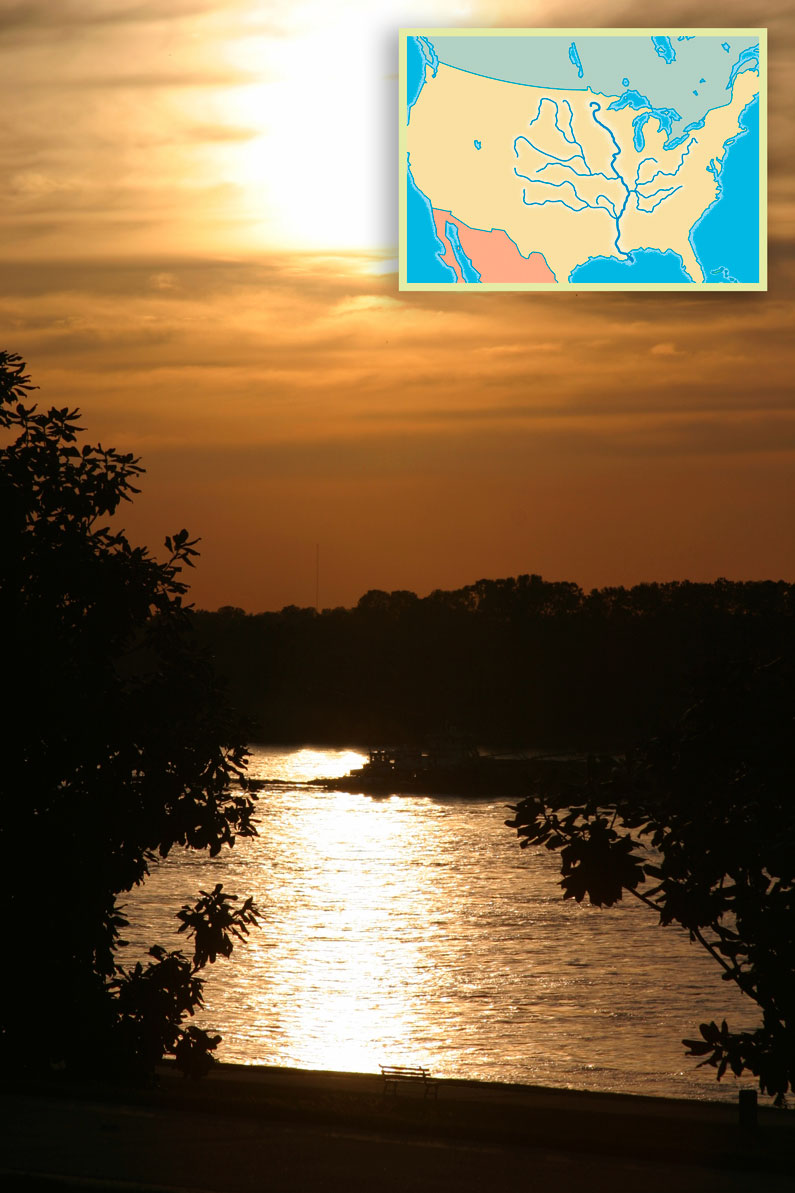
▲ From its headwaters in Minnesota to its outlet in the Gulf of Mexico, the Mississippi River is about 2,350 miles long. That makes it the second-longest river in the U.S. (after the Missouri, its chief tributary). The Mississippi has some 250 tributaries, including the Ohio, Arkansas, and Tennessee Rivers. The Mississippi is one of the busiest commercial waterways in the world. Oceangoing vessels can travel up the river as far as Baton Rouge, Louisiana. Barges and towboats can travel as far north as Minneapolis, Minnesota.