Free
No author is more closely linked to the Mississippi River than Mark Twain.
Twain was born Samuel Clemens in Florida, Missouri, in 1835. When he was four, his family moved to the little town of Hannibal, along the shores of the Mississippi. Clemens left Hannibal at the age of 18 and became a world-famous author and humorist. But it was Hannibal and the Mississippi that inspired his greatest works.
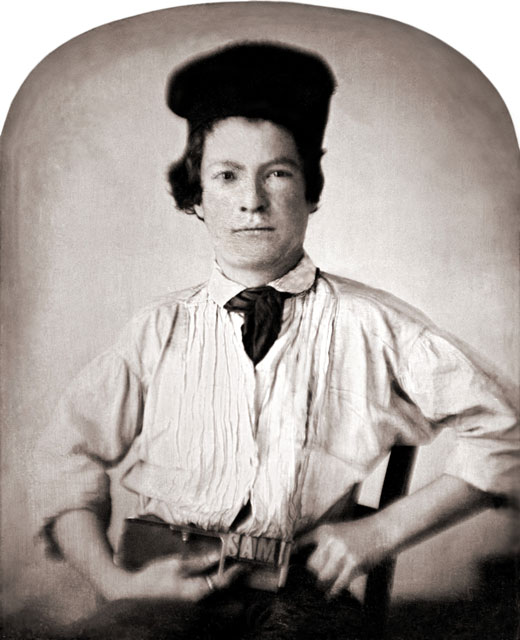
◀ To Sam Clemens, Hannibal was “a boy’s paradise.” He spent his days there fishing, swimming, playing pranks, and hunting for lost treasure. After his father died, Clemens left school at the age of 12. He went to work as a printer, but he really wanted to become a riverboat pilot.
The face of the water, in time, became a wonderful book—a book that told its mind to me without reserve, delivering its most cherished secrets as clearly as if it uttered them with a voice. And it was not a book to be read once and thrown aside, for it had a new story to tell every day.—from Life on the Mississippi, by Mark Twain
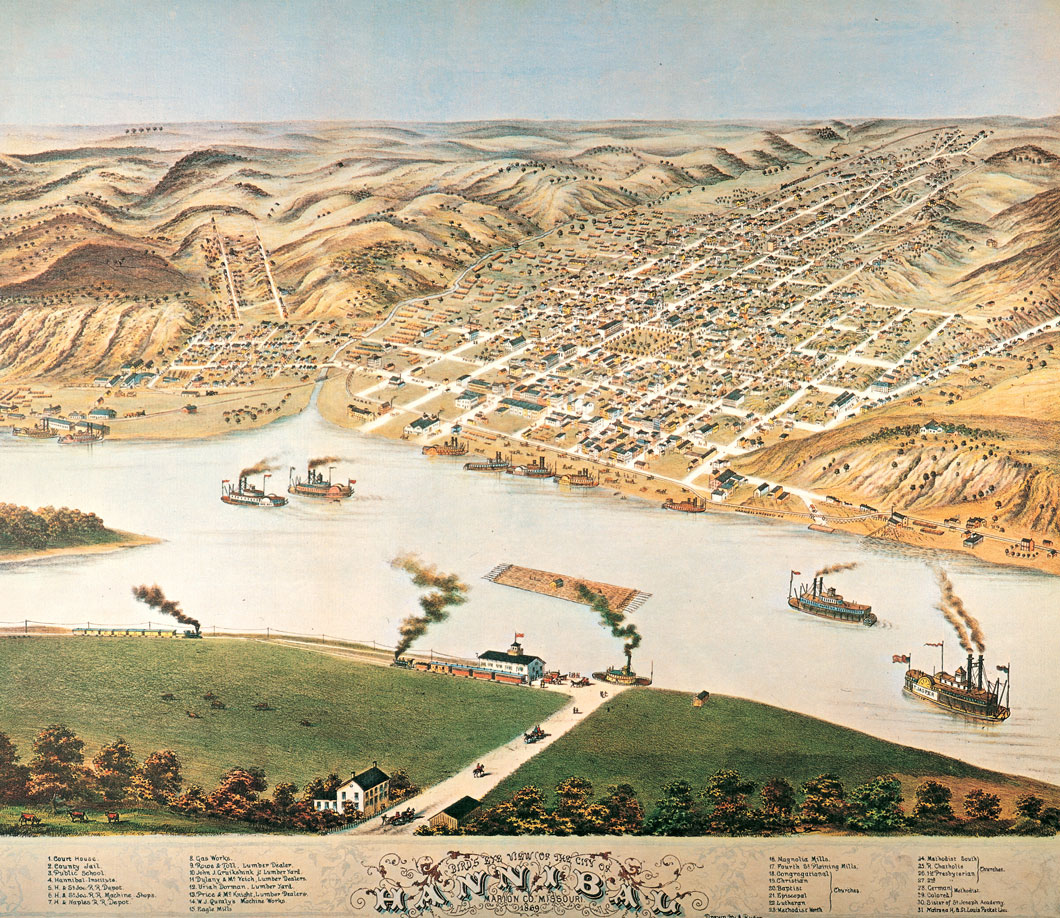
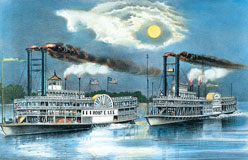
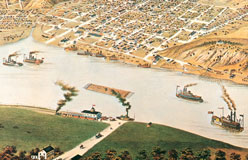
▲ During Twain’s lifetime, steamboats and huge log rafts traveled the Mississippi. Here, Hannibal looks out at the action on the river.
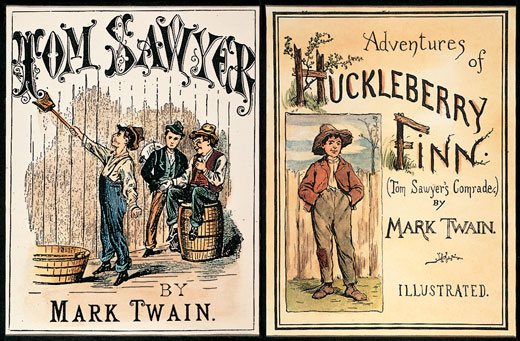
Twain later married and moved to Hartford, Connecticut. In 1876, he published his first effort to describe his happy youth. The Adventures of Tom Sawyer is set in a made-up version of Hannibal. It includes the famous scene where Tom gets his friends to pay him for the “privilege” of painting a fence. How does he do this? He convinces them that he’s having more fun painting than they are watching. ▶
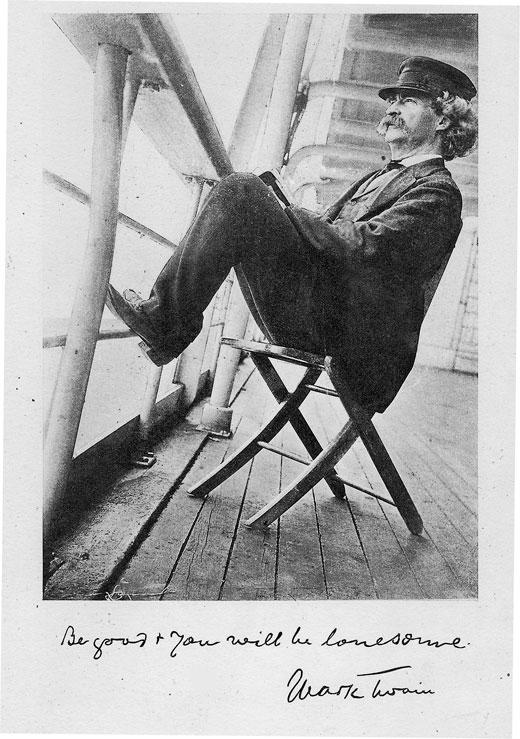
◀ In 1857, Clemens’s dream came true. The captain of the Paul Jones hired him as a cub (apprentice) pilot. He soon found himself back at “school” again. The pilot taught him to recognize every inch of the Mississippi. That included everything from sandbars, underwater trees, and islands to changing water depths and weather patterns. Clemens succeeded in becoming a pilot. But the beginning of the Civil War, on April 12, 1861, ended his riverboat career.
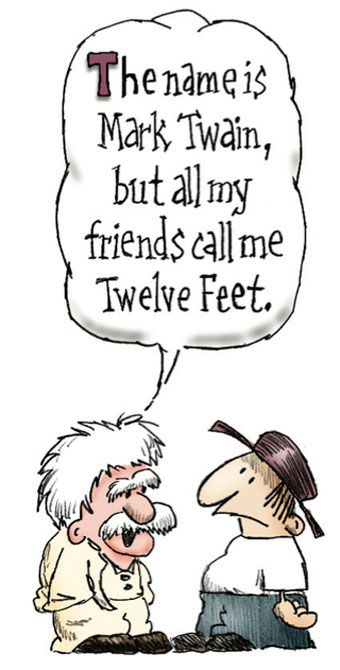
◀ For a short time, Clemens fought for the Confederate army. Then he headed west to be a miner in Nevada. He never struck it rich, but he did begin writing the humorous stories that eventually made him famous. In 1863, Clemens took the pen name Mark Twain. It came from a shout given when deckhands measured a river’s depth. They would drop weights into the water to see how deep they went, and then shout out the soundings. The shout “mark twain” meant two fathoms, or 12 feet. That was a safe depth for a boat.
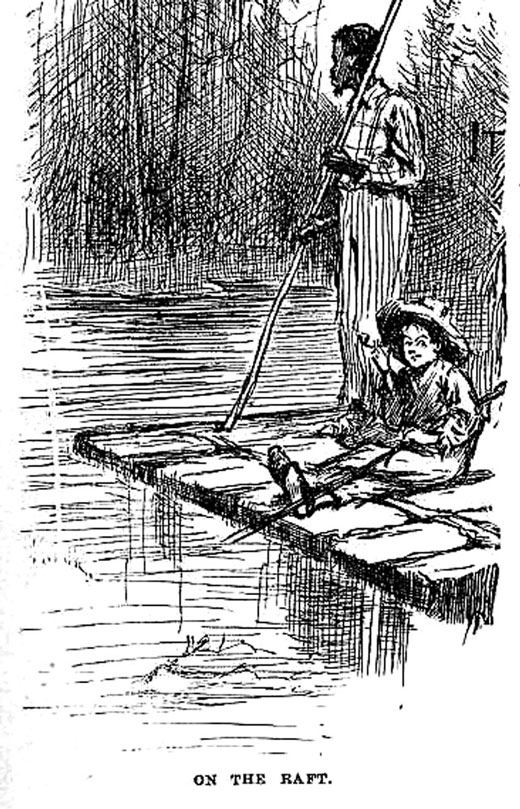
Tom Sawyer was a huge success. But Twain had more to say about his boyhood on the Mississippi. In 1884, he published The Adventures of Huckleberry Finn. In this masterpiece of American literature, Tom’s friend Huck runs away from home, escaping his violent father (and civilization) as he floats down the Mississippi on a raft. On the way, he is joined by Jim, an enslaved person who has run away. Their journey is filled with adventures. But it also forces Huck to answer a serious question: should he turn in his friend Jim, since helping a runaway slave is against the law? Or should he help Jim, whom he has come to love and respect? As Huck works out his answer to this question, he slowly grows from a boy to a man. ▶
Think Piece!
What do you think Huck does? How would you act if you were in his place?