Free
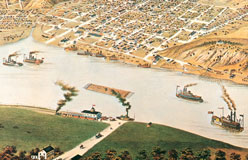
In 1811, the New Orleans was the first steamboat launched on the Mississippi. Soon, steamboats were traveling up and down the river at faster and faster speeds.
In 1817, it took 25 days for a steamboat to go from New Orleans, Louisiana, to Louisville, Kentucky. That’s around 600 miles. In 1827, it only took ten days. Steamboats were perfect for river travel because they rode high in the water. They didn’t run aground when the water level was low. Most steamboats were workhorses designed to transport goods and passengers, but some offered luxury.
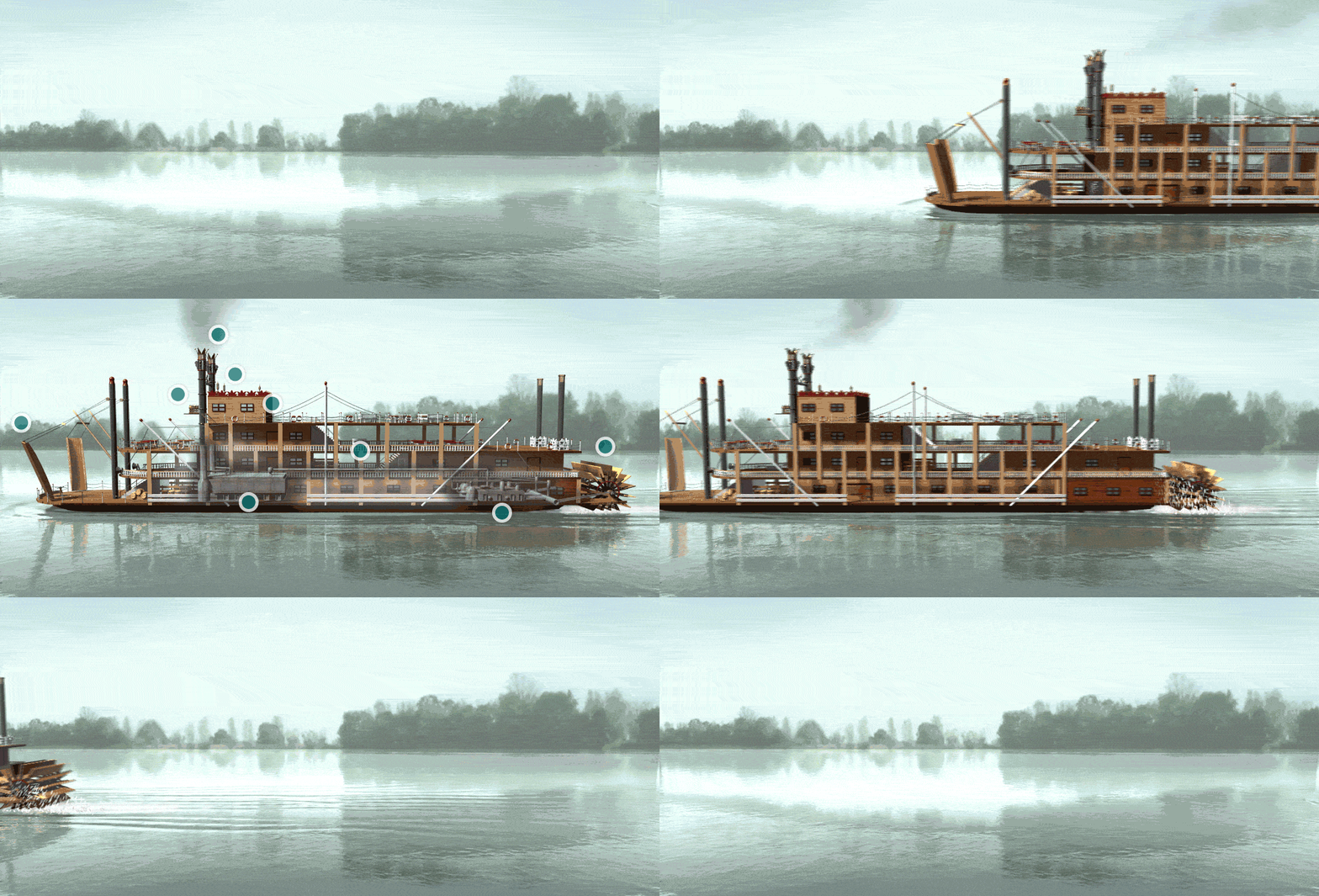
Landing Stages
Landing stages were used for loading and unloading. They were tied to the shore with ropes. Since these “docks” were actually part of the boat, a pilot could land anywhere along the river.
Calliope
Most steamboats had calliopes, organlike instruments made up of steam-powered whistles. When a key was pressed, the whistle released steam and created a high-pitched note. Calliopes entertained the passengers and those waiting to board. A calliope could be heard half a mile away!
Stacks
A steamboat’s tall stacks made it visible to people waiting to board upriver or downriver. Some stacks could be lowered. That made it possible for the boats to pass under bridges.
Steam Whistle
Pilots used steam-powered whistles to announce the boat’s presence. Boats often had three or more whistles, each with a distinct sound.
Pilot House
This was the pilot’s command center. It gave him a wide view of what lay ahead—sunken trees, sandbanks, oncoming boats, and other dangers. The pilot could talk to the engine room through speaking tubes. Pedals allowed him to work the ship’s whistles.
Boiler
Large stacks of wood were burned to boil water. The boiling water produced steam, which was then piped to the engine.
Passenger Decks
Most passengers rode on the main deck. The cabin decks might be lined with fancy rooms and restaurants. Some steamboats even offered entertainment, which could include gambling.
Steam Engine
The engine’s pistons were powered by steam from the boiler. They made the paddle wheel rotate. The more steam pressure the engineer released, the faster the paddlewheel would turn, and the faster the boat would go.
Paddle Wheel
Most large passenger boats were side-wheelers, with a huge paddle wheel on each side. Stern-wheelers had a single paddle wheel at the rear of the boat. Stern-wheelers were usually smaller than side-wheelers.
I am so indolent [lazy], and all forms of study are so hateful to me, that although I was several years constantly on steamboats, I never learned all the parts of the steamboat.—Mark Twain
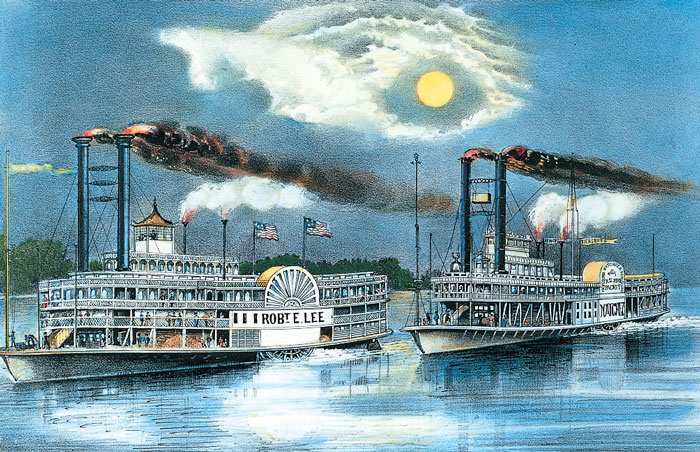
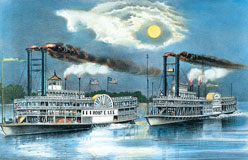
▲ Steamboat Races
Steamboat races were an exciting attraction on the Mississippi. The most famous one took place in 1870, when the Robert E. Lee and the Natchez raced from New Orleans to St. Louis. The Robert E. Lee made the 750-mile trip in just 3 days, 18 hours. It landed 6 hours and 36 minutes ahead of the Natchez. When steamboats moved so fast, disasters were likely to happen. Steam pressure could make the engines explode!
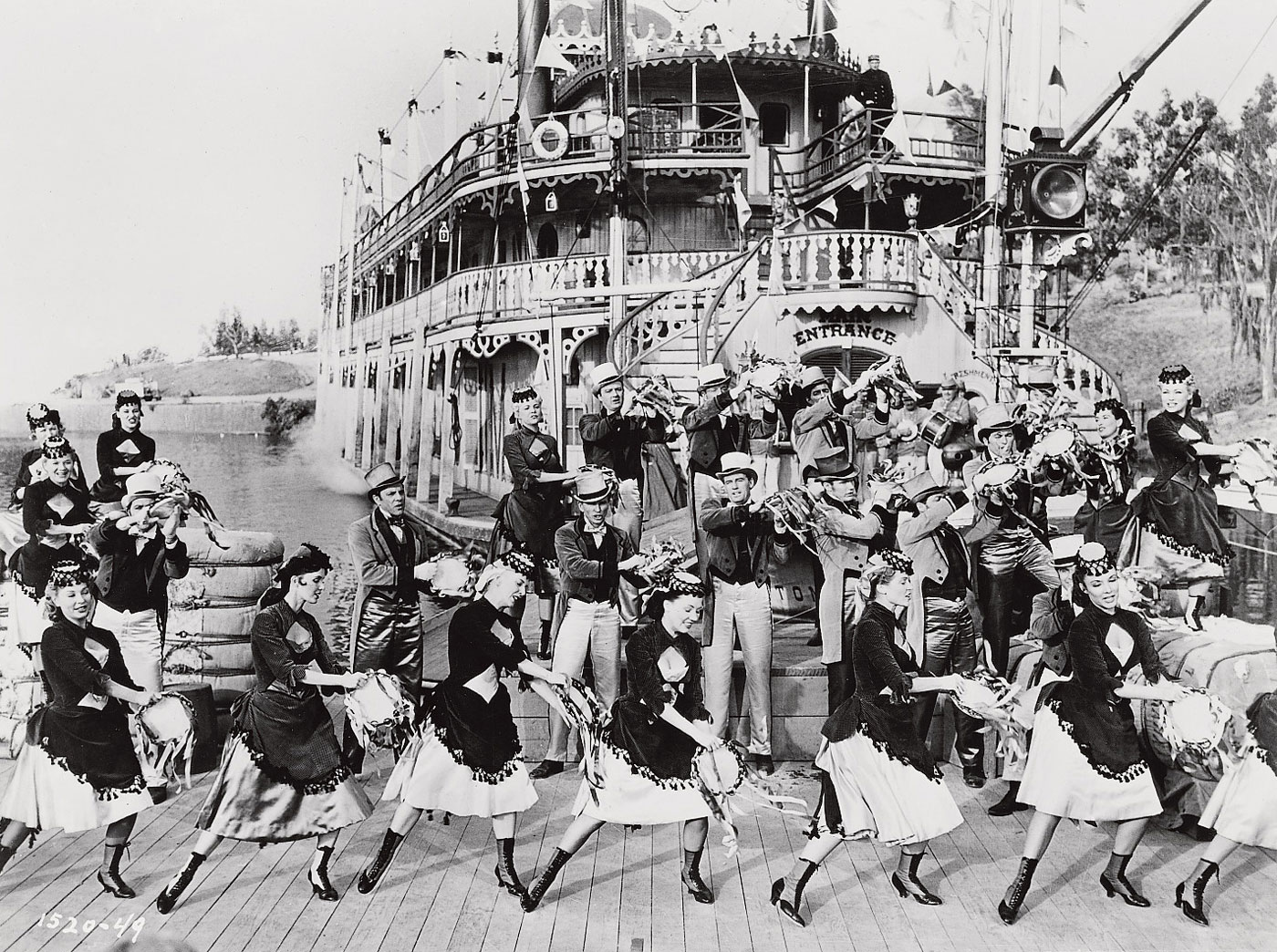
“Ol’ Man River,
Dat Ol’ Man River,
He mus’ know sumpin’,
But don’t say nuthin’,
He jes’ keeps rollin’,
He keeps on rollin’ along.”
Lyrics by Oscar Hammerstein II
Music by Jerome Kern
From Show Boat, 1927