Free
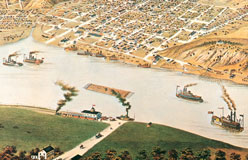
The Mississippi River flows over rapids and falls. It drops nearly 700 feet between its headwaters at Lake Itasca and Minneapolis and Saint Paul.
It keeps dropping until it reaches the Gulf of Mexico. The river also gets wider as it flows south. Its water level keeps changing, too. This makes it hard to keep the river safe for boats. It also makes it hard to keep its shores safe for people to live there. But over the years, engineers have built dams, levees, and locks. These things help control the mighty Mississippi.
▲ Levees
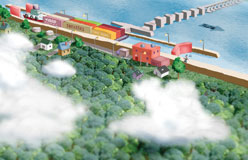
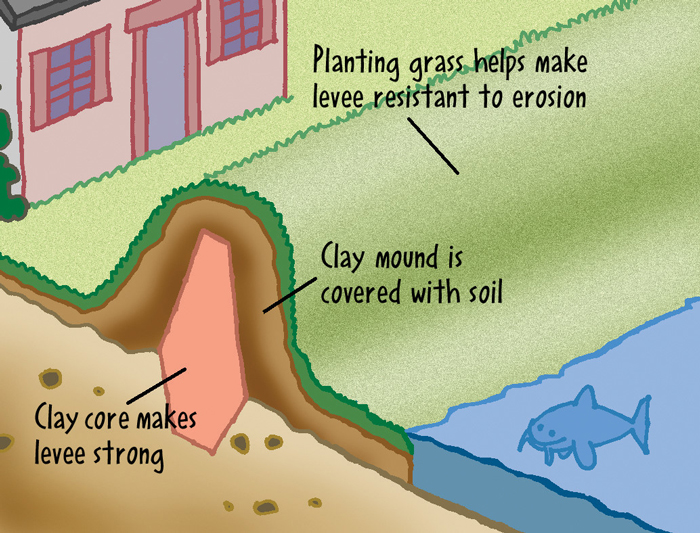
Levees are banks made of earth. They contain, control, or turn water aside. They are built to protect areas from flooding. Levees must be able to stand up to fast-flowing water. The first levees were three feet high. French pioneers built them to protect New Orleans in 1718. Today, some levees are more than 50 feet high.
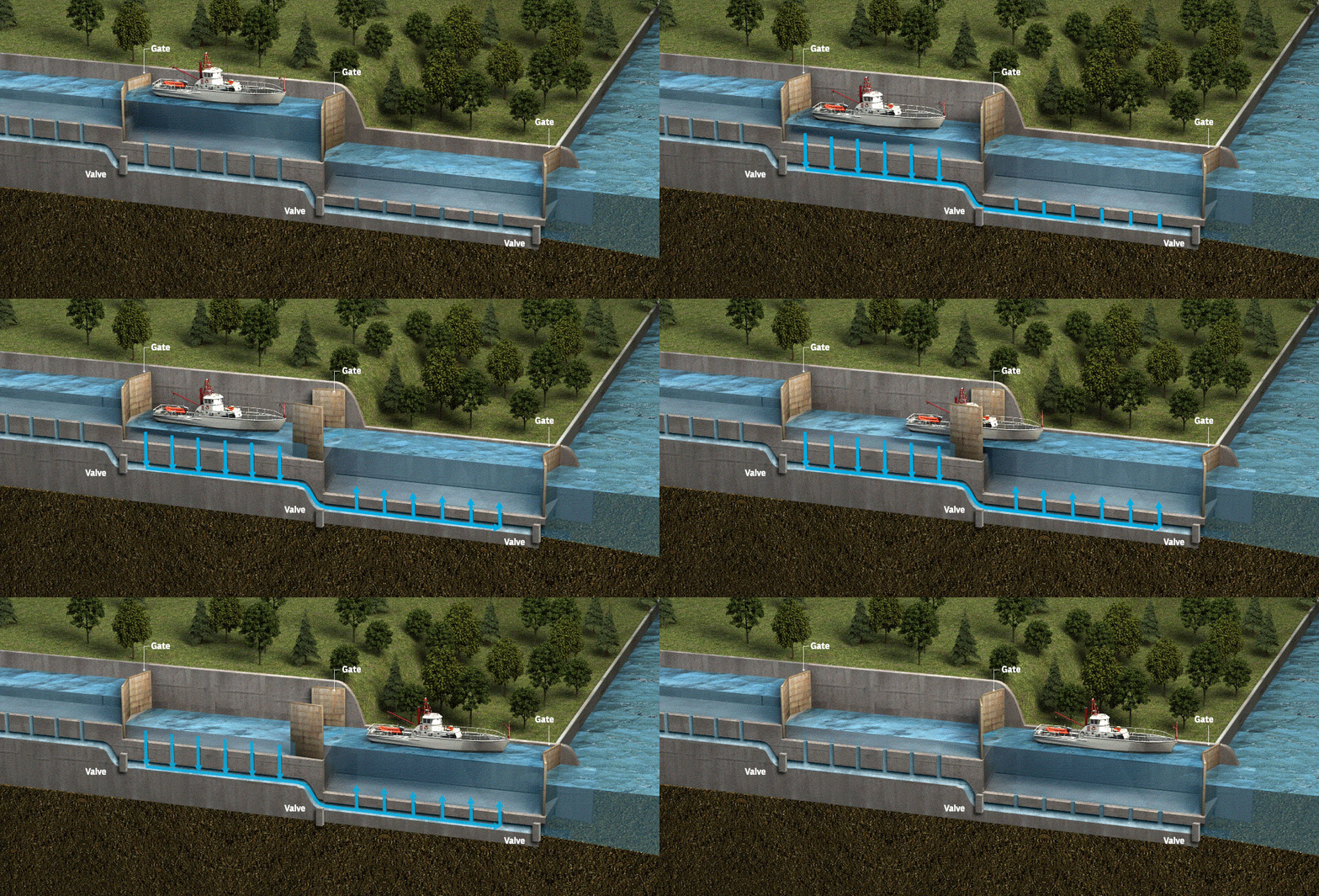
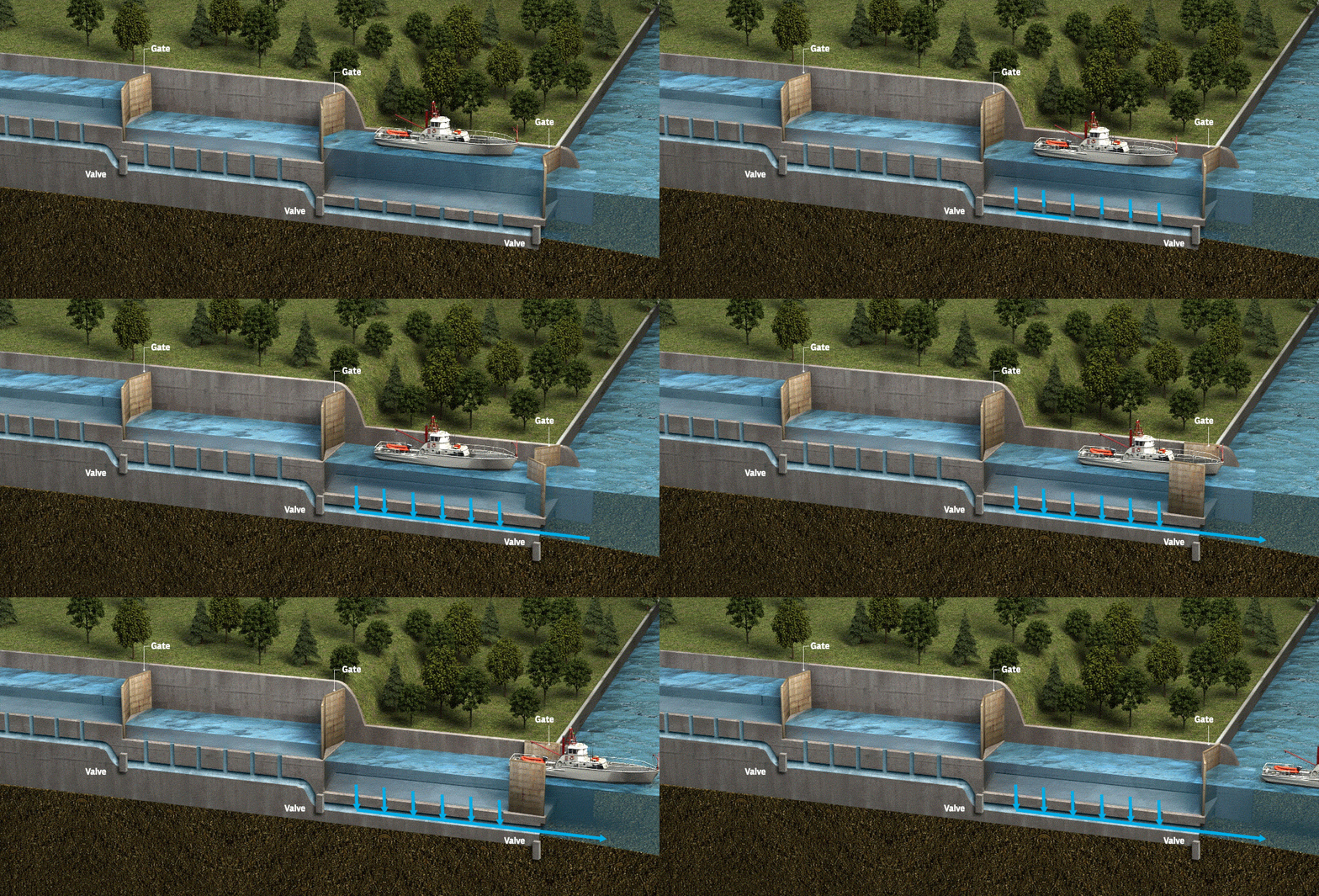
Locks
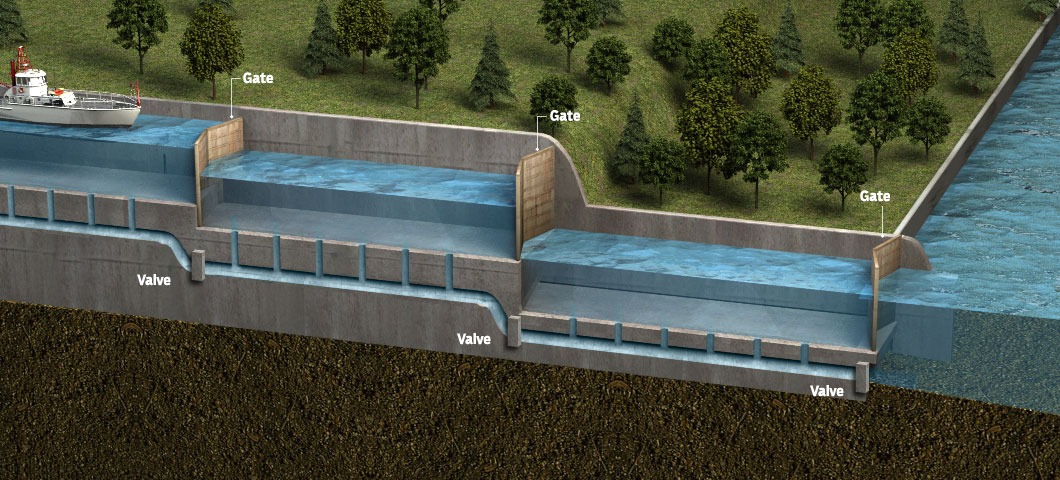
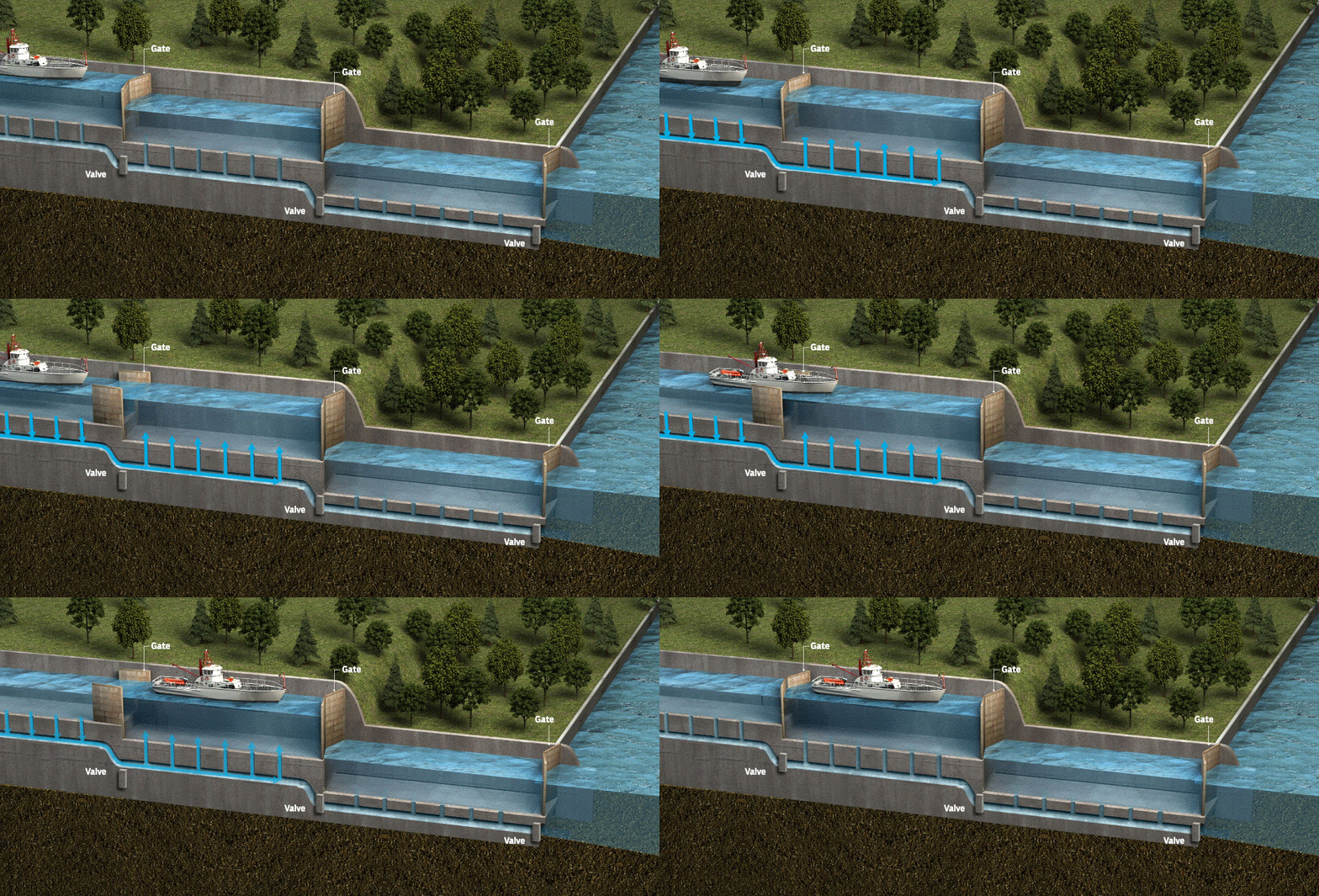
The Mississippi drops more than 400 feet from Minneapolis to St. Louis. The U.S. Army Corps of Engineers has built 29 locks and dams between the two cities. They make it easy for all kinds of boats to travel on this part of the river.
▲ Dredging
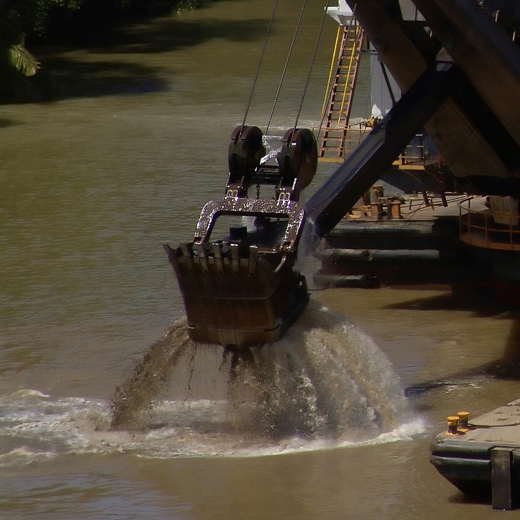
Dirt and trash are always getting into the river. That clogs the waterway. To keep the river clear for boats, it must be dredged. Big barges are floated to the center of the river. They carry giant shovel-like tools, huge suction pumps, and other equipment. Dirt from the river bottom is sometimes blown through pipes back to shore. Then that dirt is used to build levees.
▲ Flooding
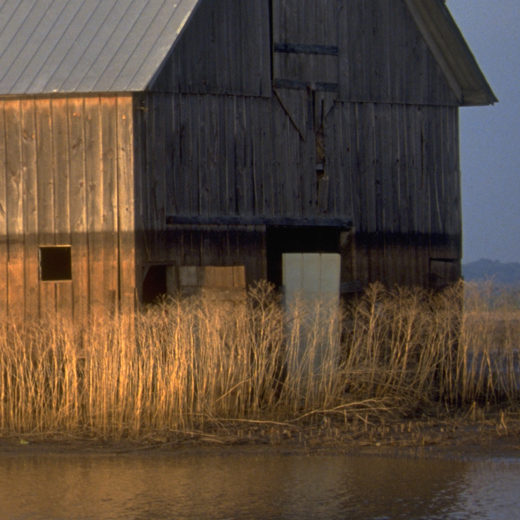
In the spring, melting snow and heavy rains send lots of water into the Mississippi. Sometimes this causes floods. Flooding makes soil richer. But it can also cause damage. Dams on the Ohio and Missouri Rivers control how much water flows into the Mississippi. Levees and walls hold in rising water. Still, floods happen. In 1993, heavy rains in the upper Midwest caused the Mississippi and its tributaries to overflow. The result: $7 billion in property damage and $10 billion in crop loss.