Free
Many different forces have an effect on the weather every day. Two examples are storm clouds and cold fronts.
These forces are always changing. That’s why weather forecasts change a lot, too. However, climate mostly stays the same over decades or even centuries. Why? Because climate is influenced by things that change very slowly, if at all. Some examples are mountains, oceans, the land, and closeness to the equator. These steady influences make for regular kinds of weather patterns. So, they create a steady climate.
Winds and Climate
The Earth has regular winds that follow basic patterns. Air is warmed by the sun. The warm air rises, and cold air takes its place. (Warm air is lighter than cold.) This creates a circular pattern of air, and that makes winds.
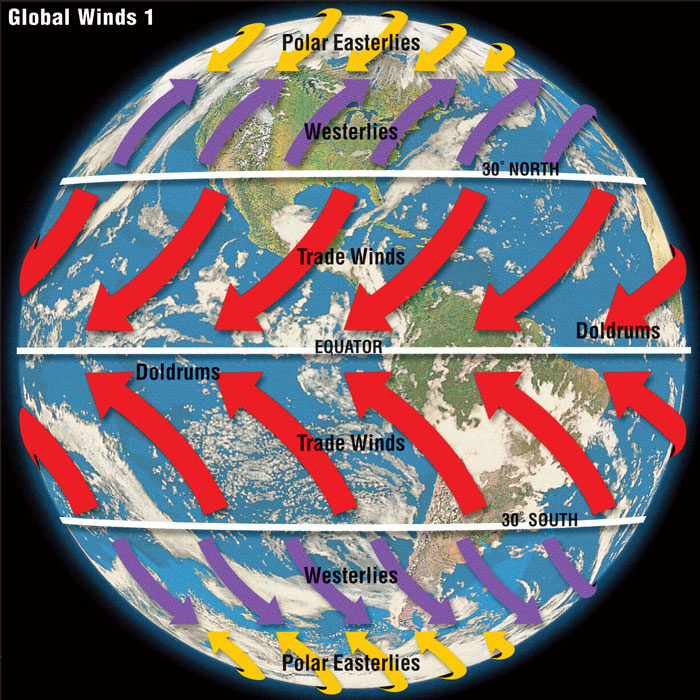
◀ The trade winds, westerlies, and polar easterlies are all surface winds. Trade winds come out of the subtropics and blow toward the equator. North of the equator, they are called northeasterlies. South of the equator, they are known as southeasterlies. Westerlies are winds in the midlatitudes. These winds blow from the subtropics toward the poles. The doldrums are areas in the ocean near the equator. In those places, the winds are light, and they change a lot.
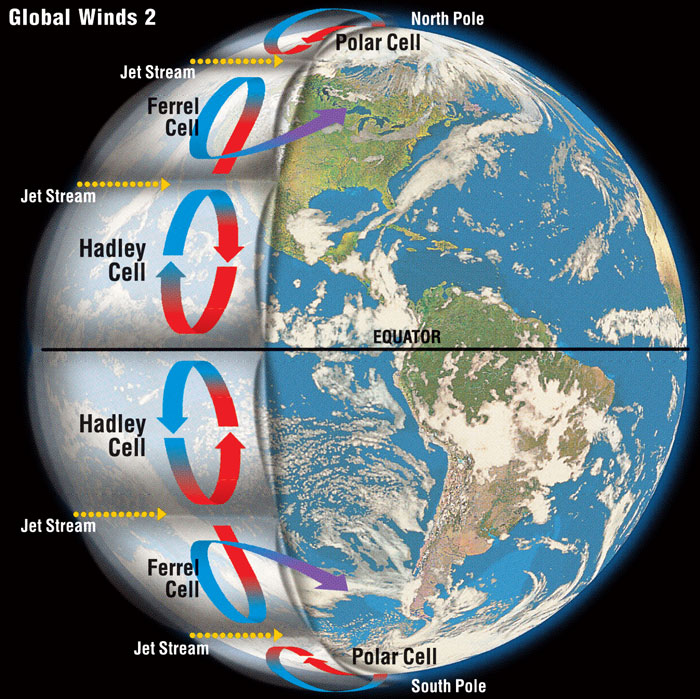
Patterns of rising and falling air are called Hadley, Ferrel, or polar cells. A Hadley cell works like this: strong sunlight at the equator warms the air. The hot air rises, then spreads out north and south of the equator. At around 30° latitude north and south, the air cools and sinks back down. As it sinks, it piles up. The air pressure increases. Dry weather comes with high air pressure. So, places at around 30° latitude are some of the driest on Earth. Look at a world map and you will see that there are often deserts in these areas. ▶
Sunlight and Climate
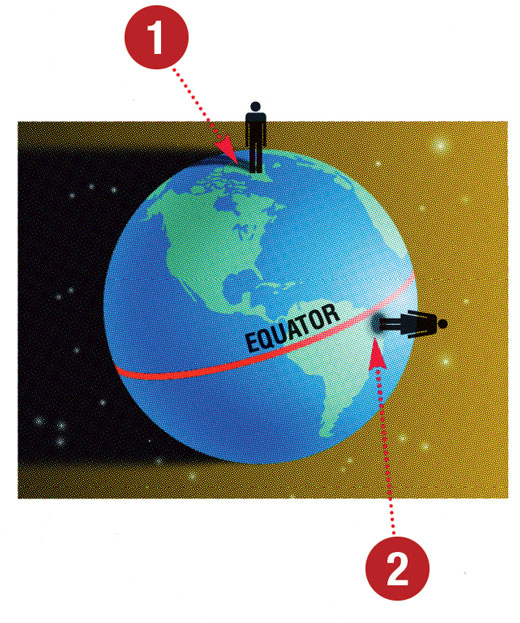
1. As you get closer to the poles, the sunlight gets less direct. It does not deliver as much heat to the Earth’s surface. That’s why climates near the North and South Poles are cold.
2. The sun is almost directly overhead in areas near the equator. Direct sunlight focuses a lot of heat on the Earth’s surface. So, climates near the equator are hot.
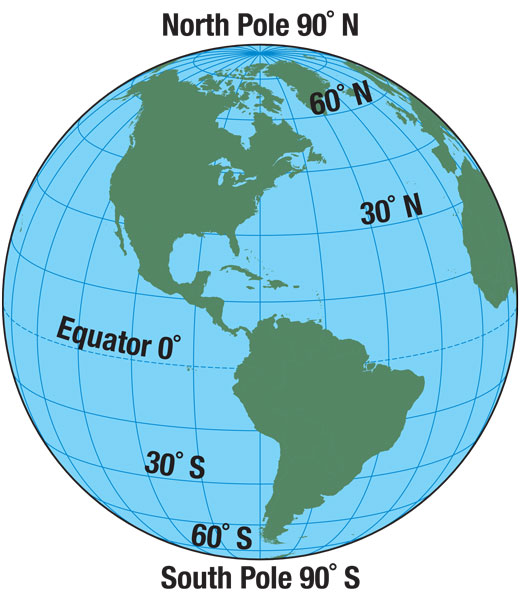
Mapmakers use imaginary lines to mark areas of Earth. Latitude lines go around the planet. The equator marks 0° latitude. The other lines of latitude mark the distance between the equator and the North Pole or the South Pole. ▶
Oceans and Climate
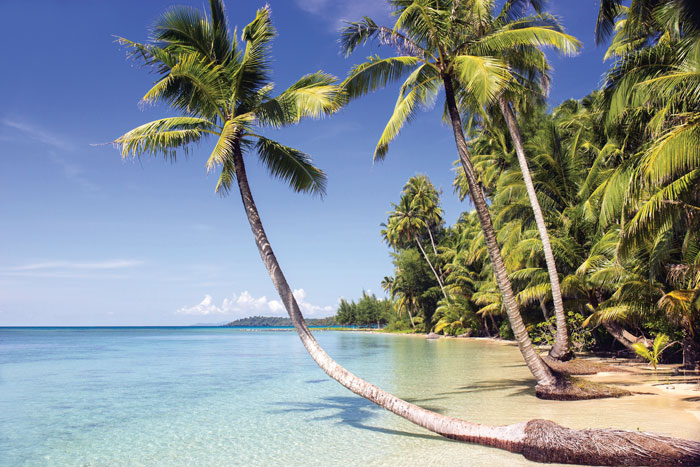
▲ Thanks to the oceans, coastal climates are moderate. The water changes temperature more slowly than the land does. In the fall, temperatures drop on land away from the water. But warm ocean breezes keep coastal areas warm longer. In the spring, cool ocean breezes blow. They keep coastal areas from warming up as quickly.
Mountains and Climate
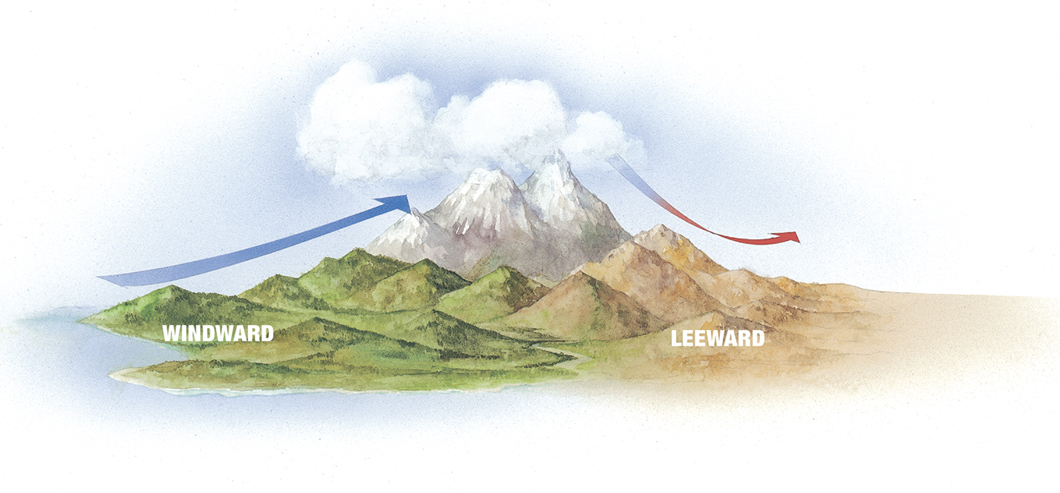
The cool, moist ocean air carries water vapor.
When the air rises, the water vapor forms clouds. Then the water falls as rain or snow.
Now that it’s dry, the air warms up as it sinks.
▲ When air runs into mountains, it has to rise. Rising air often leads to clouds and rain. The rain falls mostly on the top of the mountains, or on the side where the wind blows. That’s called the windward side. That often leaves the lee (sheltered) side dry. This effect is called a “rain shadow.”
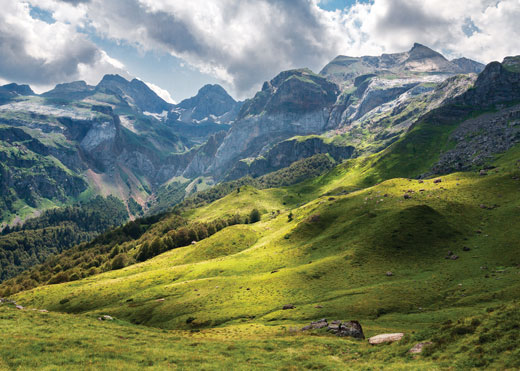
The windward (French) side of the Pyrenees is moist.
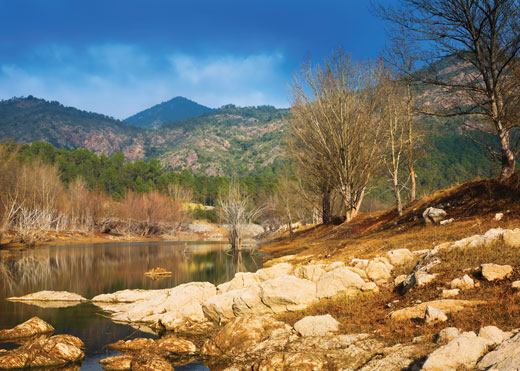
The leeward (Spanish) side of the Pyrenees is dry.
Climate is also affected by altitude, or how high up the land is. As air rises, it gets thinner and cools off. For every 1,000 feet you climb, the temperature drops 5.5°F. There may be big, leafy trees near the bottom of a mountain. But at the top there may be only scrubby plants. There may even be a snow line. Snow never melts above that line. Very few plants can grow that high. There may even be no plants up there.
Jet Streams and Climate
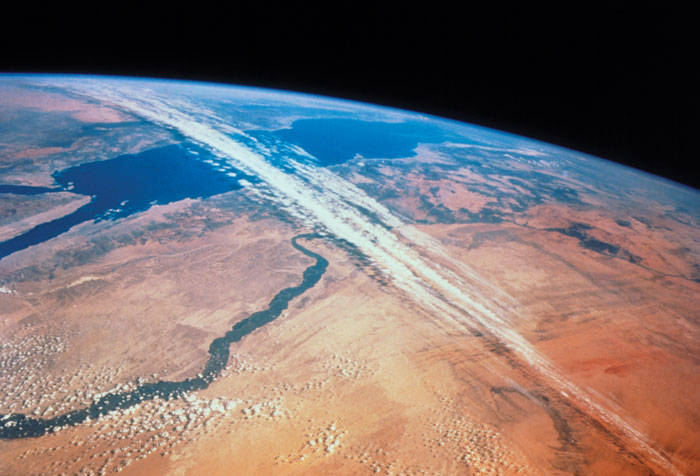
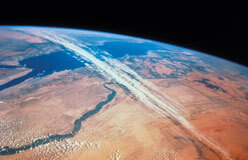
▲ Jet streams are rivers of air moving at high speeds in the upper atmosphere. They can carry stormy weather. This photo shows one moving clouds over Egypt. The Nile River is near the middle of the picture. Jet streams are stronger in winter than in summer. But, they tend to stick to regular patterns. Their effect on the weather is also fairly regular. So, jet streams affect climate, too.