Free
The climate has always affected how people live – for better and for worse.
However, when severe weather occurs, entire communities can be changed forever – or even destroyed.
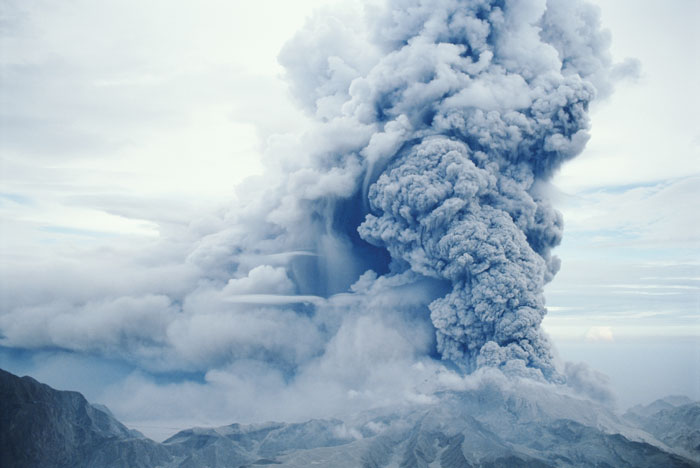
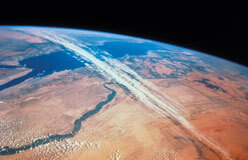
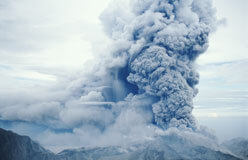
▲ In 1991, Mount Pinatubo, a volcano in the Philippines, spewed tons of ash high into the stratosphere. The ash spread out, forming a hazy band around the equator. The band blocked some sunlight from getting through – enough to chill global temperatures by an estimated 1°F. The result? That winter brought blizzards and cold weather to many parts of the globe. Scientists believe the Earth felt Pinatubo’s cooling effects for at least two years.

▲ “Incessant [never-ending] rain often confined us for days to the house,” said 18-year-old Mary Shelley about the unusually wet summer of 1816. Stuck indoors, Mary and her friends decided to spend their vacation writing and sharing ghost stories. Two years later, Mary published her own story as Frankenstein: or, The Modern Prometheus.
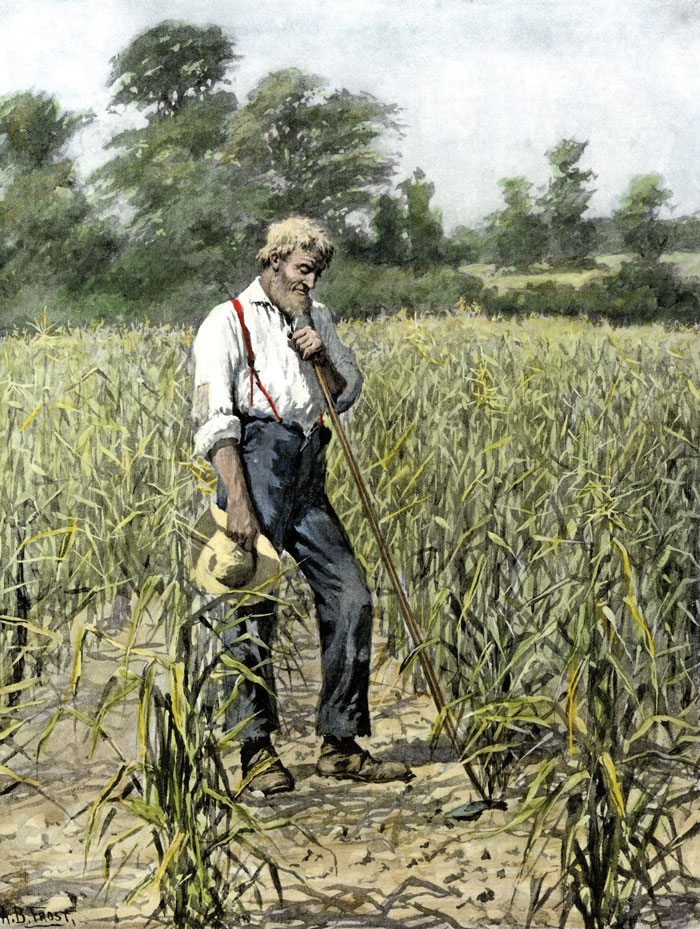
▲ The prairies of Nebraska and Kansas were once called “the Great American Desert.” Then, in the 1870s, a wet spell turned the dry prairie into lush farmland. Millions rushed to homestead there, believing that the climate had changed forever. Some claimed that settlers had changed the climate by farming the land. They used the phrase “Rain follows the plow.” But when the wet spell ended in the mid-1880s, the land dried up again, and many settlers fled.
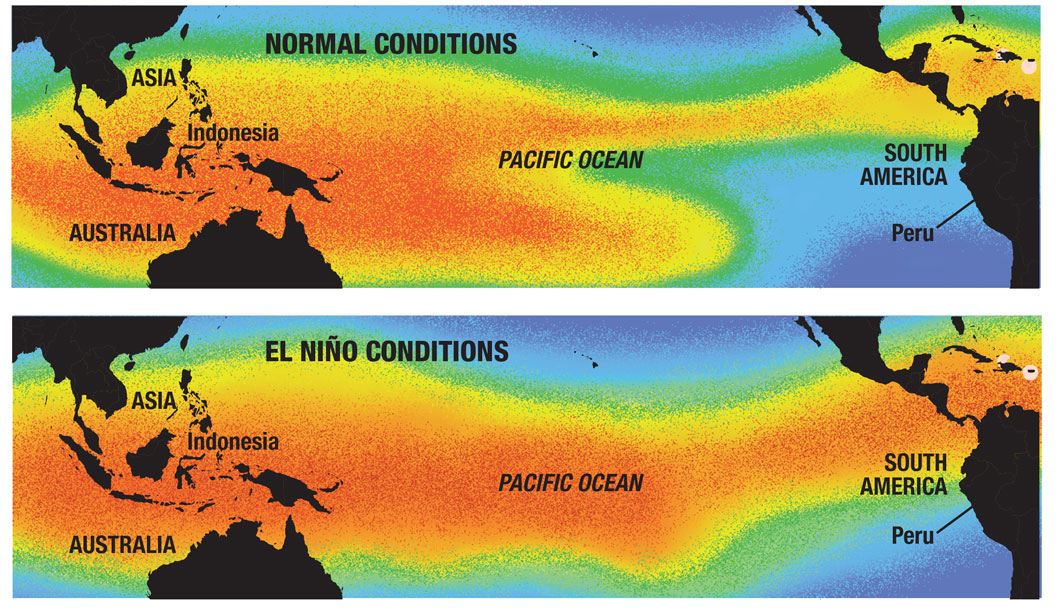
▲ Floods in Peru? Drought in Indonesia? All these dramatic weather conditions are linked to the interaction of the atmosphere with a patch of warm ocean water called El Niño. In an El Niño year, trade winds weaken, and ocean temperature patterns change. The water in the western Pacific gets cooler than normal, while the water in the eastern Pacific gets warmer. The wet weather shifts eastward, too. Warm water heats the air, which contributes to storm conditions. So, countries like Peru are hotter and wetter than usual, while countries like Indonesia are drier and cooler.
Before Flood
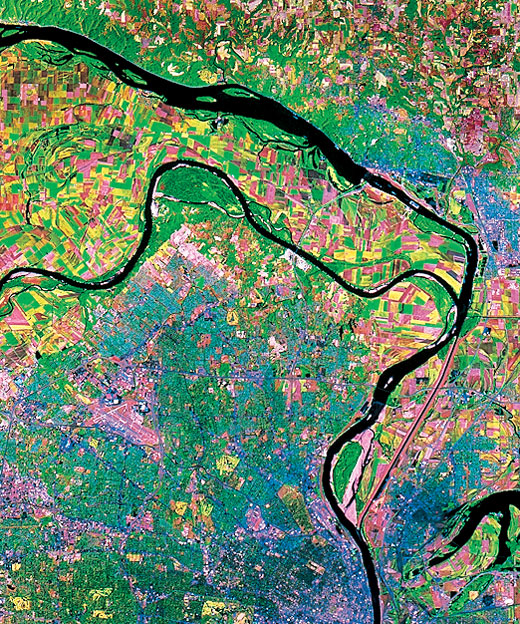
The black lines are the Mississippi and Missouri Rivers.
After Flood
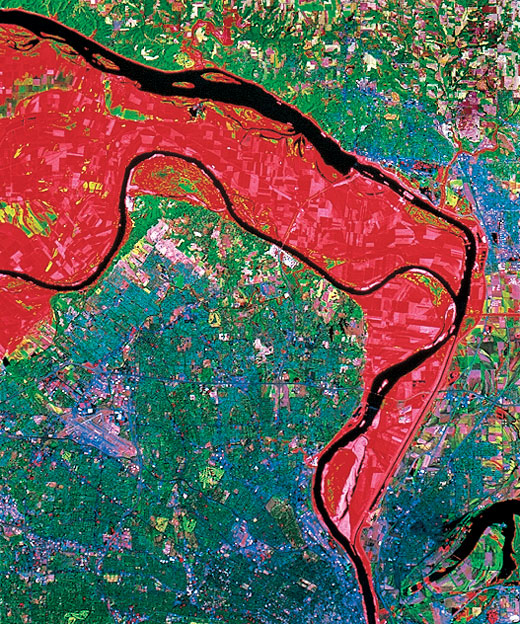
The red area shows the floodwaters.
▲ Scientists called the great Mississippi flood of 1993 a “hundred-year flood.” They meant that each year holds a 1 percent chance of a flood that big, so on average, you might expect one such flood about every hundred years. The 70,000 people who lost their homes in this flood had to decide what to do next. Some rebuilt their homes in the floodplains, while others moved to higher ground. What would you have done?