Free
In good and bad ways, climate always touches human lives.
But sometimes people face severe weather. These extremes can change whole communities – or even destroy them.
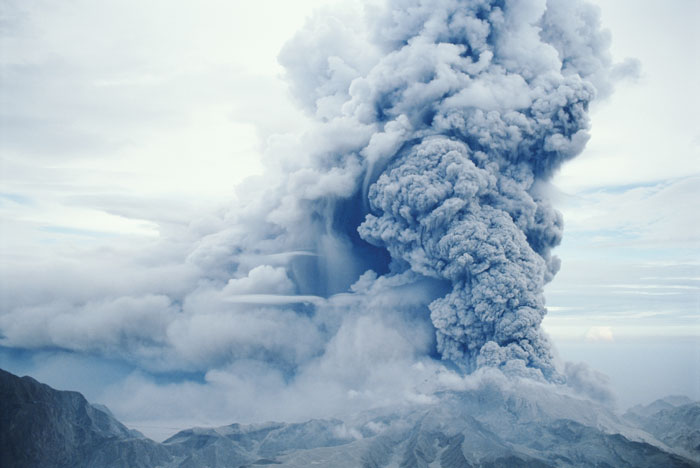
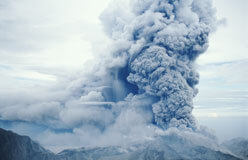
▲ Mount Pinatubo is a volcano in the Philippines. In 1991, it blasted tons of ash high into the stratosphere. The ash spread out and made a fuzzy ring around the equator. It formed a haze that blocked some sunlight. How much? Enough to cool down temperatures around the planet by about 1°F. That winter, blizzards and cold weather hit many parts of the world. Scientists say Pinatubo’s cooling effect lasted for at least two years.

“Incessant [never-ending] rain often confined us for days to the house.” That’s what 18-year-old Mary Shelley said about the very wet summer of 1816. Stuck indoors, she and her friends spent their vacation writing and sharing ghost stories. Two years later, Mary published her story as Frankenstein: or, The Modern Prometheus.
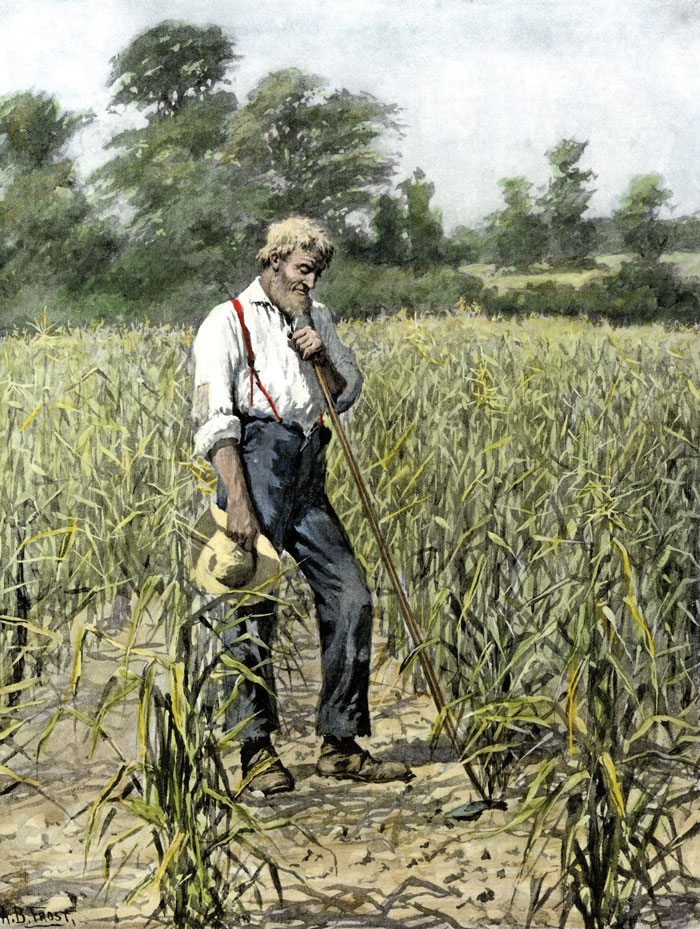
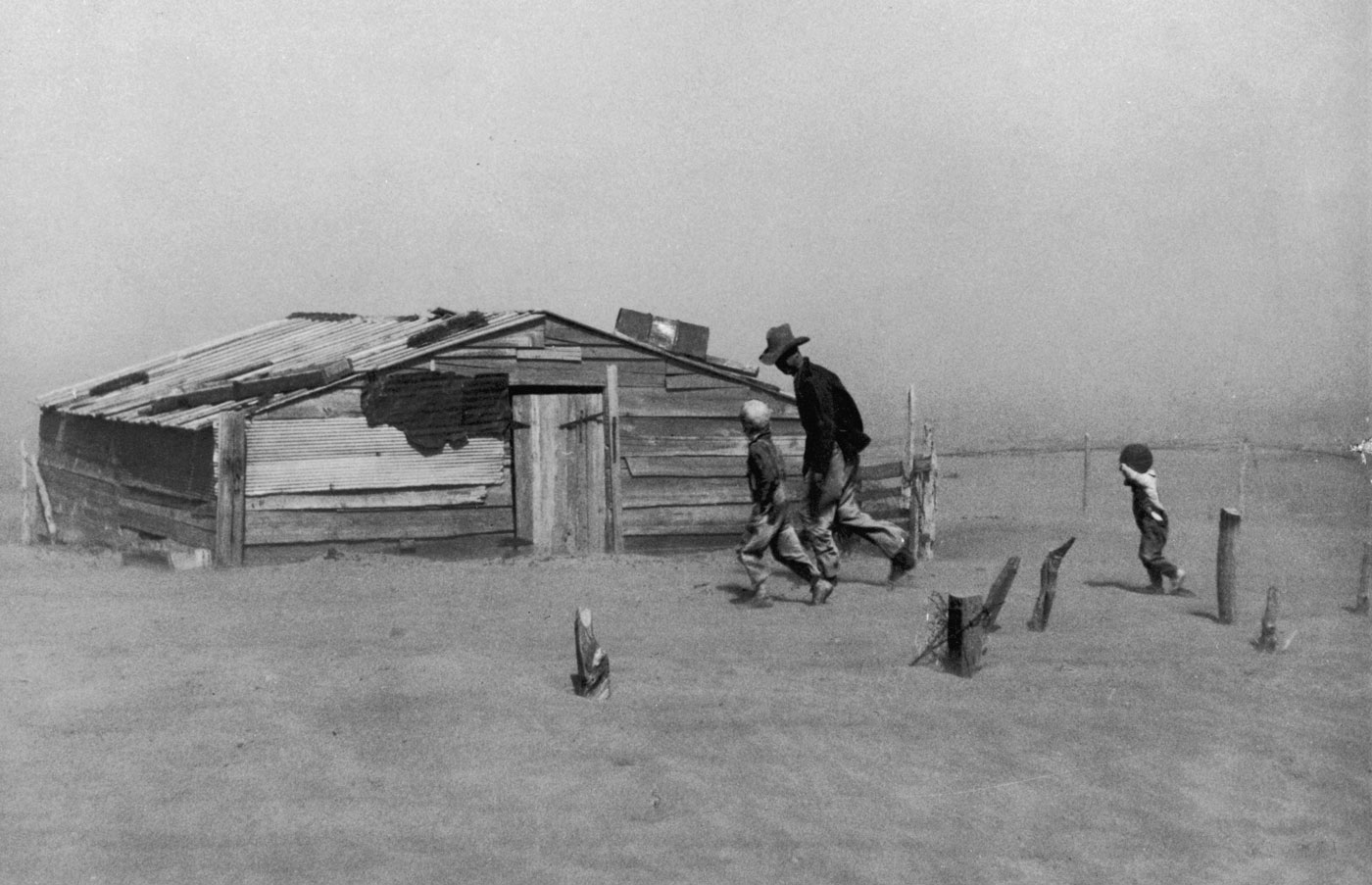
“The Great American Desert.” That’s what people used to call the prairies of Nebraska and Kansas. Then, in the 1870s, a long stretch of wet weather turned those dry plains into green farmland. Millions thought the climate there had changed for good. They rushed in to claim land. Some thought settlers had changed the climate by farming. They said, “Rain follows the plow.” But when the rainy spell ended in the mid-1880s, the land dried up again. Many settlers left the area.
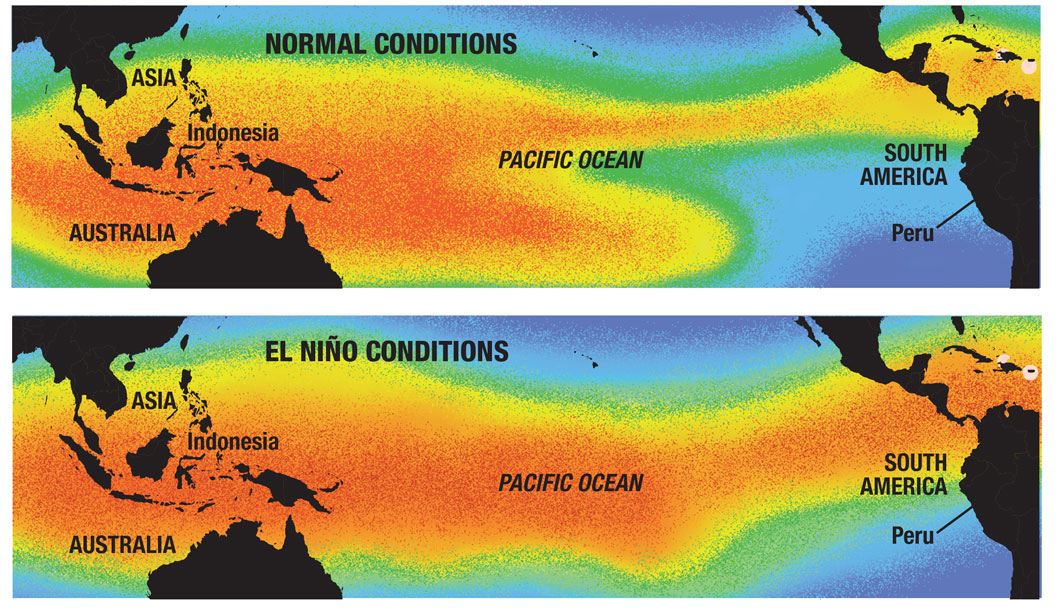
▲ Floods in Peru? Drought in Indonesia? These extreme weather conditions could be caused by the same thing. They have to do with how the atmosphere is affected by a patch of warm ocean water called El Niño. In an El Niño year, trade winds get weaker. Ocean temperature patterns change. In the western Pacific, the water turns cooler than normal. In the eastern Pacific, it gets warmer. Wet weather moves east, too. Warm water heats the air, which helps create storms. That means countries like Peru are hotter and wetter than usual. Meanwhile, countries like Indonesia are drier and cooler.
Before Flood
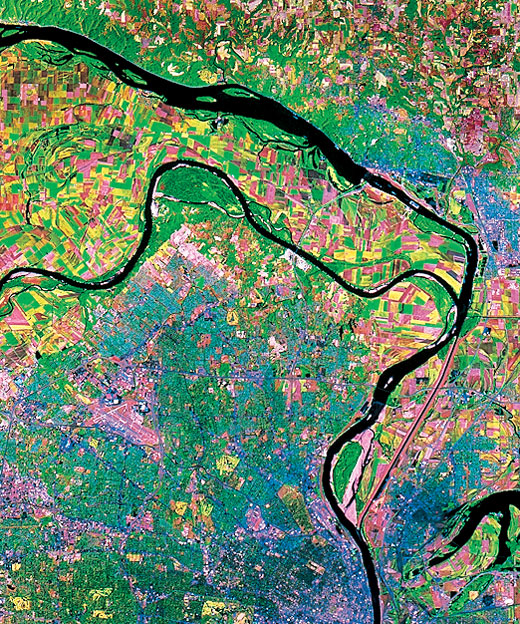
The black lines are the Mississippi and Missouri Rivers.
After Flood
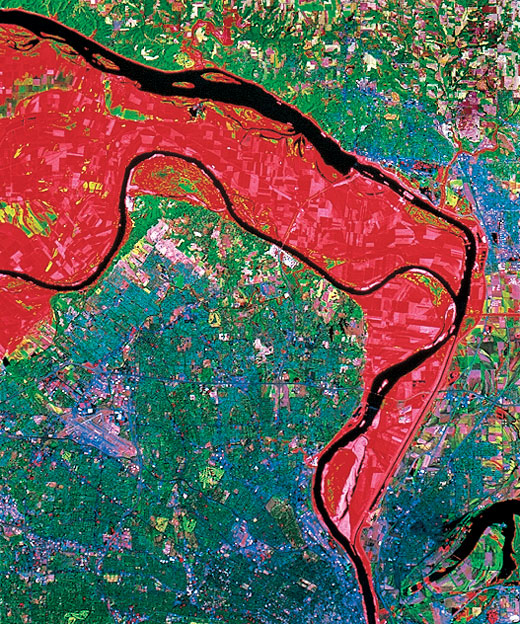
The red area shows the floodwaters.
▲ Scientists called the great Mississippi flood of 1993 a “hundred-year flood.” They meant that in each year, there’s a 1 percent chance a flood that big will happen. So on average, you might get one flood that big every hundred years. In that flood, 70,000 people lost their homes. They had to figure out what to do next. Some rebuilt their homes in the floodplains. Others moved to higher ground. What would you have done?