Free
Minnesota, our neighbor state to the west, is known as the “Land of 10,000 Lakes.” But Wisconsin has even more. Over 15,000.
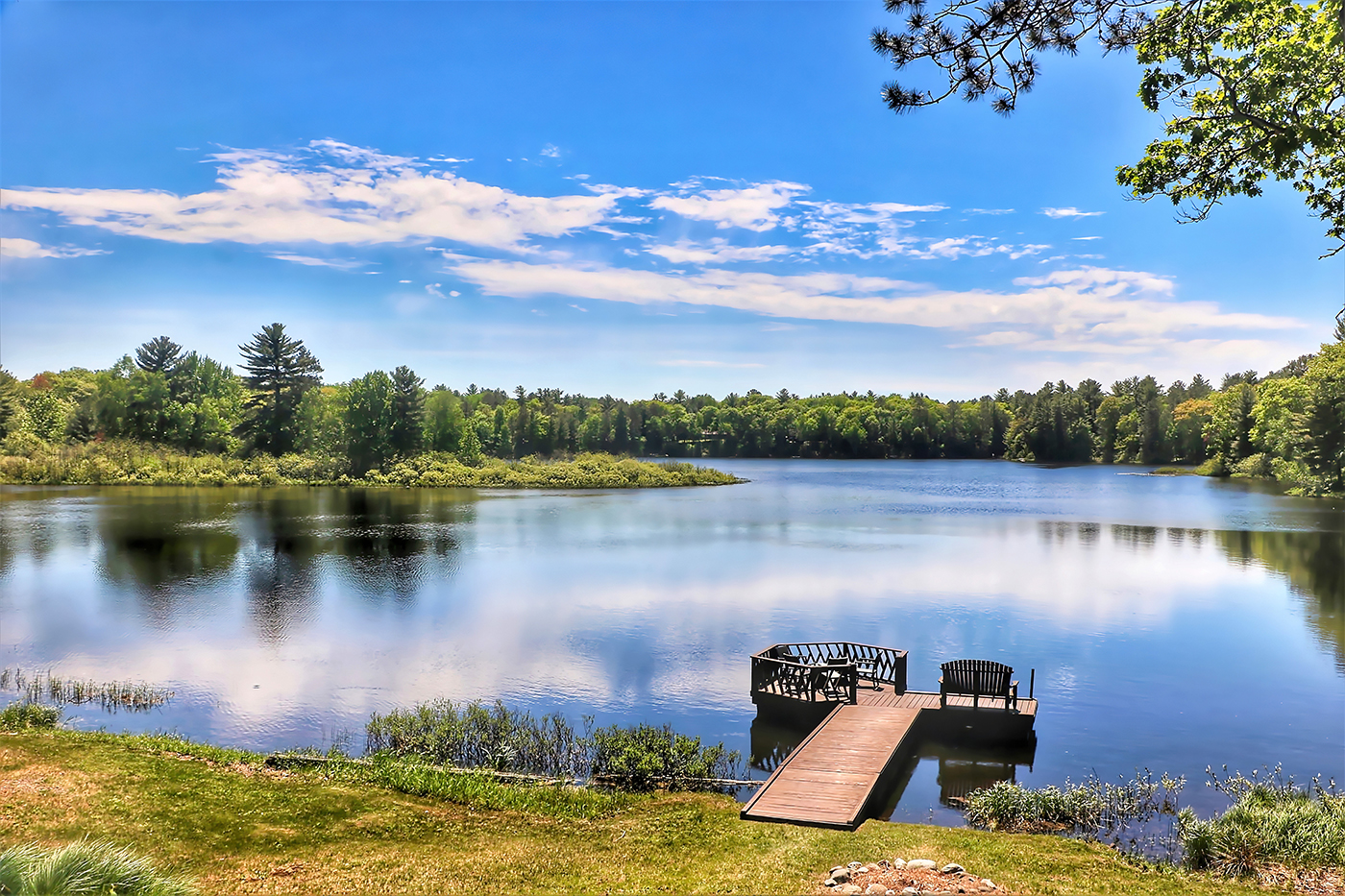
Most were formed during the last ice age. This period is known as the Wisconsin Glaciation. Back then, glaciers covered much of our state. Glaciers are huge masses of slowly moving ice, snow, and rock. As they melted, they made big holes in the land. The holes filled with water and became lakes. Or ponds and wetlands. Surrounding these bodies of water are lowlands, plains, and highlands.
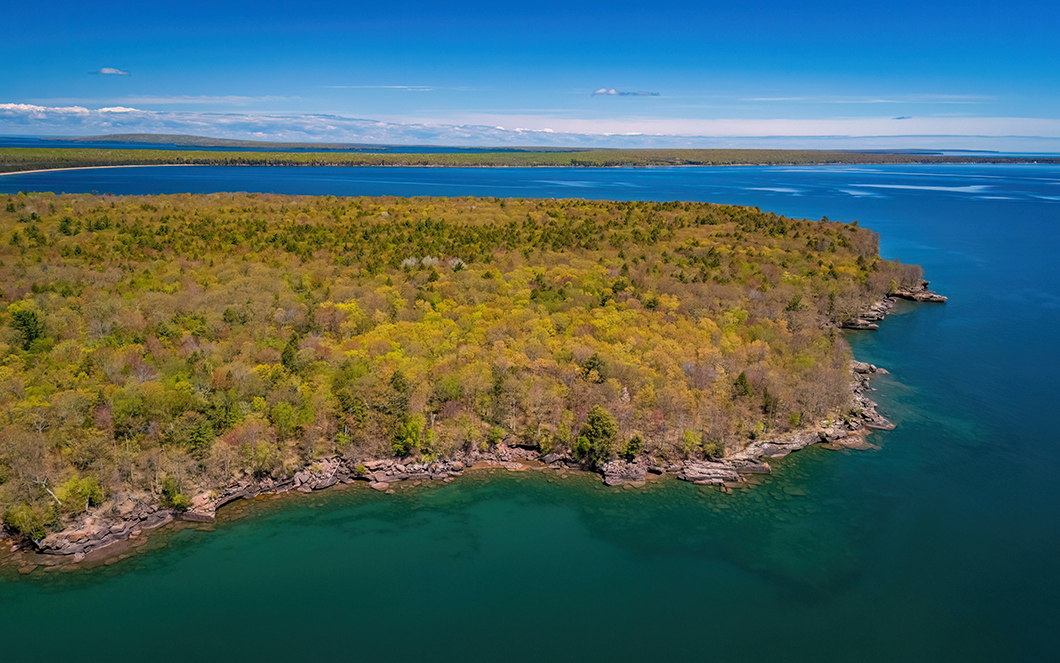
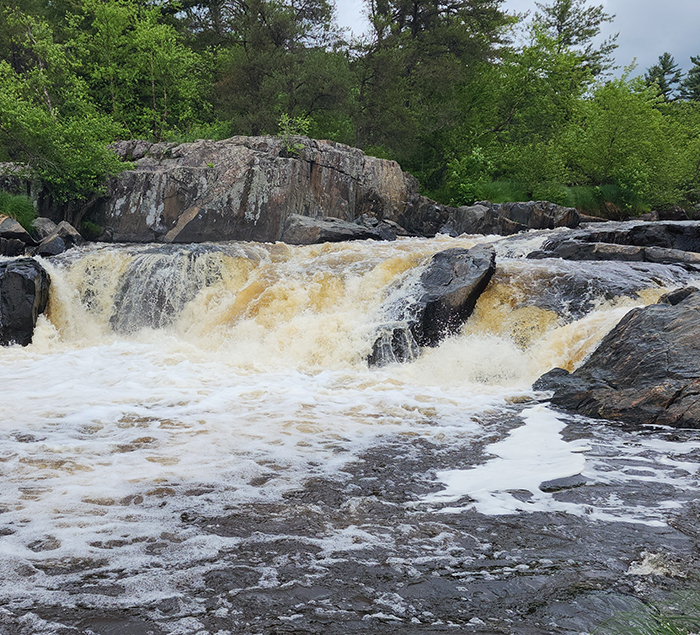
▲ The Lake Superior Lowland is in the north part of the state. It reaches no farther than 20 miles inland from Lake Superior’s shore. The land is mostly flat. It slopes down toward the lake. The region is known for its wetlands. Its waterfalls. And its forests. At the northernmost tip is the Bayfield Peninsula. This is land that reaches into the lake. From there you can see the 22 Apostle Islands.
This is Timms Hill. It is halfway between the North Pole and the equator. Timms Hill is the highest point in Wisconsin. It’s part of the 1,200-mile Ice Age Trail. The trail follows the path of the last glacier. This is one of the few National Scenic Trails located wholly within one state. Timms Hill is named for logger Timothy Gahan, who had a camp nearby. It’s the highest state high point that’s called a hill. ▶
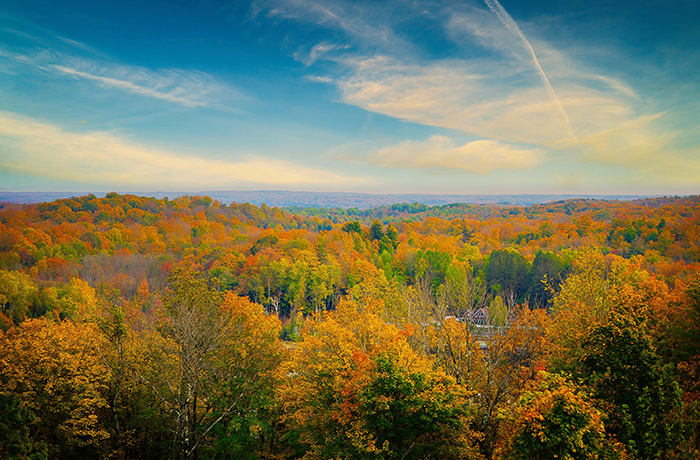
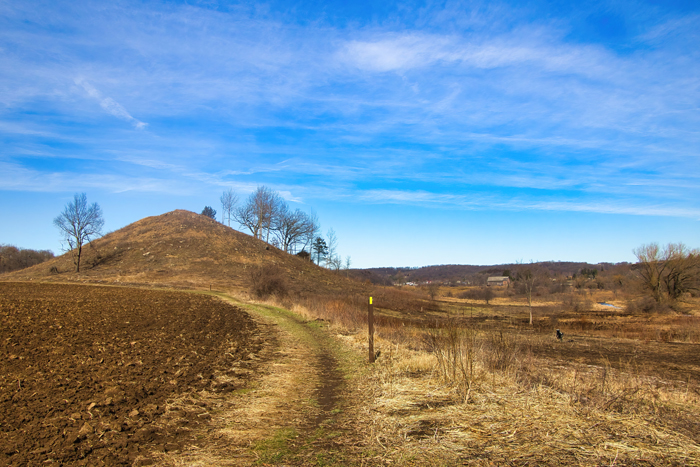
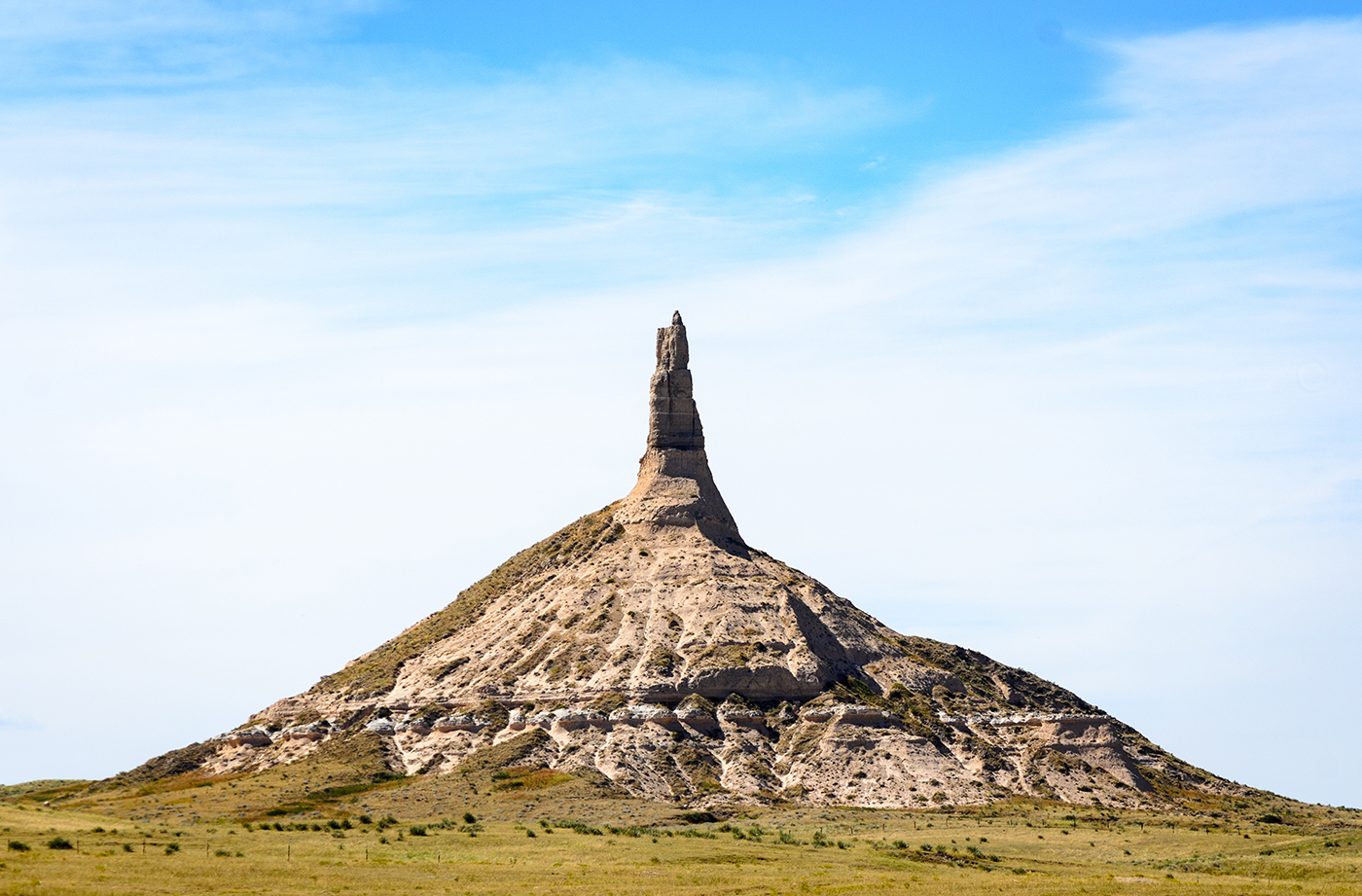
▲ The Central Plain is a U-shaped area. It’s just south of the Northern Highland. Here, you’ll find sand plains. These are flat, open regions. They were formed by deposits of sand left behind by the glaciers. Rising up from the land are buttes. These are tall, steep-sided rocks with flat tops. The Central Plain is also home to glacial lakes. To wetlands. And to marshes.
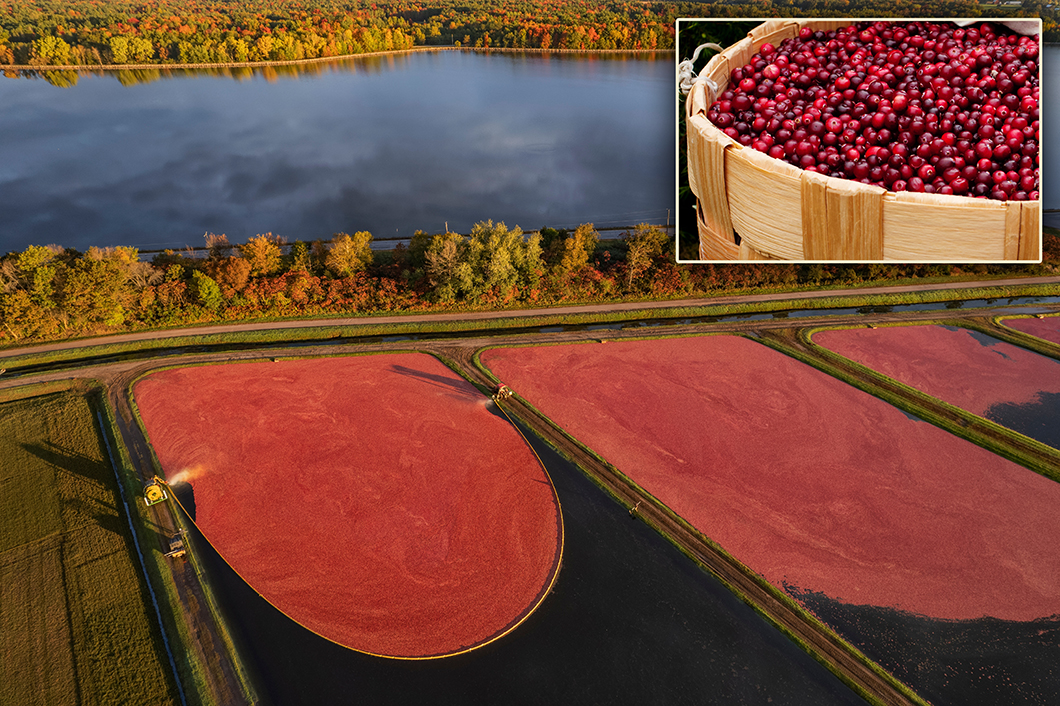
▲ Wisconsin’s marshes are just right for growing cranberries. This is an important crop for Wisconsin. Our state produces more cranberries than any other state. We provide over half of the country’s yearly supply. Indigenous (Native) peoples harvested cranberries long before Europeans arrived.
Loading the player...
▲ Here, in the Eastern Ridges and Lowlands region, glaciers left behind a thick layer of rich soil. This fertile land runs along Lake Michigan. Here you’ll find sandy beaches and high bluffs. A bluff is a hill with steep sides that often overlooks a body of water. The region extends west to the Central Plain and Western Upland. It stretches east to the Niagara Escarpment. The escarpment is a rocky ridge. It goes from Wisconsin to Niagara Falls in New York. The soil here is some of the best in the world. It supports farming that includes corn and soybeans. Along the shores of Lake Michigan is where you’ll find the lowest elevation in the state. It’s less than 600 feet above sea level.
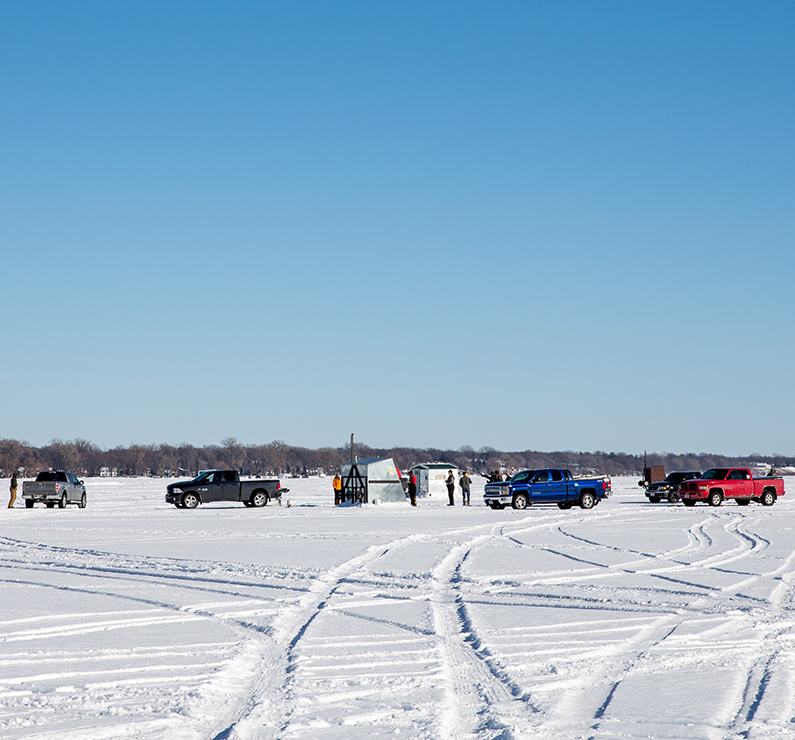
Lake Winnebago is in the Eastern Ridges and Lowlands region. It’s often called Wisconsin’s Third Great Lake. It’s not one of the five actual Great Lakes. But it’s Wisconsin’s largest inland lake. (An inland lake is one that’s not connected to the ocean.) Lake Winnebago is 215 square miles. That’s more than twice the area of Milwaukee. People fish here all year round. In winter, ice fishing is very popular. That’s when lake ice is so thick that people can drive their trucks on it. ▶
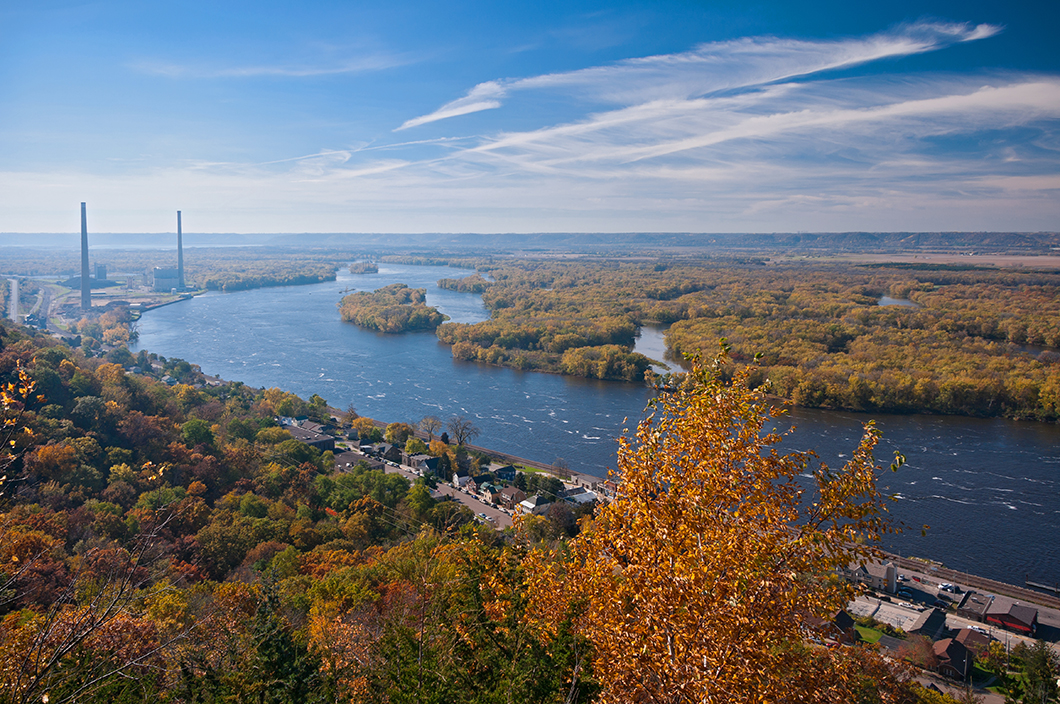
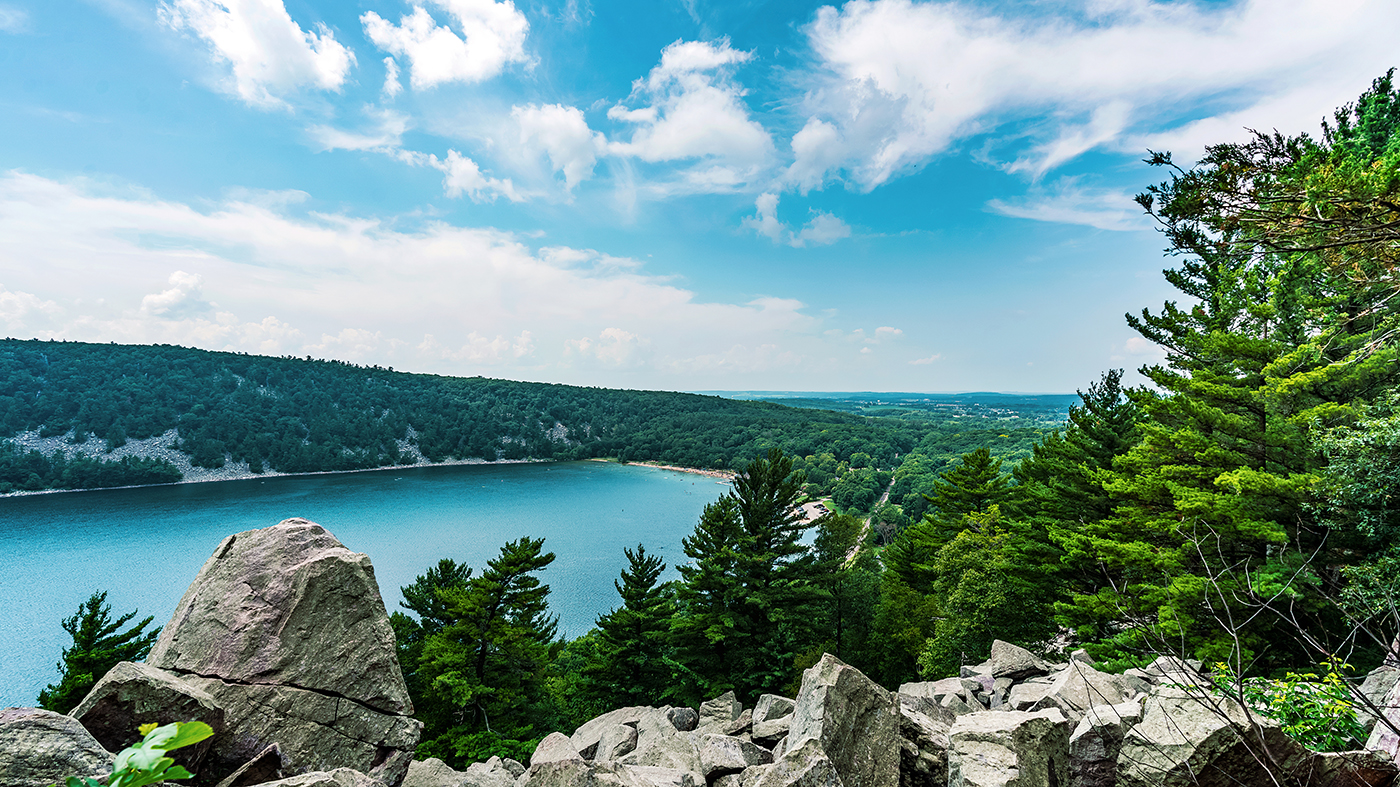
▲ The Western Upland region extends from the Central Plain and the Eastern Ridges and Lowlands to the Mississippi River. Here, you’ll find amazing views from high bluffs and deep gorges. Here too are hills, valleys, and more than 250 caves. The southwestern part of the region is in the Driftless Area. Drift is the material left behind as glaciers moved. It had the effect of smoothing out the land. Glaciers didn’t cover this part of the state. So it’s known as the Driftless Area.
Loading the player...
▲ Stretching north from the southeast corner of the state are 400 miles of Lake Michigan shoreline. Wisconsinites and others enjoy the beaches. They also appreciate the Lake Michigan Water Trail. The trail has over 500 miles of cliffs, sand dunes, marshes, and sandy beaches. Lake Michigan provides drinking water for the people of Milwaukee and other communities. It’s also an important stopover spot for migrating birds. More than 400 million years ago a saltwater sea covered the land. Today, fossils of coral and other sea life from that time wash onto the shore.
If you’re in Wisconsin, you’re never very far from water. The state is crisscrossed by more than 12,000 rivers and streams. The Mississippi and the St. Croix Rivers form our western border. The Wisconsin River, which flows west into the Mississippi, is our longest. The Fox River begins in the north and flows into Lake Michigan. Indigenous peoples and Europeans used our waterways for trade and travel. Today, many people enjoy rafting. They also have fun canoeing, kayaking, and fishing. ▶