Free
The late 19th and early 20th centuries brought the Industrial Revolution to the United States. The Industrial Revolution was a time when products started to be made in factories instead of by hand.
With it came new industries to Wisconsin and the growth of our cities. Then, more changes came. In 1919, Wisconsin became the first state to approve the 19th Amendment, giving women the right to vote. Two years later, our state passed the nation’s first equal rights bill. The bill gave women “the same rights and privileges under the law as men.” We also did our part helping to lead the country through two world wars. Not to mention our famous inventors, artists, and entertainers.
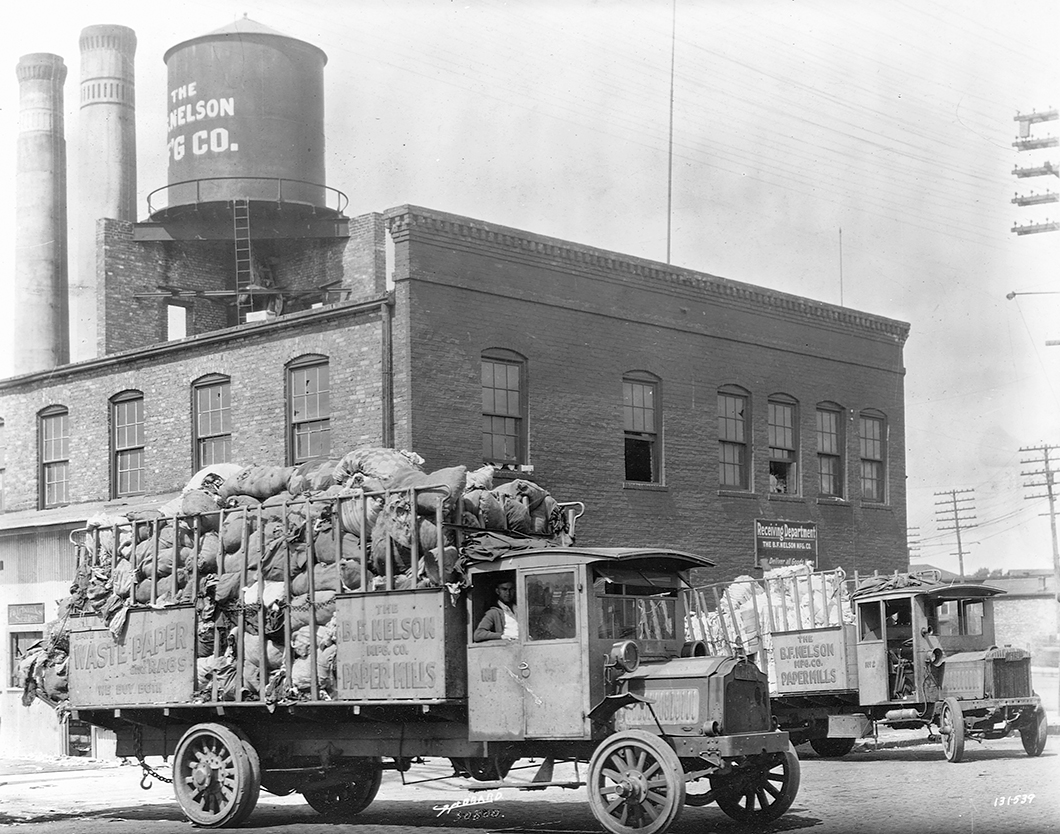
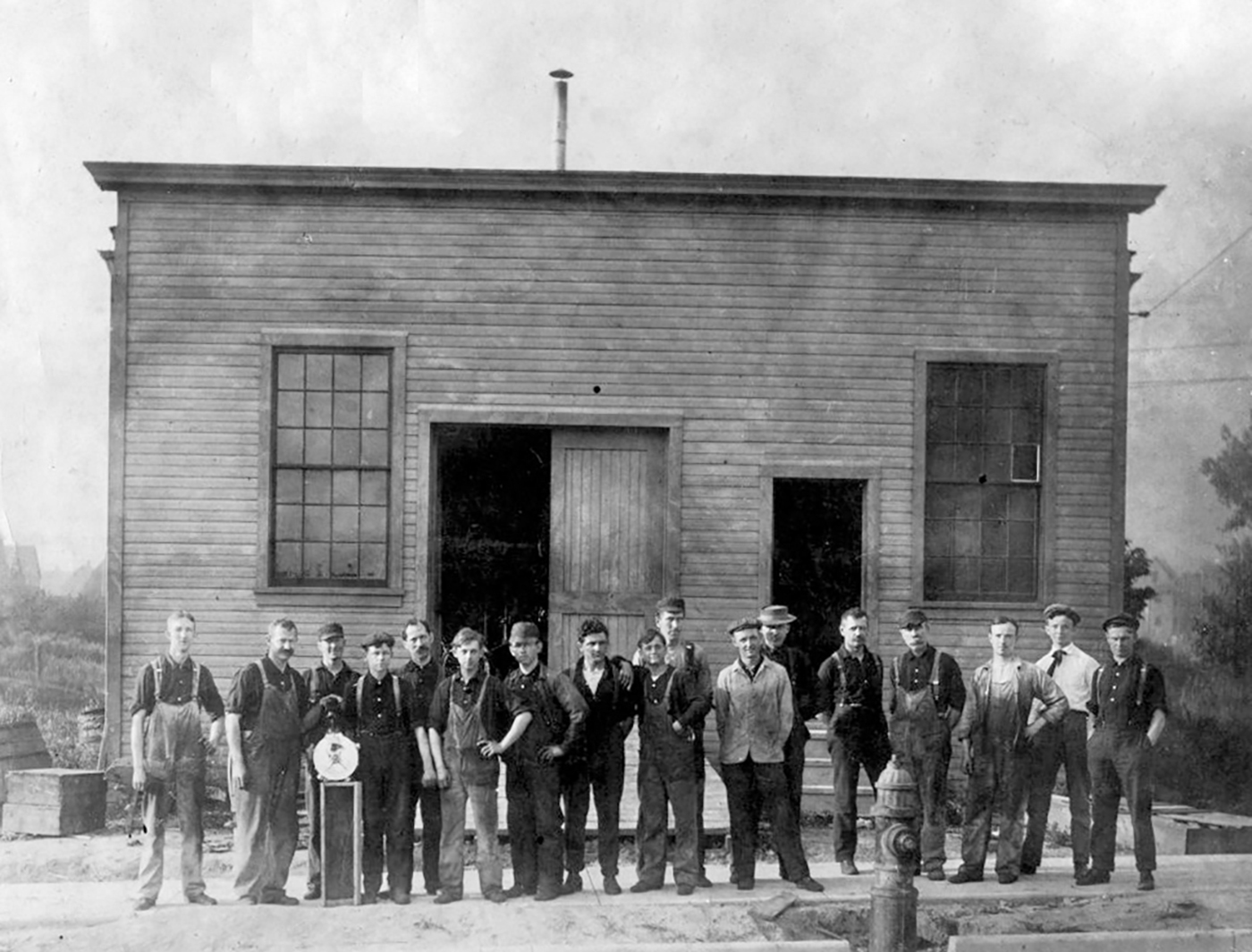
▲ Papermaking was one of the new industries to spring up in Wisconsin. Paper is produced by making pulp from wood. Pulp is soft, mushy material made by grinding or soaking strands of wood. Wood from forest trees and water from lakes and rivers were key to this process. Both were plentiful in Wisconsin. Milwaukee and Green Bay were early centers of the paper industry. Green Bay still is, living up to its reputation as the “toilet paper capital of the world.”
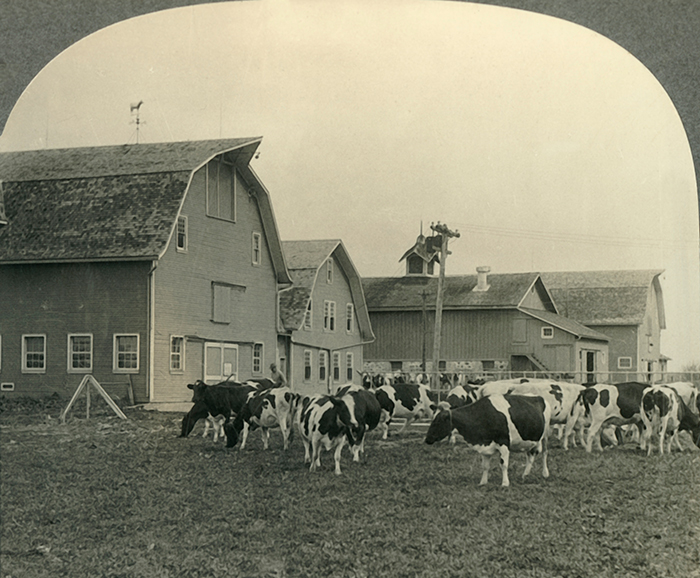
▲ Wisconsin farmers did well growing and selling wheat. But year after year, the crop took nutrients from the soil. And the harvests grew smaller. Add to that the chinch bug. It fed on wheat and other grasses and further shrank the harvest. A change was needed. The change was dairy farming. Many early dairy farmers came from New York and brought skills needed to make dairy farms successful. The University of Wisconsin was also involved in research related to dairying. By 1915, Wisconsin was the leading dairy state in the country. It produced more cheese and butter than any other state. Today, it’s second only to California as the country’s leading supplier of milk – earning it its nickname as “America’s Dairyland.”
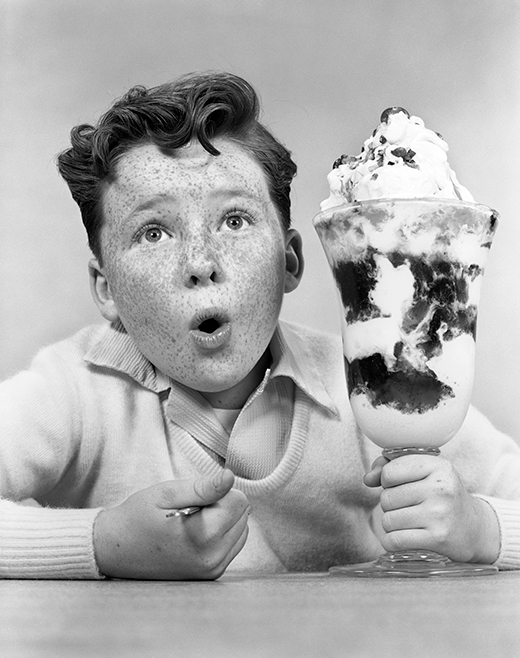
Everyone may not agree, but talk to anyone in Two Rivers, Wisconsin, and they’ll probably tell you that the ice-cream sundae was invented there. It happened when George Hallauer was at Ed Berner’s soda fountain. Hallauer asked for ice cream with chocolate sauce on top. But Berner only used chocolate sauce in ice-cream sodas. And a law made it illegal to serve sodas on Sunday. Berner and Hallauer agreed on a compromise. Berner would serve ice cream with chocolate syrup on top, not chocolate sauce. Berner called this new treat the “Sunday special.” To serve it any day of the week, not just Sundays, he changed the spelling from “Sunday” to “sundae.” ▶
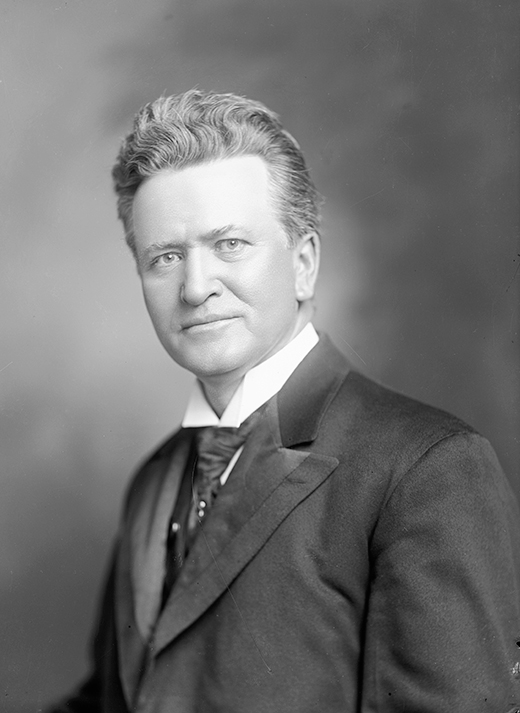
◀ For some, the Industrial Revolution was a time of enormous wealth. For others, it was a time of extreme poverty. Wisconsin governor and then senator Robert La Follette led a movement to change these inequalities. It was called the Progressive Movement. People in the Progressive Movement believed that government should serve the people. They wanted big corporations to have less power. And they wanted to expand democracy. During this time, Wisconsin earned the nickname “Laboratory of Democracy.”
Think Piece!
The Progressive Movement was about “clean government.” What do you think this term means? What are some examples of “clean government”? Of government that is not clean?
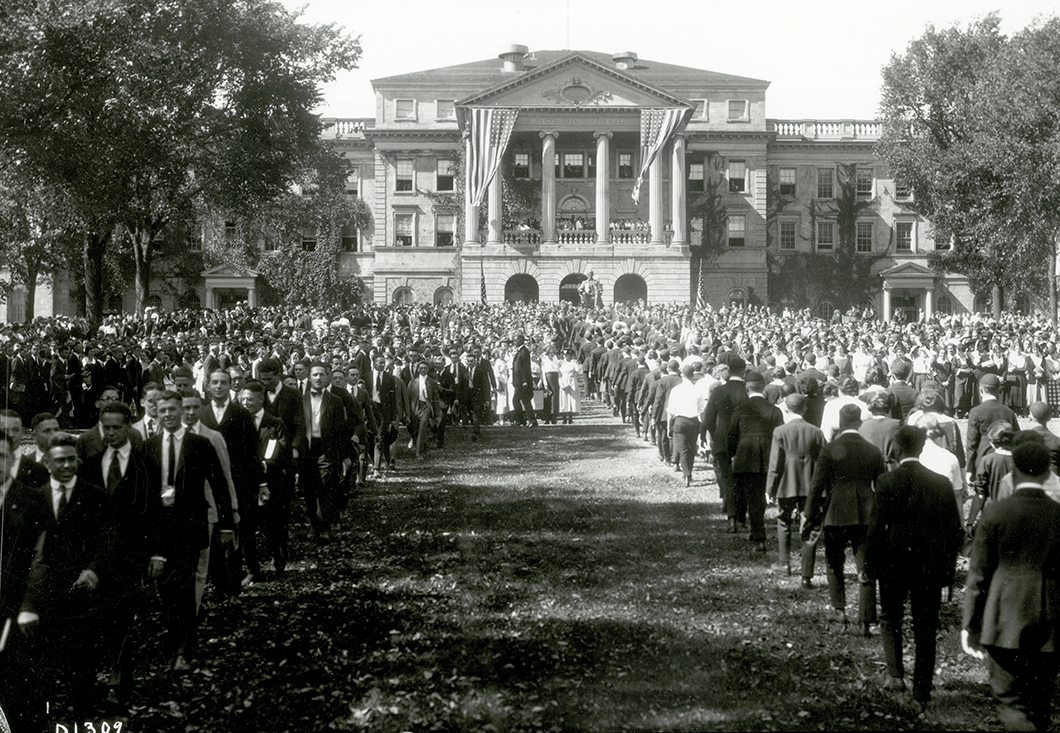
▲ The University of Wisconsin was part of the Progressive Movement. Together, Wisconsin governor Robert La Follette and university president Charles Van Hise came up with what became known as the Wisconsin Idea. This was the idea that the university’s expertise should be available to all the people of Wisconsin, not just those who attended the university. This was accomplished through the formation of the Wisconsin University Extension program, which provided a way for all Wisconsinites to benefit from the university’s research. It was particularly helpful for farmers dealing with agricultural problems. WHA, a radio station, was set up by the university to broadcast educational programs. On the air since 1916, WHA is the oldest continually operating radio station in the country.
Think Piece!
Charles Kendall Adams, president of the university before Van Hise, described the Wisconsin Idea this way. “The boundaries of the university campus are the boundaries of the state.” What is your opinion of his idea?
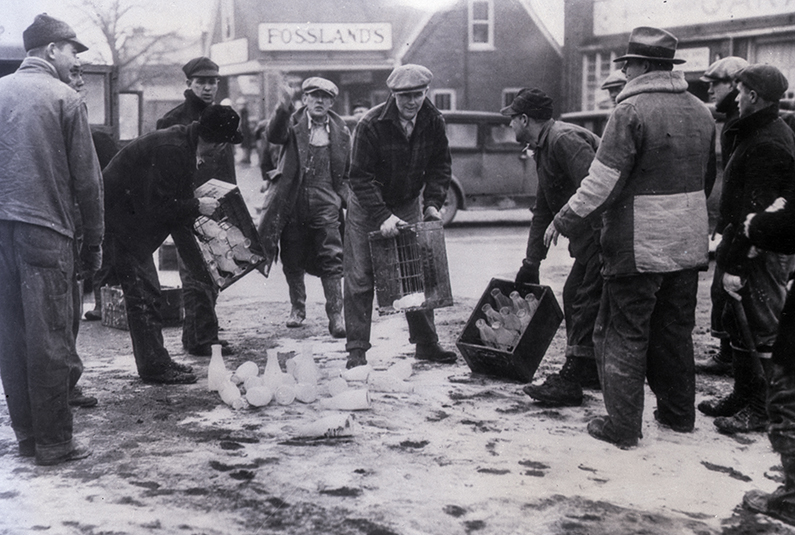
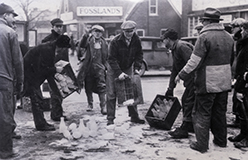
▲ During the Great Depression, people experienced hard times. Starting in 1929, many people lost their jobs. Or couldn’t get enough to eat. Or couldn’t keep their homes. Most people didn’t have much money so they cut way back on spending. And prices fell. Dairy farmers in Wisconsin were hit hard. In 1933, they went on strike. Instead of selling milk at extremely low prices, they threw it away. Their idea was to create a milk shortage so the price of milk would go up. Eventually, Congress passed government programs that helped Wisconsin’s farmers.
Reflection
Reflect on the effects of the milk strike. Who do you think it hurt most – consumers or dairy farmers?

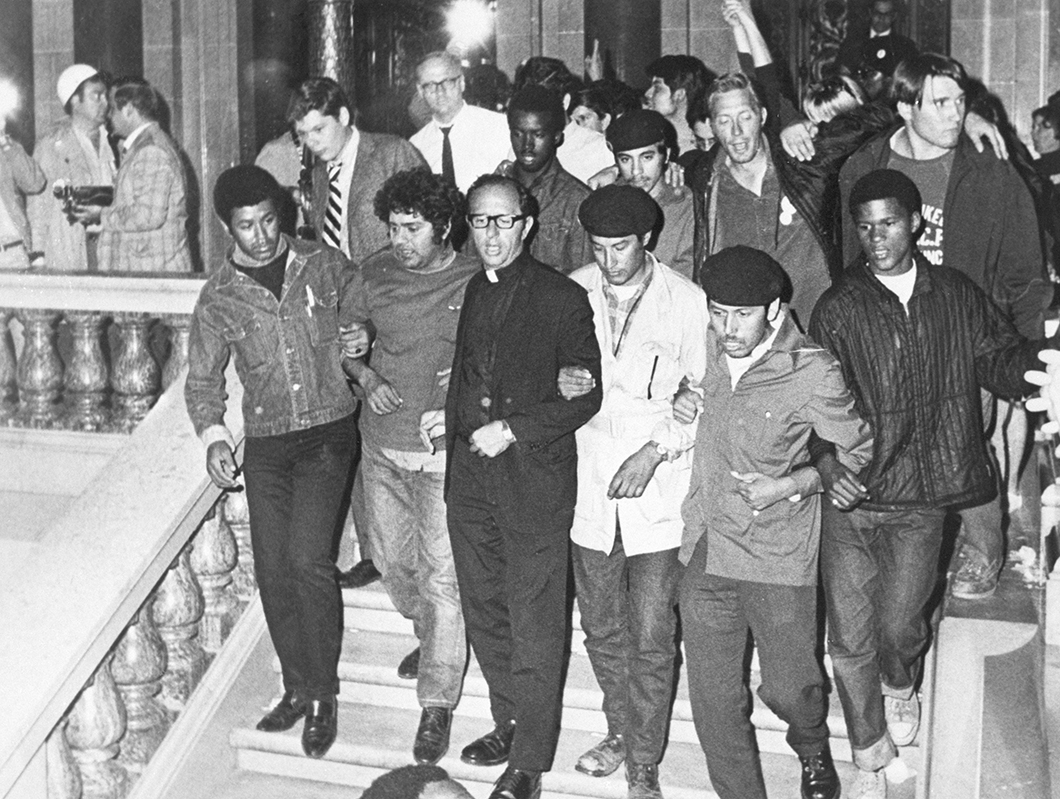
▲ Milwaukee was a center of protest during the civil rights movement in the 1960s. De facto segregation was the main issue. (De facto segregation is when segregation exists even though it is not required by law.) It affected housing, schools, and jobs. James Groppi, a Catholic priest, and Vel Phillips, the first Black woman elected to the city council in Milwaukee, worked to address racism in the city. Groppi (above, center) led marches every day for 200 days to protest housing discrimination. (Housing discrimination is treating someone looking for a home unfairly because they are different in some way, such as race or religion.) Phillips proposed a fair-housing law. In 1968, Milwaukee passed such a law, and Congress passed the Fair Housing Act, which prohibited housing discrimination nationwide.
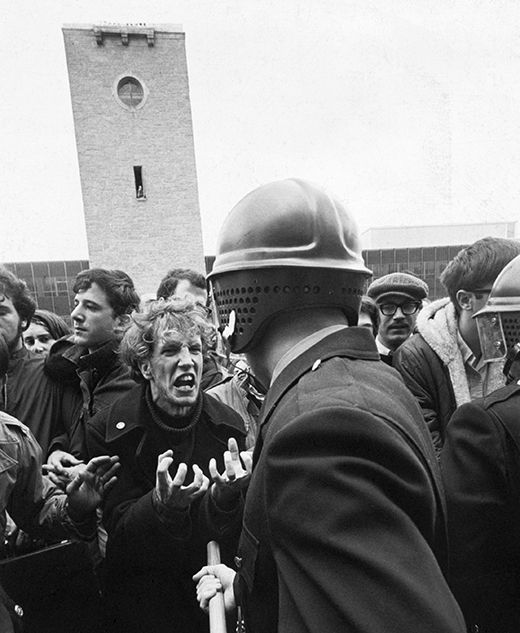
The United States went to war in Vietnam to stop the spread of Communism. Communism is a system where the government – not individual people – owns things like factories and farms. Many people in the U.S. were against the war. Especially college students. Students at the University of Wisconsin–Madison were at the center of antiwar protests. These included demonstrations and strikes. Students wanted to end the draft. (The draft is when the government forces citizens to join the military.) The protests wound down in the 1970s as the war drew to a close. ▶
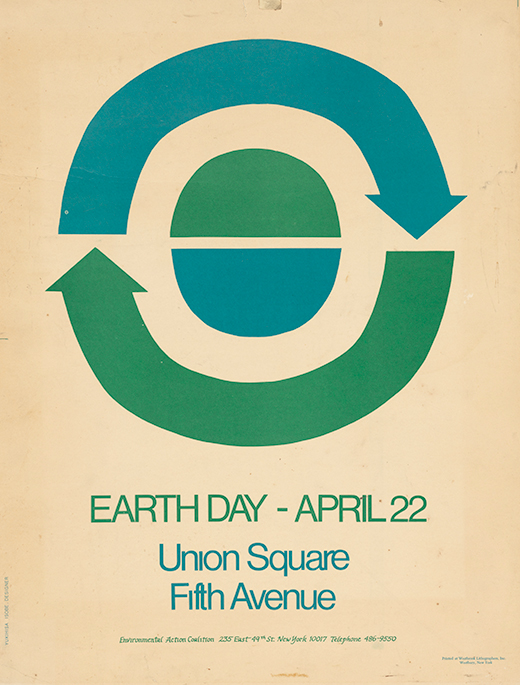
◀ Gaylord Nelson was Wisconsin’s governor from 1959 to 1963. Known as the “Conservation Governor,” he worked to preserve Wisconsin’s natural resources. He also expanded recreation land. In 1969, Nelson proposed a teach-in on college campuses about the environment. It was called the “National Teach-In on the Crisis of the Environment.” The idea took hold. In April 1970, the first Earth Day took place. Earth Day is not an official holiday, but it is celebrated by millions of people around the world. Gaylord Nelson said this in a speech on the first-ever Earth Day:
It’s tremendously encouraging to see all . . . the remarkable interest . . . on an issue which is not only just an issue of survival, but an issue of how we survive. I don’t think there’s any other issue . . .which is critical to mankind as the issue of the quality of the environment in which we live. . . . It is . . . not just how we dispose of tin cans . . . . It is concerned with the habitats of marine creatures, animals, birds, man . . . .
Famous Wisconsinites
 1
1
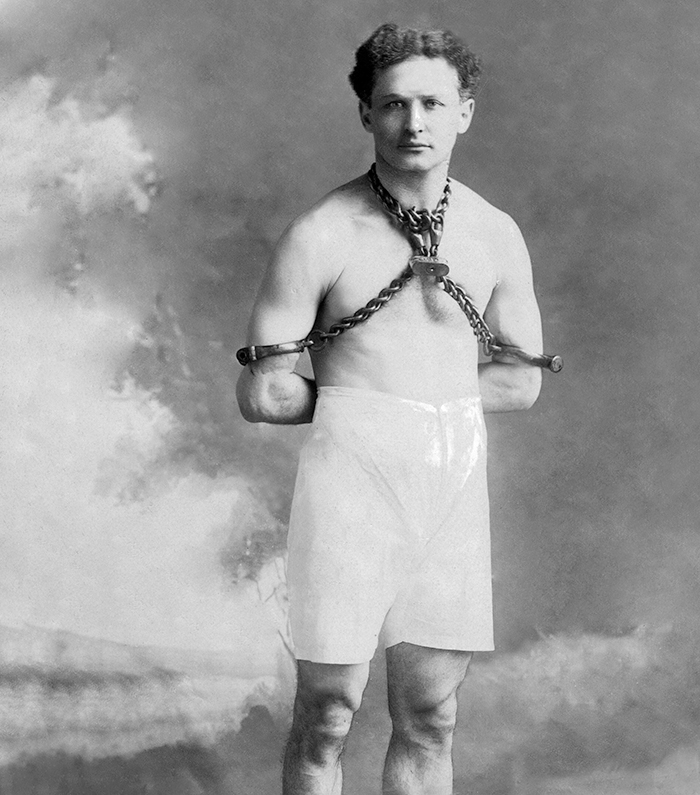
Harry Houdini
Master magician and escape artist Harry Houdini grew up in Appleton, Wisconsin. Houdini became known for escaping from the “unescapable.” Chains and tires. Straightjackets. Even sealed water tanks.
 2
2
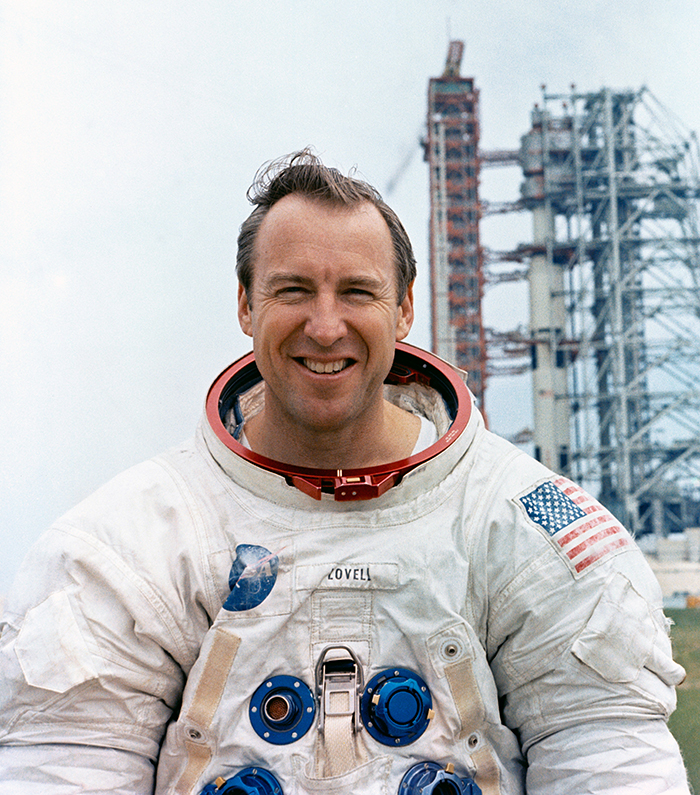
James Lovell Jr.
Astronaut and test pilot James Lovell Jr. grew up in Milwaukee. In 1962, he was chosen to be an astronaut. Lovell was the first astronaut to make four space flights and the first to travel to the moon twice.
 3
3
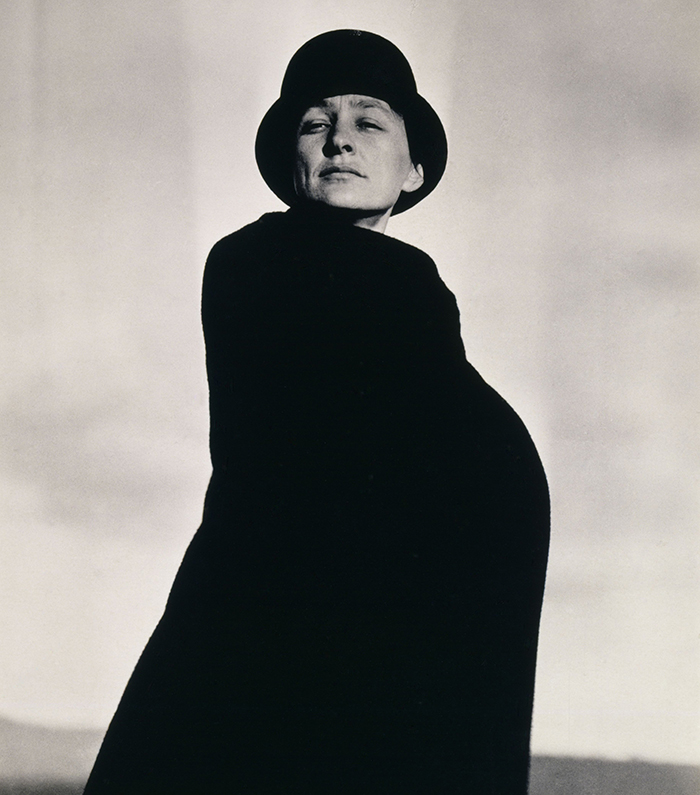
Georgia O’Keeffe
Georgia O’Keeffe grew up on a farm near Sun Prairie, Wisconsin, and went on to become a nationally known artist. She painted close-up images of flowers and other things in nature. In her own words, O’Keeffe wanted to “create an equivalent for what I felt about what I was looking at – not copy it.”
 4
4
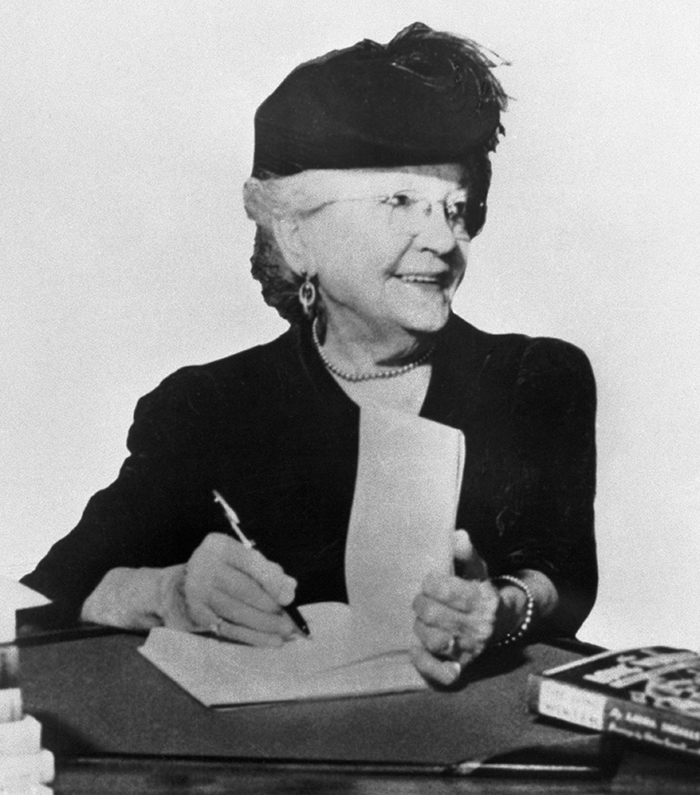
Laura Ingalls Wilder
Born in Pepin, Wisconsin, Laura Ingalls Wilder was a children’s book author. She was 65 when she wrote her first book, Little House in the Big Woods. The story was about her childhood in Pepin.
 5
5
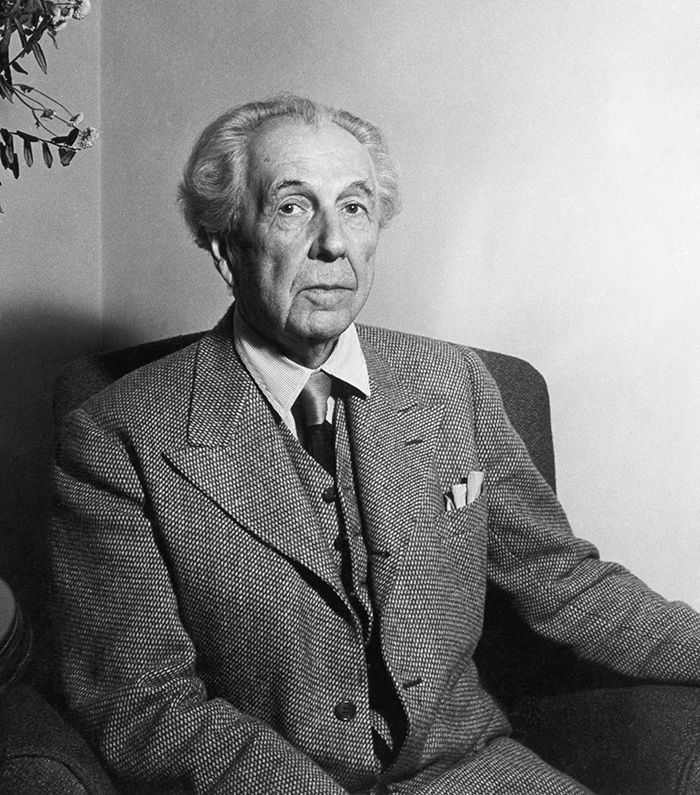
Frank Lloyd Wright
Architect Frank Lloyd Wright was born in Richland Center, Wisconsin. He designed many well-known homes and buildings. These include Taliesin, his own home and studio, and the famous Guggenheim Museum in New York City.