Free
The roots of volcanoes are in a layer called the mantle.
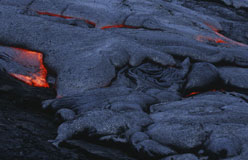
They can be 40 to 120 miles inside the Earth. Temperatures down there get as hot as 4,000°F. That’s so hot, rock melts like chocolate on a summer day down there! The melted rock becomes thick, flowing stuff called magma. Magma is lighter than the solid rock around it. So, it pushes up through cracks in the Earth. Wherever magma comes out, volcanoes form and grow. Magma that comes out of the ground is called lava. As lava cools, it turns into different kinds of rock.
There are three main types of volcanoes:
1. Cinder cones
2. Stratovolcanoes
3. Shield volcanoes
Fiery Rocks
Granite, basalt, and obsidian are igneous (ig-NEE-us) rocks. They are made from magma mixed with different minerals. The three rocks have different textures too. That tells you how they were formed.

◀ Granite has a rough texture. The minerals in it are big enough for you to see without a microscope. This rock forms from magma that cools under the ground. The minerals cool slowly. That gives them time to grow into big crystals. Granite is a strong building stone that can be polished until it shines like a mirror.
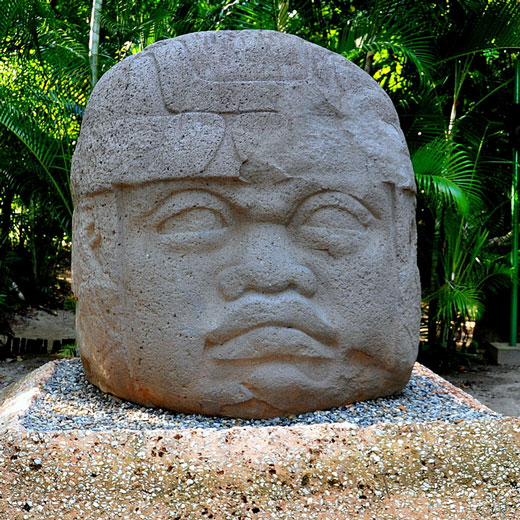
Basalt has a fine texture. It forms above ground and cools faster than granite. That gives it smaller crystals. Usually, you need a microscope to see the minerals in basalt. The Olmec of ancient Mexico carved this head about 2,000 years ago. It’s made from one big block of basalt! ▶
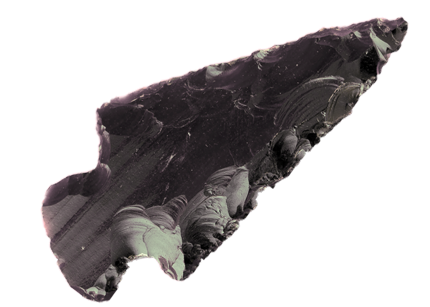
Obsidian has a smooth texture, like glass. Like basalt, it forms above the ground. But crystals don’t have time to grow in it. That’s because the lava cools really quickly, in minutes or days instead of years or centuries. For many centuries, Native Americans made sharp weapons from obsidian.
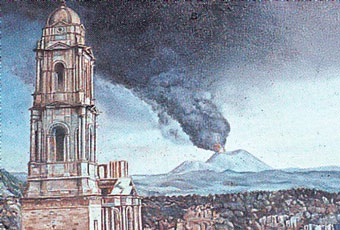
The volcano Parícutin created a cinder cone in a Mexican cornfield. The steep pile of cinders grew 1,000 feet in just one year. That’s about as high as a 60-story building! ▶
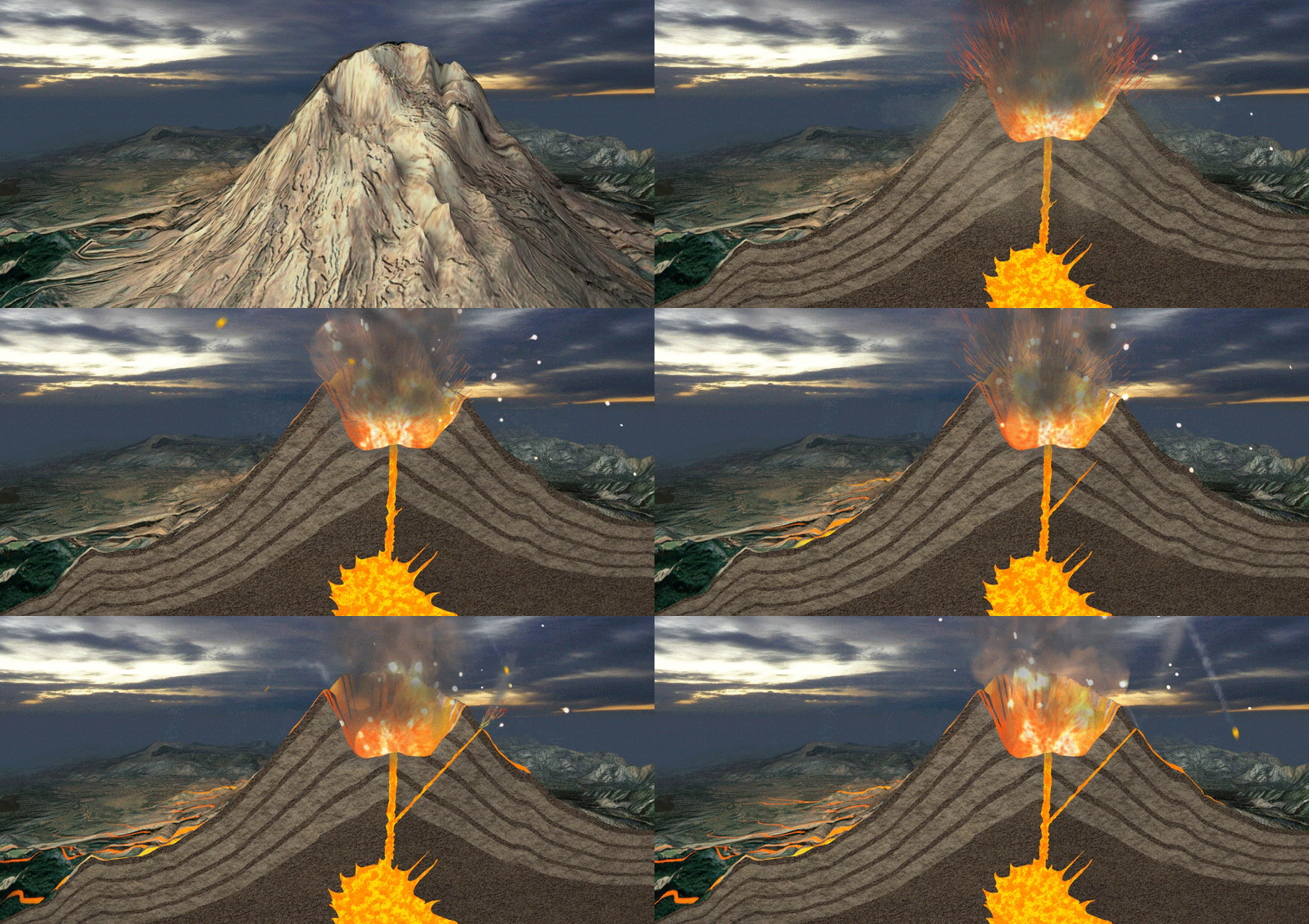
Bomb
A lump of lava thrown out of a volcano while still molten
Crust
The upper part of the Earth
Magma Chamber
An underground area where thick, molten rock pools up
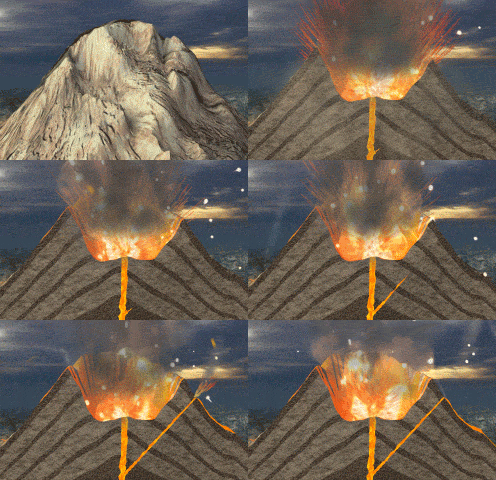
Central Vent
A channel in the neck of a volcano, where magma erupts
Fissure
A large crack in the Earth through which lava can flow
Crater
The bowl-shaped area around the mouth of a volcano
Ash and cinders
Tiny pieces of rock and lava in the air
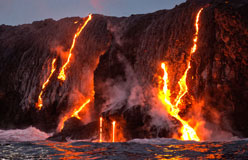
Lava Flow
Molten rock flowing down the sides of a volcano
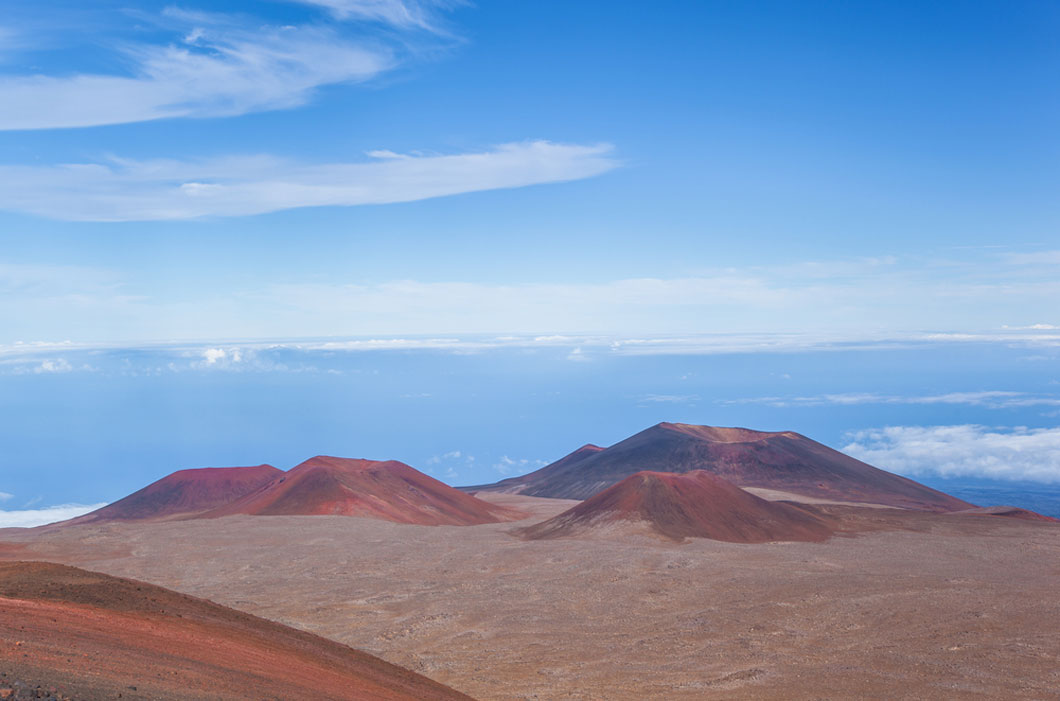
▲ Hawaii’s Mauna Kea is a large shield volcano. This type of volcano is cone-shaped. It has gently sloping sides and a wide base. Mauna Kea has been dormant for 4,500 years.