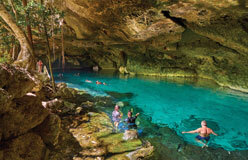
The Maya called them sacred wells because they believed Chaak, the rain god, lived in the water.
Today, we call them cenotes (sih-NO-tays). They’re natural swimming holes found on the Yucatán Peninsula, and they can be hundreds of feet deep! How did cenotes form? Porous limestone dissolved over time and revealed underground freshwater pools. Many Mexican farmers still pray to Chaak, but now cenotes are mainly tourist spots. They’re popular with swimmers, snorkelers, divers, and people who just want to cool off. One of the largest cenotes is Dos Ojos near Tulum. Its name means “two eyes” in Spanish.