Free
Thousands of years before European explorers reached the Mississippi, Native Americans made its shores their home.
They hunted in the forests along the riverbanks and developed complex cultures. Some welcomed the Europeans. Others did not. Here are some explorers who tried to claim this great river for their countries.
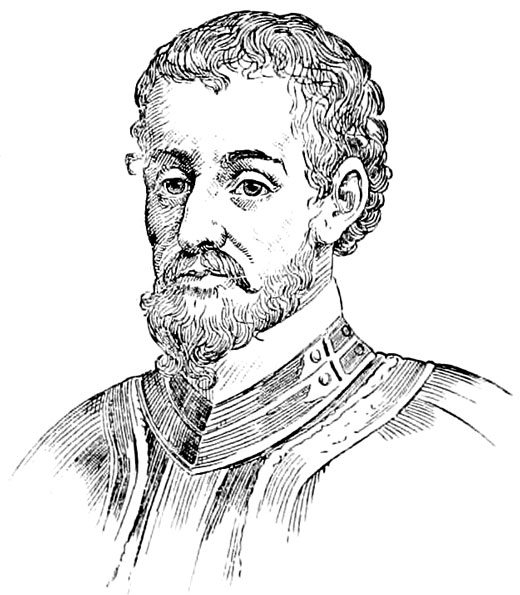
Hernando de Soto was a Spanish explorer. He went to what is now Peru. He came back to Spain a rich man. In 1539, he set out to conquer Florida. In search of treasure, his group explored much of present-day Georgia, the Carolinas, Tennessee, Alabama, and Oklahoma. In 1541, de Soto became the first European to see the Mississippi River. His men faced freezing weather, lack of food, and attacks by Native Americans. On the return to Florida, de Soto became ill and died. He was buried in the Mississippi River. ▶
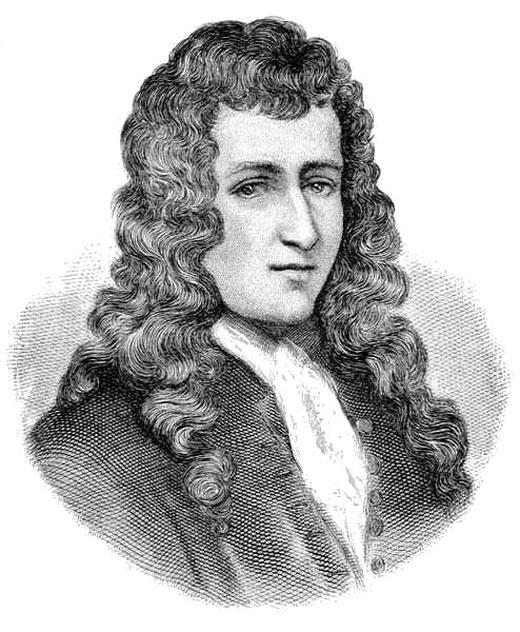
◀ Robert Cavelier, Sieur de La Salle, was a French explorer. He was the first European to reach the Ohio River. His dreams, though, centered on the Mississippi. La Salle reached the mouth of the river in 1682. He claimed all lands that drained into the Mississippi for France. But the claim was never honored. La Salle was murdered by his own men in 1687.
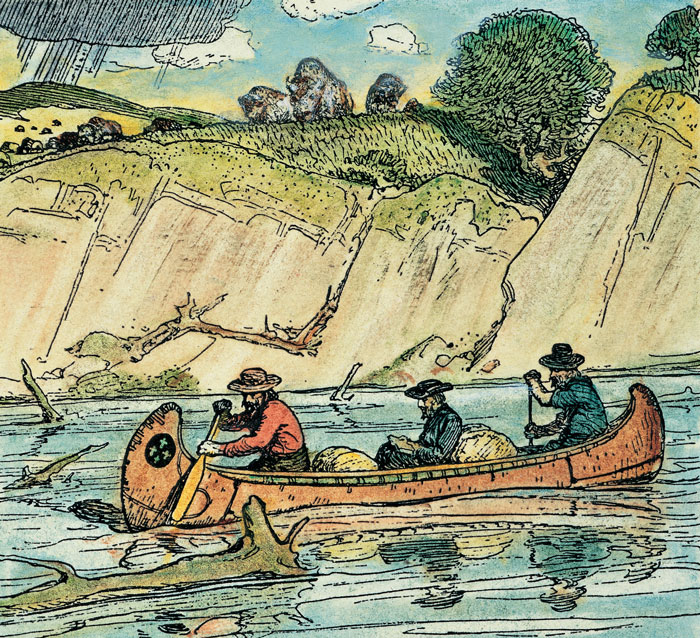
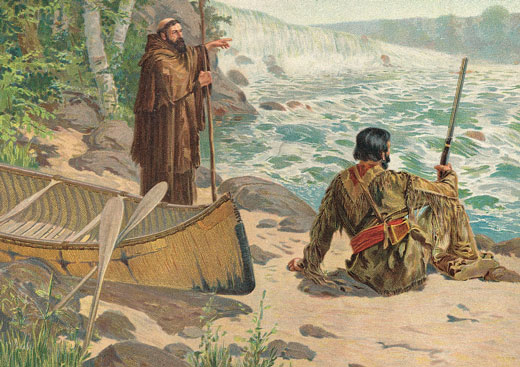
▲ Louis Jolliet was born in Quebec, Canada. Jacques Marquette was born in France. Marquette became a Jesuit priest, then he moved to Quebec. Rumors had spread that a large river ran south of Canada. Jolliet believed that it would flow into the Pacific. In 1673, he led a group to find and explore the river. Marquette was his chaplain. The men traveled down the Wisconsin River until it met the Mississippi. They followed the Mississippi south until they came across traces of Spanish explorers and angry Native Americans. They didn’t want to risk being captured, so they returned north up the Illinois River.
Louis Hennepin was a Franciscan priest. He went on one of La Salle’s expeditions. Captured by Sioux in 1680, he was later freed and returned to France. Hennepin hadn’t really done much exploring. But he wrote book after book bragging about his adventures. He copied a lot directly from writings by La Salle. Hennepin was dishonest. But his fame lives on in Minnesota and the rest of the upper Mississippi valley. There, his name is on bridges, schools, and streets. Even the county where Minneapolis is bears his name. ▶
In 1832, Henry Schoolcraft made a major discovery. He found that Lake Itasca was the source of the Mississippi. ▶
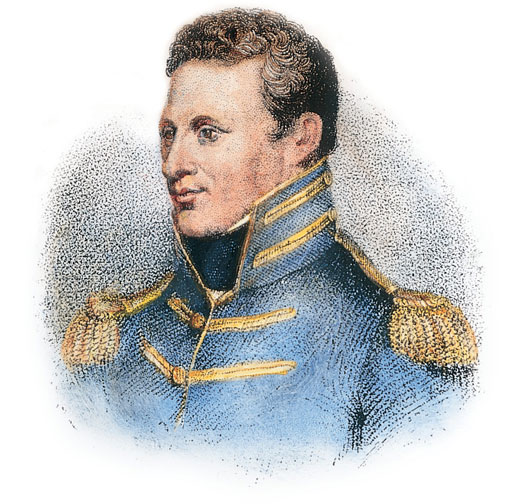
◀ Zebulon Pike was a U.S. soldier. In 1805, he was sent to the upper Mississippi to explore the river’s headwaters. He was supposed to choose sites for forts along the way. Pike never found the Mississippi’s actual source. He claimed Leech Lake was the source, but that was a mistake. It is actually miles away.