Free
If you step onto wet cement, you leave a footprint.
It will be there long after the cement has set. Imagine your footprint is the effect you have on the world. It’s how much you use, how many things you throw out, and how much water you use or waste. It’s also what goes into the food you eat and the heat you use and all the other resources you use. Want to help conserve resources? Leave as small a footprint as you can.
How does a carbon footprint work? It’s all about how much carbon dioxide goes into the atmosphere because of you. When you ride in a car, the footprint grows. Why? Because a car’s engine emits a lot of carbon dioxide. But your carbon footprint does not grow if you walk or ride a bike. What about longer trips? Take a bus or a train. They make your carbon footprint grow much less than riding in a car does.
You may be wondering what the big deal is about a carbon footprint. Here’s the big deal: Carbon dioxide traps the Sun’s heat in our atmosphere. That’s called the greenhouse effect. It is the main cause of climate change. Climate change leads to changes on Earth. They can cause droughts and floods. Have you noticed how much you hear about droughts and floods lately? Climate change also causes habitat loss for plants and animals. As the polar ice caps melt, it also causes the sea level to rise.
Carbon Footprint of a Cheeseburger...
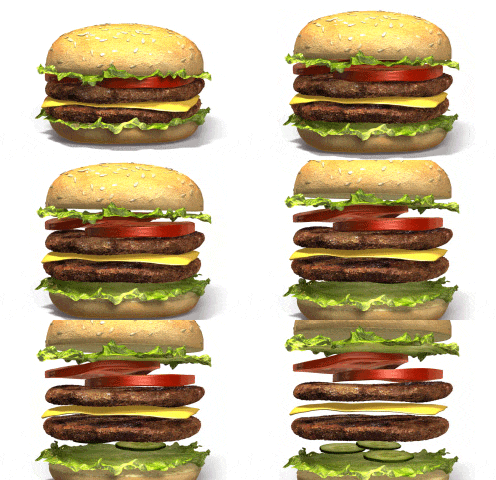
Cars aren’t the only things that add to a carbon footprint. Practically everything does. Even a cheeseburger! Let’s figure out the carbon footprint of a cheeseburger. We’ll add up how much energy goes into each part:
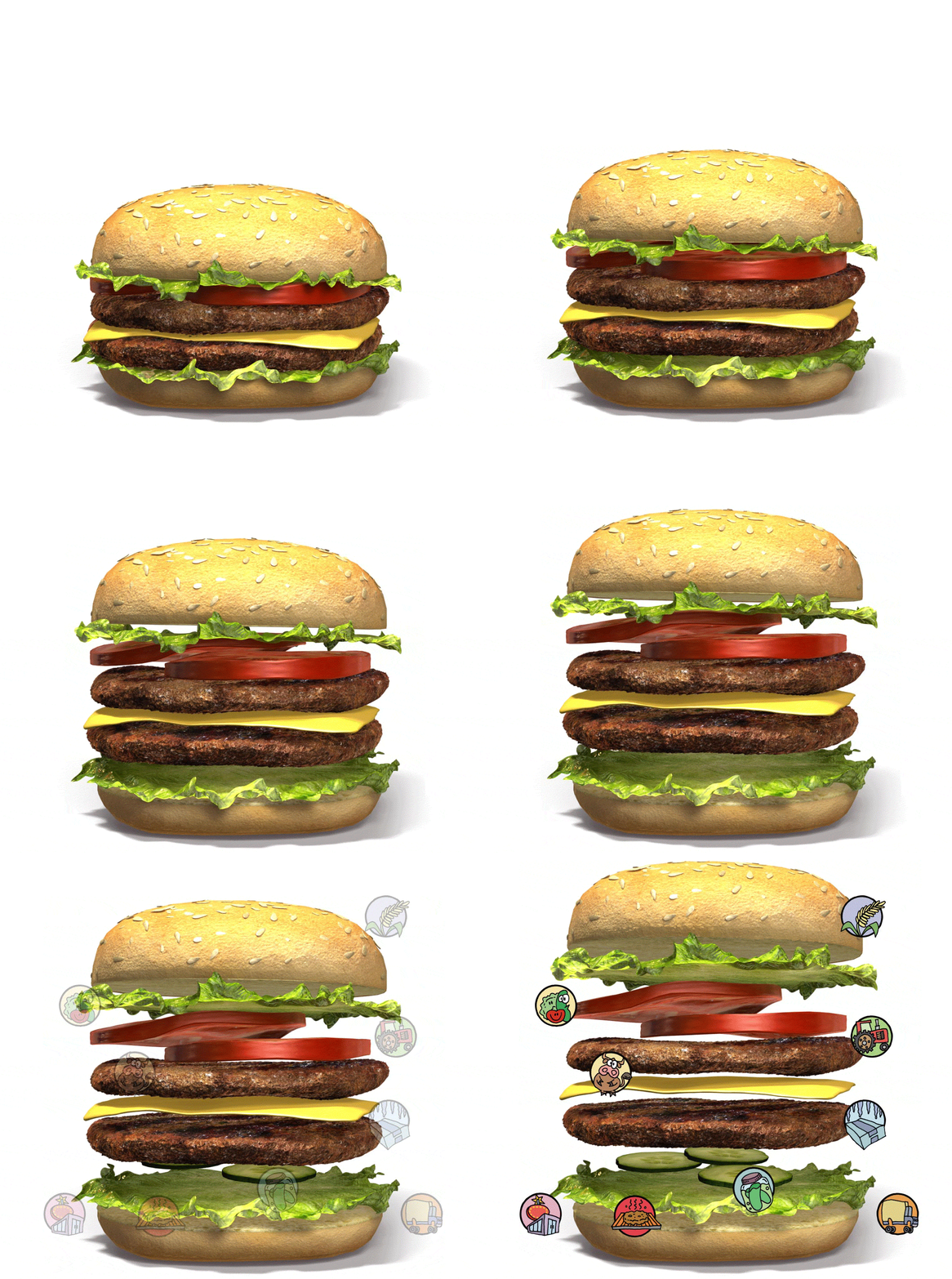

Growing and milling the wheat for the bun

Growing the tomatoes, lettuce, and cucumbers

Pickling the cucumbers to make pickles

Growing feed for the beef cattle

Feeding the cows that provide the milk for the cheese

Preparing and freezing the meat
Storing and transporting the ingredients of the cheeseburger
Cooking the cheeseburger
Running the restaurant where you buy the cheeseburger
Researchers in Sweden looked into this. They figured out the carbon footprint of just one cheeseburger. It is about eight pounds of carbon dioxide. So multiply that by all the cheeseburgers eaten in the U.S. in one year. They leave a carbon footprint at least as big as that left by all the SUVs now on the road.
▲ About 35 percent of all food gets thrown out. Where does it go? Into landfills. There, it sends carbon dioxide and methane gas into the atmosphere as it breaks down. What if we could do something useful with all that food?
The average person in the United States throws out about 185 pounds of plastic every year. (Think soda bottles, grocery bags, straws, and scores of other objects.) Where does it go? Much of it ends up in the oceans. There, it harms or kills animals and transports pollutants. What if we could do something useful with all that plastic?
Maybe we can.
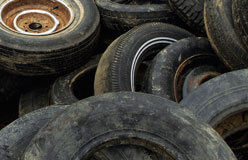
In January 2020, scientists at Rice University announced a process that turns carbon-based materials into graphene. Graphene is a material thought to be about 200 times stronger than steel. (Carbon-based materials include food, plastic, coal, and even rubber tires.) Adding a small amount of graphene to plastic, concrete, and metals increases their strength significantly.
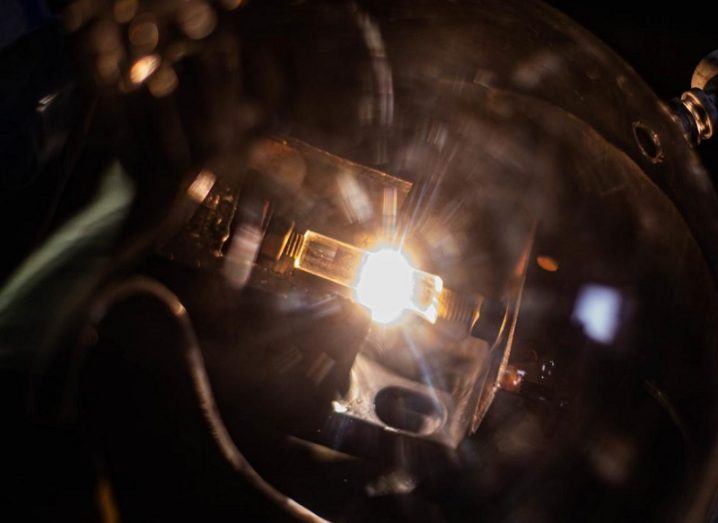
Until now, graphene has been too expensive to use this way. But a new process, called “flash graphene,” changes that. The process involves heating carbon-based materials to about 5000°F for less than a second. In that small amount of time, two things happen. The non-carbon materials disappear, and the carbon turns to graphene. The process is fast and cheap.
What’s the big deal? Using carbon-based materials to make graphene means less carbon dioxide and methane in the atmosphere. And the big winner is us.
Your Part
There are many ways to cut down your carbon footprint. One way is to use less energy. Another is to eat foods that need less energy to make.

▲ The way we light our homes and offices is changing. Compact fluorescent bulbs, or CFLs, use 75 percent less energy than standard bulbs. Plus, they last longer. Light emitting diode bulbs, or LED bulbs, use even less energy. They also last even longer. But they cost more. Talk with adults in your home about using CFLs or LEDs.
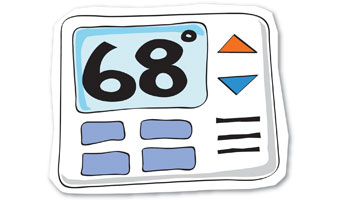
▲ A/C and heat are great. But there’s no need to keep a home freezing in summer and boiling in winter. Ask adults to keep the indoor temperature at 75°F in summer. Similarly, keeping it 68°F in winter is a good habit.
Help move furniture away from radiators and other heat sources. That way, the heat can go into the room. It won’t be absorbed by the furniture.
Your food has a big impact on your carbon footprint. How and where it’s grown are just the start. Packaging and moving it from where it’s grown to where you are takes a lot of energy. How can you help? Plant a vegetable garden. Talk with adults who buy your food about choosing food that is grown locally (within 100 miles of home).
▲ What are processed foods? They’re foods that are frozen, canned, or packaged. They have a big carbon footprint. You can reduce your own carbon footprint by eating fresh foods. Choose a baked potato instead of potato chips. Eat an apple instead of applesauce. Instead of buying dried fruit in a bag, eat fresh fruit.