Free
Do you have a trash can in your room?
Is it full now? Every day, every person in the United States throws away about three and a half pounds of trash. In a year’s time, all that trash would fill a hole the size of a football field. Guess how deep that hole would be. How about 100 miles deep! It would fill enough garbage trucks to reach halfway to the Moon. That’s in just one year. The trash includes 60 million plastic bottles and almost 2 million aluminum soda cans. In just one day, each person chucks out almost two pounds of paper. Where does it all go? Landfills. Landfills in the United States are filling up faster and faster. The costs and problems of opening new landfills are huge. That’s why conservation is such big deal.
Welcome to the Landfill
Most garbage goes to landfills. A landfill is a place just for trash. To keep animals away, new trash is covered with dirt every day. ▼
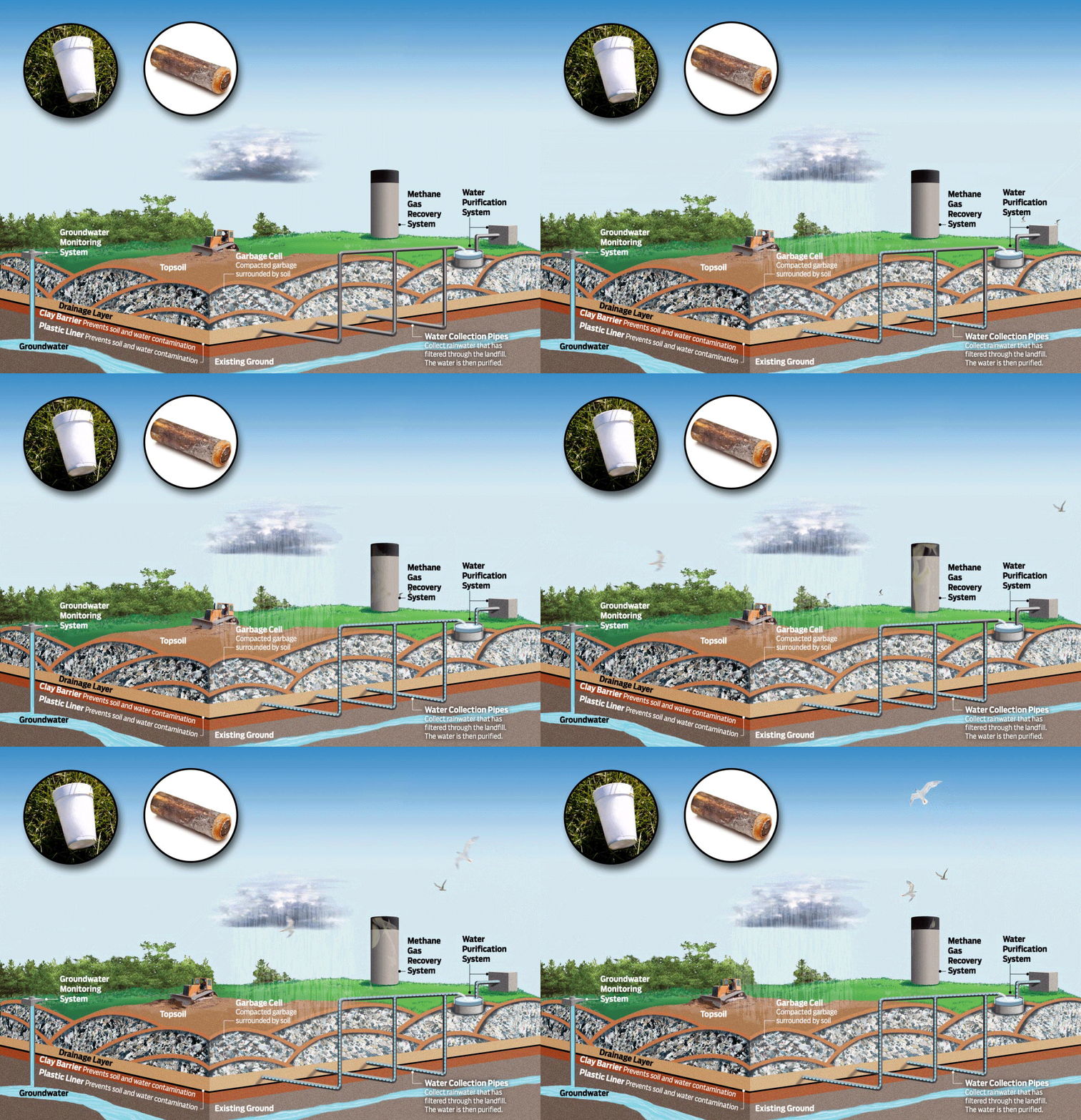
Landfills aren’t always quiet. Sometimes they can explode! Here’s how. Bacteria break down the trash. As they do that, the bacteria make a gas called methane. You can’t see or smell methane, so it’s hard to know if it’s even there. If a lot of it builds up under the trash, it can explode. So landfills have pipes to collect the gas and carry it away. Some landfills even store and sell the methane as natural gas, which can be used to heat homes and businesses.
The trash in a landfill is kept dry and covered. So it breaks down very, very slowly. A Styrofoam cup that goes into a landfill today will still be there 500 years from now.
Ever throw a battery or paint into the trash? It’s not a good idea. Batteries, nail polish remover, spray cans, and other toxic trash give off dangerous chemicals. Landfills are mostly dry, but some water gets in anyway. Then it works its way down through the layers of trash and dirt. As it seeps through, it picks up those chemicals. Pipes carry away most of the water in a landfill. But nothing’s perfect. Dangerous chemicals from our trash can get into the soil under and around a landfill.
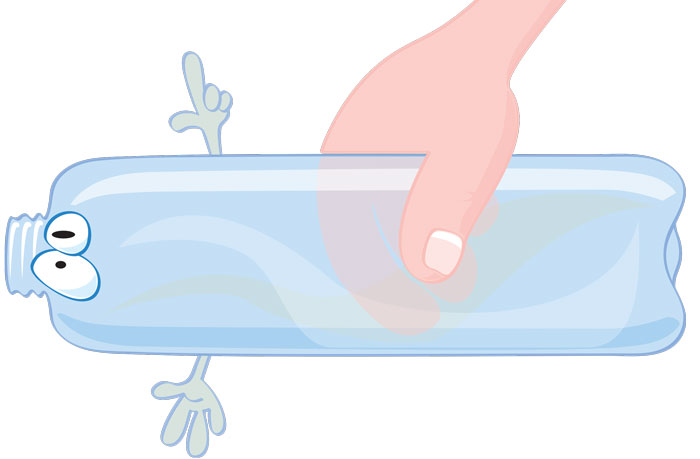
Reduce the amount of garbage you make.
Reuse things instead of tossing them.
Recycle paper, plastic, glass, and cans.
• Fix something instead of throwing it away.
• When you buy something, carry it home without a bag. Or bring your own bag.
• Try not to use throwaway forks and cups.
• Refill empty bottles of water. Don’t buy new ones.
• Use both sides of every sheet of paper. Recycle scrap paper.
• Buy and use things that are made to last.
• Buy goods that need less wrapping and packaging.
• Reuse empty jars as holders for things like pencils and pens.
• Don’t just throw out food waste and grass clippings. Use them to make compost, which turns into new soil.
• Separate your trash so you can recycle paper, glass, aluminum cans, and plastic.
• Take old batteries, cell phones, and other electronic equipment to a recycling center.
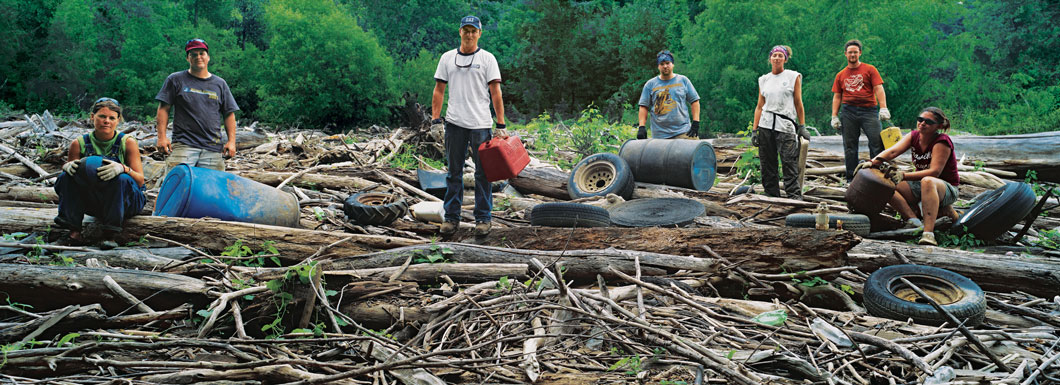
▲ Ever pick up trash? Here’s a guy who’s picked up a LOT of it. Chad Pregracke was still in his teens when he started cleaning up the Mississippi River. He began by cleaning up 100 miles of the shore. He recycled more than 45,000 pounds of trash. The next year, 1998, he founded Living Lands and Waters (LL&W). It protects, preserves, and restores our major rivers and watersheds. Now it has 14 members and more than 70,000 volunteers. So far, they’ve cleaned up 8 million pounds of junk along the Mississippi and Illinois Rivers. Thanks to their hard work, more and more people see how much we need to preserve our rivers.
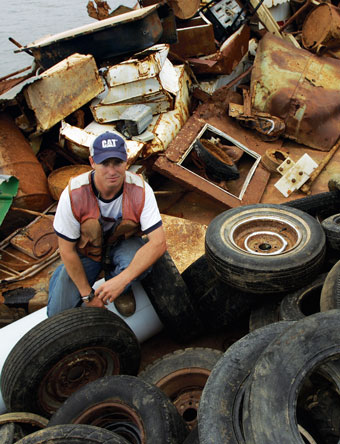
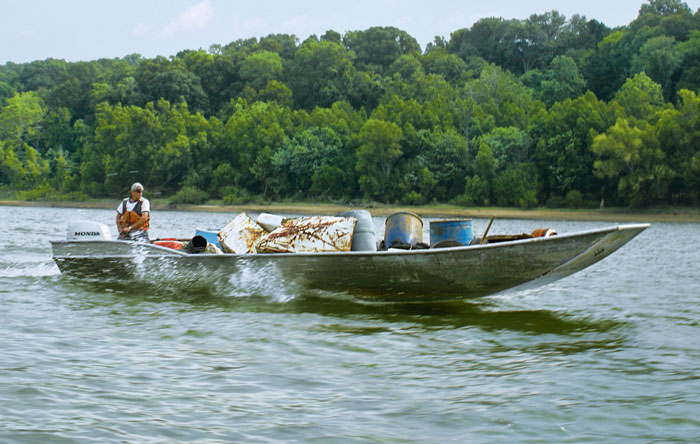
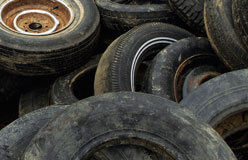
“Most people think we just pick up garbage. They forget what the garbage does to the wildlife in the rivers. A single car tire contains seven gallons of petroleum, and a fridge’s compressor is loaded with PCBs [polychlorinated biphenyl—a dangerous chemical waste]. We collect thousands of these a year.”
—Chad Pregracke
A Word About Recycling
• Why recycle? Lots of reasons! Recycling reduces how much trash goes into landfills. It also helps protect the environment, and it conserves energy and other resources.
• E-waste is old electronic stuff, like computers and cell phones. It contains lead and mercury. Those are toxic chemicals that should never go into a landfill. So send your e-waste back to its manufacturer. You can also take it to special centers where they recycle e-waste.
• Here’s how recycling helps. If you recycle one aluminum can, you’ve saved enough energy to power three hours of TV watching!
• If we recycled all our paper, we’d cut our trash by 40 percent. That would cause less pollution. It would also save water, energy, and trees. Trees take a long time to grow, so we shouldn’t just use them up and toss them.