Free
Problems between the colonists and Britain began in 1763. The Americans had fought for the British against France in the French and Indian War (known as the Seven Years’ War when it spread to Europe).
Britain won the war. France was forced to surrender Canada and all claims to the Ohio and Mississippi Valleys. But the war left Britain with huge debts. Britain wanted the American colonists to help pay for the war and for the soldiers stationed in the colonies to protect them. The British government decided to tax the colonists. Even though Americans had the lowest tax burden in the British Empire, many colonists felt the British government had no right to tax them because the colonies were not represented in the British Parliament.
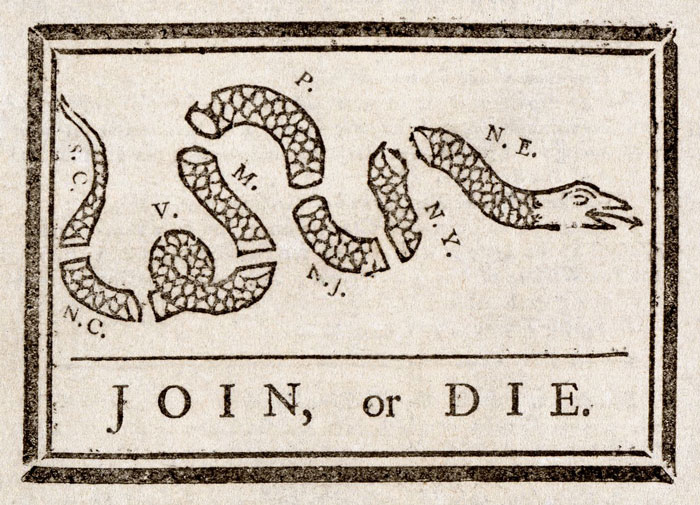
In 1763, the British Parliament passed the Sugar Act, which taxed all sugar, molasses, and rum brought to the colonies from non-British sources. This cartoon by Ben Franklin is a plea for the colonists to unite against the common enemy. The cartoon was originally used to encourage the colonies to unite during the French and Indian War. ▶
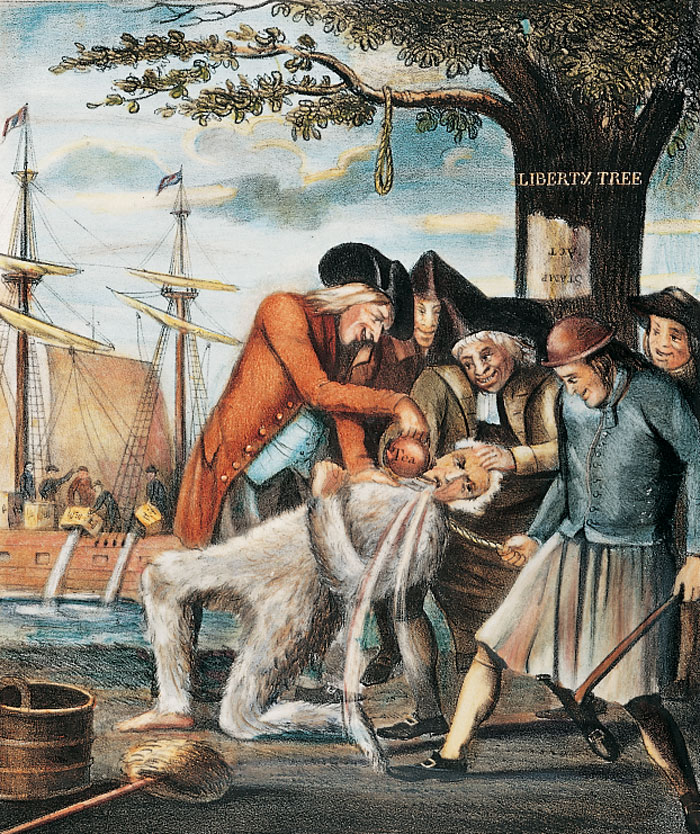
Parliament soon ended the Stamp Act, but it taxed paper, lead, glass, paint, and tea. Colonists again refused to buy British goods, and British merchants lost money and complained. By 1770, the British were only taxing tea. ▶
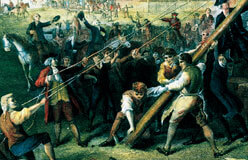
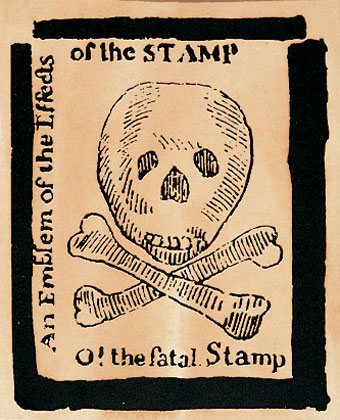
◀ The 1765 Stamp Act required that stamps or special stamped paper be bought and attached to many printed items, including newspapers and legal documents, before they could be sold. This law enraged the colonists. “No taxation without representation” became their cry. Angry colonists refused to buy the stamps. Sometimes they tarred and feathered officials who tried to collect the taxes!
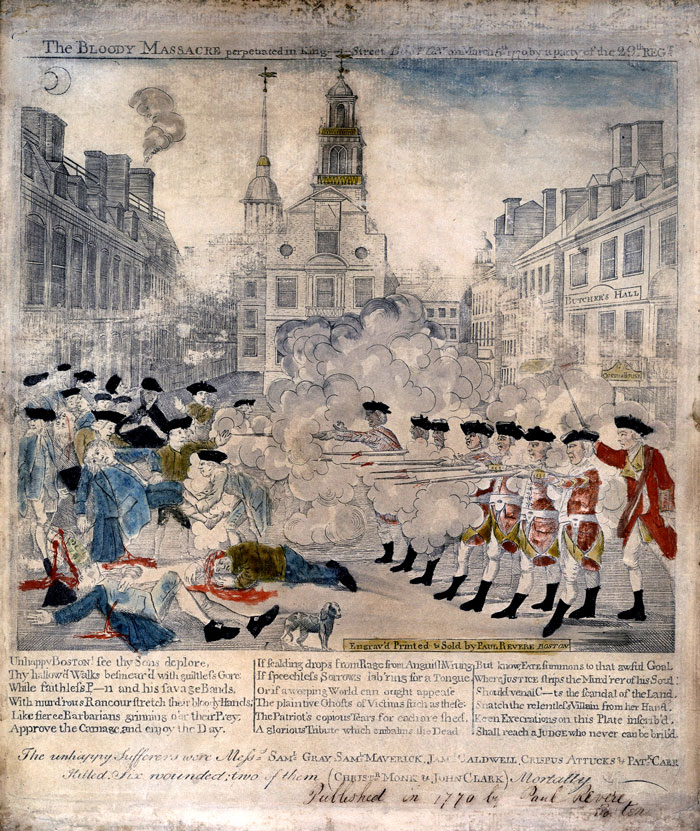
▲ Until 1770, the fight between the colonists and the British was mostly a war of words. That changed in Boston in 1770, when a pushing and shoving crowd began throwing chunks of ice and attacking British soldiers with clubs. The frightened soldiers fired into the mob, killing five people. Boston colonists called this the Boston Massacre. During their trial, the soldiers were cleared of murder charges, but Patriots used the incident to fuel anger against the British. Patriots were people who favored independence for the American colonies. They printed posters like the one shown here, by Paul Revere, which shows an inaccurate version of the event.
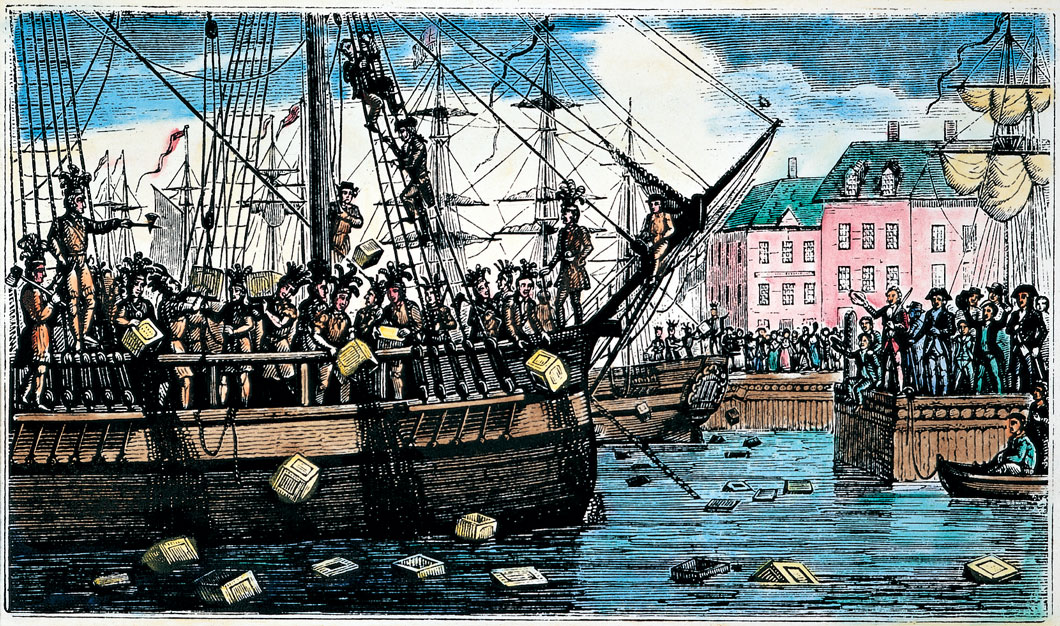
▲ The 1773 Tea Act gave British merchants a monopoly on tea sold to the colonies. To protest, Patriots dressed up as Native Americans and dumped tons of British tea into Boston harbor. Furious British officials punished Boston for its “tea party” by closing Boston harbor to all ships and taking many powers away from the Massachusetts legislature.
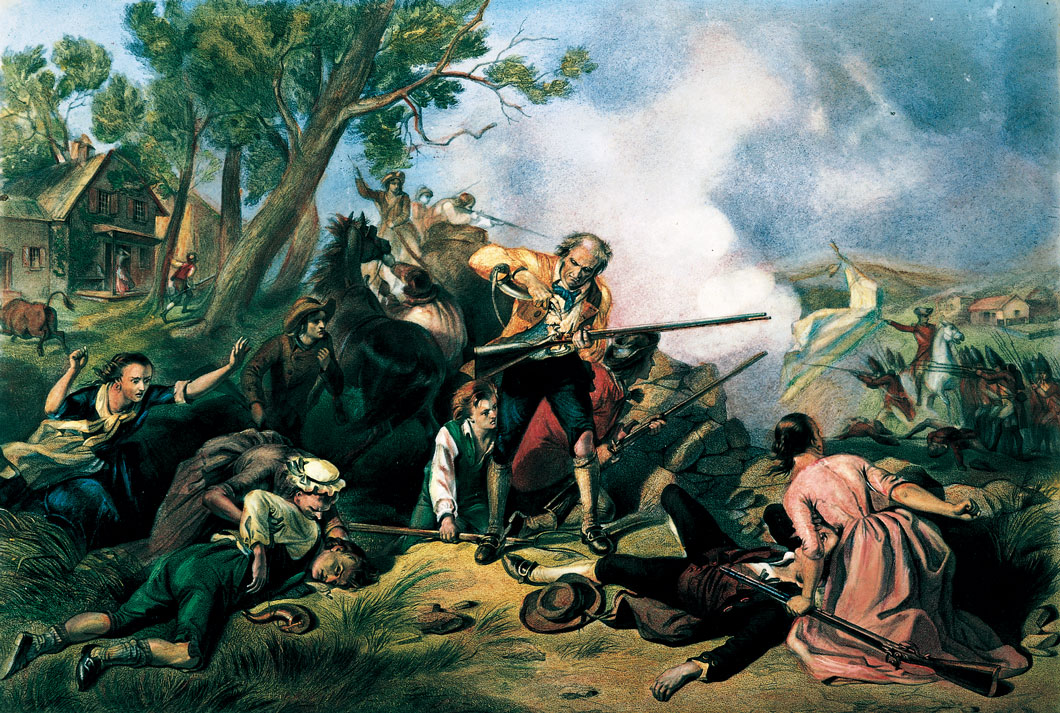
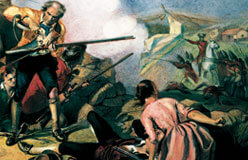
▲ The first battles of the war took place in Massachusetts. On April 19, 1775, British soldiers and American volunteers shot at each other in the towns of Lexington and Concord, and the war was on!
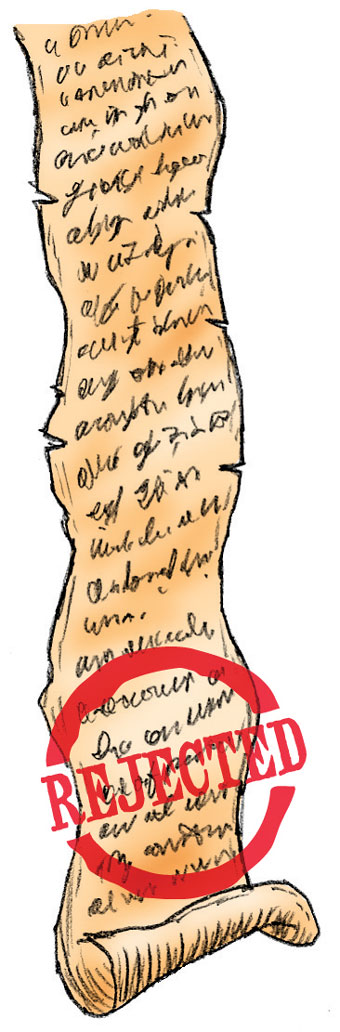
In May 1775, 56 delegates met in Philadelphia at the Second Continental Congress to show support for Massachusetts. They wrote a letter to King George III, called the Olive Branch Petition. It listed their complaints and asked for his help. They also called for a boycott of trade with Britain to protest taxes. The following year, the king rejected the petition. ▶
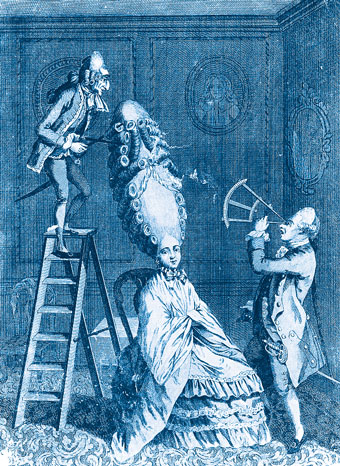
▲ Before the war, wealthy men and women wore wigs. Patriot men gave up their wigs and wore their hair long or sometimes tied back in a ponytail. Many Patriot women tried a new style that included 13 curls at the neck, one for each of the 13 colonies.