Free
Imagine the period of time from one birthday to the next. Think about the things you did, the places you went, the people you saw. It probably feels like it was a long period of time.
Now imagine 12,000 of those periods. Twelve thousand years ago, as the ice from the last ice age melted, humans and animals moved into present-day Wisconsin. Scientists call these first inhabitants of our state the Clovis people. What we know of Clovis culture is based mostly on the discovery of their stone tools.
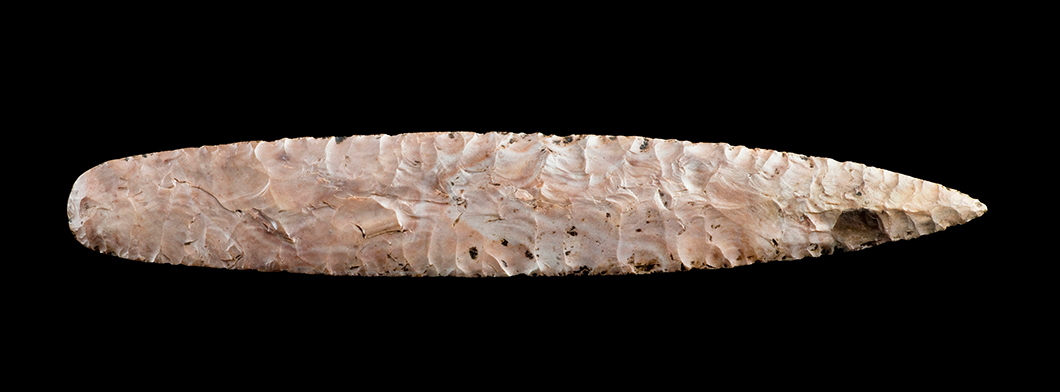
▲ Clovis tools include spearpoints used for hunting and scrapers used for cleaning animal hides. The spearpoints were made by hitting a rock hard enough that flakes broke off. Eventually the rock would take the shape of a point, which was then tied to a stick to make a spear. Early people may have used spears similar to these to hunt large animals like mammoths and mastodons. Scientists have found evidence that plants were also part of early people’s diet. Known as hunter-gatherers, Clovis people didn’t stay in one place for long; instead, they followed the animals, which they needed for their own survival.
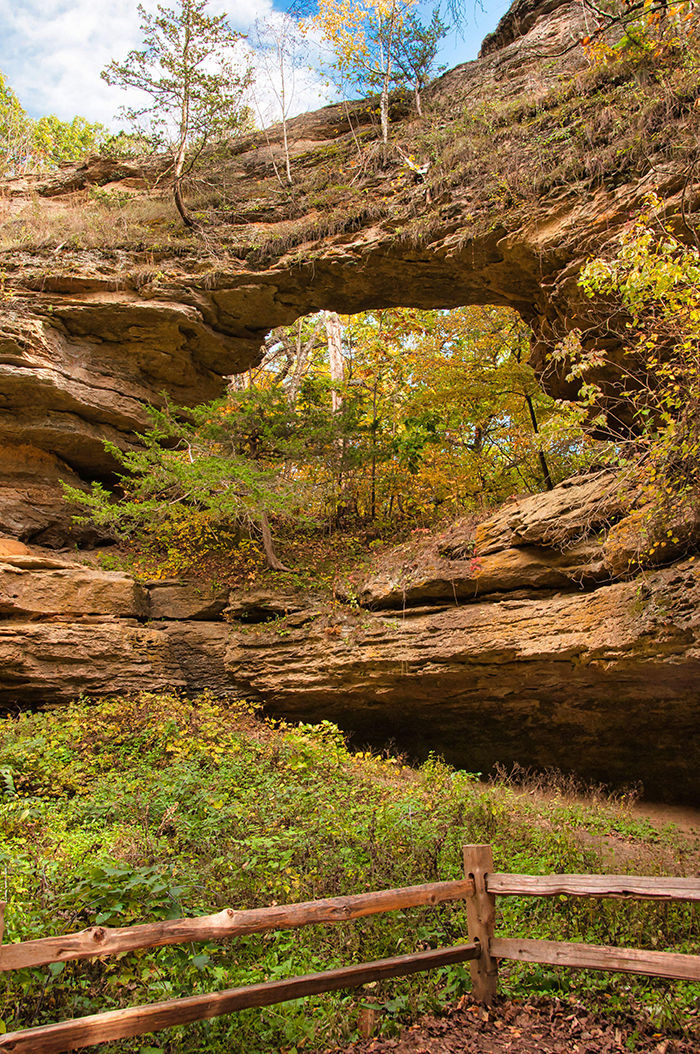
▲ The Clovis people traveled long distances to find the stone needed for their tools. One of those places was Silver Mound in west-central Wisconsin, where they dug pits into the mound to find a very hard kind of sandstone called quartzite. While collecting the stone, they would stay in rock-shelters, which were shallow caves in the side of the mound.
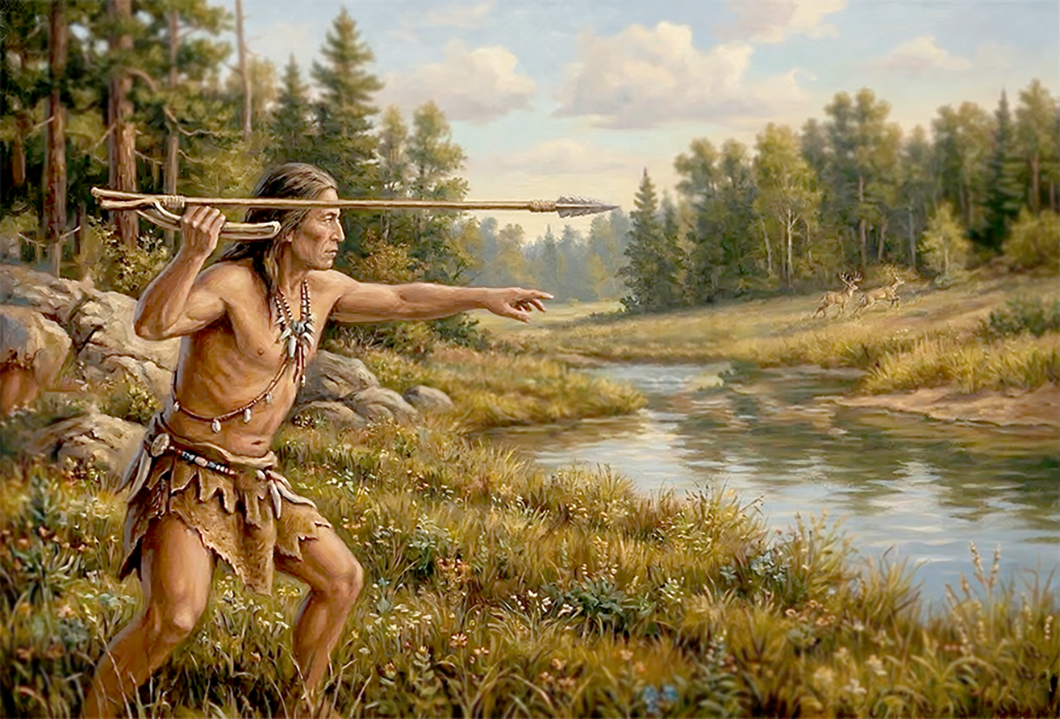
▲ As the climate changed, people adapted. Their adaptations marked the start of the Archaic Period, around 10,000 years ago. By this time, mammoths and mastodons were becoming extinct, so people hunted smaller animals like elk and moose as well as rabbits, birds, and fish. Deer were especially important because they were a source of meat, hides for clothing and shelter, and bone used for making tools. There’s also evidence of tamed dogs that probably helped with hunting and guarding the camp. Scientists think an atlatl, or spear-thrower, was first used during this time.
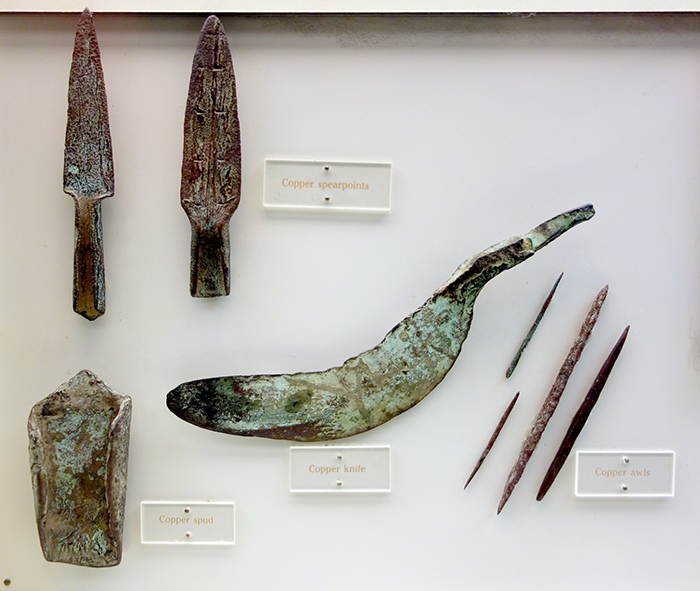
Copper objects dating back 3,500 or more years have been found in the eastern part of the state and along the southern shores of Lake Superior. The copper used to make these objects was mined there as well. Objects include fishing hooks, points, and wedges. Bracelets, rings, and beads have also been discovered. Scientists estimate that millions of tons of copper ore were mined during this time in Wisconsin. Copper ore is rock that contains copper. ▶
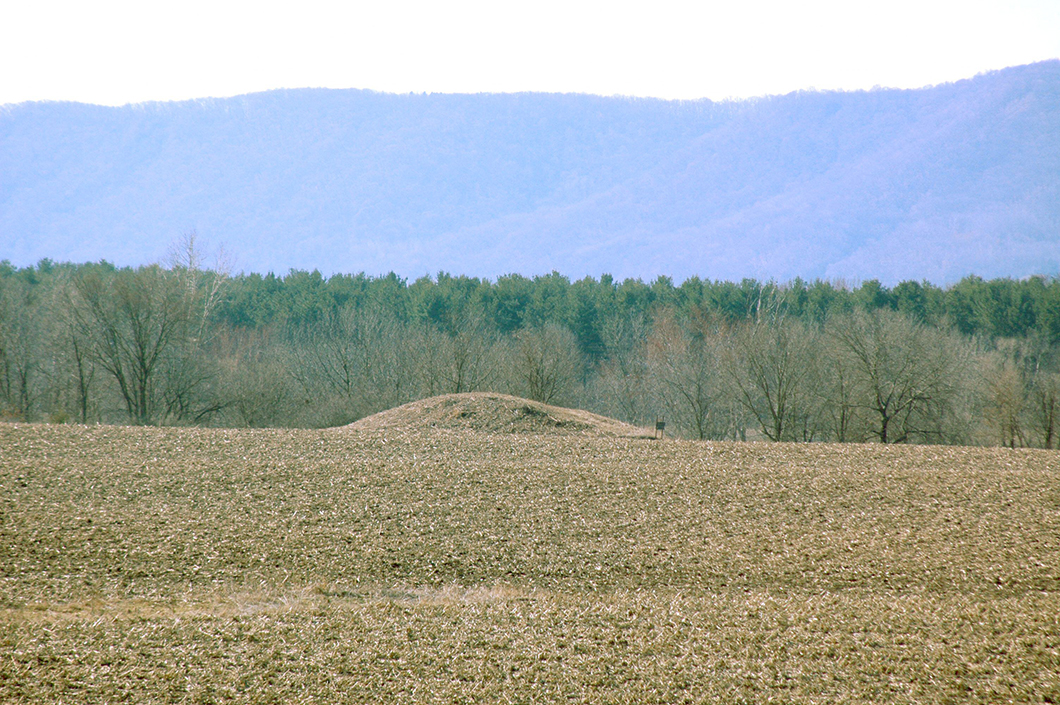
▲ The Woodland Indians built mounds, some of which were cone-shaped. Others – called effigy mounds – were in the shape of bears, birds, and other animals. At 90 feet wide and 11 feet high, Nicholls Mound in western Wisconsin is one of the biggest. Many mounds were used for burials. Some contained special objects, like stone knives, copper axes, and ornaments. These were often made from materials from as far away as the Rocky Mountains.
Think Piece!
How do you think materials from the Rocky Mountains ended up in Wisconsin?
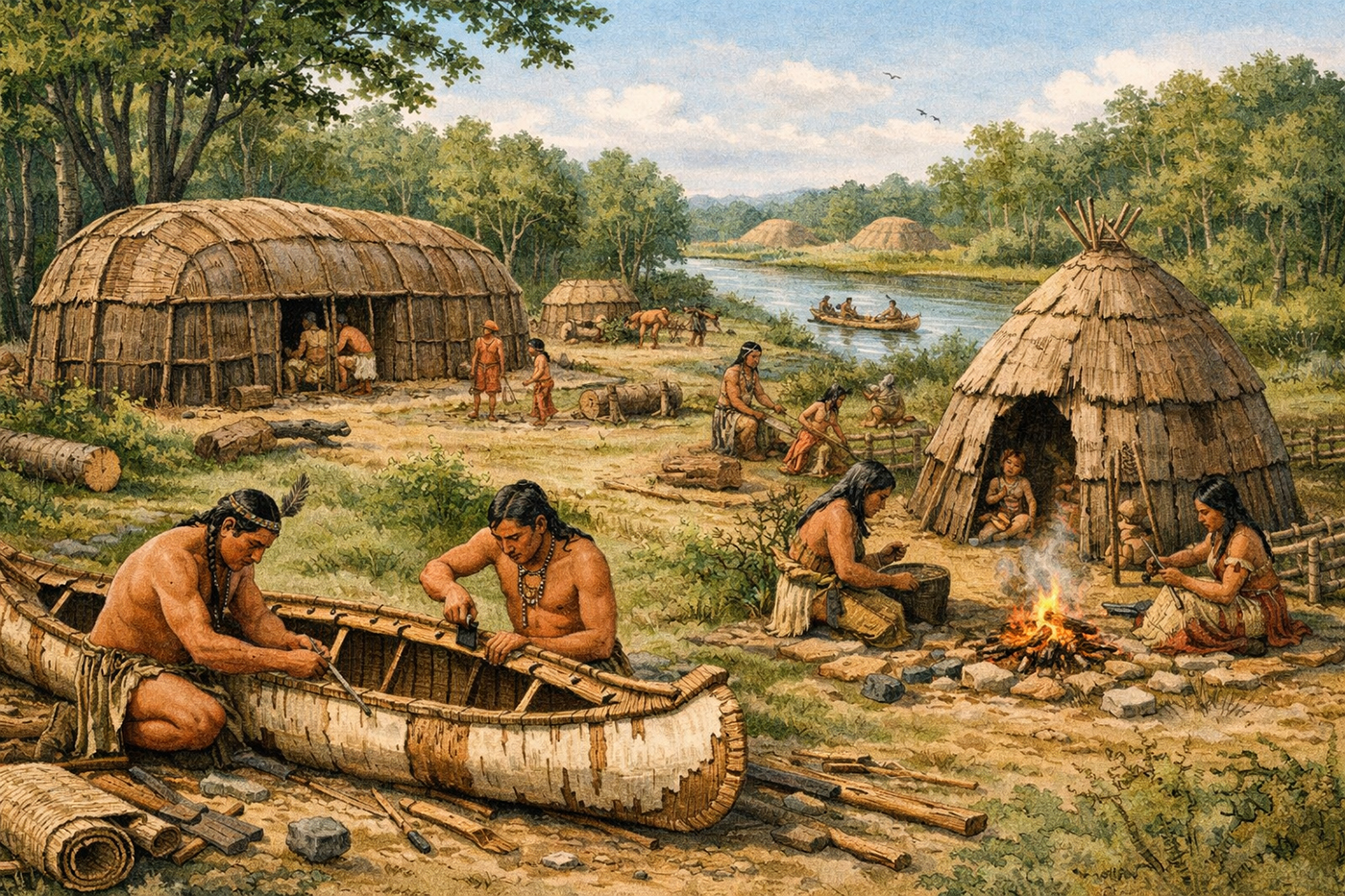
About 3,000 years ago, Mississippians from present-day Illinois probably moved north to Wisconsin and shared their culture. One of the changes they brought was farming, especially large farms of corn and squash. With a steady source of food, villages of 50 to 100 people could form. One of them was Aztalan, on the banks of the Crawfish River. ▶
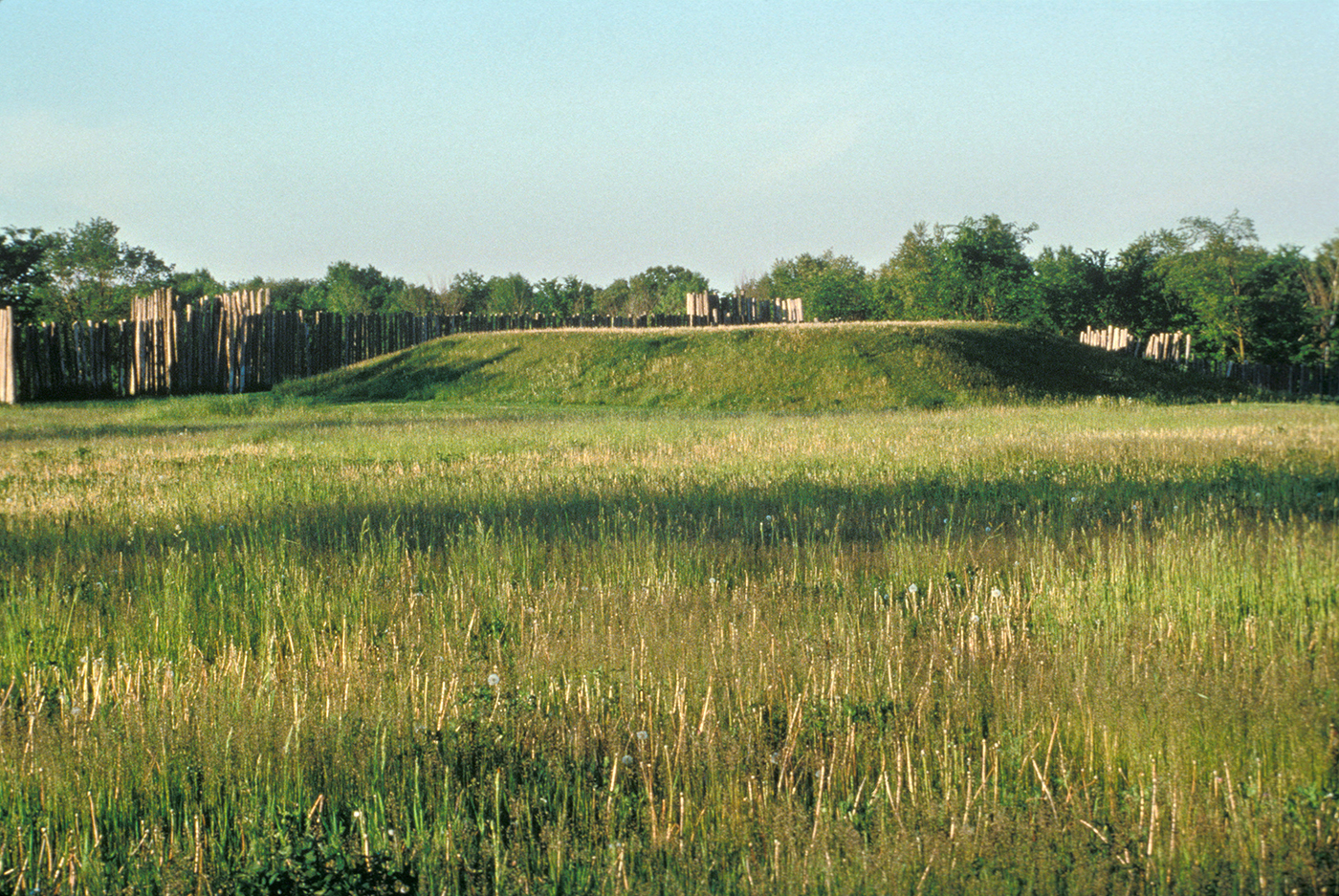
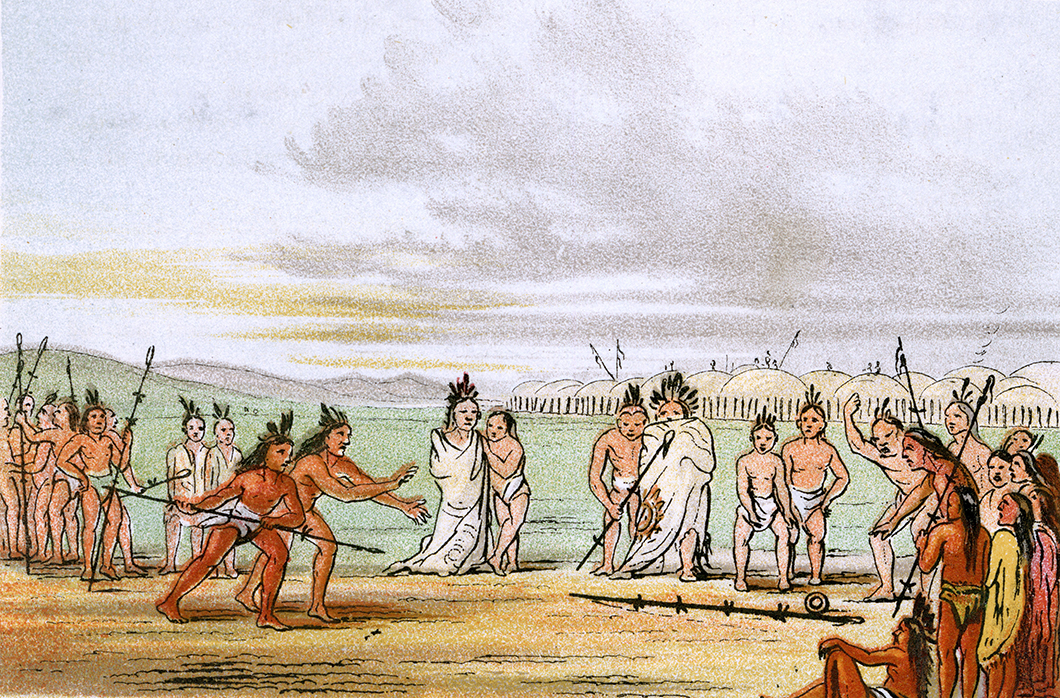
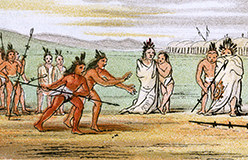
▲ Mississippians in Aztalan played a game called tchung-kee, or chunkey, with a small stone disk and a spear. One player rolled the disk while others threw their spear toward it. The player whose spear landed closest to where the disk stopped rolling would be the winner.
The Oneota were present in southern Wisconsin when Europeans arrived in the 1600s. The Oneota were farmers who lived in villages of 100 or more along the shores of large rivers and lakes. The villages had pits used to store crops and, later, garbage. Archaeologists have learned a lot about the Oneota from the trash found in these pits. Unlike earlier peoples, the Oneota buried their dead in cemeteries rather than building burial mounds. ▶
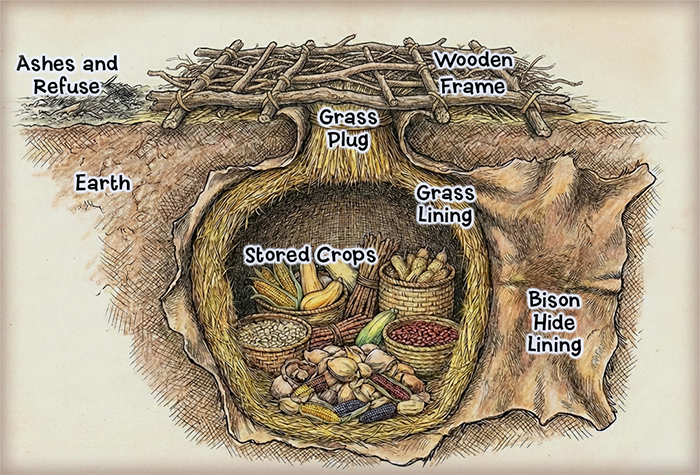

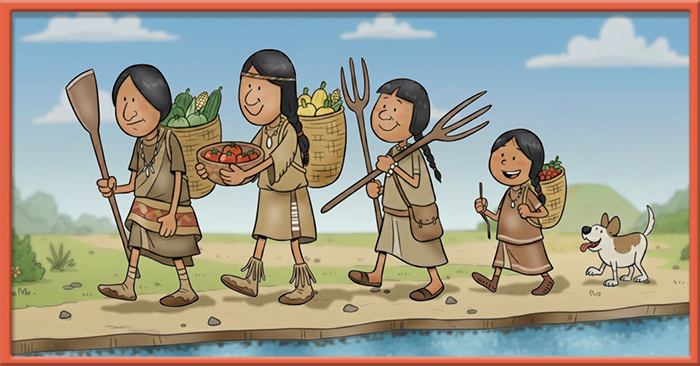
◀ Some scientists believe that the Oneota were the region’s first true farmers. They grew crops of corn, beans, and squash in ridged fields. The ridges were small hills made by piling soil in long, parallel heaps. To protect the crops from floods and frost, they planted corn and beans along the top of a ridge. Corn stalks supported the bean plants as they grew while squash covered the ground and kept weeds away.