Free
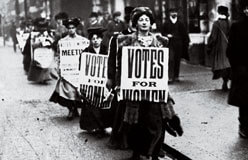
The suffrage movement lasted over 70 years. It needed strong leaders to keep it going.
Here are a few of the women who worked all their lives to get women the vote.
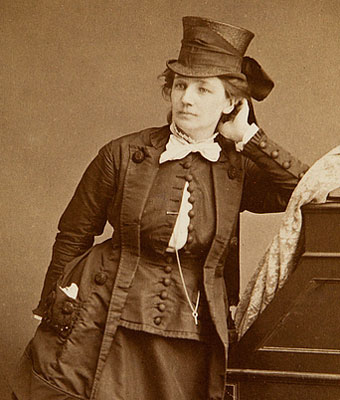
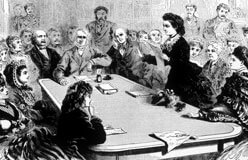
◀ Victoria Claflin Woodhull (1838–1927) and her sister refused to act the way society thought women should. With help from a rich backer, they became the first female stockbrokers on Wall Street. In 1870, Victoria ran for president. She had no hope of election. She used her campaign to call attention to the issues she believed in. Other suffragists avoided Woodhull because of her unusual behavior.
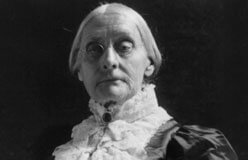
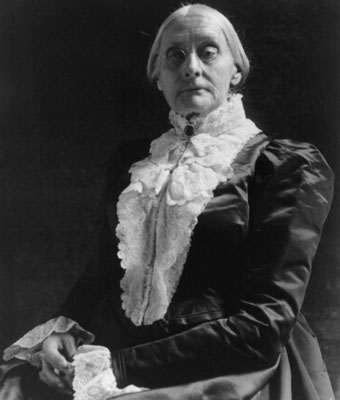
Susan B. Anthony (1820–1906) was born into a Quaker family. The family was active in the antislavery movement. Anthony taught school for 15 years. After meeting Elizabeth Cady Stanton, she made women’s suffrage her life’s work. She traveled widely and gave many speeches. She asked every U.S. Congress from 1869 to 1906 to give women the right to vote. ▶
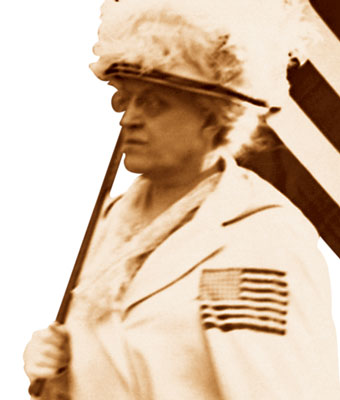
◀ Carrie Chapman Catt (1859–1947) became president of the National American Woman Suffrage Association in 1900. She took over from Susan B. Anthony, who was then 80 years old. In 1902, Catt organized the International Woman Suffrage Alliance. For nine years, she traveled the world. She wanted to bring suffrage to other countries. Back in the U.S., she pushed for the “Winning Plan.” It brought American women the vote. Afterward, Catt was a founder of the League of Women Voters.
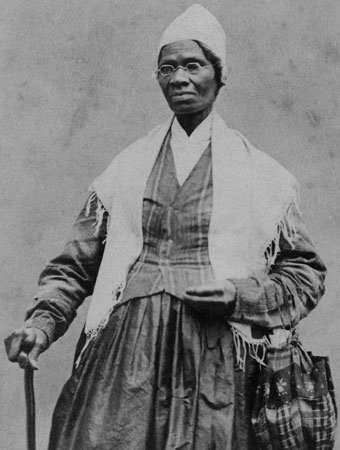
Sojourner Truth (1797–1883) was born a slave. When New York outlawed slavery in 1828, she was freed. She traveled widely, speaking for abolition. In 1850, she went to the first National Woman’s Rights Convention. She became devoted to suffrage. At a convention in 1851, a clergyman claimed that women were too weak and helpless to be allowed to vote. Truth answered him with her famous “Ain’t I a Woman?” speech. She argued for the 15th Amendment to include women. ▶
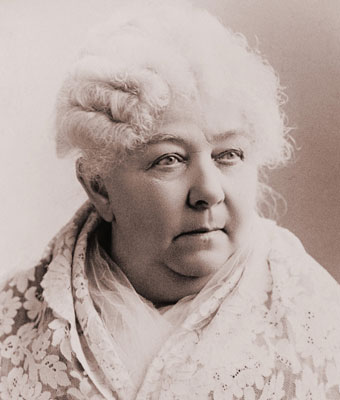
◀ Elizabeth Cady Stanton (1815–1902) is sometimes called the “mother of the suffrage movement.” She helped organize the Seneca Falls convention. She also wrote many of Susan B. Anthony’s speeches. The two women met in 1851. They sometimes disagreed over how the movement should be run. But they stayed friends for life. Stanton wrote Woman’s Bible, which criticized Christianity’s limited view of women.
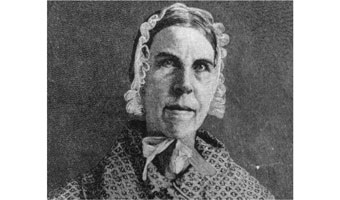
Sarah (1792–1873) and Angelina (1805–1879) Grimké were born in South Carolina. Their family owned slaves. The sisters moved north and became abolitionists. In the 1830s, they were criticized for speaking before mixed groups of men and women. They realized that they couldn’t fight for slaves’ rights until women were also free. They joined the suffragist movement. In 1870, when Sarah was 79 and Angelina was 66, they marched through a snowstorm to vote in a local election. They marched that day with 42 other women. Strangers yelled at them. ▶
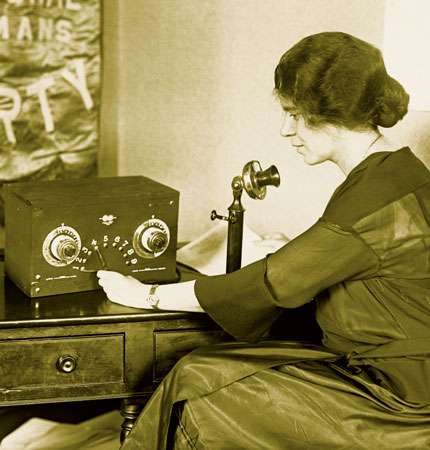
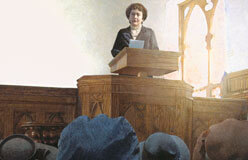
Alice Paul (1885–1977) took part in the more radical protests of the English suffragists. Then she came back to the U.S. In 1917, she founded the National Woman’s Party. She based protests on how they were done in England. She was sent to jail three times. After American women won the right to vote, she earned a law degree. In 1923, she proposed an equal rights amendment to the Constitution. She spent the rest of her life fighting for it. Here, from the Capitol, she broadcasts news about the National Woman’s Party.