Free
When this country began more than 200 years ago, almost everyone thought that a white woman’s job was to take care of her home and family.
Enslaved African-American women were expected to do hard labor in the fields or work in plantation homes and take care of their own families.
Married women couldn’t own property, such as land and buildings. They couldn’t keep any money they earned, either. In rare cases of divorce, the father got to keep the children. Women couldn’t sit on juries. They couldn’t defend themselves in court. They also couldn’t run for political office. They weren’t considered smart enough to vote.
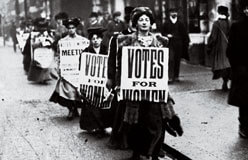
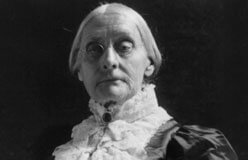
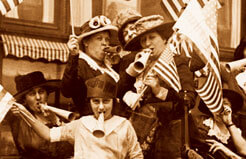
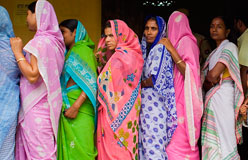
Many poor free women were recent immigrants to America. They usually had to work outside the home. Even rich women often took care of their husbands’ businesses when the men were away. In the 1800s, more and more women began to see that they were just as capable as men. Therefore, they thought that they should have the same legal rights as men. They realized that being able to vote was an important first step toward getting other rights. They also knew that they themselves would have to lead the movement that would win them suffrage—the right to vote. These women became the suffragists.
Check It Out!
The word suffrage means “the right to vote.” So what is the difference between a suffragist and a suffragette?
Both terms refer to women who fought for the right to vote. The suffix -ette is sometimes placed at the end of a word to indicate a female. For example, a female usher is called an usherette. However, many women now believe the suffix -ette is unnecessary and insulting, especially since it also means “small,” for example, statuette.
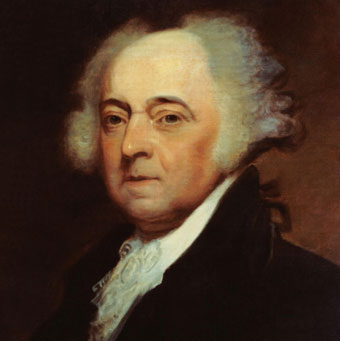
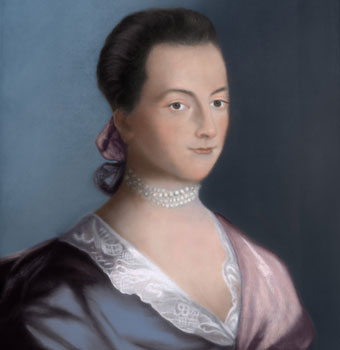
◀ John Adams had signed the Declaration of Independence. His wife, Abigail, was smart, self-educated, and funny. In 1776, while John was at the Continental Congress, she wrote to him: “By the way, in the new code of Laws which I suppose it will be necessary for you to make, I desire you would Remember the Ladies, and be more generous and favorable to them than your ancestors. Do not put such unlimited power into the hands of the Husbands.” John wrote a joking reply to her. But he later wrote to a male friend, “But why exclude women [from the vote]? You will say because their delicacy renders them unfit for practice and experience in the great businesses of life, and the hardy enterprises of war....” John knew otherwise. Abigail had run their farm for months while he was away on government business.
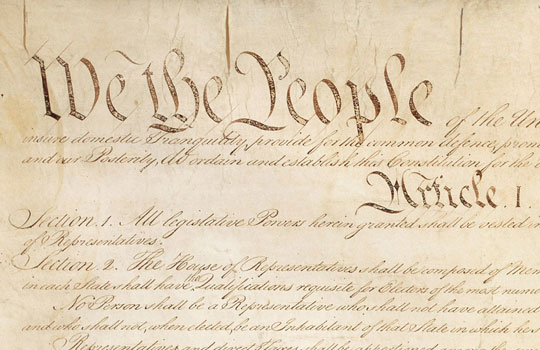
The Constitution was written in 1787. The men who created it let each state decide who could vote in that state. There were 4 million people in the original 13 states. But only 4 percent of them could vote. That’s because 2 million women and 1 million enslaved persons couldn’t vote. Neither could anyone under the age of 21 or anyone who didn’t own property. But when it came time to figure out how many representatives a state would get in Congress, slaves were counted as three-fifths of a person. ▼
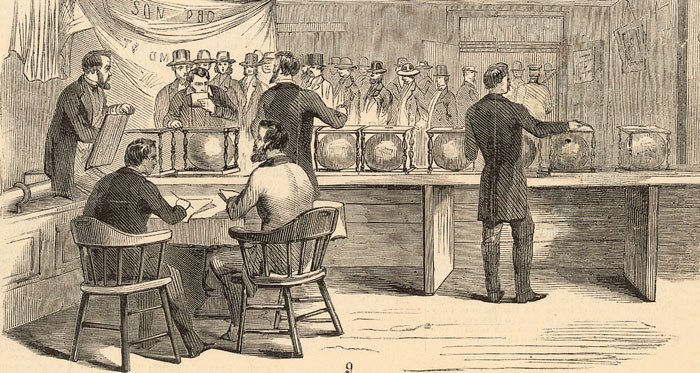
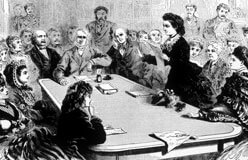
The Constitution allows for changes. A change to the Constitution is called an amendment. Some suffragists worked to get individual states to let women vote. Other suffragists fought for an amendment to the Constitution that would give the right to vote to all women in the United States. ▶