Free
The events of September 11, 2001, took place in a matter of hours, but they left behind deep and enduring scars on individuals and the country as a whole.
People whose lives were directly affected by the attacks may have their own personal ways of remembering that day. Communities were quick to create impromptu memorials, while the nation planned and built monumental places of remembrance. These are all ways people have honored victims of the attacks and pledged to remember what happened that day as a way of never letting it happen again.
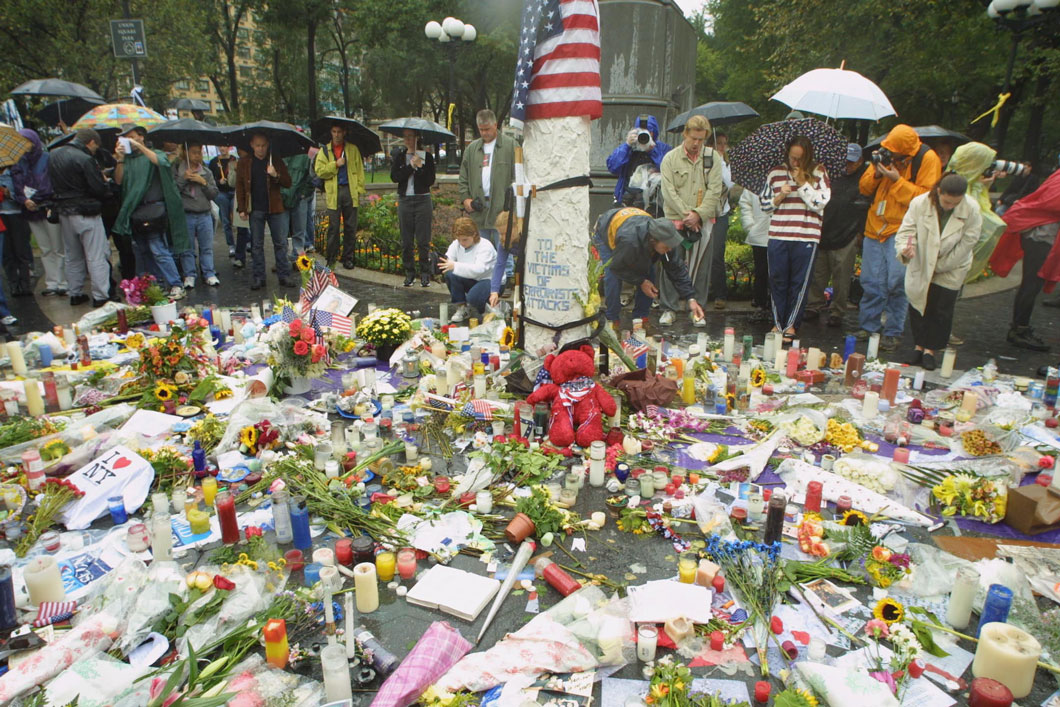
▲ Memorials sprang up spontaneously all over New York City and communities throughout the country. Flowers, flags, signs, candles, photographs, drawings, trinkets, tributes, articles of clothing. They appeared in Shanksville and around the Pentagon in Washington, D.C., too. People gathered at these places as well. They included those who had lost someone in the attacks – perhaps a family member or friend – and those who wanted to share the deep emotions the attacks brought out.

▲ They called it the “Concert for New York City.” On October 20, 2001, famous performers put on a show at Madison Square Garden in Manhattan. It was their way of honoring the first responders from the New York City Fire Department, the New York City Police Department, and their families, as well as the victims of the attacks and those who had worked on the rescue and recovery efforts. World-known musicians like organizer Paul McCartney participated, along with Rudy Giuliani, New York City’s mayor at the time, and many athletes. A month earlier, some of the same musicians had come together for a televised benefit concert called “America: A Tribute to Heroes.” Bruce Springsteen opened the concert saying, “This is a prayer for our fallen brothers and sisters.” He continued by performing a new song, “My City of Ruins.”
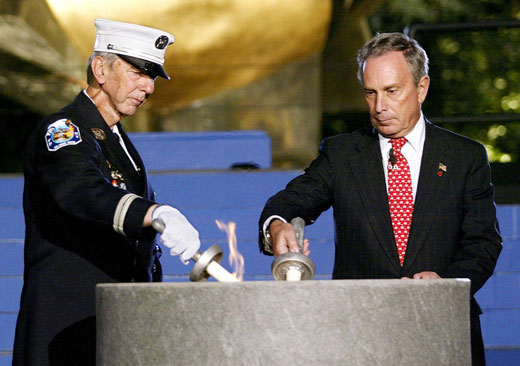
◀ Every year on 9/11, the names of the victims are read aloud at a ceremony in Manhattan. On September 11, 2002, the first anniversary, Mayor Michael Blumberg lit an eternal flame in memory of the victims. President and Mrs. Bush, who were at Ground Zero for that anniversary, lay a wreath honoring the victims at the site of the former World Trade Center. On the wreath was a plaque that read, “Every life taken here, every act of valor performed here, the nation holds in honored memory. — George W. Bush.”
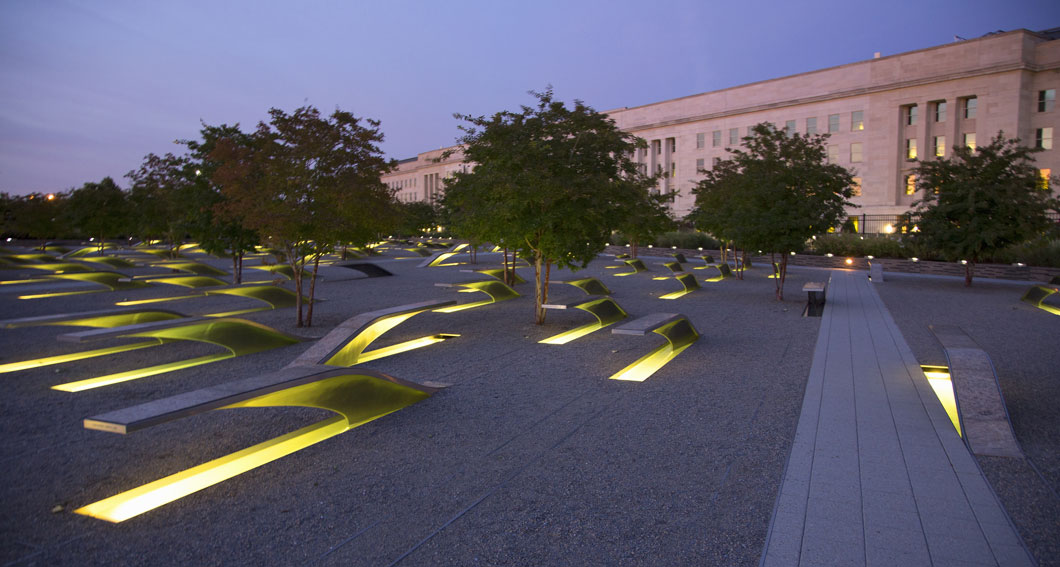
▲ A 9/11 memorial at the Pentagon officially opened on September 11, 2008. There are 184 benches to honor each of the 184 victims. A lighted pool of flowing water under each bench illuminates the memorial park. The benches are positioned to show whether the person was a passenger on Flight 77 or inside the Pentagon. Visitors face the sky when reading the name of a passenger. They have the Pentagon in view when reading the name of someone who was inside the building.
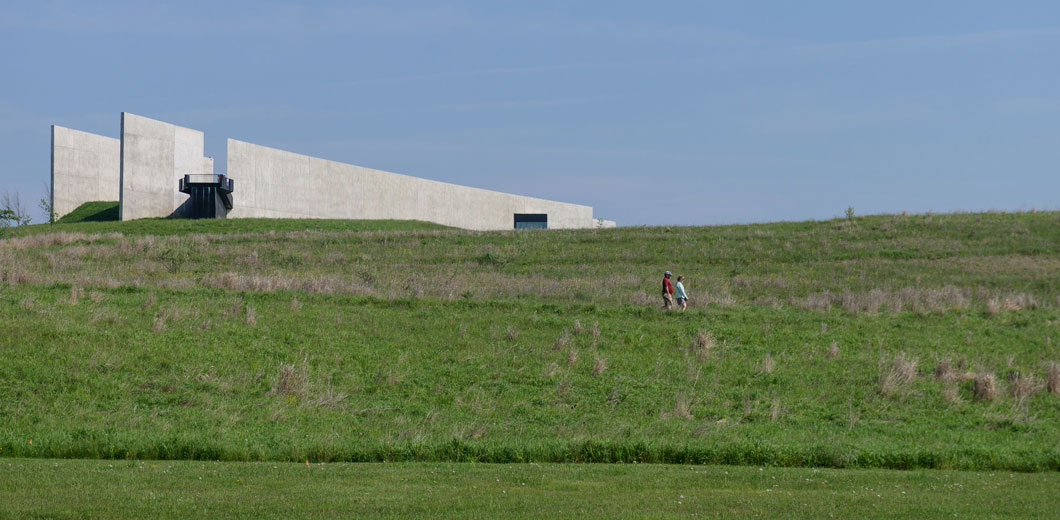
▲ A wall of names separates visitors from the sacred ground where Flight 93 went down in Somerset County, Pennsylvania. The memorial opened on September 11, 2011. Each year since then, the names of the 40 passengers and crew members on the flight are read aloud starting at 10:03 a.m., the time of the crash. Bells of Remembrance are rung, and a wreath is placed at the wall of names. The Tower of Voices is also on the site. The tower is 93 feet tall to reflect the flight number of the plane. The “voices” are actually 40 wind chimes that provide a memorial in sound.
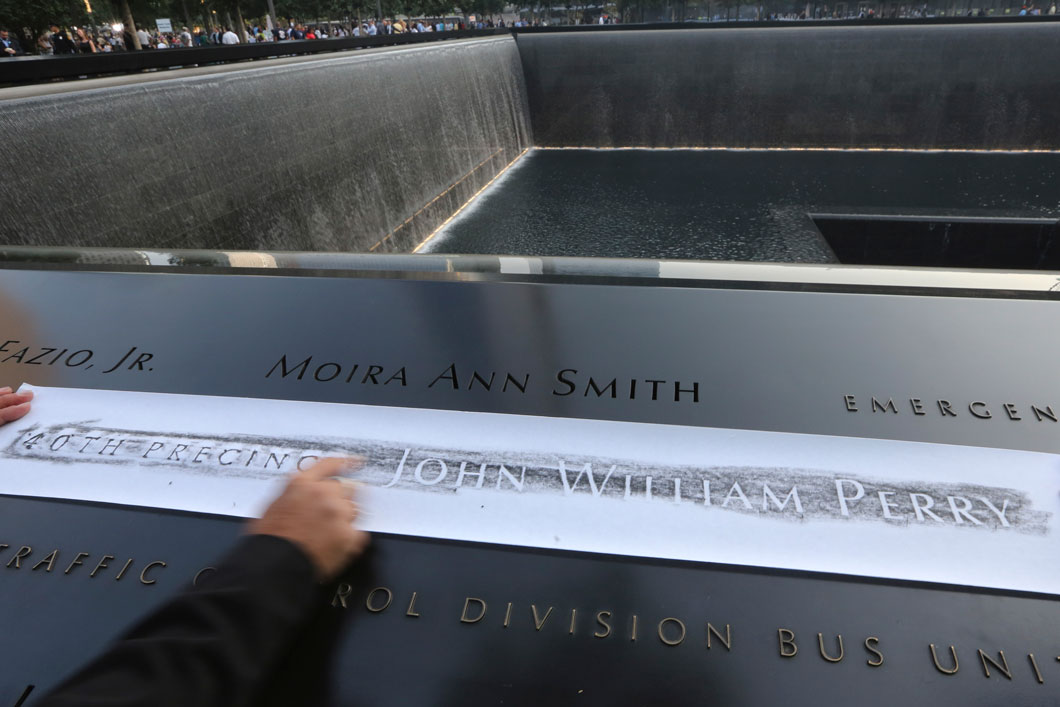
▲ The 9/11 Memorial plaza in Manhattan opened on September 11, 2011. It includes two identical waterfall pools. Each is surrounded by walls that contain the names of the victims of the 9/11 attacks and the 1993 World Trade Center bombing. The pools sit within the footprints of the North and South Towers. Both are about an acre in size. The plaza also includes the 9/11 Memorial Glade, a pathway lined on both sides with six large blocks of stone. A piece of World Trade Center steel is embedded in each stone. This is meant to symbolize strength through hard times.
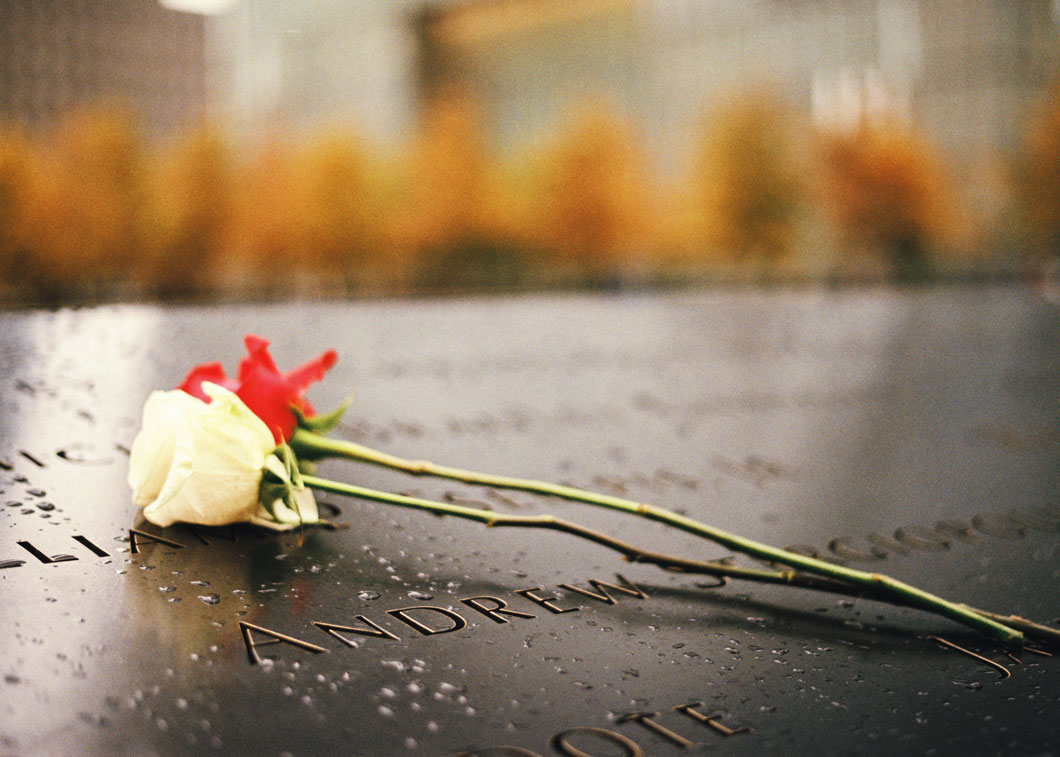
▲ On any given date at a waterfall pool of the 9/11 Memorial, you may find a white rose on a name. The rose has been placed there to remember and celebrate the person’s birthday. The Birthday Rose program began in 2013 at the suggestion of a volunteer. It is meant as a tribute to the people who lost their lives in the attacks.
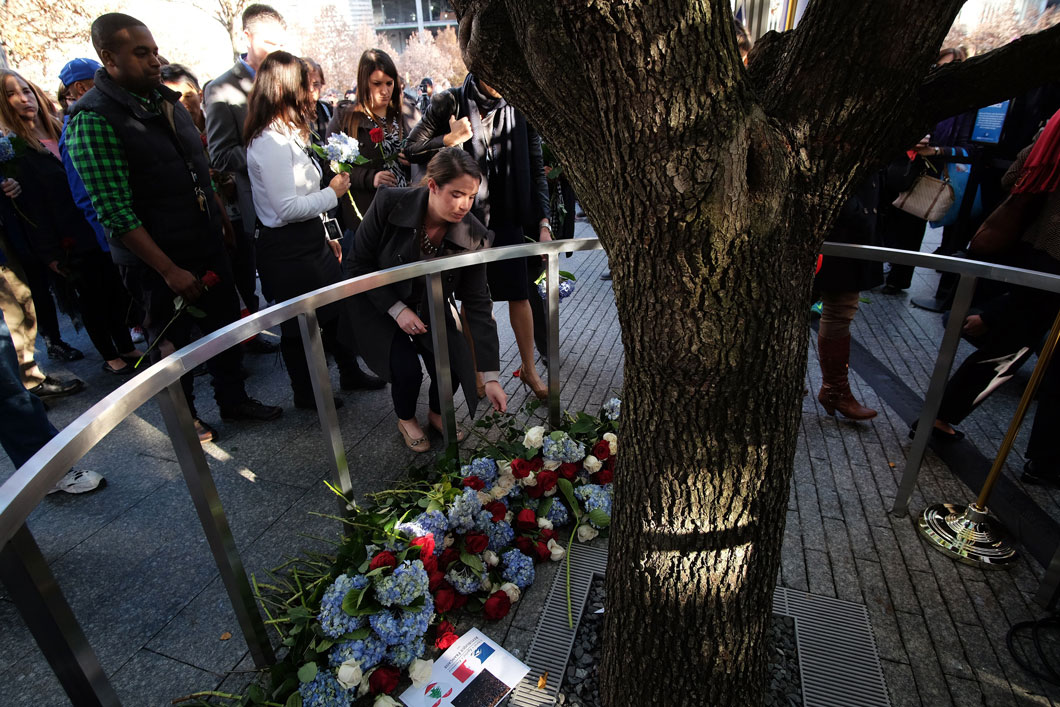
▲ One particular pear tree at Ground Zero has become known as the “Survivor Tree.” The tree was badly damaged during the attacks. Its roots were snapped. Its branches were broken and burned. The New York City Department of Parks and Recreation removed the tree from the site and cared for it. Over time, the tree recovered. New, smooth branches grew from the damaged stumps, creating a visible line between the past and the present. In 2010, the tree was replanted at the 9/11 Memorial site as a symbol of survival and rebirth. Each year, seedlings from the tree are given to communities that have survived tragedy.
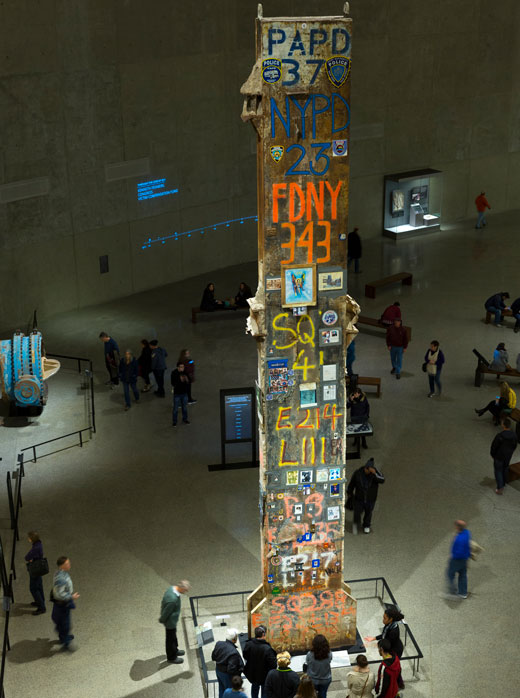
The 9/11 Memorial Museum opened on May 15, 2014. This is where belongings of survivors and victims of the attacks, personal stories, audio and video recordings, and interactive experiences are housed. Here, too, are presentations of the history leading up to the attacks, details of the day, and ongoing effects. The Survivors’ Stair – a 38-stair pathway to safety used by hundreds of people before the North Tower collapsed – was the first exhibit to be placed in the museum. Among the objects is a squeegee window washer that Jan Demczur used to pry open elevator doors to free himself and others and to chip his way through a wall to create an escape hole. These and other ordinary objects on display were used to do extraordinary things. ▶
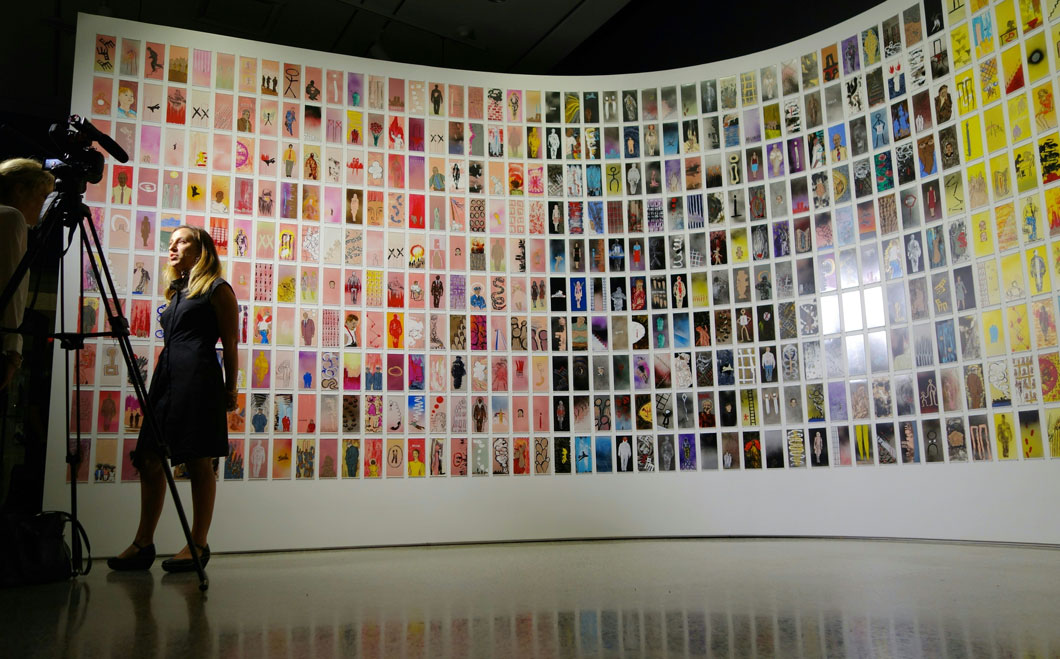
▲ Like everyone else at the time, artists strained to make sense of what had happened. And they did so through their art. Sculptures, paintings, photographs – all showing scenes or interpretations of events. Artist Manju Shandler communicated the enormity of the loss by creating almost 3,000 separate paintings, one for each victim. Gesture, the name of her work, forms a display of intense color shifting from pink to black, white, and yellow.
Think Piece!
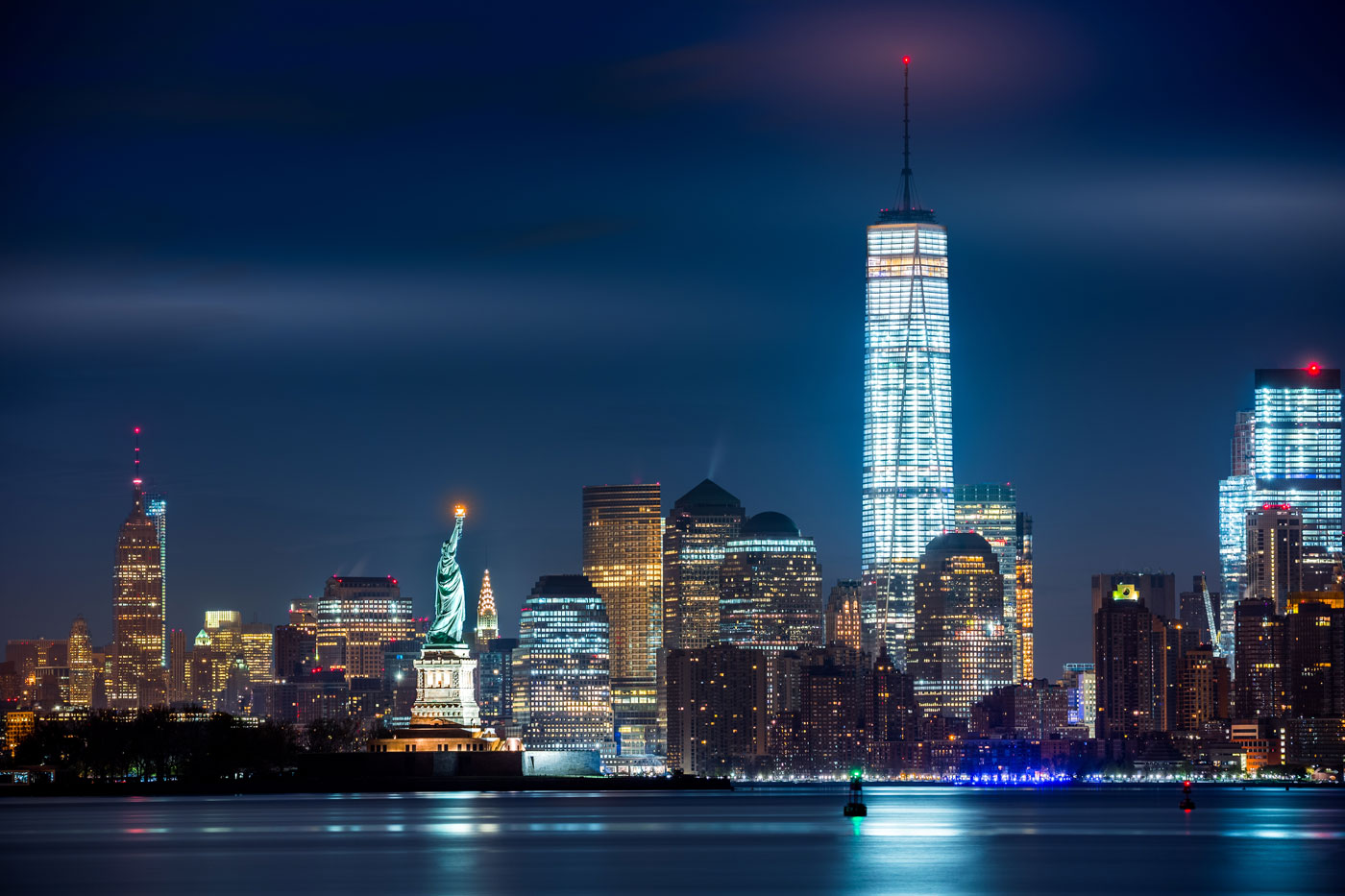
The Freedom Tower is 1,776 feet high. Why do you think this height was chosen?