Free
In 1775, Britain ruled 13 colonies that stretched along the East Coast of North America from Massachusetts to Georgia.
Many of the people living in these colonies were tired of British rule. For years, these colonists had quarreled with Britain about taxes and laws they considered unfair. Finally, in April 1775, fighting broke out between the colonists and the British army. The American Revolution had begun.
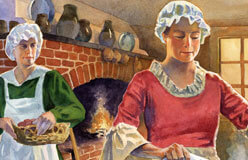
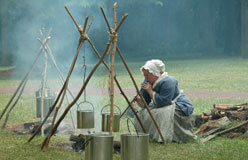
At the time of the Revolution, a woman’s role in society was limited. Most women were expected to devote their lives to taking care of their homes and their family. Women prepared meals over an open fire, milked the cows, and fed the chickens. They also churned butter, made candles and soap, and most of them made their family’s clothing. Poor women and enslaved African-American women did all this and worked for other people as well. Women were not expected to take part in politics or business. The political arena was reserved for white male property owners.
Still, many women became involved in events leading up to the Revolution and in the Revolution itself. Some were Patriots who believed in independence for the colonies, but others were Loyalists who supported Britain’s king. All had great courage to step outside of their traditional roles.
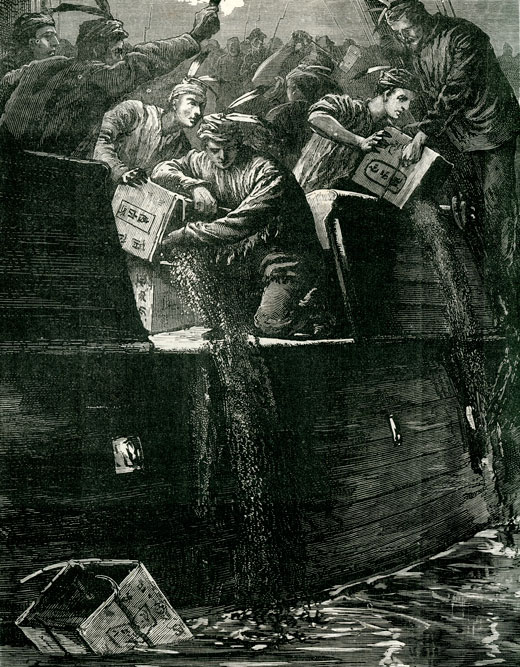
◀ To protest a British tax on tea, on the night of December 16, 1773, some men boarded a ship and threw all of its cargo of tea into Boston Harbor. The event is called the Boston Tea Party. Sarah Fulton helped the men disguise themselves as Mohawk Indians. Afterward, she heated water in her kitchen so they could wash off the disguises. For this, she is called the mother of the Boston Tea Party.
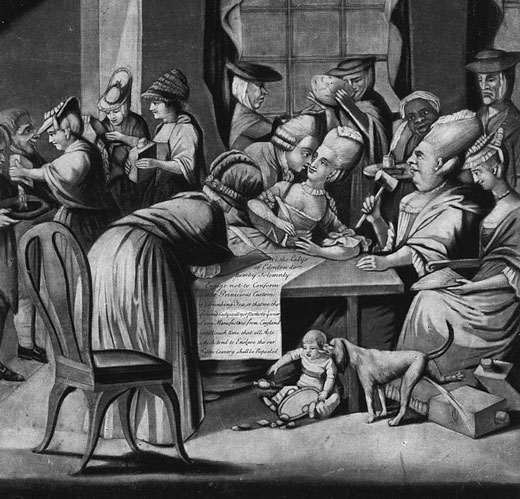
Fifty-one women in Edenton, North Carolina, signed a petition in 1774 stating their intention to boycott (not buy) British goods. It was unheard of for women to take a public stand like that. This British cartoon pokes fun at the women of Edenton for unladylike behavior. ▶
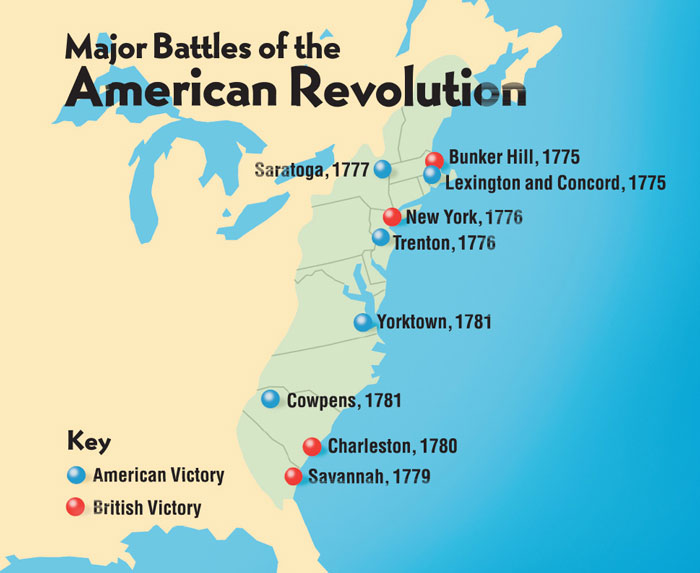
▲ For the first few years, most of the fighting was done in the North, but then the British attacked the South. The last major battle was fought in Yorktown, Virginia, in 1781, but some smaller fights took place after that.
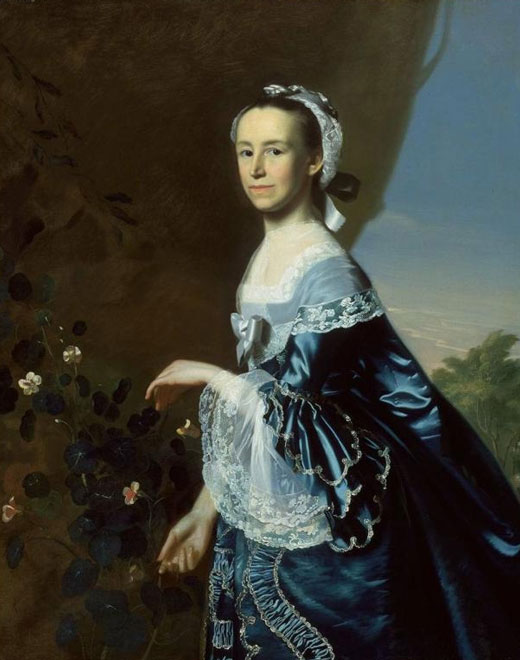
◀ Mercy Otis Warren was the sister and wife of well-known Patriots. She received her education by listening in on her brother’s tutoring sessions. Warren wrote plays making fun of British rulers. According to the custom of the day, her plays were not staged in New England, but they were printed in newspapers.
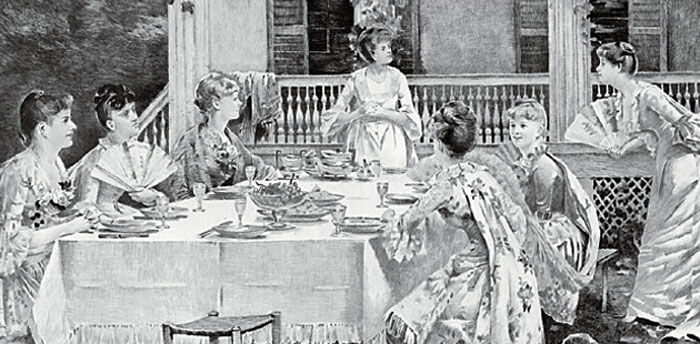
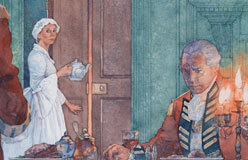
▲ Loyalist women also made their opinions known. Many took pride in serving imported tea. Anne and Betsy Cummings kept selling British goods in their Boston shop, despite pressure from local Patriots. Betsy told the Patriots that they were attempting to “injure two industrious girls who were trying in an honest way to get their bread.”