Free
Life on the home front was not easy.
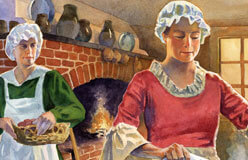
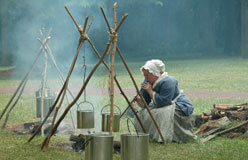
With men away at war, women had to protect their families, earn a living, and defend the family property. This was in addition to all of the hard work they usually did to run the household in peacetime.
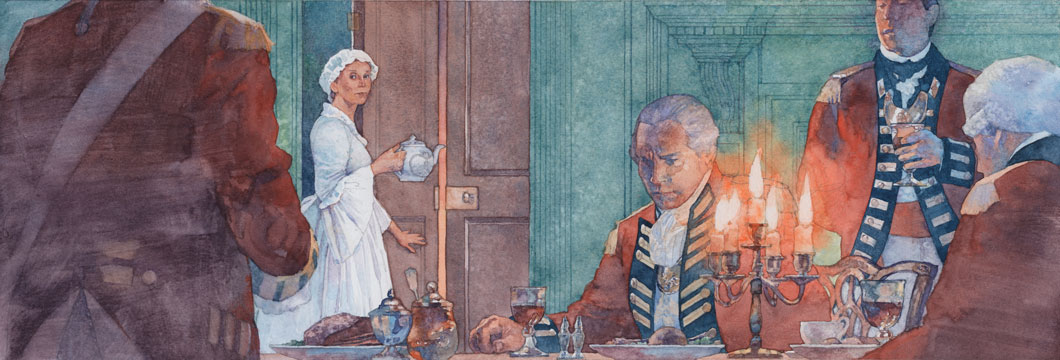
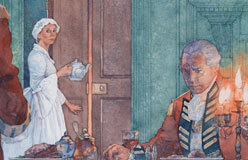
▲ Women who lived near the fighting were sometimes forced to house soldiers. That created extra work. It also put a strain on food supplies. Some Patriot women feared that their daughters would fall in love with British officers. For two years, British officers lived in Rebecca Motte’s home in Charleston. She kept her teenage daughter hidden from them the entire time. After British troops took over her house and made her family leave, Motte helped set the place on fire.
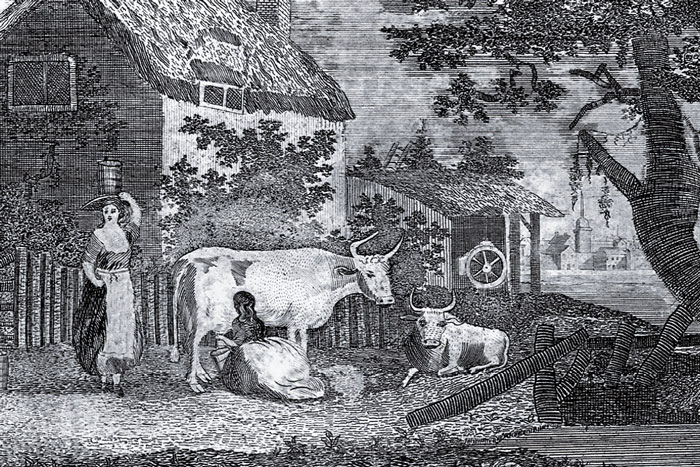
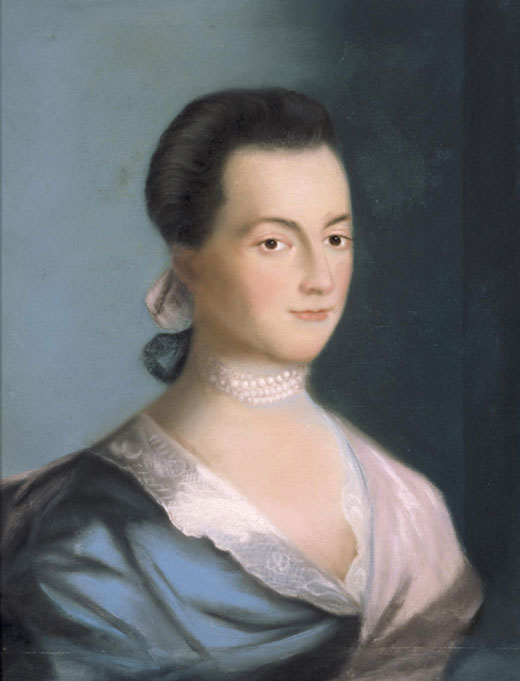
Abigail Adams was one of the most famous women on the home front. For most of the war, her husband, John, was away on official business. So Abigail took charge of the family farm in Braintree, Massachusetts. She had to deal with a shortage of farmhands, rising prices, and a lack or wool or cotton for clothing. But she kept the farm going. She also kept the family out of debt. John wrote that their friend James Warren told him “that my Farm never looked better, than when he last saw it, and that Mrs. [Adams] was like to outshine all the Farmers.” Abigail Adams became first lady when her husband was elected the second president of the United States. She was also the mother of John Quincy Adams, the sixth American president. ▶
◀ Women on farms were not used to being in charge of planting and harvesting crops. They had to take on these jobs as well as their other full-time chores. However, many took to the work quickly. Letters to husbands show that at the start of the Revolution, women usually wrote about “your farm.” But by the end of the war, more women were calling it “our farm.”
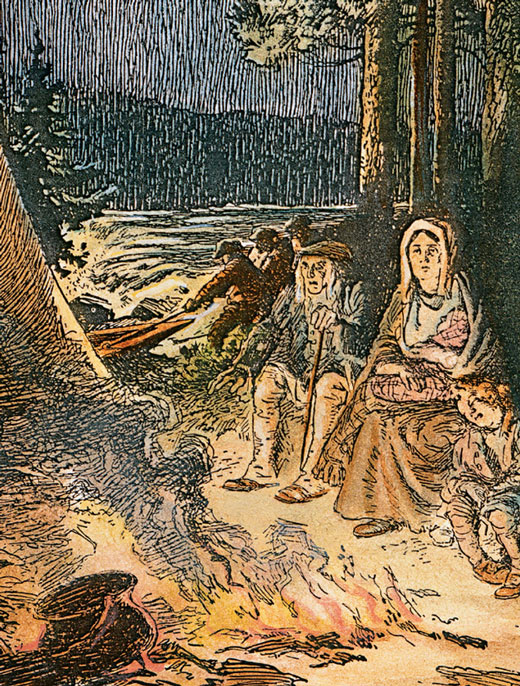
◀ Loyalist women faced the same struggles as Patriot women. Plus, Loyalists who lived behind enemy lines feared violence against their families and property. Many moved to Loyalist-held areas. But conditions in refugee camps there were harsh. By the end of 1781, in the camp near Charleston, South Carolina, about 200 Loyalists were dying each day of hunger and exhaustion. More than half were children.
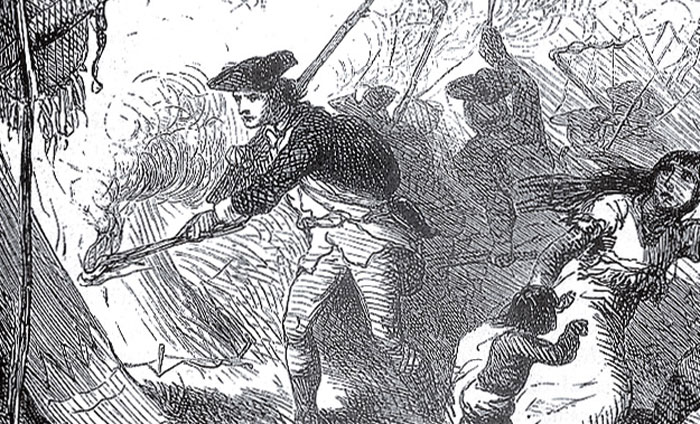
▲ Many Native American tribes sided with the British. They thought the British would keep settlers from taking more land. In return, Patriot forces attacked Indian villages. Mary Jemison was a white woman. She had lived among the Senecas since the age of 16. She reported that Patriot militias burned crops, destroyed houses, and killed cattle and horses. In 1781, Nancy Ward, a Cherokee married to a white trader, tried to work out a peace between her people and the American government.
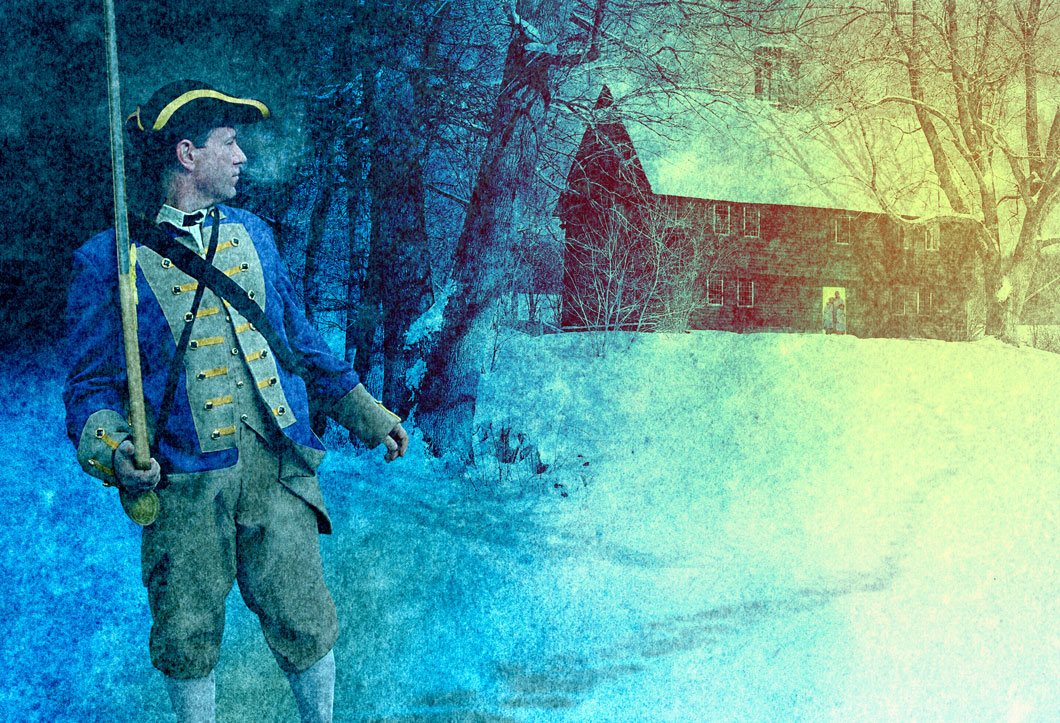
▲ “My father was in the army during the whole eight years of the Revolutionary War.... My mother had the sole charge of four little ones.... When my father was permitted to come home, his pay was short, and he had not much to leave us.... Yet when he went, my mother ever bade him farewell with a cheerful face, and told him not to be anxious about his children, for she would watch over them night and day.... Sometimes we wondered that she did not mention the cold weather, or our short meals, or her hard work.... But she would not weaken his hands or sadden his heart, for she said a soldier’s life was harder than all.”
—From Demeter’s Daughters: The Women Who Founded America 1587–1787, by Selma R. Williams
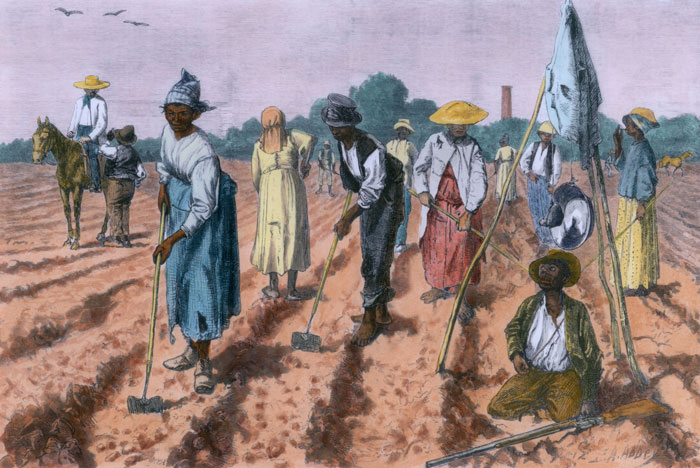
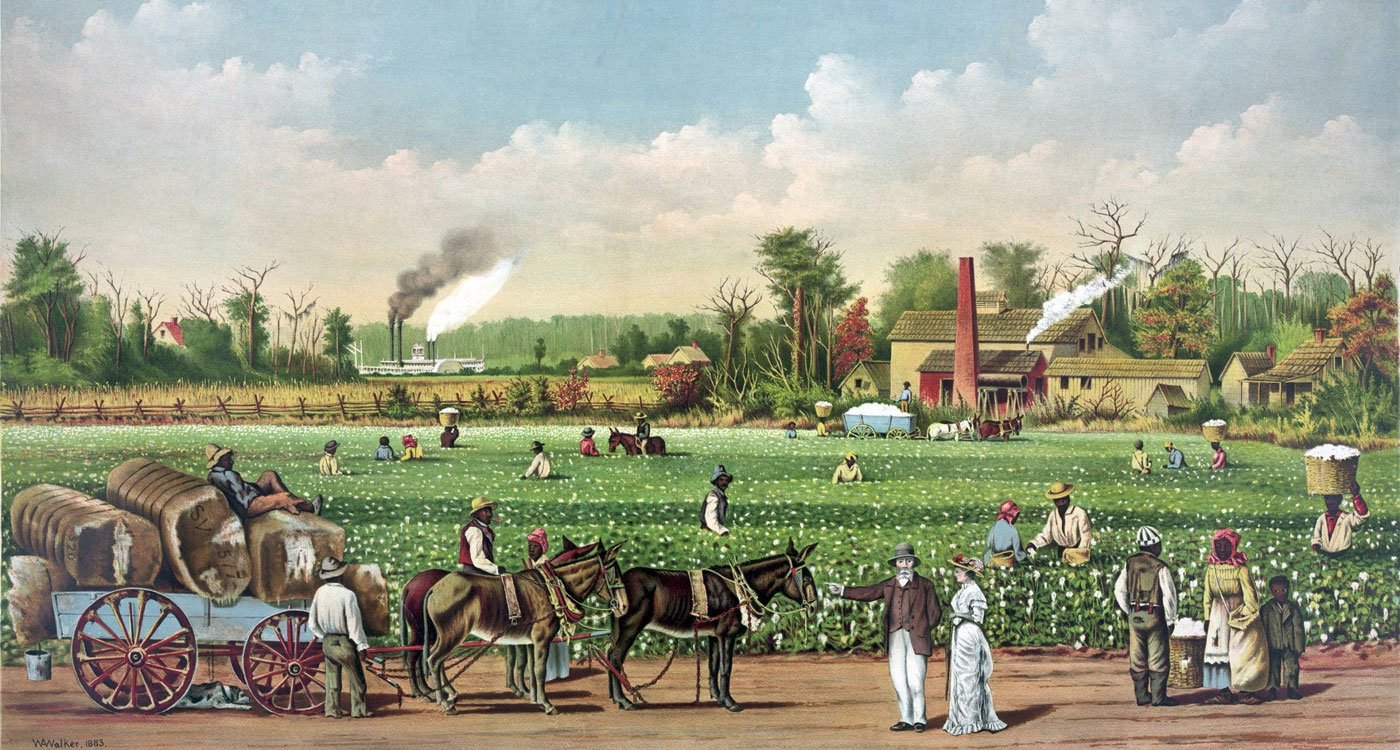
◀ From the start of the war, the British promised to free enslaved African Americans who left their masters. Thousands of enslaved people escaped. They traveled with the British army. Old Ross was a 56-year-old African-American woman. She helped a group of fellow slaves, including three of her own children, escape from a plantation in South Carolina.