Free
About 20,000 women followed their husbands to battle.
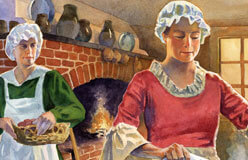
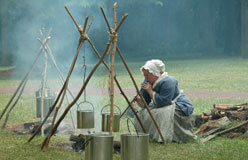
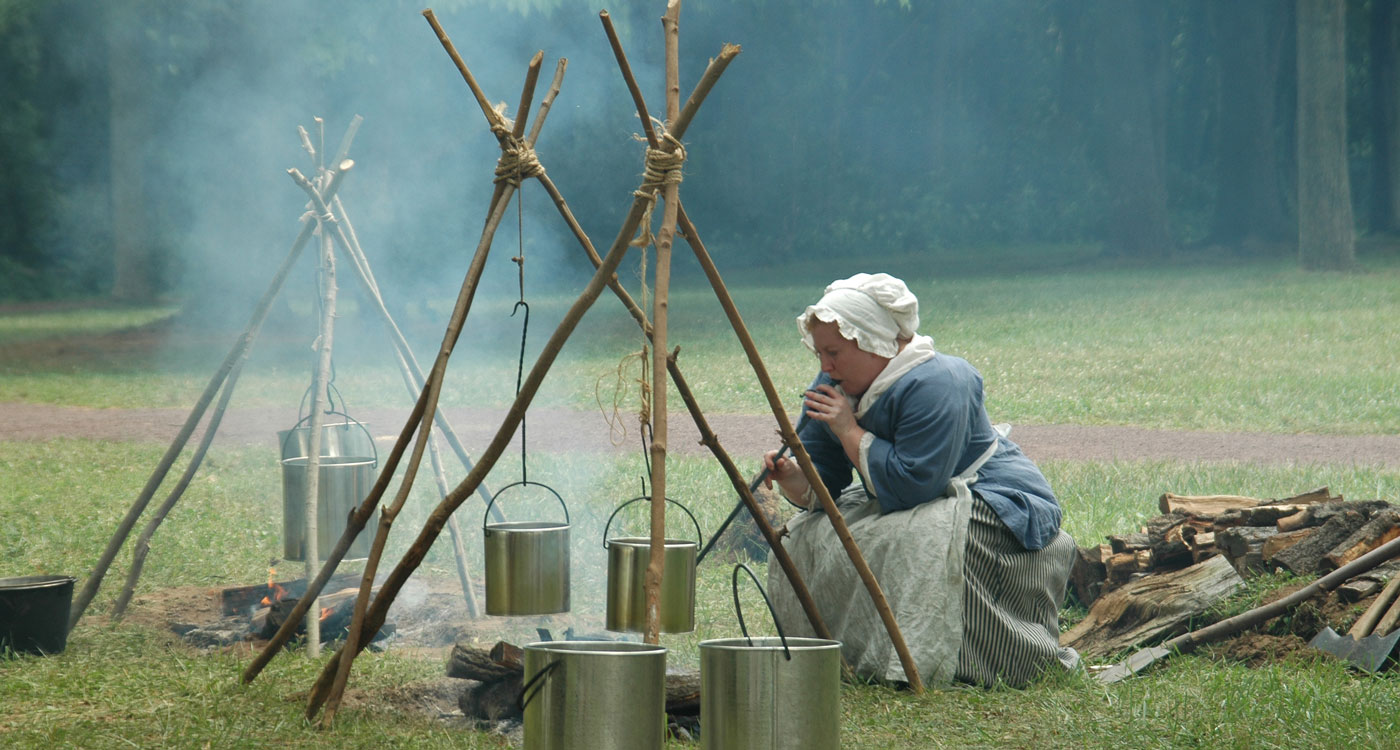
They were known as camp followers. Some were seeking adventure, others wanted to be with their loved ones, but most became camp followers out of economic necessity. They were poor women who feared that they and their children wouldn’t survive with their husbands at war. Camp followers were paid for their services as laundresses and nurses. They were also fed, but women received half a soldier’s portion of food (half rations), and children got quarter rations.

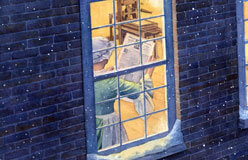
◀ Some of the camp followers worked as nurses in field hospitals. They were paid, but not much. In those days, nursing was not a skilled or respected job. Nurses emptied chamber pots, bathed and fed sick soldiers, and tried to keep hospital wards clean by sprinkling vinegar around several times a day. Very little was known about preventing disease at that time, and nurses risked catching whatever the soldiers had.
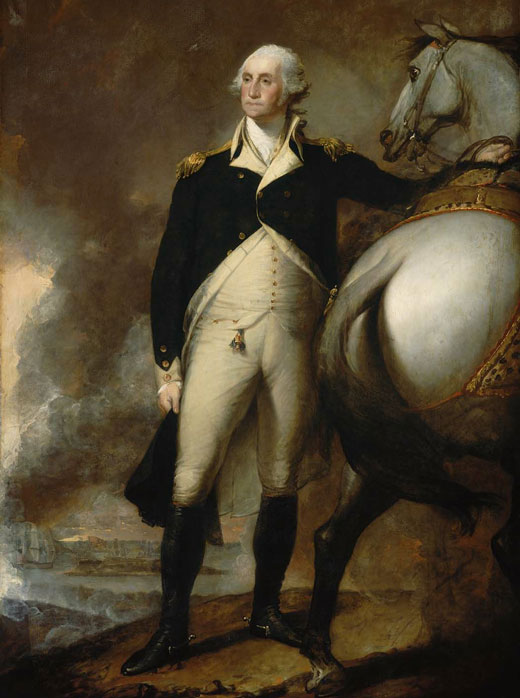
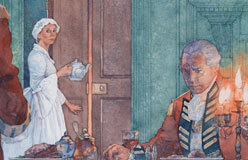
◀ George Washington was an upper-class gentleman. He was used to women with elegant manners who dressed in fine clothing. He thought the camp followers gave his army a ragtag appearance. When the Continental Army marched through Philadelphia in August of 1777, he ordered the camp followers to go by backstreets and not be seen with the soldiers. However, he did believe that having their wives in camp kept some men from deserting.
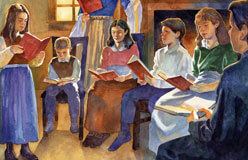
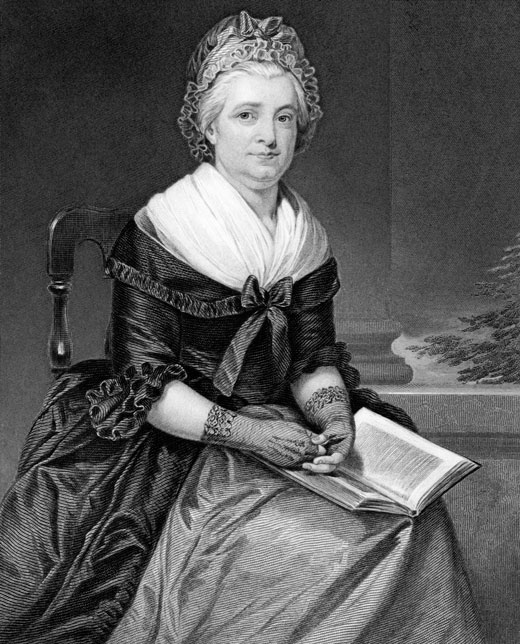
Officers’ wives usually came to stay with their husbands only during winter camp, when the army settled in one place. They knitted socks and sewed for the soldiers, but their main task was to keep up their husbands’ spirits. They did this by organizing dances and card parties. Martha Washington also joined her husband in winter quarters. On her first winter visit, to Boston, she brought George’s favorite jams and relishes and several cured hams. ▶
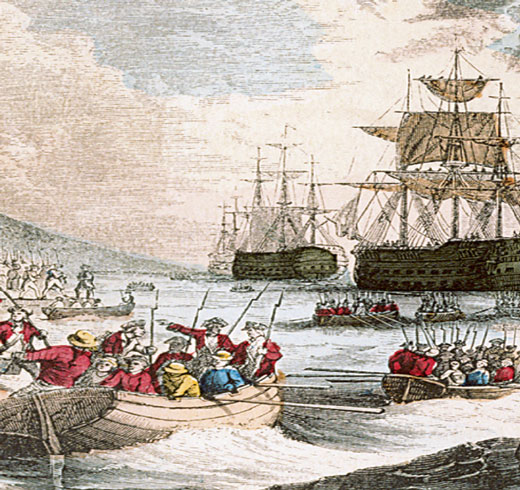
◀ British troops also had their camp followers, most of whom had sailed to America with their husbands. They were ragged and often hungry, and Loyalists accused them of stealing food. They were allowed to remain in America only as long as their husbands could fight. The first widows and orphans sailed back to England in the summer of 1775.
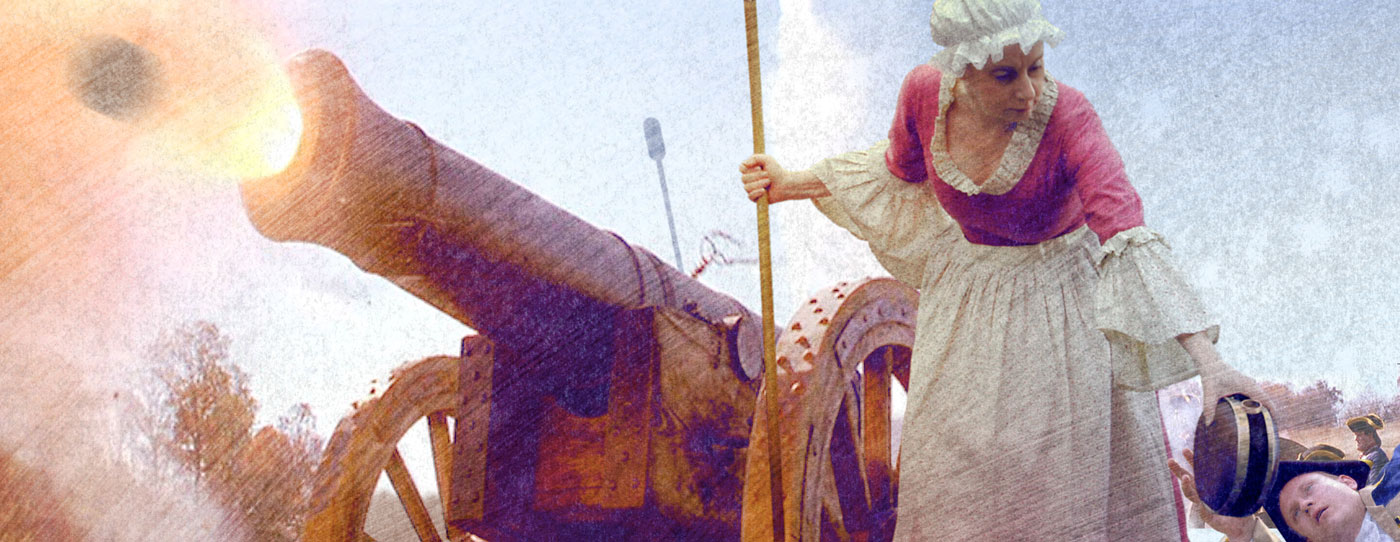
▲ A few camp followers served on the battlefield. They hauled cold water for cooling down the cannons. Two legendary water carriers were Margaret Corbin and Mary Hays, known as Molly Pitcher. Corbin took over her husband’s cannon when he was killed in battle. She fired it until her arm was nearly torn off by grapeshot (small iron balls shot from a cannon). Hays also took over from her husband when he collapsed from heat. One soldier’s memoir recalls that she kept firing the cannon even after a British cannonball blew off the lower part of her petticoat.