Free
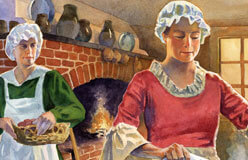
Women didn’t just maintain their homes.
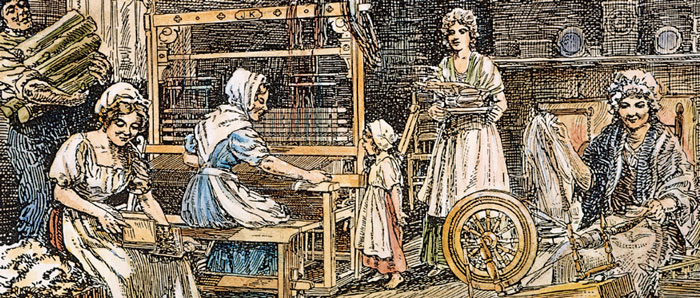
Many did other work to help the war effort. Some collected metal candlesticks, kettles, and plates. These were melted and made into bullets and cannonballs. There were also groups of women who called themselves Daughters of Liberty. They got together to knit socks, weave cloth, or sew shirts for the soldiers.
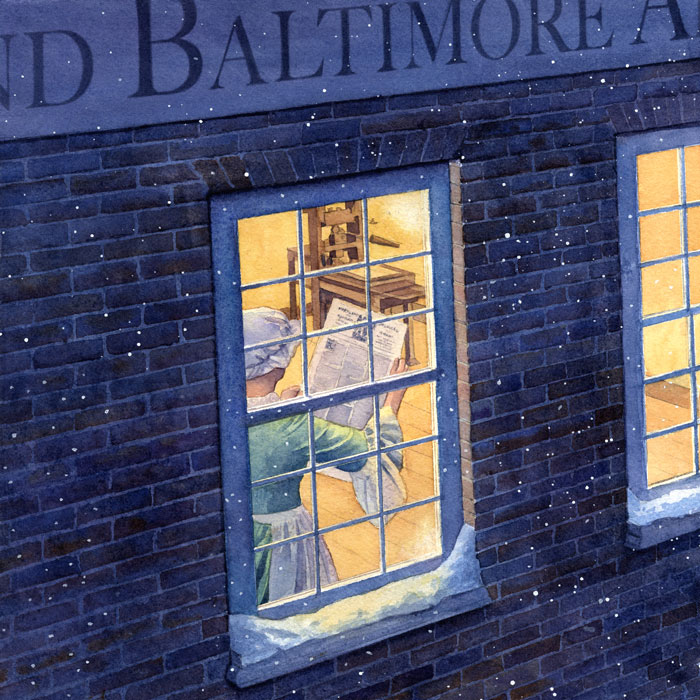
▲ During the war, six women published newspapers. In 1774, Mary Katherine Goddard took over the Maryland Journal and the Baltimore Advertiser. Her brother had been the publisher before her. Paper was hard to come by. But Goddard kept publishing for the whole war. She helped keep Patriot readers up to date with facts while rumors ran wild. How good was she at her business? In 1777, she was chosen to print the first copies of the Declaration of Independence with the names of all the signers.
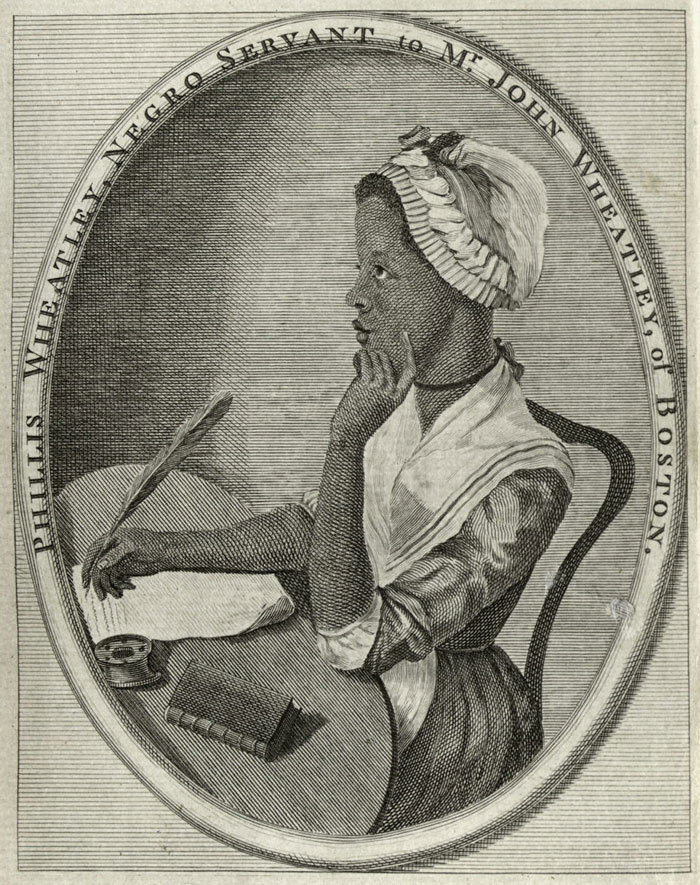
◀ Phillis Wheatley was brought to Boston from Senegal, in West Africa, on a slave ship in 1761. The family that bought her taught her to read. They also gave her time to write poetry. Wheatley supported the Revolution. In 1775, she wrote a poem about George Washington and sent it to him. He invited her to visit his camp near Boston. Wheatley was freed when her owner died in 1778. She died in poverty in 1784, just days before her poem celebrating the end of the war was published.
▲ Esther deBerdt Reed was the wife of Pennsylvania’s governor. She wrote The Sentiments of an American Woman. It asked women to actively support the Revolution. Reed and other women formed the Philadelphia Association to raise money for soldiers. Women had never done public fund-raising. But these women went from door to door asking for money. They collected $300,000 in paper money—and $7,500 in gold—from 1,645 people. Givers ranged from free African-American women to the very rich. Reed wanted to give a small cash amount to each soldier. But Washington was afraid the soldiers would waste the money on drink and not spend it on needed supplies. He talked the women into using the money to buy cloth and sewing shirts for the soldiers.
Check It Out!
Did Betsy Ross sew the first U.S. flag?
There is no proof that Betsy Ross sewed the first U.S. flag. Her grandson first told that story—100 years later. It may or may not be true. Ross and other women did sew regimental banners. These were flags soldiers carried into battle so they could fight together more easily.
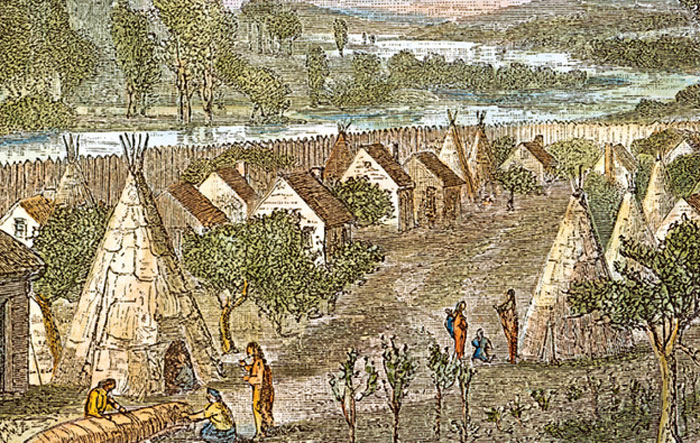
◀ Native American women played a key part in producing food. So they often had a lot of influence in their tribes. Mary Brant was a member of the Mohawk tribe. They were part of the Iroquois Confederation in western New York. At first the Iroquois decided to stay out of the war. But Brant was the widow of a British official. She talked the whole Iroquois nation into taking the British side.
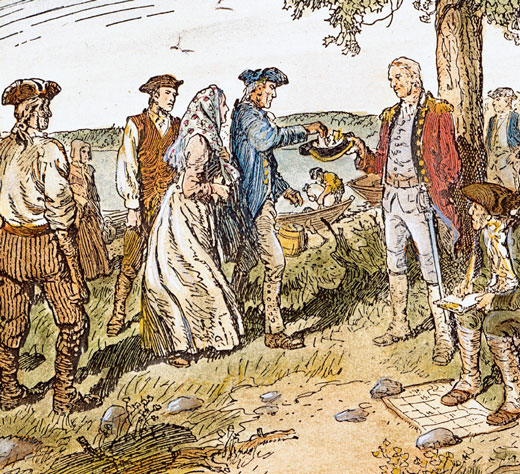
◀ Loyalist women were not as organized as Patriot women. Loyalists were sometimes harassed. They were chased out of Patriot areas. One Loyalist woman ran a newspaper for a while. Margaret Draper inherited the Boston News-Letter from her husband. She published it during 1775 and 1776. During that time, British troops occupied Boston. Patriot newspapers often attacked her. They accused her of telling lies and betraying her country. British troops left Boston on March 17, 1776. After that, Draper went to Canada. Here, Loyalists are pictured drawing lots for land after moving to Canada.