Free
Much of the time, the United States government runs pretty smoothly. Laws are passed and enforced, court cases are heard, relations with other countries are carried out.
This is due primarily to the genius of our Constitution. The Constitution establishes three branches of government – the legislative branch, the executive branch, and the judicial branch. The legislative branch makes the laws, the executive branch enforces the laws, and the judicial branch decides whether laws are constitutional or unconstitutional. The Constitution also establishes the separation of powers. That means the government has a system of checks and balances that makes sure no single branch of government has too much power.
To discover more about our national government, go here: How America Works.
To explore North Carolina’s government, scroll down.
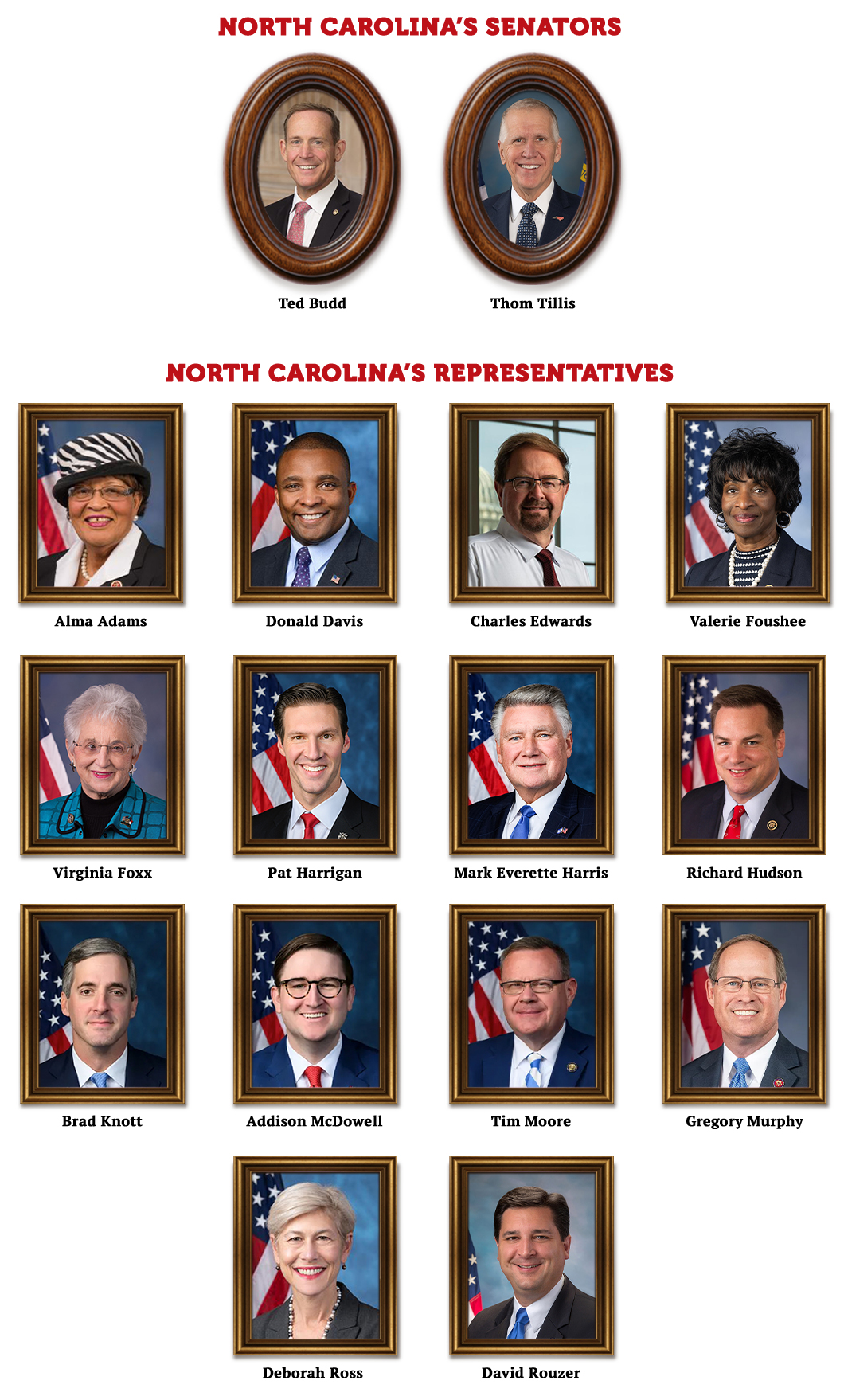
▲ The United States Congress has two parts – the Senate and the House of Representatives. The people who make up the Senate and the House come from every state, Washington, D.C., and the U.S. Territories. Every state has two senators, no matter how many people live there. Every state has representatives according to its population, so states where many people live, like New York or California, have more representatives. States where few people live, like Alaska, have fewer representatives. North Carolina has two senators and 14 representatives.
◀ North Carolina’s government is divided into three branches, just like the national government. It also has the same checks and balances. The governor is the head of the executive branch. The North Carolina Legislature is the legislative branch, which makes laws that apply only to people in North Carolina. The judicial branch makes sure that laws are carried out correctly.
North Carolina’s Governor

Josh Stein
▲ North Carolina’s executive branch includes the governor and the lieutenant governor. The executive branch also includes the attorney general, the secretary of state, the state treasurer, the state superintendent of public instruction, and several other commissioners. The attorney general is the state’s chief legal officer. The governor and lieutenant governor are elected to four-year terms and cannot serve more than two consecutive terms.
Loading the player...
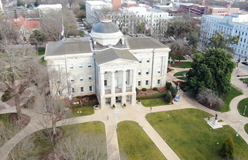
▲ North Carolina’s legislative branch is the North Carolina General Assembly, which has two parts. One part is the North Carolina Senate, with 50 members; the other part is the North Carolina House of Representatives, with 120 members. Members of the North Carolina Senate serve two-year terms with no term limits. Members of the North Carolina State Assembly also serve two-year terms with no term limits. Elections are held in even-numbered years. The members of North Carolina’s legislative branch create laws and decide on the state budget – how the state will spend its money on things like parks, roads, and schools.
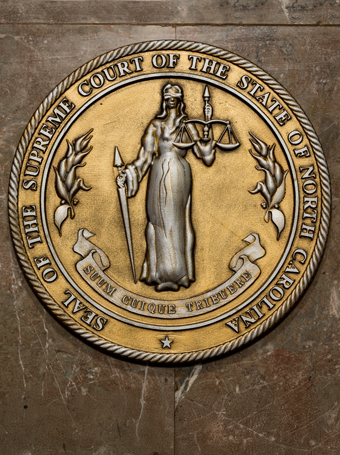
North Carolina has one unified court system for the state. The court system has three divisions – the Appellate Division, the Superior Division, and the District Court Division. The Appellate Division consists of the Supreme Court and the Court of Appeals. The Supreme Court is our highest court. It has a chief justice and six associate justices. The Supreme Court reviews and decides cases that have been decided in lower courts, including the Court of Appeals. The Court of Appeals has 15 judges. The Superior Courts and the District Courts are trial courts. Judges in these divisions are elected by the voters in their district. Superior Court judges serve eight-year terms. District Court judges, who hear cases involving lower-level crimes, serve four-year terms. Magistrates are officers of the District Courts. They have many responsibilities that include performing marriages. Magistrates are appointed. Their first term is for two years. ▶
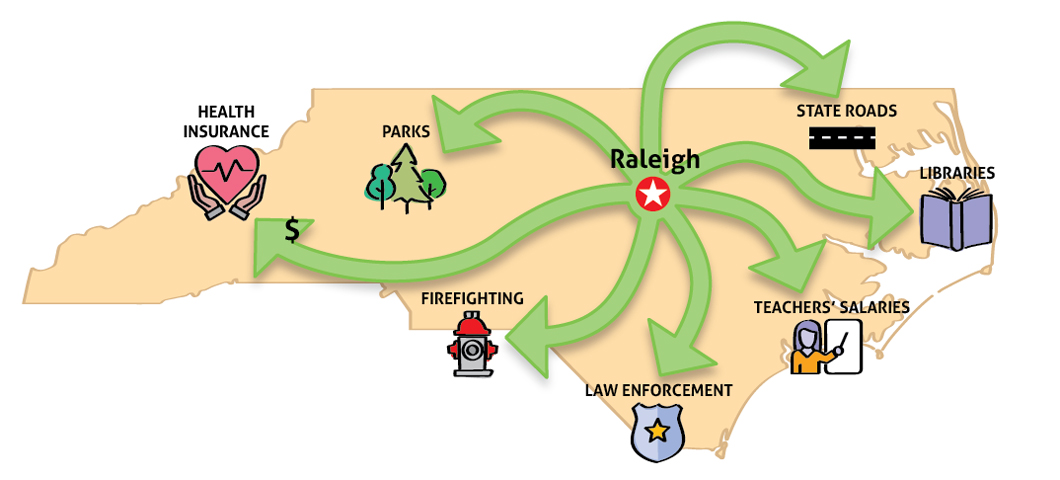
▲ Many people complain about taxes, the money people pay to city, state, and federal government. Some taxes are based on a person’s income. Some taxes are added to the price of goods and services. Where does all that tax money go, you might ask. It depends. State taxes mostly pay for education, health insurance for people who cannot afford it, state roads, and public safety including police. Local taxes pay for teachers’ salaries, law enforcement, firefighters, emergency medical services, libraries, parks, and lots more. People may think their taxes are too high, but without them, our state and our country would look quite different.

◀ North Carolina has 100 counties. Each is governed by a board of commissioners with five or more members. Counties may join together to make recommendations for ways to use land. Counties and cities may join to provide several kinds of public services. Taxes on property, local sales taxes, and fees for services like providing water and maintaining sewers are some of the sources of funding for counties.