Free
One thousand of anything is almost too hard to imagine. Especially when it comes to time. For example, one thousand years ago there was no such country as the United States. No technology as we know it today. No big cities. Almost no travel.
Ten thousand years is even harder to imagine. But that’s about how long ago the earliest inhabitants of our region arrived here. There are no written records from that time, but scientists have found evidence of their lives and culture – fossils, pottery, jewelry, tools, and more. Experts have used this evidence to put together an understanding of what the people and their culture were like.
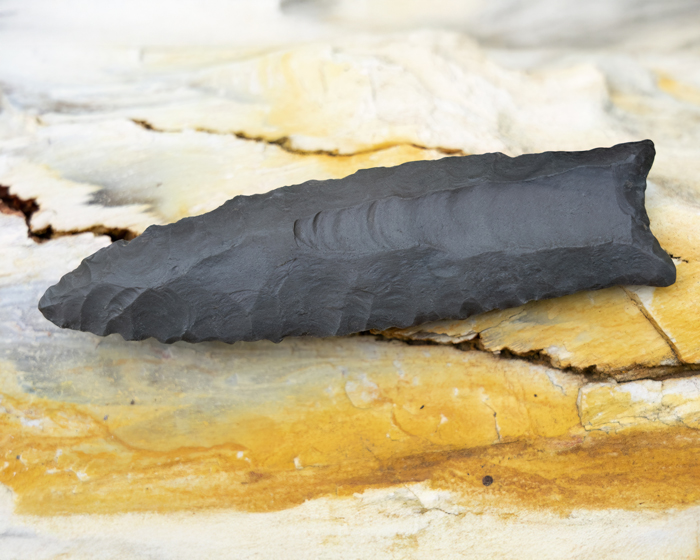
◀ Scientists refer to the first peoples to reach what is now North Carolina as peoples from the Paleo-Indian period. Known as Clovis, they were hunters and gatherers. They survived by hunting big animals like mammoths and mastodons and gathering plants they could eat. Clovis peoples didn’t stay in one place for long. They moved with the seasons and followed the animals. Scientists have found evidence that shows the Clovis way of life. One example is stone spear points created by chipping off pieces to form a point.
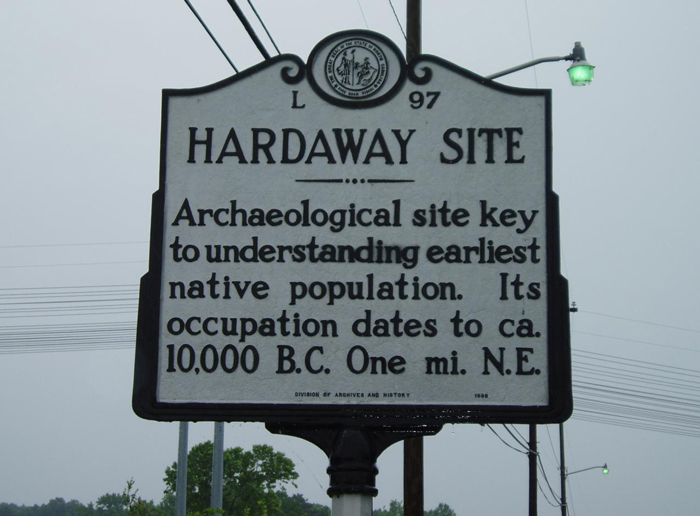
The Hardaway Site, in the Piedmont region, is a hollowed-out area at the top of a hill near the Yadkin River. Scientists believe this was a campsite of Indigenous peoples for thousands of years. The nearby Uwharrie Mountains had resources for making stone tools and spear points. In 1990, the site was named a National Historic Landmark because of how it helped us understand the prehistory of the area. Prehistory is the time before there were written records. ▶
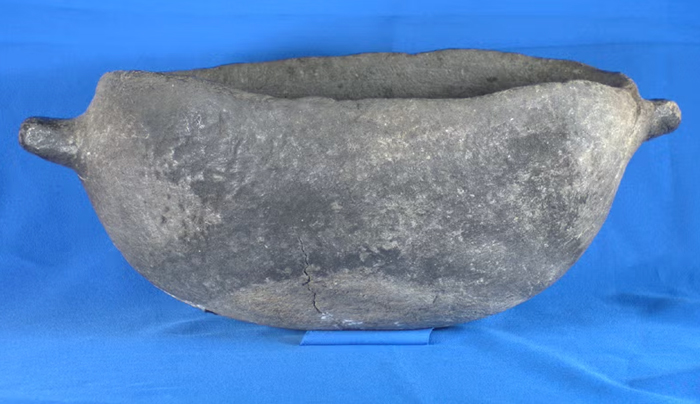
◀ Peoples from the Archaic period were in our region until about 3,000 years ago. They lived mostly in the Piedmont. Like their Clovis ancestors, the Archaic peoples were hunters and gatherers. They didn’t have year-round homes. In time, they developed tools for grinding nuts from the surrounding trees. They also carved bowls from steatite. Steatite is a soft stone that has a soapy feeling.
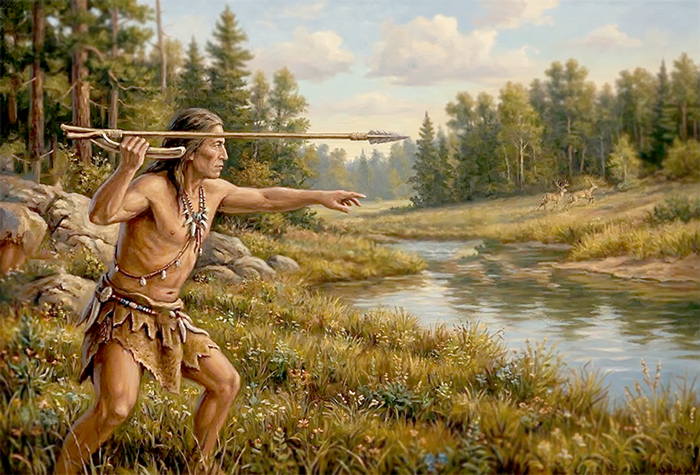
The Archaic peoples developed the atlatl. This is a tool that allowed them to throw a spear farther and harder. But, unlike other peoples of this period, the Archaic peoples of North Carolina did not develop the bow and arrow. They did not create pottery. And they did not have agriculture. Those developments would be left to those who came after them. ▶
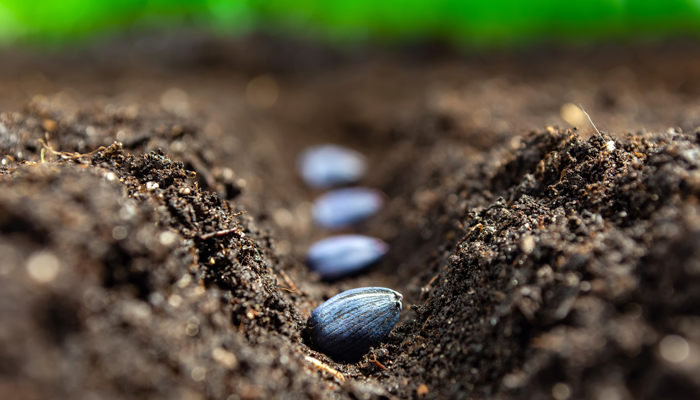
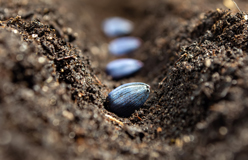
◀ The Woodland peoples came after the Archaic peoples. They lived in semi-permanent villages. They made pottery and planted gardens. Evidence of sunflowers, maygrass, and goosefoot have been found. These plants are different from those planted in other regions. As a result, scientists think agriculture in this area was first developed by the Woodland peoples.
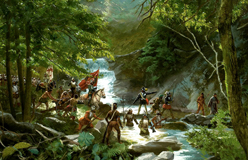
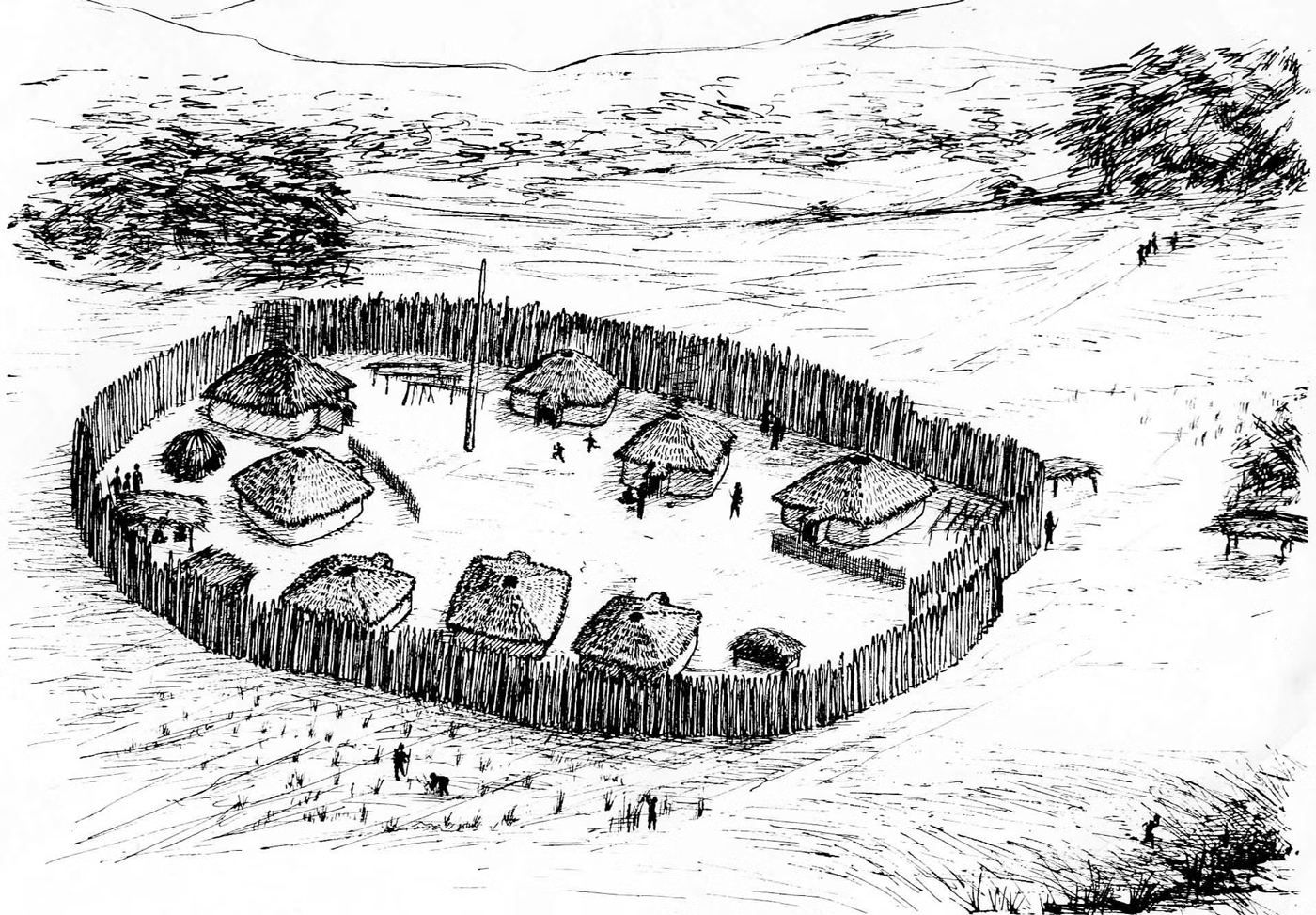
Researchers have found evidence of several Woodland villages like this one. One of them is at the “Mitchum Site.” The site is along the Haw River. Homes there were in the shape of ovals. They were made using wooden posts from young trees. The posts were probably tied to form a dome shape at the top. They were likely covered with animal skins or bark from trees. A palisade, or defense wall, surrounded the village. Some villages during this time included large storage areas. ▶
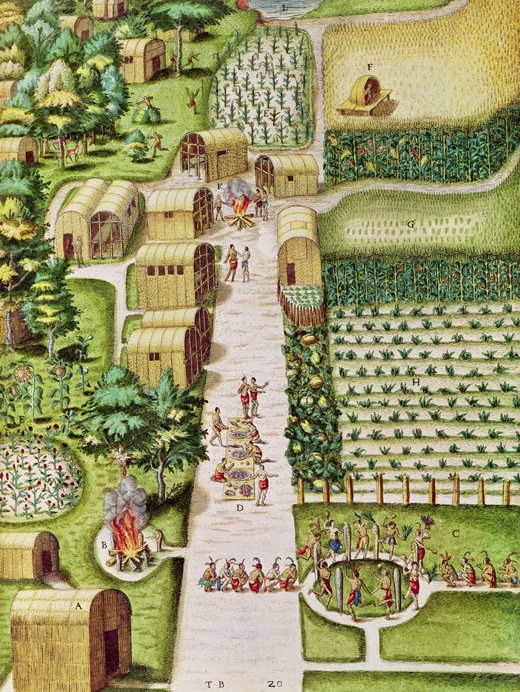
The McLean Mound is a Woodland burial ground near the Cape Fear River. The original sand mound is thought to have been about six feet high. It was 49 feet by 66 feet at its base. Hundreds were buried in the mound. Also included were objects like beads, pottery, and stone tools. Scientists think this site may have been used for hundreds of years.
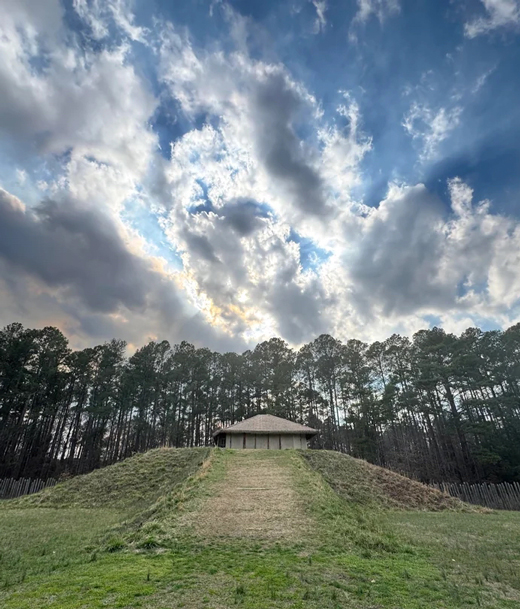
◀ Starting about 1,000 years ago, Mississippian peoples were present in the southern Appalachian and Piedmont regions. The Pee Dee were one of many Mississippian peoples. A Pee Dee site called Town Creek is on the Little River. Here, researchers found an 11-foot-high platform with a temple built on top. The temple was probably used for special ceremonies and public meetings. The Mississippians were the first in North Carolina to have large farms. At first, they grew corn. Later came beans and squash.
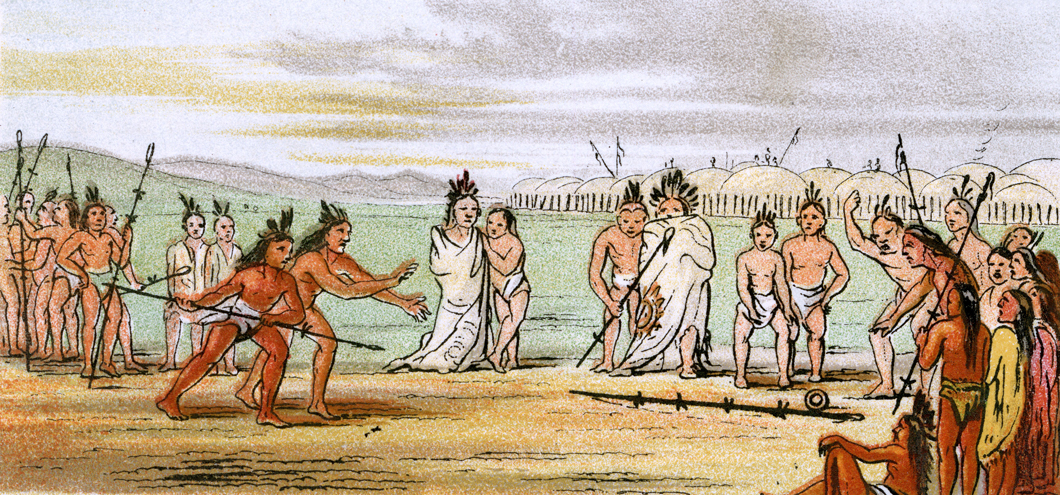
▲ Woodland and Mississippian peoples enjoyed games – especially chunkey (tchung-kee) and stickball. In chunkey, a stone was rolled by one player while others threw spears to where they thought the stone would stop. The player with the spear closest to the stone won. In stickball, players took turns using their stick to toss a ball toward a pole and score points. Members of the Lumbee Tribe of North Carolina played both games during the First Annual Indigenous Games competition at the University of North Carolina, in 2023.