Free
The year was 1763, and trouble was brewing.
Britain had beaten France in a war for control of a large portion of North America. It had been a long and costly process. Britain had to find a way to pay for it. New taxes on the colonists were the solution. Among them was the Stamp Act, which required people to buy stamps to put on all newspapers, pamphlets, and other papers. Then came the Townshend Acts, which put taxes on products like glass, paper, and tea that were imported into the colonies. Finally came the Tea Act. At that point, independence was essential.
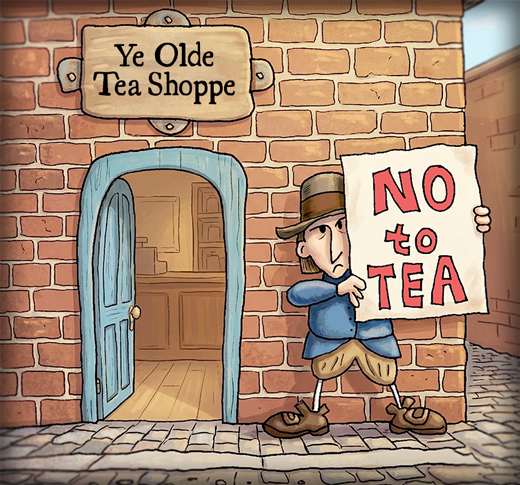
◀ In 1773, Britain passed the Tea Act. The act gave one company, the East India Company, a monopoly on tea. A monopoly is when one company has control over selling something. The act also forced colonists to pay a tax on tea. Colonists in New York and Philadelphia protested. They made the ships carrying tea turn back to Britain. Starting in May 1773, colonists in Boston refused to unload the tea. On December 16, what is known as the Boston Tea Party took place. Colonists boarded the ships and dumped the tea overboard.
Think Piece!
Imagine you were a colonist in North Carolina at this time. What would you have done?
North Carolinians had had enough. In 1774, the First Provincial Congress met. There, people talked about governing themselves. The next year, the Second Provincial Congress met. The congress adopted the Mecklenburg Resolves. The resolves declared Mecklenburg County to be independent of Britain. ▶
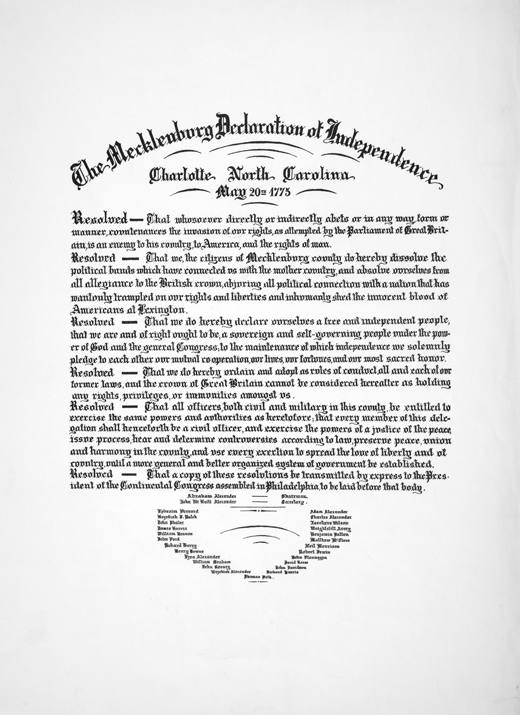
We conceive that all Laws . . . confirmed by, or derived [resulting] from the Authority of the King or Parliament, are annulled [canceled] and vacated [removed], and the former civil Constitution of these Colonies for the present wholly suspended [banned].
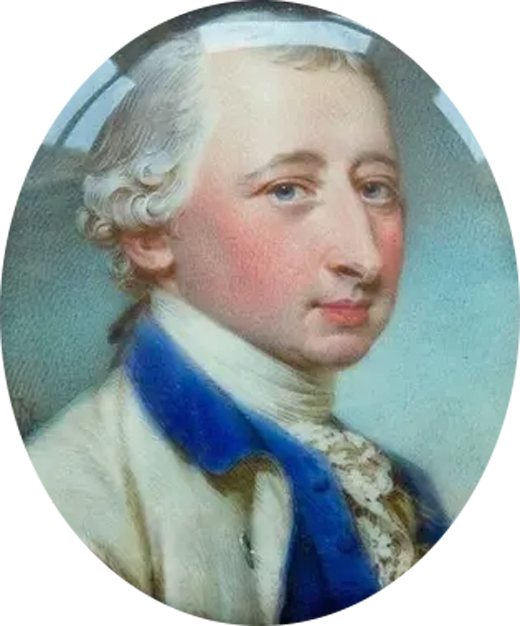
◀ The Provincial Congress set up the Committees of Safety. These were groups of committees throughout the colony. In effect, they replaced the British colonial authorities. They took away all power from Josiah Martin (left), the royal governor. Instead, they put in place a government approved by the people. They also organized militias, or citizen soldiers. And they enforced the ban on trading with Britain. In June 1775, Josiah Martin fled North Carolina.
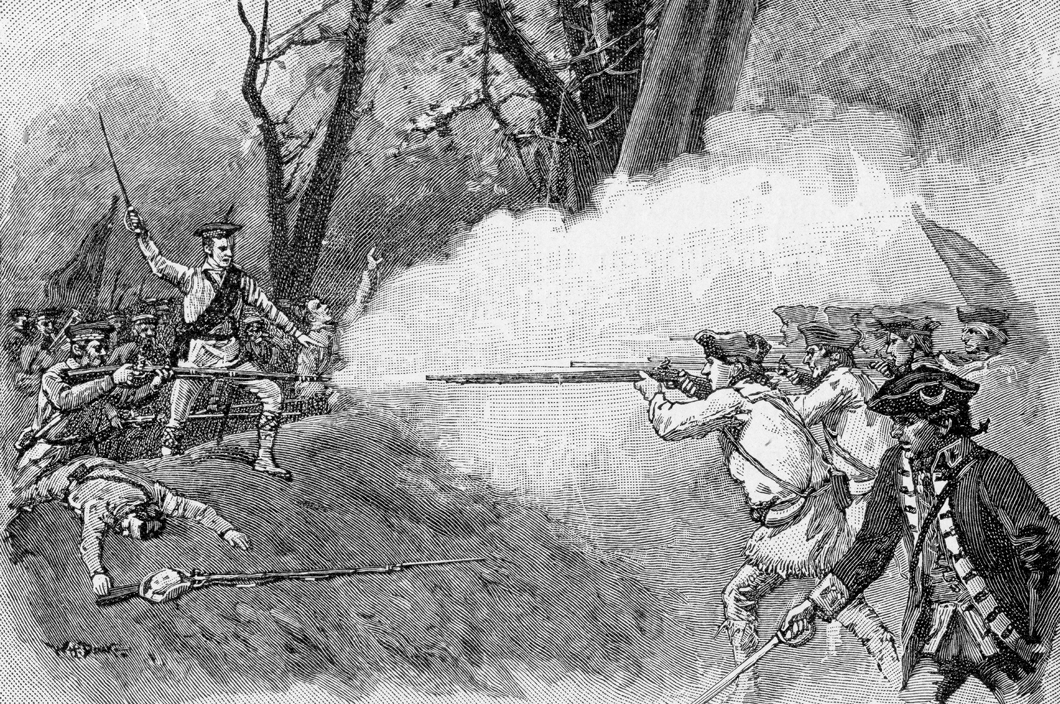
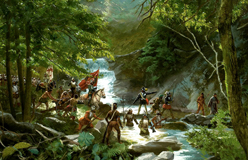
▲ It was 1776. The American Revolution had begun months ago, but no battles had taken place in North Carolina yet. On February 27 that changed. That’s when the Battle of Moore’s Creek Bridge (near present-day Wilmington) took place. There, the Patriots – troops fighting for independence – defeated the large British army. Today the Battle of Moore’s Creek Bridge is known as the “Lexington and Concord of the South.” Lexington and Concord in Massachusetts were places where the war actually started.
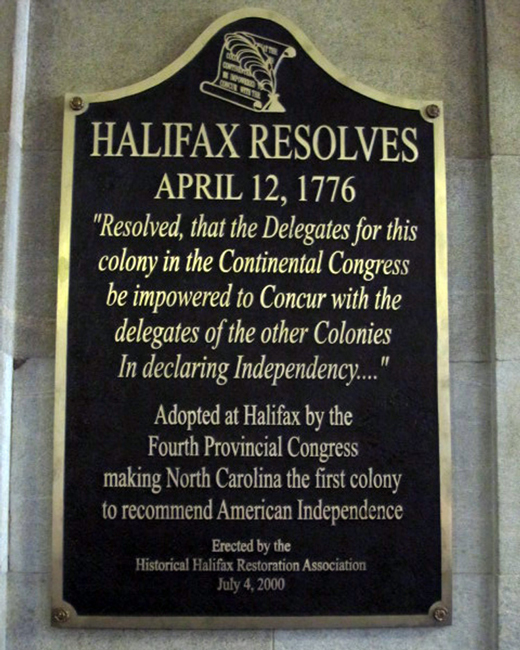
Months after the Battle of Moore’s Creek Bridge, North Carolina’s Provincial Congress met again. A committee wrote a report about independence. The report was known as the Halifax Resolves. It gave North Carolina power to declare its independence. Ours was the first colony to do so. The event is honored on our license plates with the slogan, “First in Freedom.” ▶
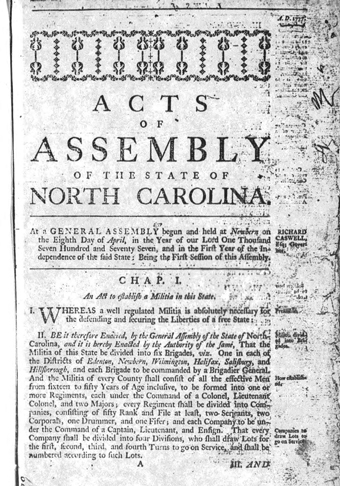
◀ The first General Assembly of North Carolina met in New Bern in April 1777. Its job was to pass laws to form a new government. And it did. The assembly set up a court system. It established land offices in every county, which was a way for people to buy land. It set up a militia and a system for collecting taxes. North Carolina was ready to go! But independence had not been won yet.
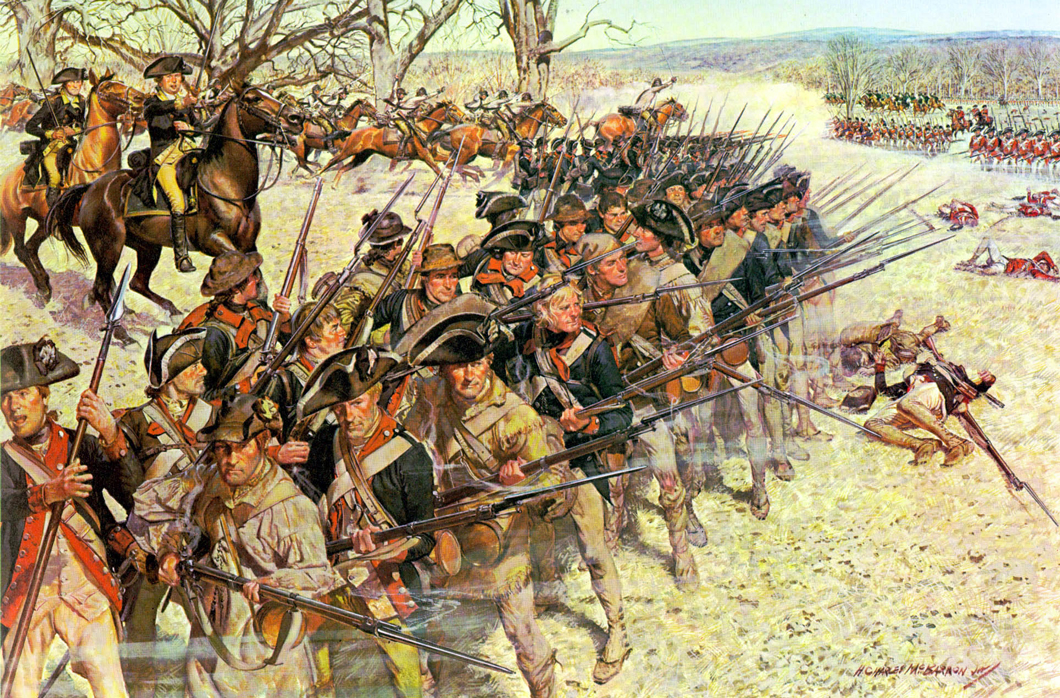
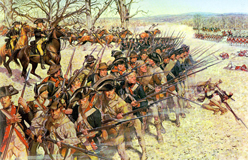
▲ Historians might describe the Battle of Guilford Courthouse near Greensboro as a victory within a defeat. The American Revolution had been going on for six years when the battle took place. The British won the battle, but it was very hard fought. Charles Cornwallis, their general, said this about the Patriot soldiers from North Carolina. “I never saw such fighting since God made me. The Americans fought like demons.” Even though the British army won the battle, it was very weak afterward. Cornwallis left North Carolina altogether. Months later he surrendered at Yorktown, Virginia. The American Revolution was over.
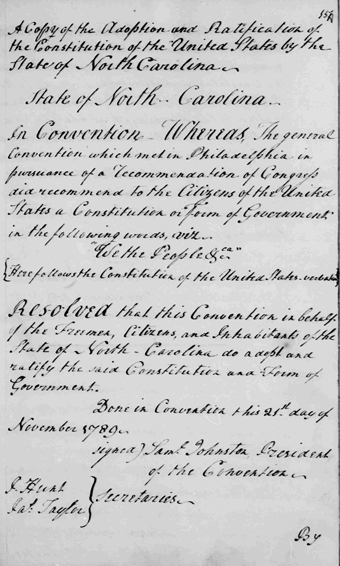
The United States Constitution was written in 1787. Then it was handed over to the states to ratify, or approve. People in North Carolina disagreed. Some liked the idea of a strong federal, or central, government. Some wanted a strong state government. Since the two sides could not agree, the Constitution was not approved. Debate continued. Finally, in 1789 North Carolina became the 12th state to approve the Constitution. But only after the Bill of Rights had been added. The Bill of Rights are the first 10 Amendments to the Constitution. They protect people’s rights. They limit what the federal government can do. ▶
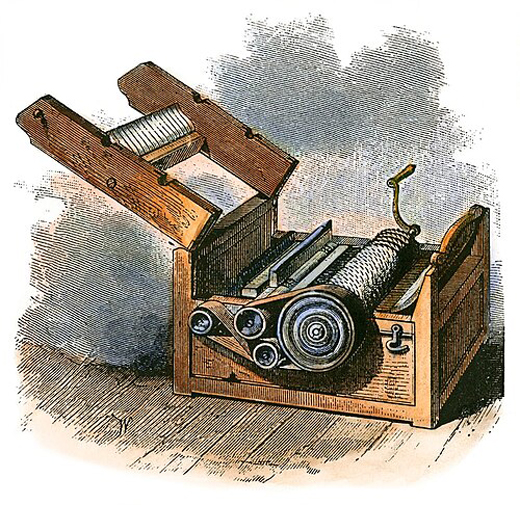
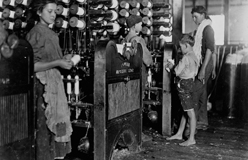
◀ In 1793, Eli Whitney invented the cotton gin. The machine made it fast and easy to separate cotton from the seed. North Carolina farmers had been growing cotton since colonial times. With Whitney’s machine, production increased. By the end of the century, cotton had become a major crop in North Carolina. That meant more land was being used for bigger plantations. It meant more enslaved people were being brought in to work. And more textile mills in the Piedmont. A textile mill manufactures fabric from raw cotton.
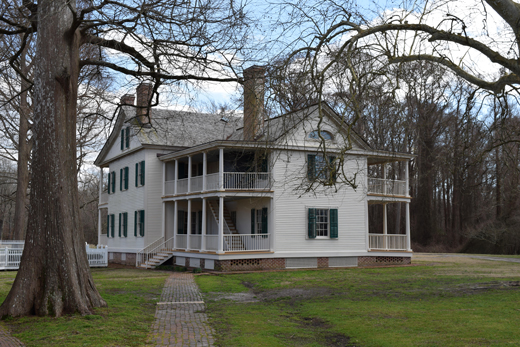
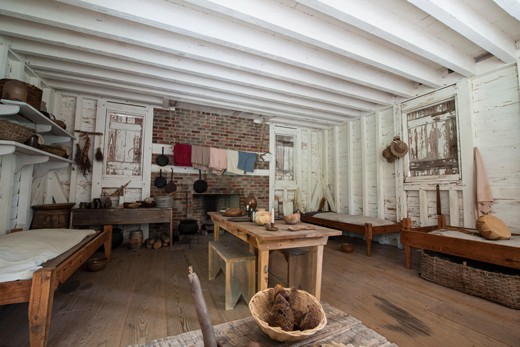
▲ The Somerset Place Plantation in North Carolina was one of the most successful. Today, it is a historic site. But for 80 years, it was home to enslaved people who worked there. They lived in a crowded house. Their children slept on the floor. In winter, a fireplace was used for heating. Karen Hayes, site manager of the plantation, describes it this way:
[Enslaved people] would be issued 3 and one-half pounds of sawed up pork per week. . . . They supplemented their diets with fish from the lake, trapping small animals like rabbits and raccoons. . . . There were whippings here. That was one of the punishments in the slave community – whipped by the overseer, being placed in the stock and sold.
Reflection
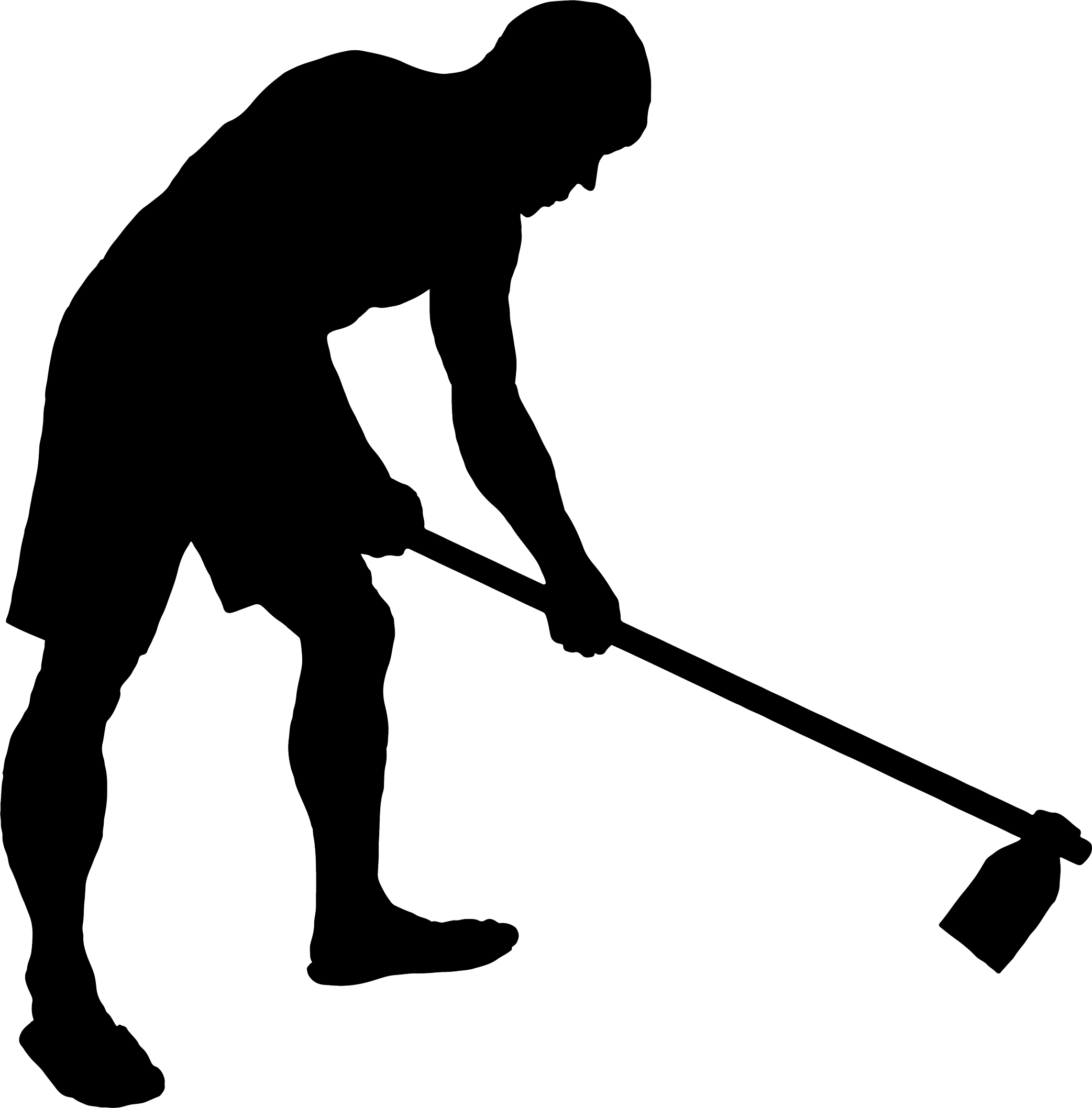
Reflect on life at Somerset Place. What do you think enslaved people did to survive the situation?
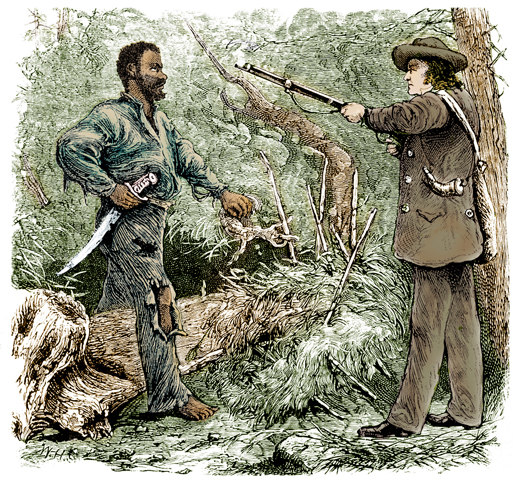
In 1831, Nat Turner led a revolt of enslaved people in Virginia. It took place about 20 miles from the North Carolina border. The plan was to move from one plantation to the next and do away with all White people connected to slavery. The revolt lasted only about 48 hours before it was put down. But the effects reached into North Carolina. ▶
Check It Out!
What were the effects of Nat Turner’s Rebellion in North Carolina?
White people in North Carolina panicked. They were afraid of an uprising in their own state. Militias struck back at Black people. New laws were passed. One made it a crime to teach an enslaved person to read or write. Another took away the voting rights of free Black people. White people hoped that severe laws would make a revolt less likely.
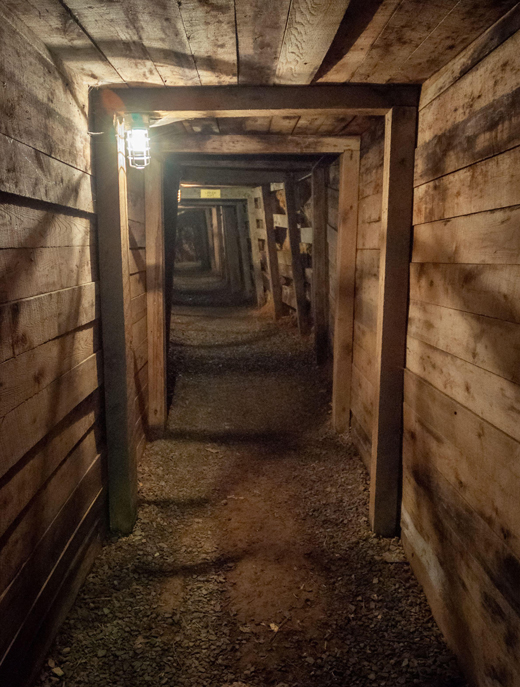
◀ John Reed had a farm in the southern Piedmont region of North Carolina. One day in 1799, his son found a yellow rock in a creek on the farm. The rock weighed about 17 pounds. For years, Reed used it as a doorstop in his home. When a jeweler saw the rock, he knew it was gold. This was the first gold found in the United States! A gold rush followed. Today, Reed Gold Mine (left) is a historic site.
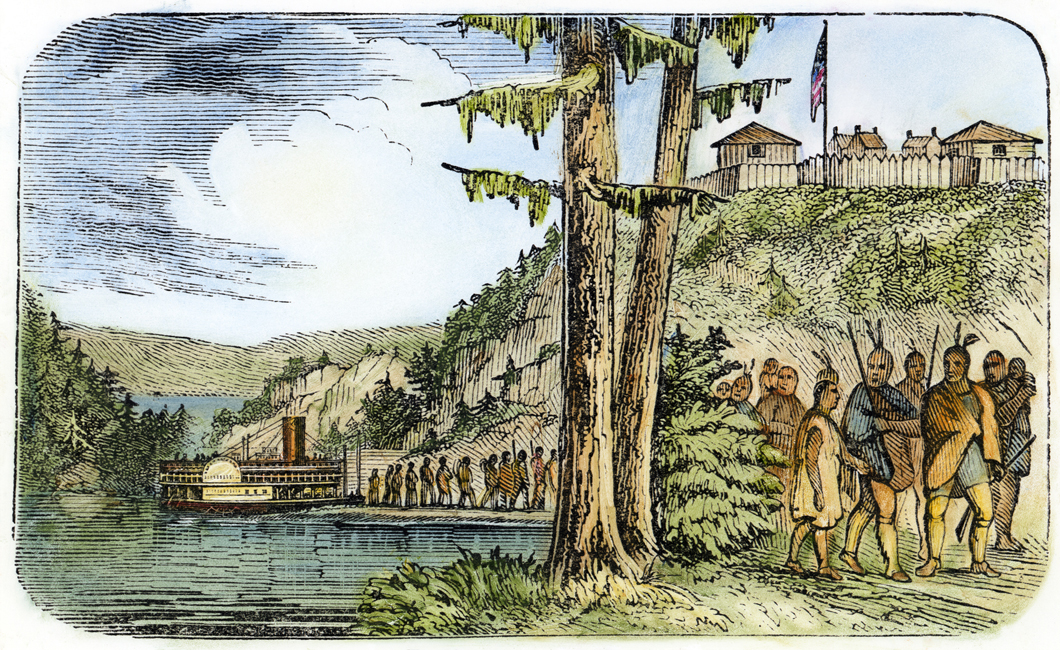
▲ The mountains of western North Carolina had been the Cherokees’ home. They had built towns and farms in the valleys there. In 1835, a group of Cherokee sold their land to the U.S. government. Within three years, the Cherokee were being rounded up and marched toward Tennessee. Then on to Oklahoma. Their journey became known as the Trail of Tears. Many U.S. government officials expected strong resistance. One official observed this:
They all remain quietly at work on their little farms, as though no evil was intended them. They sell us very cheap anything they have to spare, and look upon the regular troops as their friends. . . . These are innocent and simple people into whose homes we are to obtrude [force] ourselves, and take off by force. They have no idea of fighting, but submit quietly to be tied and led away.
Think Piece!
Compare how Indigenous peoples and Black people were treated by White people.
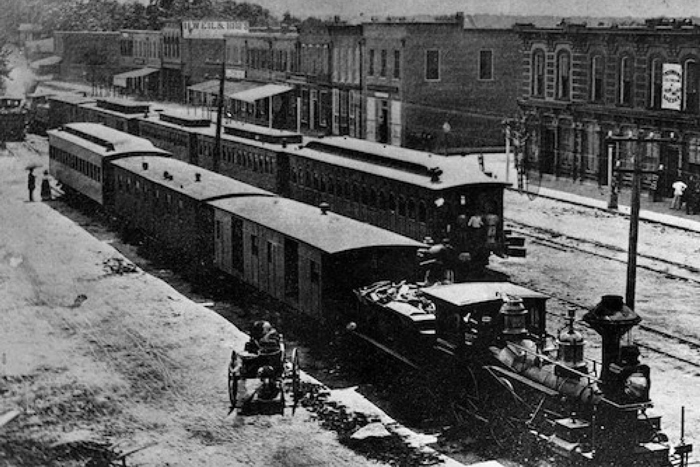
◀ In 1840, the Wilmington and Weldon Railroad began operations in North Carolina. The trains carried agricultural goods like cotton and tobacco from the Piedmont to ports on the coast. New towns sprang up along the route. Plus, it brought new jobs to the region. When the railroad was completed, it was the longest in the world (161 miles). It also became an important way to move soldiers and supplies during the war that was coming.