Free
You know that things don’t just disappear.
A person may lose something, or misplace it, or forget where they put it, but it doesn’t just disappear into “thin” air. Yet, that’s what seems to have happened to a whole settlement in North Carolina in the late 16th century. But we’re getting ahead of ourselves. The story of Europeans in North Carolina begins decades earlier. . . .
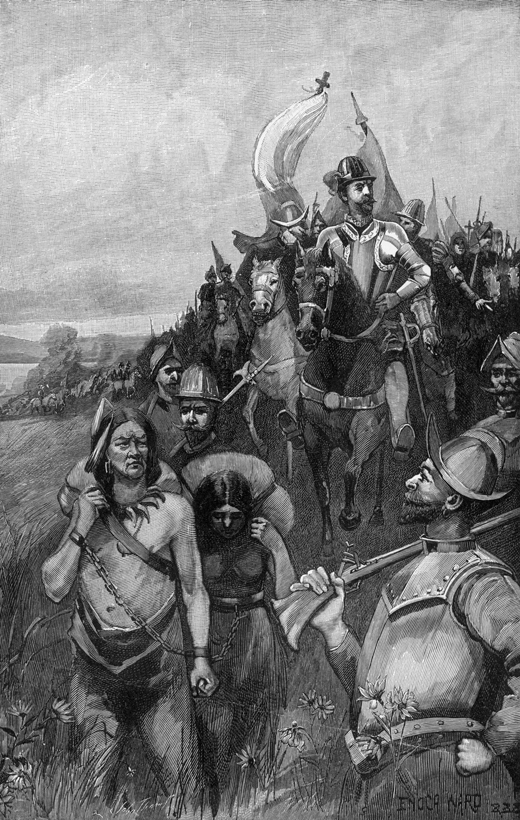
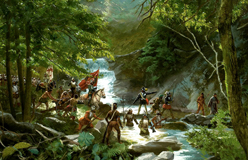
◀ In the early 16th century, Spain wanted to control land in North America and to discover gold and silver. Hernando De Soto led the first expedition to achieve those goals. In 1539, his group of around 600 explorers left from Cuba, sailed to Florida, and traveled north from there until they reached the Piedmont and the western mountains of present-day North Carolina. Once there, they followed the Nolichucky River into what is now Tennessee. De Soto relied on the Indigenous peoples he met for their help with directions. At the same time, he took their food and enslaved many of their members. He never did find the riches he sought.
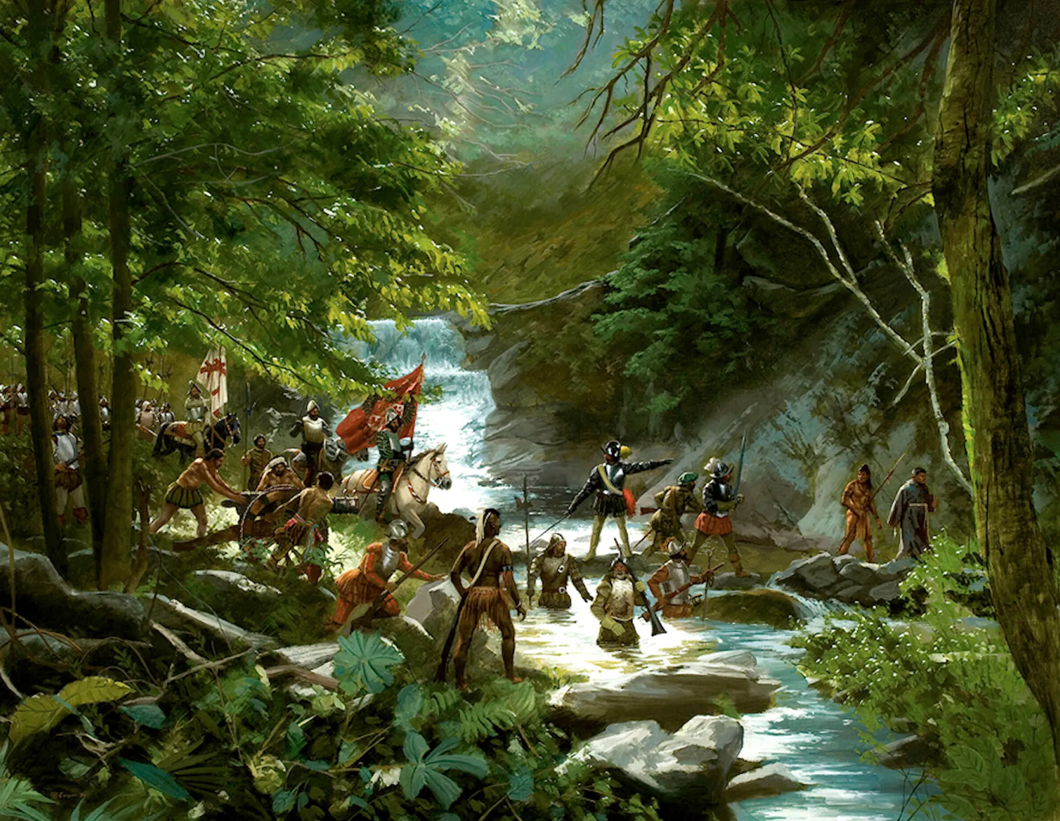
▲ From 1566 to 1568, Juan Pardo led two expeditions that reached western North Carolina. Both traveled north from Santa Elena (near modern-day Parris Island, in South Carolina). The goal of the first expedition was to reach Joara, a tribal community at the bottom of the Blue Ridge Mountains. There, Pardo founded Fort San Juan, the first European settlement in the interior of North Carolina. The goal of his second expedition was to find Zacatecas in Mexico. . . and its silver. Pardo did not reach Mexico, but he did establish several forts along the way.
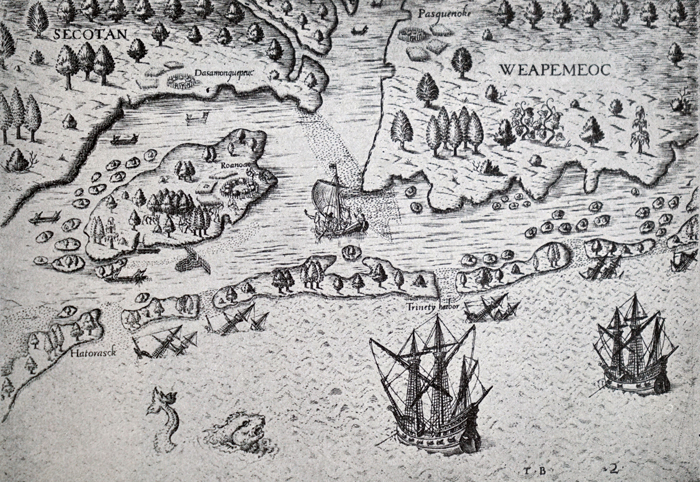
◀ In 1584, British adventurer and writer Walter Raleigh sent Philip Amadas and Arthur Barlowe on an expedition with the goal of finding a site for a future British colony. After a three-month sea voyage, they reached the North Carolina coast and claimed the land just north of Roanoke Island for England. There, the explorers met members of Indigenous tribes. In his report, Barlowe describes what he learned about how they made their boats:
Their boats are made of one tree. . . . They have no edge-tools to make them. . . . The manner of making their boats is thus: they burn down some great tree . . . and putting gum and resin upon one side thereof, they set fire into it, and when it has burnt it hollow, they cut out the coals with their shells . . . and by this means they fashion very fine boats. . . .
Think Piece!
What do you think of the way Indigenous peoples made boats? How else could they have done it?
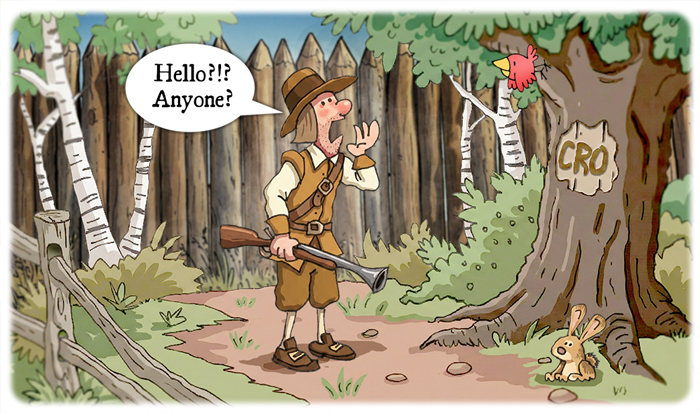
▲ In July 1587, 117 English colonists arrived on Roanoke Island to start a new settlement with John White as their governor. Among the colonists were White’s daughter and son-in-law. Their baby, Virginia Dare, was born soon after they arrived on the island, making Virginia Dare the first English child born on what would become American soil. White soon had to leave the island for England. He was unable to return to Roanoke for three years. Upon his return, he discovered that the settlement had vanished. The letters “CRO” were carved into a tree, and the word ”CROATOAN” was carved into a palisade post. The Croatoan were Indigenous peoples in the area. Was this a clue to what had happened to the settlers? To this day, the truth is not known. Here is an excerpt of what White wrote about the experience:
We passed toward the place where they were left in [many] houses, but we found the houses taken down, and the place very strongly enclosed with a high palisade of great trees . . . and one of the chief trees . . . at the right side of the entrance had the bark taken off . . . and . . . in . . . capital letters was graven CROATOAN.
Check It Out!
What do scientists say about the disappearance of the colony?
People have several ideas about what happened to the colony. Maybe the settlers had been killed by a hurricane, or perhaps they ran out of food or became very ill. They might have moved away from Roanoke or joined the Croatoan. There is evidence that supports this last idea.
Think Piece!
What do you think happened to the settlers on Roanoke Island?
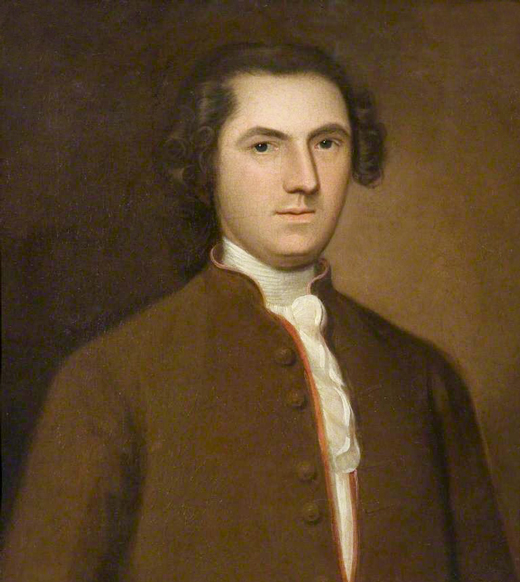
In 1663, King Charles II gave the land south of Virginia and north of Florida to eight English proprietors, or owners. They named it the Province of Carolina in honor of the king. However, the area was too large to govern, so in 1712 it was split in two – North Carolina and South Carolina, with Edward Hyde (right) being the first governor of North Carolina. ▶
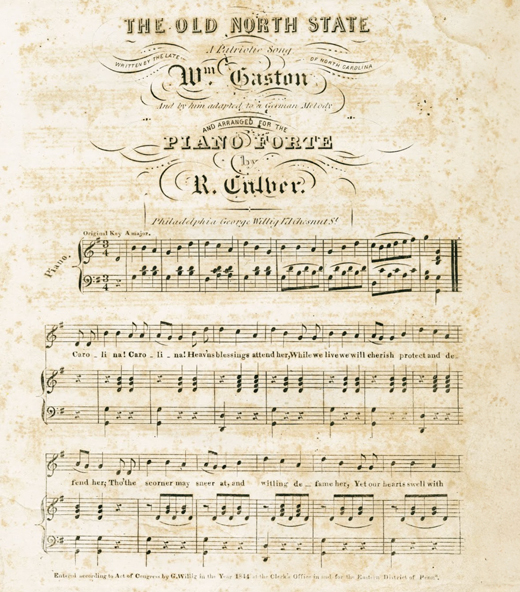
◀ The northern part of the original province of Carolina was settled earlier than the southern part, which earned it the nickname, “The Old North State.” Today, “The Old North State” is the title of our state song. Below are the first and last verses of the song:
Carolina! Carolina! Heaven‘s blessings attend her!
While we live we will cherish, protect and defend her;
Though the scorner may sneer at and witlings defame her,
Our hearts swell with gladness whenever we name her.
Hurrah! Hurrah! The Old North State forever!
Hurrah! Hurrah! The good Old North State!
Then let all who love us, love the land that we live in
(As happy a region on this side of Heaven),
Where Plenty and Freedom, Love and Peace smile before us,
Raise aloud, raise together, the heart-thrilling chorus!
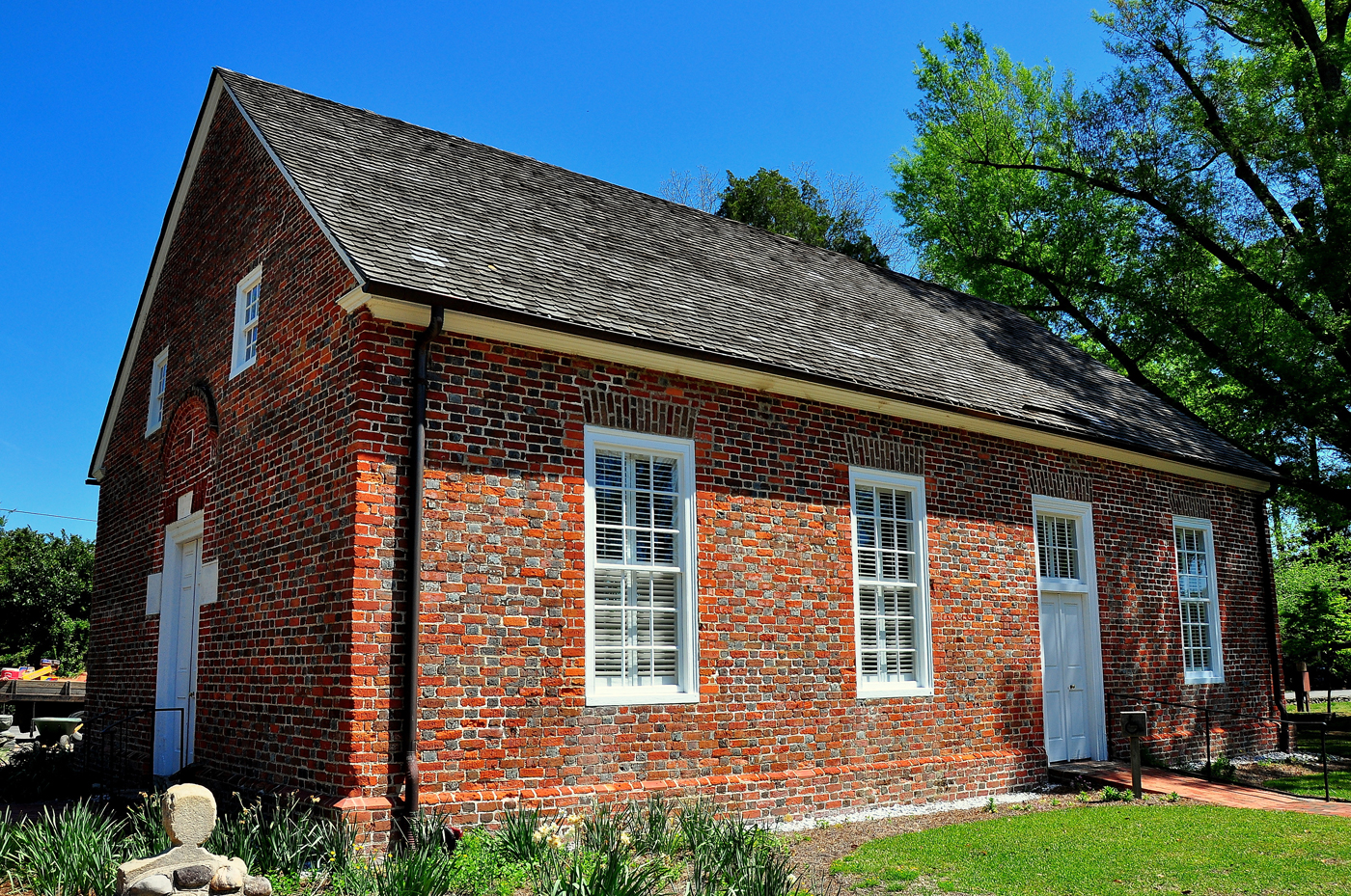
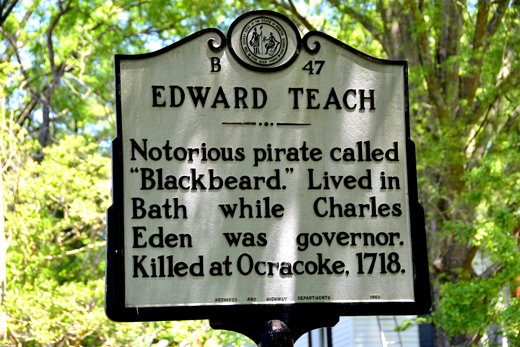
Perhaps you’ve heard of the pirate Blackbeard. His real name was Edward Teach. He was born in England and became a wicked pirate. Teach earned his nickname from the bushy black beard that covered his whole face. In 1718, Teach settled in Bath. ▶
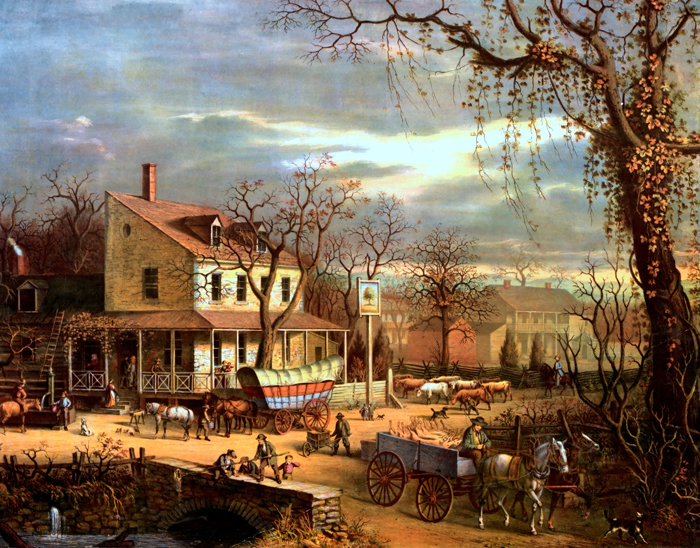
◀ Originally, the Great Wagon Road was a trail created by Indigenous peoples. The road helped settlements in North Carolina grow. Newcomers followed it south from Pennsylvania to find new homes in the western Piedmont, often using axes, picks, and shovels to widen the path. Over time, they settled villages that became cities like Salem, Salisbury, and Charlotte. In 1775, pioneer Daniel Boone opened the Wilderness Road, which connected the Great Wagon Road to places in the west, especially Tennessee and Kentucky.
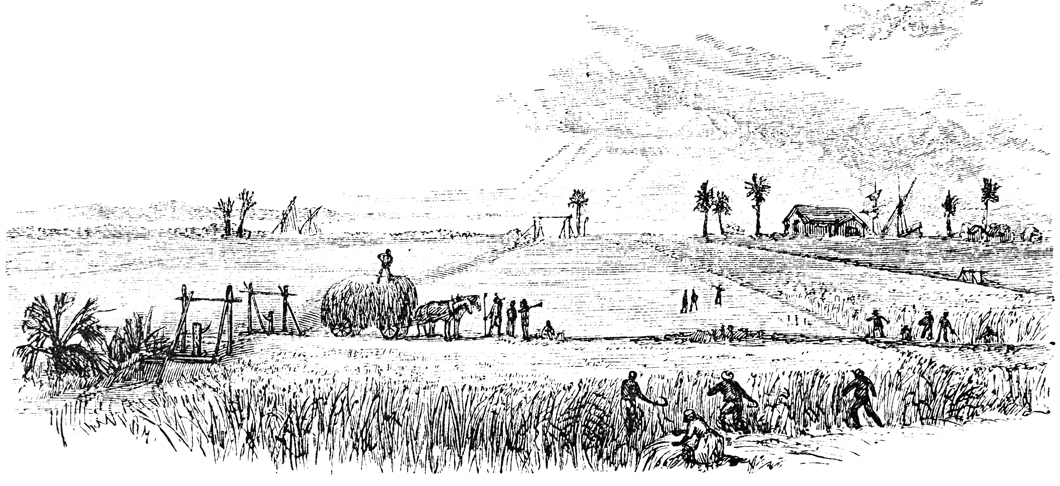
▲ The western and eastern parts of North Carolina were very different. Along the Coastal plain were large plantations of rice and tobacco. In the Cape Fear part of the coast, indigo was farmed as well. Indigo was a popular blue dye in Britain at the time. Like rice and tobacco plantations, farming indigo depended on enslaved labor. In the Piedmont and the mountain region were subsistence farms. Subsistence farms are small farms where families grow food to feed themselves. Wheat, corn, peas, and beans were grown for trading. Farmers used the Great Wagon Road to move cattle and hides to cities.
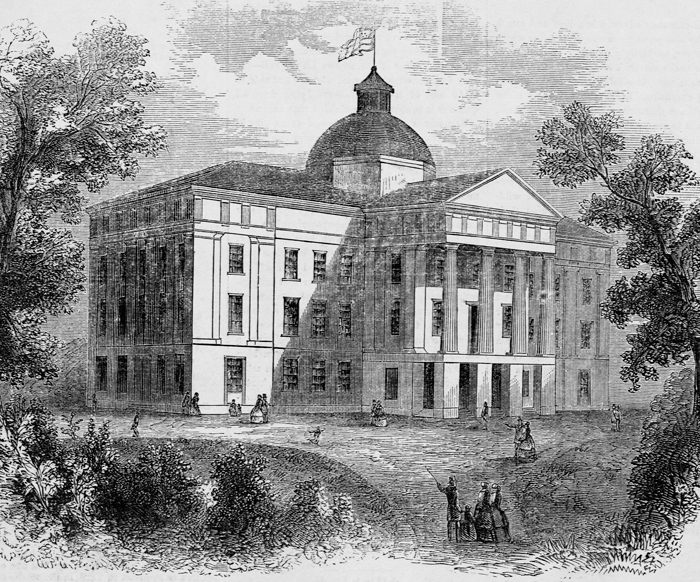
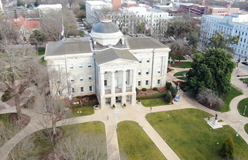
◀ The capital city of colonial North Carolina moved around quite a bit. Often, governors lived in their own houses rather than in an official residence, while people in the legislature met in one another’s homes. In 1722, Edenton was made the capital; however, government meetings also took place in Bath and New Bern. In 1776, New Bern was named the permanent capital. But the matter was still not settled. The American Revolution had started, and the soon-to-be state government moved and moved again. Finally in 1794, the state government met in Raleigh, which is where the capital has been ever since.