Free
Mexico City is home to more than 21 million people. That’s more than any other city in North or South America.
Mexico City doesn’t just have more people. It has more everything: museums, sports arenas, art galleries, parks, TV stations, theaters, and jobs. It is the nation’s center for government, culture, industry, and transportation. Its size also causes some big headaches, like more traffic and air pollution.
How did the nation’s capital city get so large? As machines did more and more work on farms, many people lost their jobs. They became very poor. Mexico City was full of better-paying factory jobs. It was also a place where people might get an education, so many moved there.
Mexico City’s climate attracted people. It’s warm but not too hot. That’s because it sits in a valley in the high plateaus of central Mexico, about 7,500 feet above sea level.
Loading the player...
▲ There are many modern buildings in Mexico City. But the base of the city is very old. The capital sits on top of the Aztec city of Tenochtitlan. In the 1970s, workers were digging a hole for an electrical cable. They found the remains of a large pyramid complex. Above is a model of the complex.
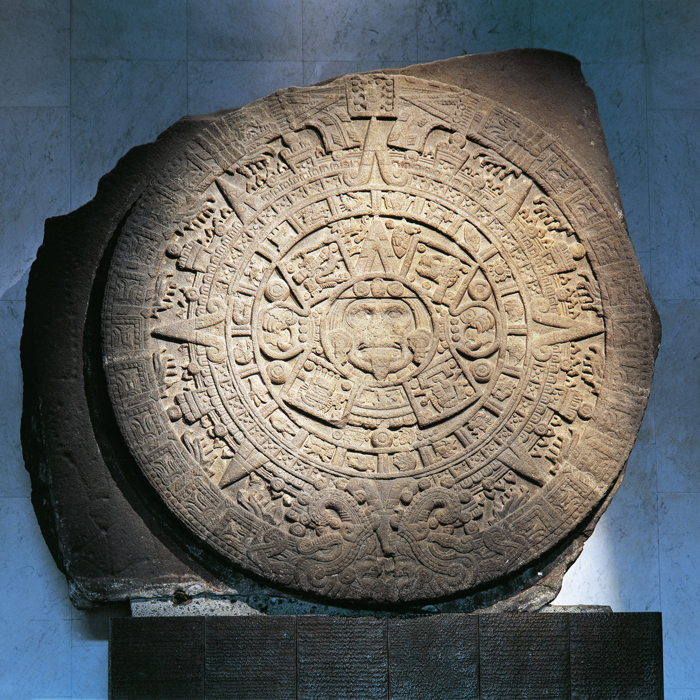
▲ In 1790, workers were digging a basement in the Zócalo area. They found a 24-ton disk covered in markings. It was this Aztec calendar stone. The carvings on the stone tell the history of the world according to the Aztec religion.
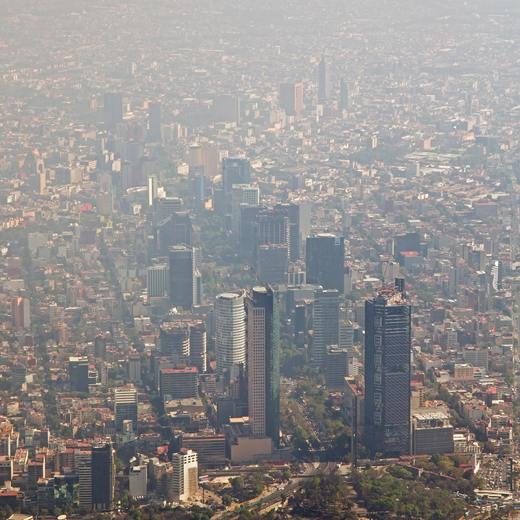
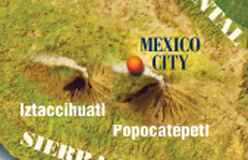
▲ Air pollution is a big problem in Mexico City. That’s because there are mountains and volcanoes all around the city. They form a bowl. That traps the polluted air, which causes heavy smog to rest over the city. The good news is that the smog is less bad now than it used to be. The government has taken many steps to improve the air.
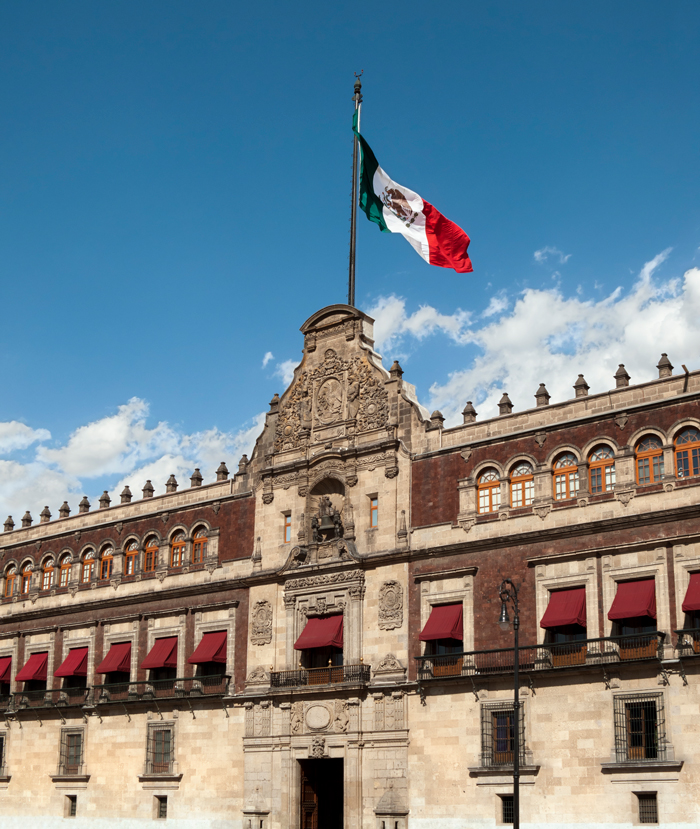
▲ This is the National Palace. It is the headquarters of the federal government, and Mexico’s president has his office there. The bell that Father Hidalgo rang in 1810 hangs from the front of the building.
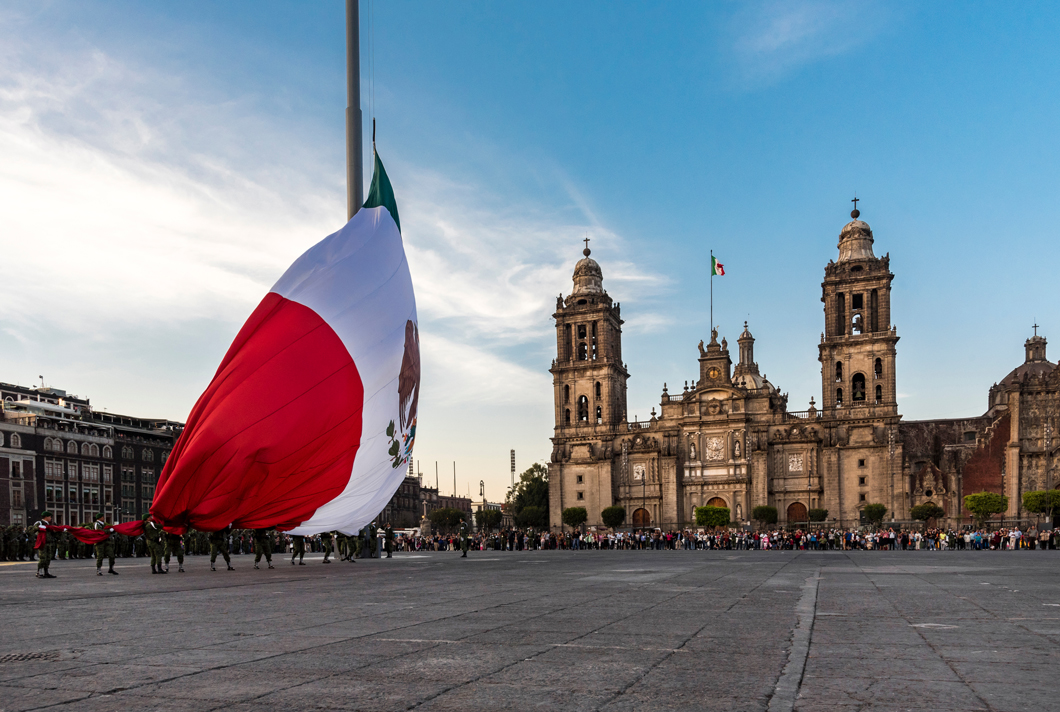
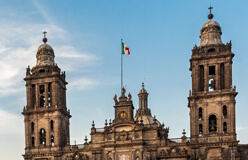
▲ This is Mexico City’s central plaza, or square. It is officially called the Plaza de la Constitución. But everyone calls it the Zócalo. That means the base or the foundation. It has been a public square ever since the time of the Aztecs. It is also the site of the National Cathedral, which was built over three centuries, beginning in 1572.
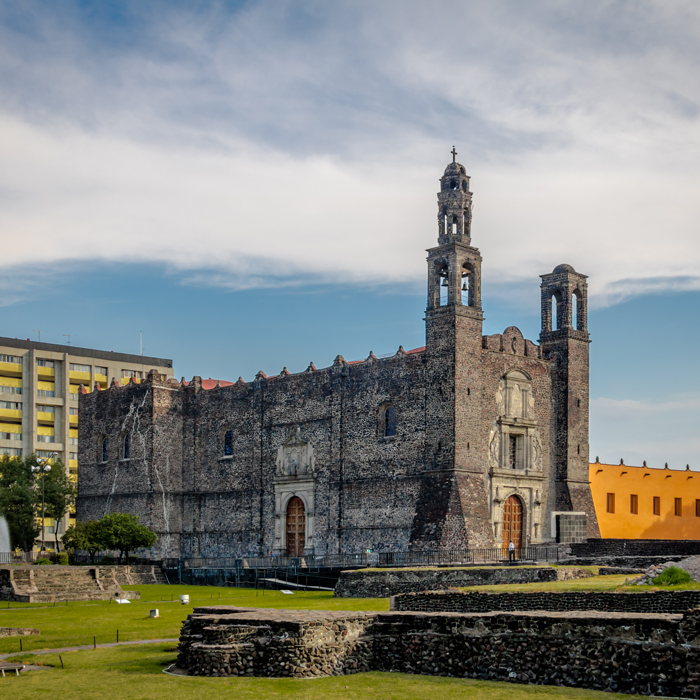
This is another famous Mexico City square. It is called the Plaza of Three Cultures. That’s because buildings from Indian, Spanish, and modern Mexican culture stand side by side here. ▶
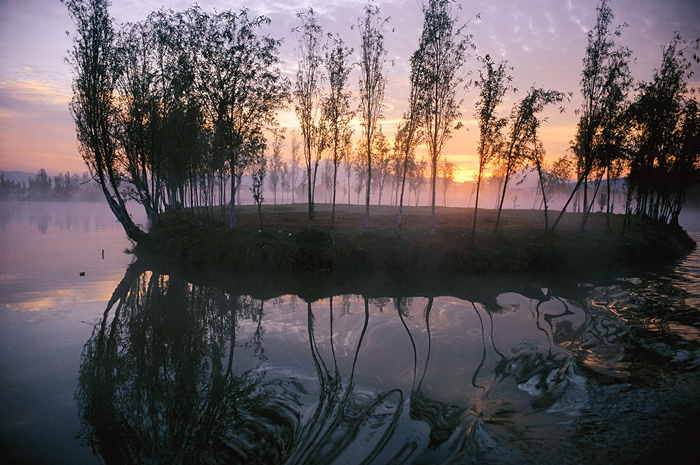
▲ Many years ago, the Aztec city of Tenochtitlan, which is now Mexico City, was filled with water gardens. Today, only this water garden remains. It is a living piece of the city’s past.