Free
During the civil rights movement, leaders and ordinary people showed great courage.
You’ve met some of them on other pages. Here are just a few of the many, many more. Learn more about them in books or online.
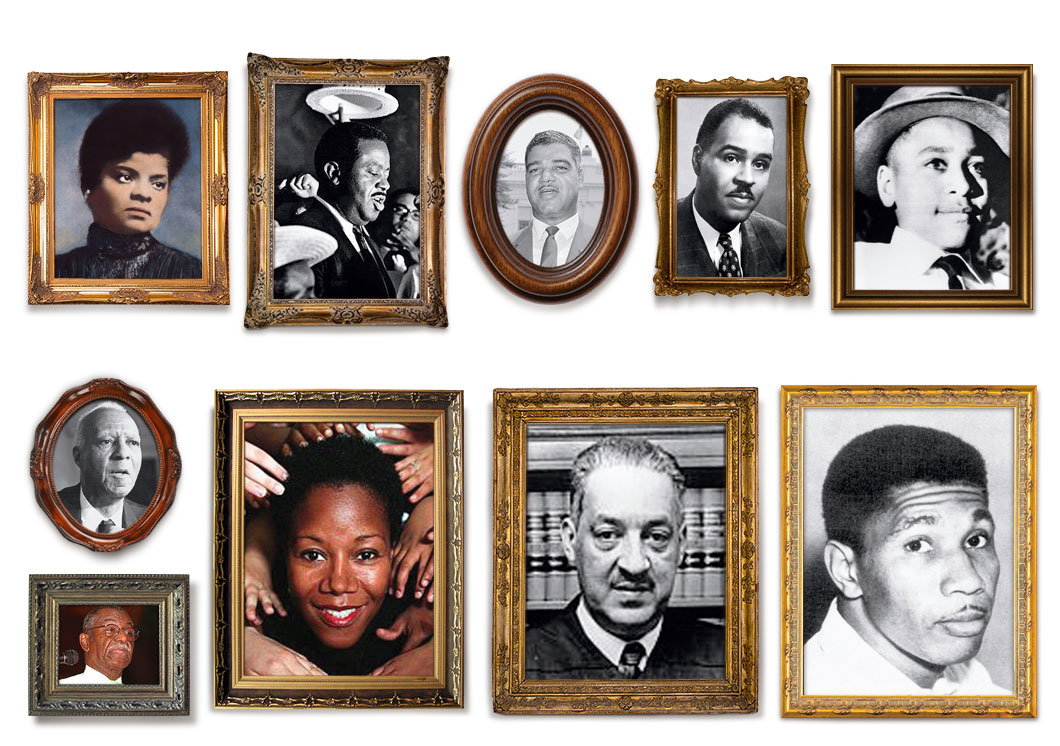
Ida B. Wells-Barnett
(1862–1931)
Born into slavery, she became a teacher and a writer. She fought against lynching and supported women’s right to vote.
Reverend Ralph Abernathy
(1926–1990)
He was a close friend of Martin Luther King Jr. A leader in the SCLC, he went to jail with King many times.
Whitney Young
(1921–1971)
He was executive director of the National Urban League. He spoke to businesses and government. He wanted equal opportunities for African Americans in jobs, education, and health care.
Roy Wilkins
(1901–1981)
During the civil rights movement, he was executive director of the NAACP. He was strongly in favor of nonviolent protest. He thought the best way to fix things was through the legal system.
Emmett Till
(1941–1955)
While visiting relatives in Mississippi in 1955, this 14-year-old was murdered. Why? He talked to a white woman in a way that was said to be disrespectful. His accused killers were found not guilty at trial. But later, they said they’d done it.
A. Philip Randolph
(1889–1979)
He was a labor leader and a key figure at the 1963 March on Washington.
Reverend Fred Shuttlesworth
(1922–2011)
He was a co-founder of the Southern Christian Leadership Conference, or SCLC. He went to jail for freedom more than 20 times.
Ruby Bridges
(1954– )
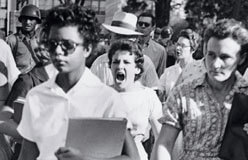
She was six years old in 1960. That’s when she became one of the first black children to go to a white elementary school in the Deep South. Federal marshals walked her past angry mobs.
Thurgood Marshall
(1908–1993)
He was one of the NAACP lawyers who argued the case of Brown v. the Board of Education. That case went before the Supreme Court in 1954. President Lyndon Johnson made him the first black Supreme Court justice. That was in 1967.
Medgar Evers
(1925–1963)
He was the first full-time staff member at the Mississippi chapter of the NAACP. He was shot to death in 1963. His murderer was convicted in 1994.
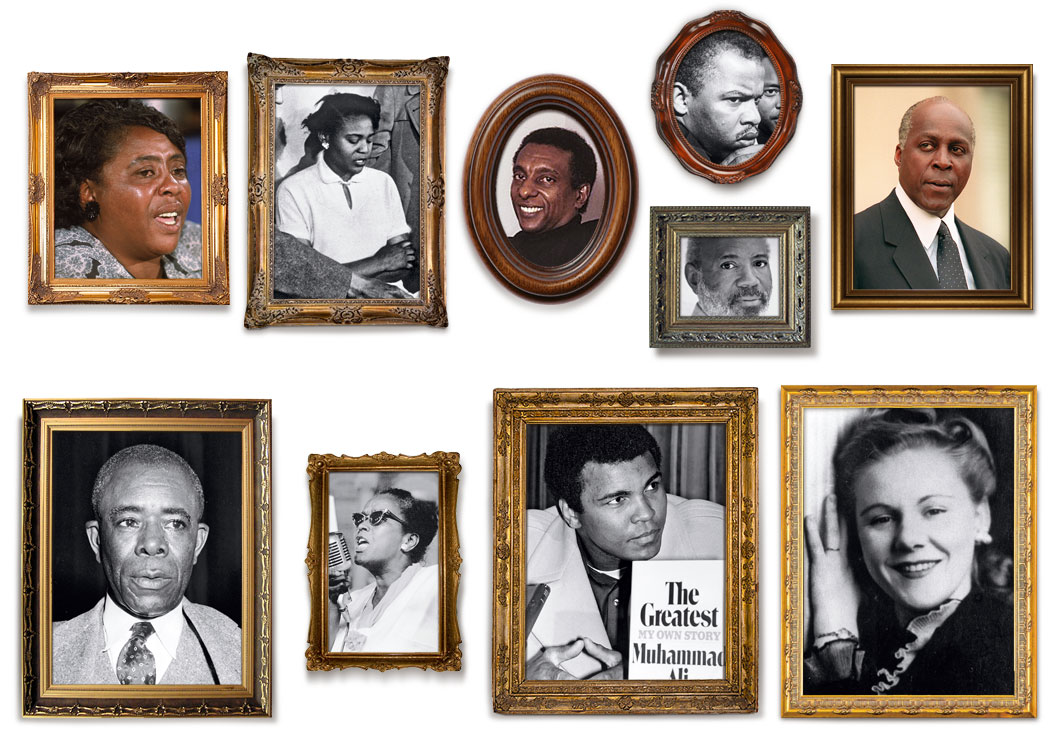
Fannie Lou Hamer
(1917–1977)
In 1964, she went with the integrated Mississippi Freedom Democratic Party to the Democratic National Convention. There, she made a strong plea. She asked the convention to seat her delegation instead of the state’s official all-white one. But the convention said no. Hamer was fired from her job and kicked out of her home for doing that.
Autherine Lucy
(1929– )
She tried to attend the University of Alabama in February 1956. She was met by an armed white mob. Then she was expelled, with the excuse that it was for her own safety.
Stokely Carmichael
(1941–1998)
He was the chairman of the Student Nonviolent Coordinating Committee. He was arrested many times. He came to believe in “black power.” That was the idea that African Americans must pool their political, social, and economic power to win freedom.
John Lewis
(1940–2020)
He was a founder of the Student Nonviolent Coordinating Committee. He was at most of the big civil rights protests. In 1986, he was elected to Congress as a representative from Georgia.
James Meredith
(1933– )
He was the first black student to enter the University of Mississippi. That was in 1962. Riots broke out when he got there. They only ended when President Kennedy sent the Army to protect him.
Vernon Jordan
(1935– )
A lawyer, he sued the University of Georgia for not admitting black students. Later, he also walked Charlayne Hunter through mobs to class. She was one of the school’s first black students.
E. D. Nixon
(1899–1987)
He was the head of the Montgomery chapter of the NAACP. In 1955, he came up with the idea of the Montgomery bus boycott.
Ella Baker
(1930–1986)
She was an official with the NAACP and SCLC. She spoke up for grassroots organizing and inspired the students who started the SNCC.
Muhammad Ali
(1942– 2016)
He became heavyweight boxing champion of the world in 1964. He refused to fight in the Vietnam War. So his title was taken away. But the Supreme Court ruled in 1974 that the government was wrong to do that, and Ali got his title back.
Viola Liuzzo
(1925–1965)
This white mother of five from Detroit went to Selma as a volunteer. She drove black protesters back from Montgomery after the march there. Her car was followed. She was killed by members of the Ku Klux Klan.