Free
If you live in California’s Desert Region, you can show your visiting friends the lowest point in the Western Hemisphere. It’s 282 feet below sea level!
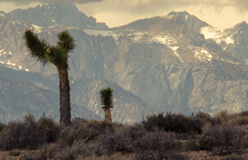
The spot is in Death Valley, near the Nevada border, one of the hottest and driest places on Earth. Without shelter and water, people can’t survive in this desert. But the plants and animals that live in Death Valley have adapted to the harsh conditions.
Elsewhere in the Desert Region, farms use irrigation to water crops that could not grow there normally. With effort and technology, some people call it home.
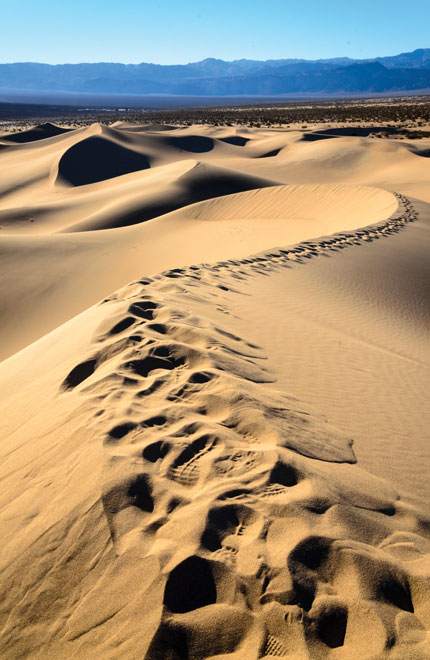
◀ Two deserts cover most of southeastern California. The biggest is the Mojave Desert. It’s between the southern Sierra Nevada and the Colorado River. The Colorado Desert is farther south, near the border with Mexico. The Desert Region includes several valleys, such as the Imperial and Coachella Valleys. The Salton Sea is also in the region. It’s actually a lake! It formed when the Colorado River flooded more than 100 years ago.
Weather in the desert can be extreme in more ways than one. It’s famous for its extreme heat and many months without rain. But it can also be very cold at night. High winds can rip through steep canyons, tearing limbs off trees and pushing tumbleweeds across the desert floor. Sudden storms can send torrents of water crashing through valleys in flash floods. ▶
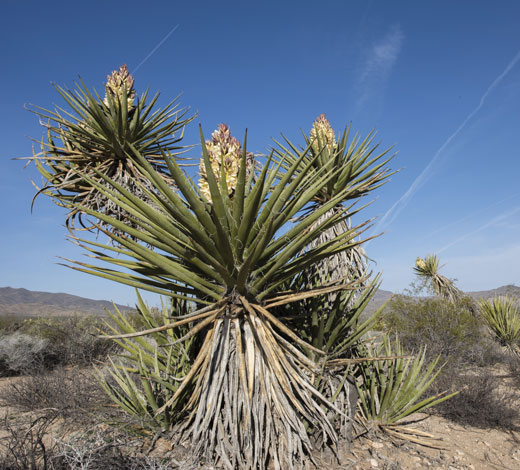
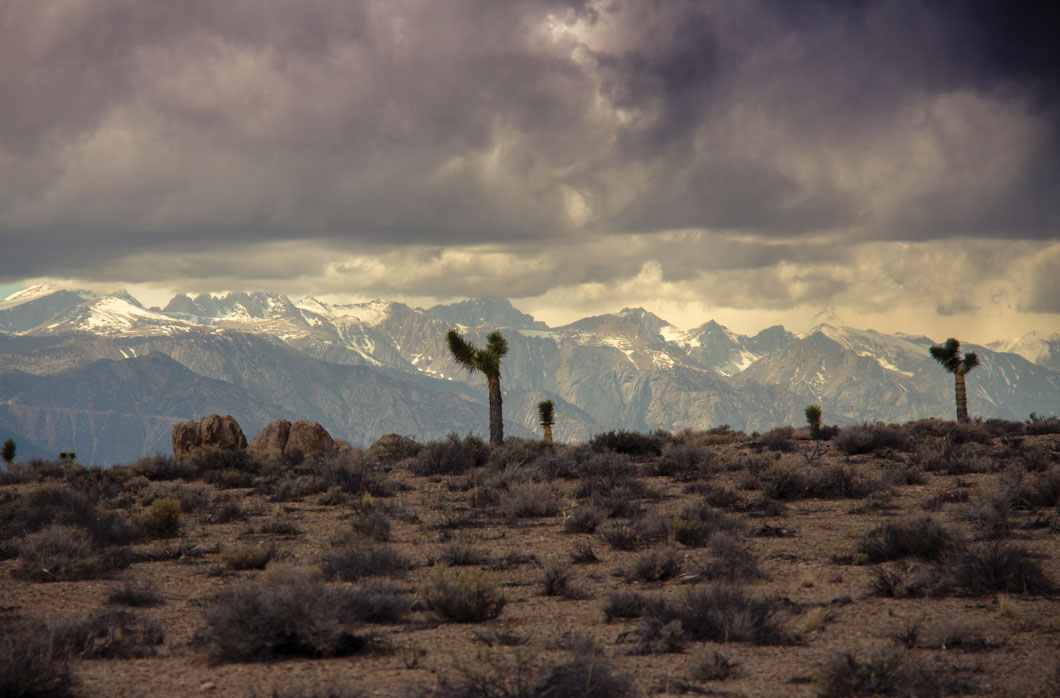
▲ Why are California’s deserts so dry? One reason is that the mountains to the west form a rain shadow: they block moist air from reaching the other side. Another reason is that there is little humidity in the air to block the sun’s rays. In addition, the soil is rocky. Instead of soaking into the ground, rainwater just runs off.
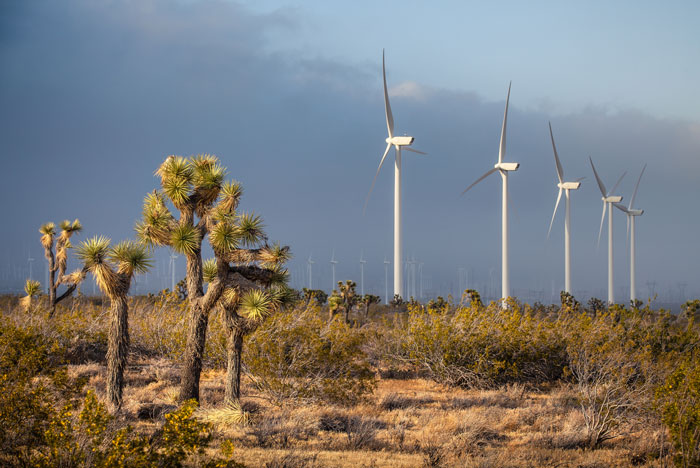
California’s high population density creates great demand for electricity. Meeting power needs is expensive. Many types of power plants cause pollution.
Wind is an abundant natural resource in the desert. So is open space. Some power companies have adapted to Southern California’s need for clean energy by generating electricity using giant wind turbines in the desert.
Learn More!
Northern California gets lots of rain. Southern California doesn’t – and its cities have much higher population densities. People all over the state depend on a solid snowpack in the Sierra Nevada each winter. It keeps lakes, reservoirs, and underground water levels high. These resources support the needs of many millions of people. Sometimes California doesn’t get enough precipitation. People and businesses may use too much water. As supplies drop, the people who manage water ask Californians to conserve, or save, water. What are some ways you can save water in your house and yard? ▶
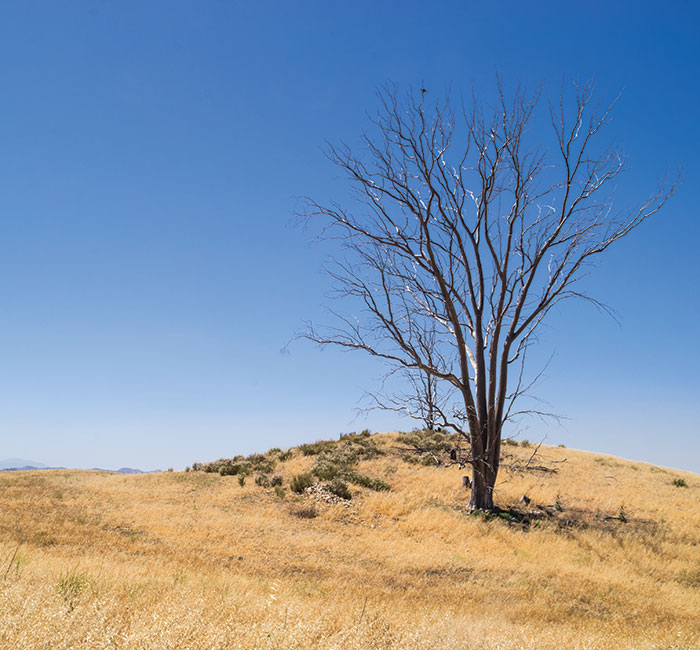
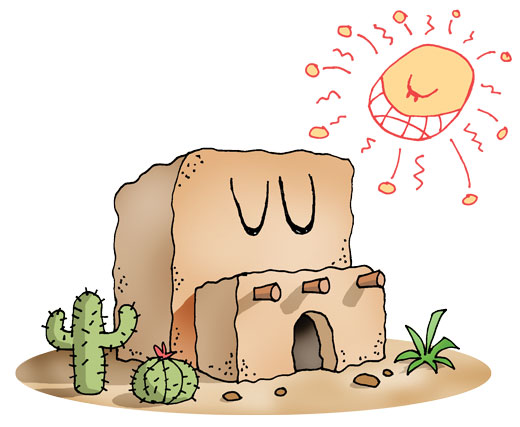
◀ In the desert, people adapt to the climate in many ways. Many houses and other buildings are made of adobe, or thick brick. Adobe bricks stay cool in the hot sun longer than other materials. People generally stay indoors during the heat of the day and go out in the early morning or evening. They grow desert plants in their yards, or they just leave the desert around them in its natural state. Most rely on water brought from other areas. They use air conditioners to keep homes and businesses cool.
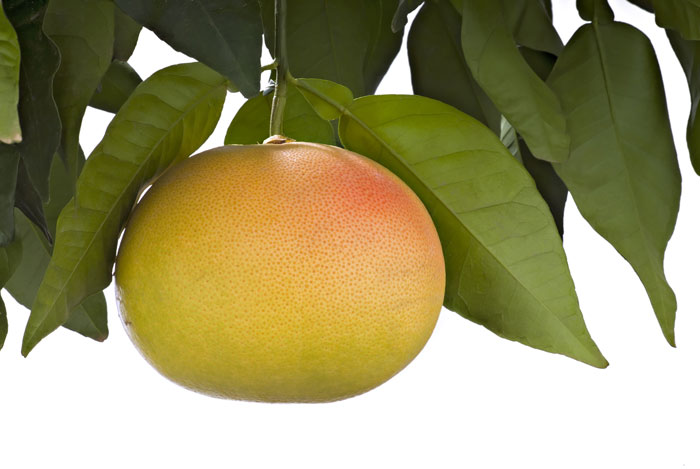
How do people grow fruit in the Desert Region? Some farmers bury their hoses underground. Drip nozzles stretch from the hoses to each tree. Water is released right at the tree’s roots in small amounts. Big, sweet grapefruits ripen on the trees’ branches. But no water evaporates into the dry desert air.
Learn More!