Free
You’re having a huge party. You invite all your friends and family – not just neighbors who live close by, but people from all over! Naturally, they want your address. You tell them your street and your city. You say that you live in California. Then some of them ask a strange question: “Where’s that?”
You might give one answer to a friend who lives in Florida, and a different response to an aunt in Alaska. If you have family that lives in a country far away, your answer could change again.
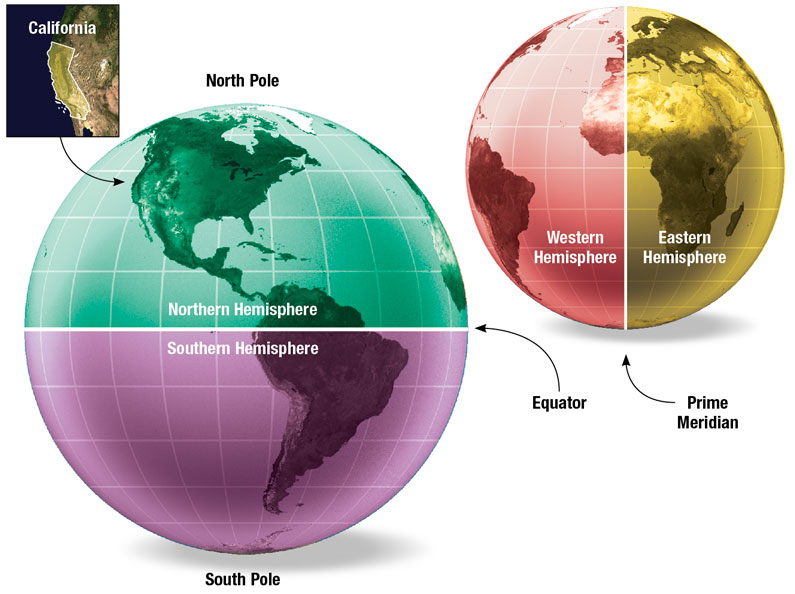
One way to describe California is to explain its relative location: its position in relation to other places. California is in the Northern Hemisphere. That’s the half of Earth that is north of the equator. (The equator is the imaginary line that divides Earth halfway between the North and South Poles.) It is west of the prime meridian. The prime meridian is the imaginary line that divides Earth into the Western Hemisphere and the Eastern Hemisphere. ▶
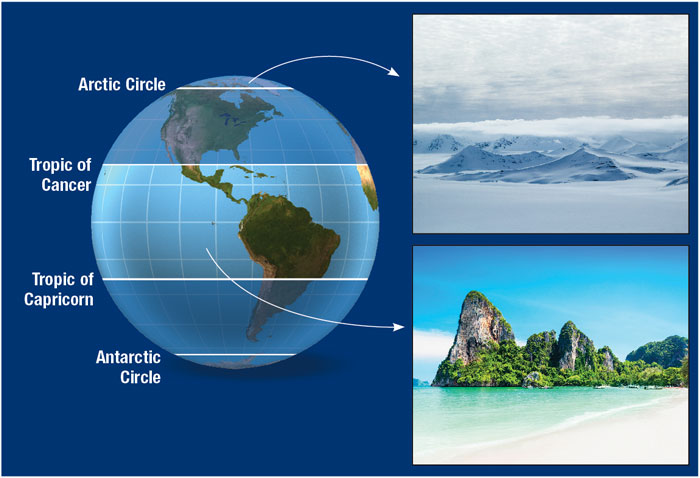
◀ California is north of the line called the Northern Tropic, or Tropic of Cancer. The Southern Tropic, or Tropic of Capricorn, is in the Southern Hemisphere. The area between these two lines gets the most sunlight on Earth. It’s often hot and humid, especially near the equator. California is south of the Arctic Circle, which surrounds the North Pole. The Antarctic Circle is around the South Pole. The Arctic and Antarctic Circles get less sunlight than other parts of Earth.
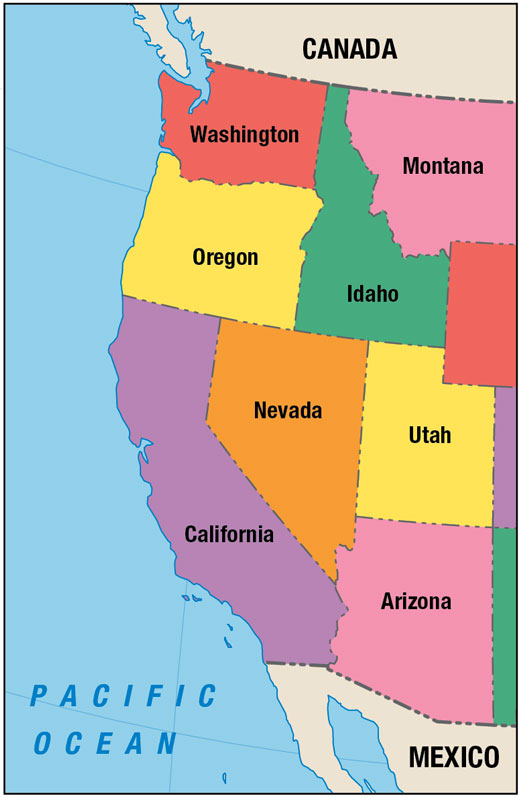
Another way you can describe California’s location is to talk about which continent, or landmass, it sits on. Then you can describe where you live in relation to closer places. California is part of the United States (U.S.), which is on the continent of North America. Within the U.S., California is north of the country of Mexico. It is south of the state of Oregon, east of the Pacific Ocean, and west of the states of Arizona and Nevada. ▶
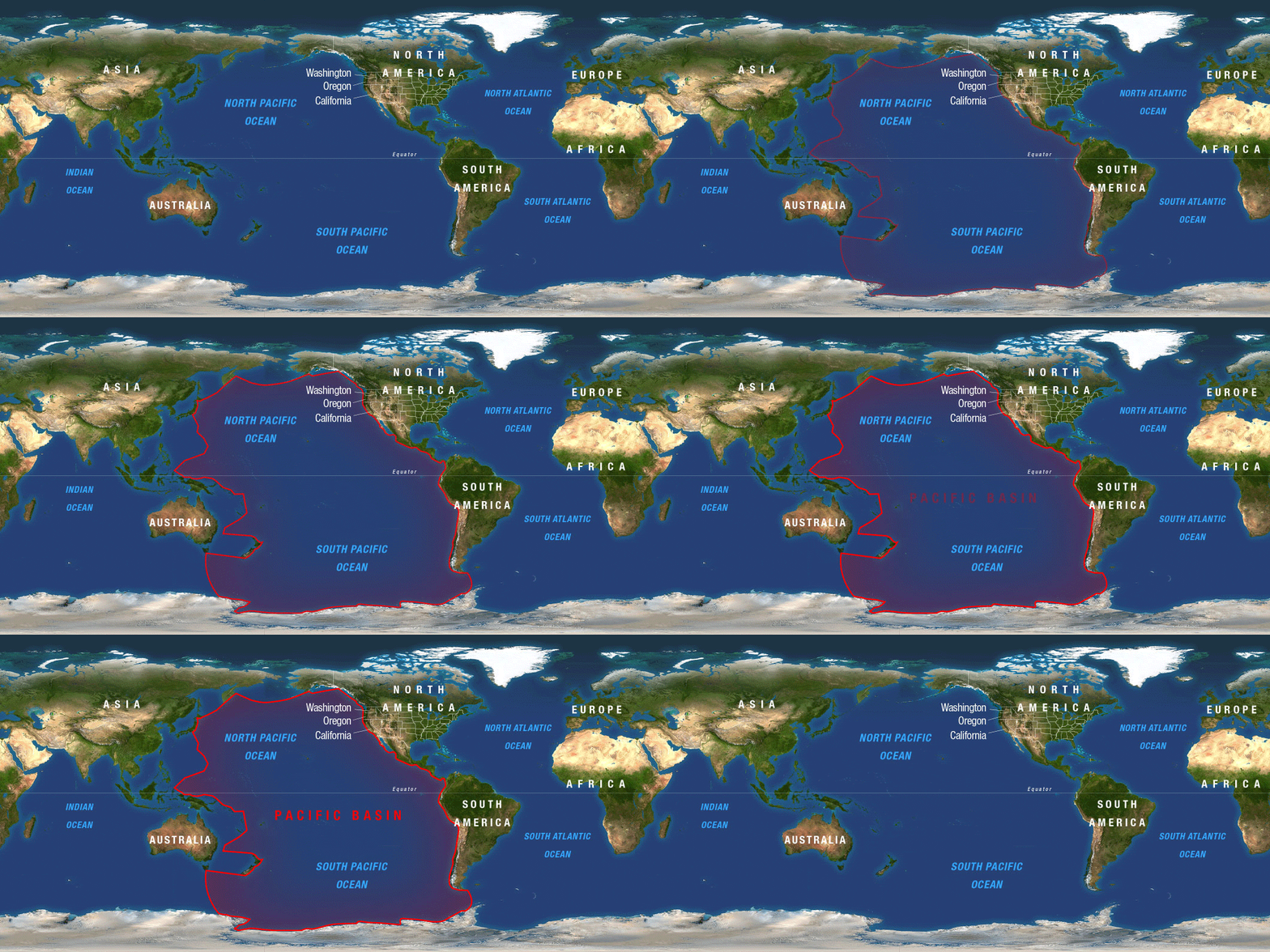
▲ The Pacific Ocean and the countries around it form a region called the Pacific Basin. California, Oregon, and Washington are all along the Pacific Basin.
The Pacific Ocean plays an important role in California. It affects weather patterns, jobs, food, and trade. Boats traveling across the Pacific have brought many of the people who live in the state. If you’ve ever been to the beach, you know that surfers, swimmers, and sand castle builders love the ocean!
Learn More!
Want to describe California’s location without discussing other places? Use latitude and longitude. That gives you an “absolute location.” ▼

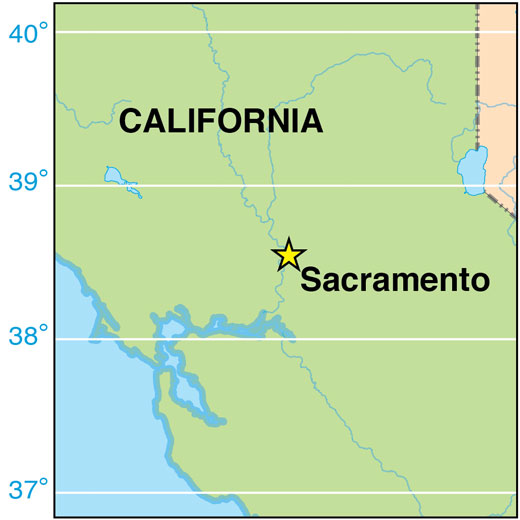
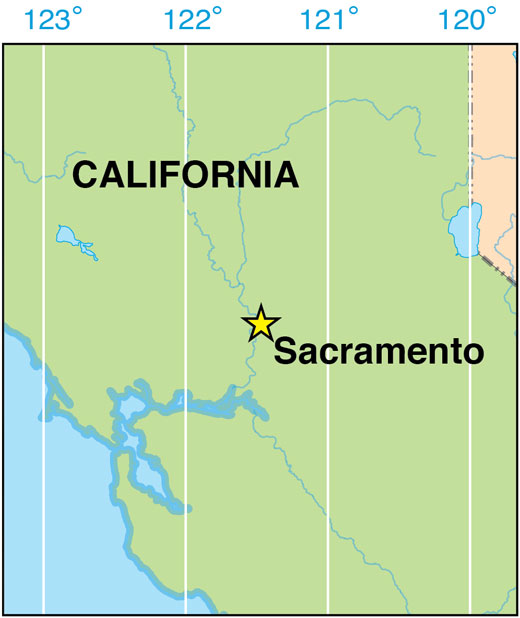
The longitude of Sacramento is approximately 121 degrees west. What does that mean? Imagine 360 equally spaced lines stretching from the North Pole to the South Pole. The lines cross the equator at 360 places, with 180 lines heading east and 180 going west from the prime meridian. Sacramento would fall in the 121st section to the west. ▶
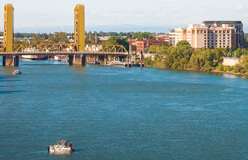
◀ Sacramento is the capital of California. Its latitude (or position north or south of the equator) is approximately 38 degrees north. If you drew a line from the equator to the North Pole and divided it into 90 equal sections, Sacramento would fall in the 38th section.
Try This!
Map Your Own California Adventure
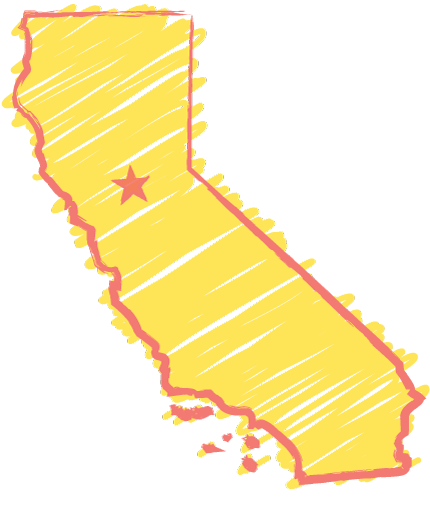
Have you seen a lot of California? Would you like to? Print or draw an outline of California on a piece of paper. Look at a map and copy a few lines of latitude and longitude. Then look up the absolute location of your favorite places and draw them on your map. Map places you’ve been, or places you want to see. You decide!
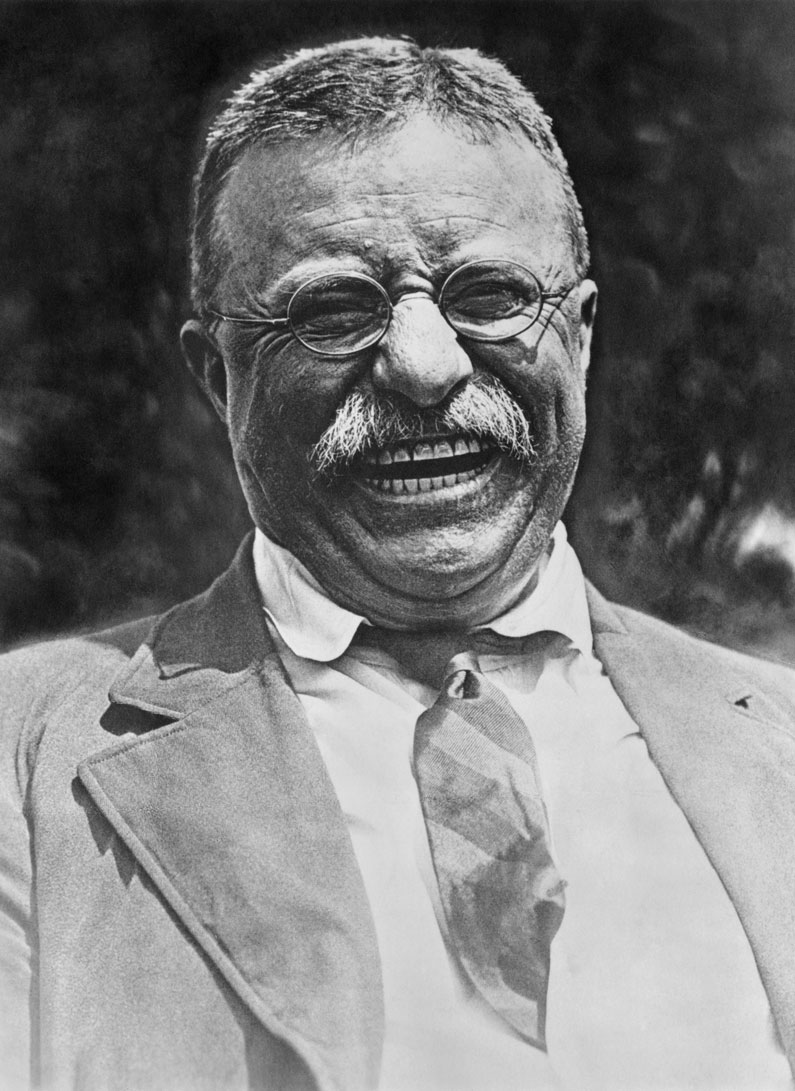
After the turn of the 20th century, President Theodore “Teddy” Roosevelt toured California. He visited the California State Capitol building in Sacramento. There, in 1903, he gave a speech about the grand places he had seen.
“I have come across the continent from the East to the West, and now beyond the West to California, for California stands by itself. I have enjoyed every hour of my stay here. I have just come from a four days’ rest in the Yosemite, and I wish to say one word to you here in the capital city of California about certain of your great natural resources, your forests and the water supply coming from the streams that find their sources among the forests of the mountains.
California possesses a wonderful climate, a wonderful soil, and throughout the portions that I have visited it is literally astounding to see how the land yields a hundred and a thousand fold when water is put upon it. And where it is possible to irrigate the land the result is, of course, far better than having to depend upon rainfall anywhere, but no small part of the prosperity of California in the hotter and drier agricultural regions depends upon the preservation of her water supply; and the water supply cannot be preserved unless the forests are preserved.”
Learn More!