Free
Now that people know how to get to your party, you need to tell them how to dress for the weather.
California is a big state with many climates. It’s the third-largest state in the country, after Alaska and Texas! It’s also tall. The northern edge of California is at a much higher latitude than its border with Mexico. Latitude, elevation, and how far a place is from the ocean all shape California’s climates.
Some Californians can drive from baking deserts to frosty mountain peaks in just a few hours. How should your friends dress for your climate?
Weather. Climate. What’s the Difference?
Weather is the temperature, rainfall, wind, and humidity levels that happen in an area. Weather changes from season to season. It can also change from day to day. The term “climate” refers to the typical weather for a region over many years. Extreme climates experience hotter summer weather and colder winters. Moderate climates don’t vary as much between seasons. ▶
Climate in California
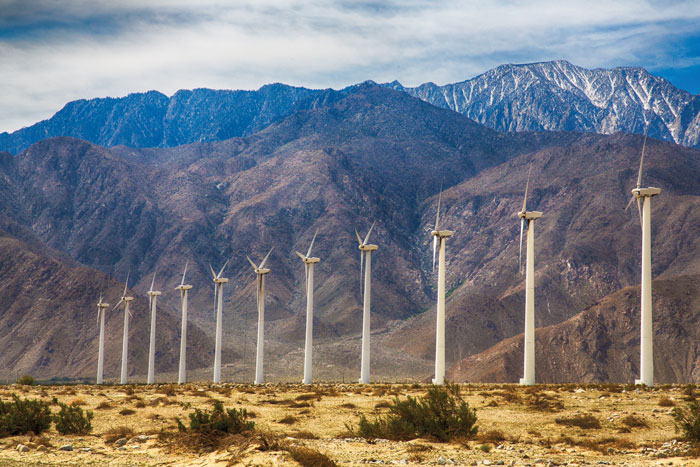
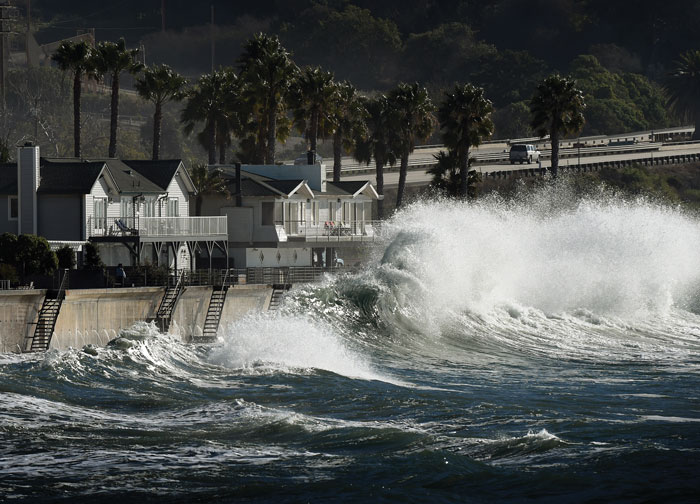
◀ Even in a big state like California, scientists can make observations about climate. California is cooler and drier than the tropics to the south. It’s warmer than the arctic regions in the north. Within California, temperatures are warmer in the south. Coastal climates are usually more moderate than mountains and deserts to the east.
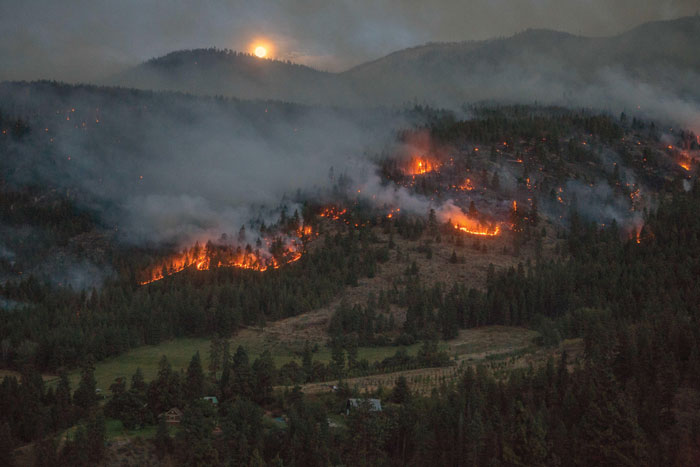
▲ In California, severe weather often comes in the form of dryness. Little to no rainfall is normal in the summer. It is also normal in early fall. But dry spells can last for many months, or even for years. These are called droughts. During a drought, plants can dry up and even die. That includes huge trees. Dry brush leads to wildfires. They can destroy homes and animal habitats. Without water, farmers cannot keep their crops alive.
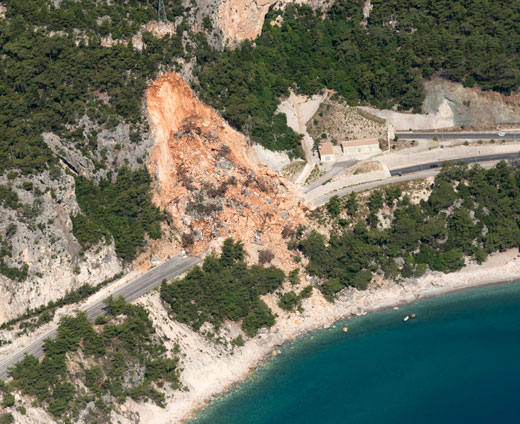
◀ After a drought, everyone welcomes rain. Rain waters the forests. It replaces water deep in the ground. This can be pumped out for drinking and for growing crops.
But big storms after a drought can have a bad effect. The effect is landslides. When grasses and shrubs grow, their roots help hold soil on mountains and hills. They no longer anchor the mud when plants dry up, or after a wildfire. Rain can soak into the soil until it slides downhill. A downpour on mountains can cause flash floods. These might wash away roads and bridges.
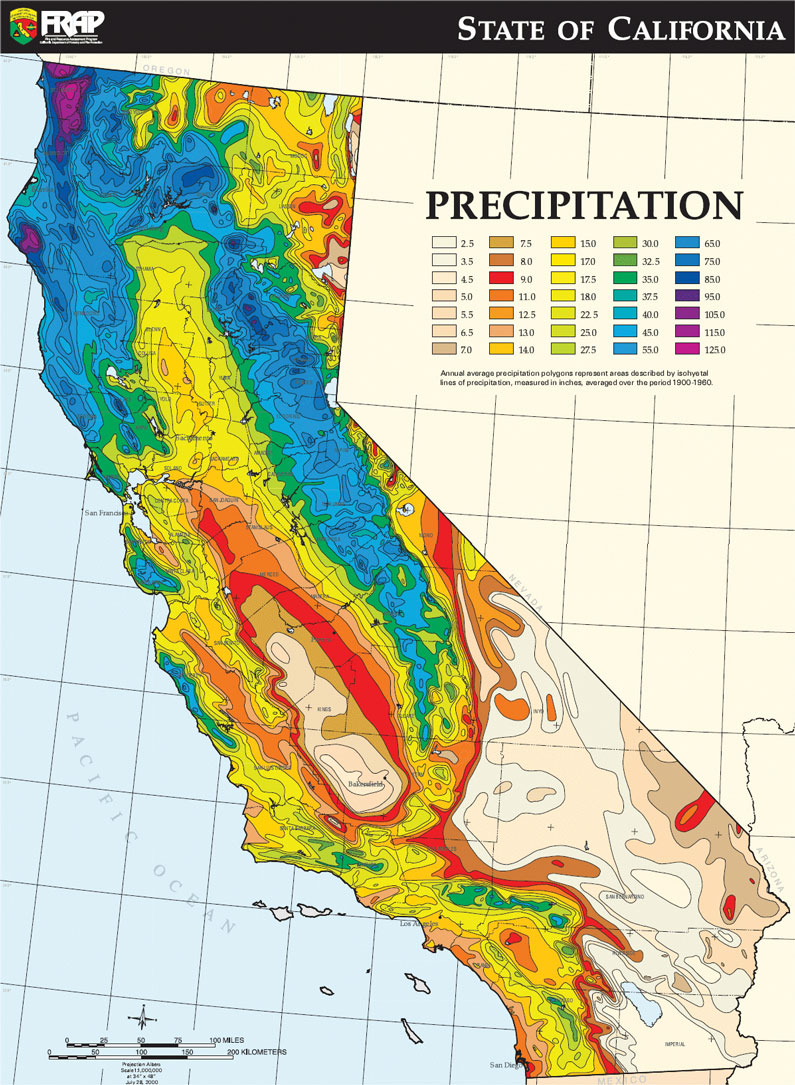
Communities in different climates have different kinds of vegetation. Vegetation means “plant life.” Big Bear is in Southern California. Hikers there find oaks and pines. Big Basin Redwoods State Park is farther north. Hikers there see more redwoods. Yet both places are areas with forests. The forests are so different because of the mountains. Those in the center and northern half of the state get more than twice as many inches of precipitation as those in the southern half. Precipitation includes rain, hail, sleet, and snow. ▶
Learn More!
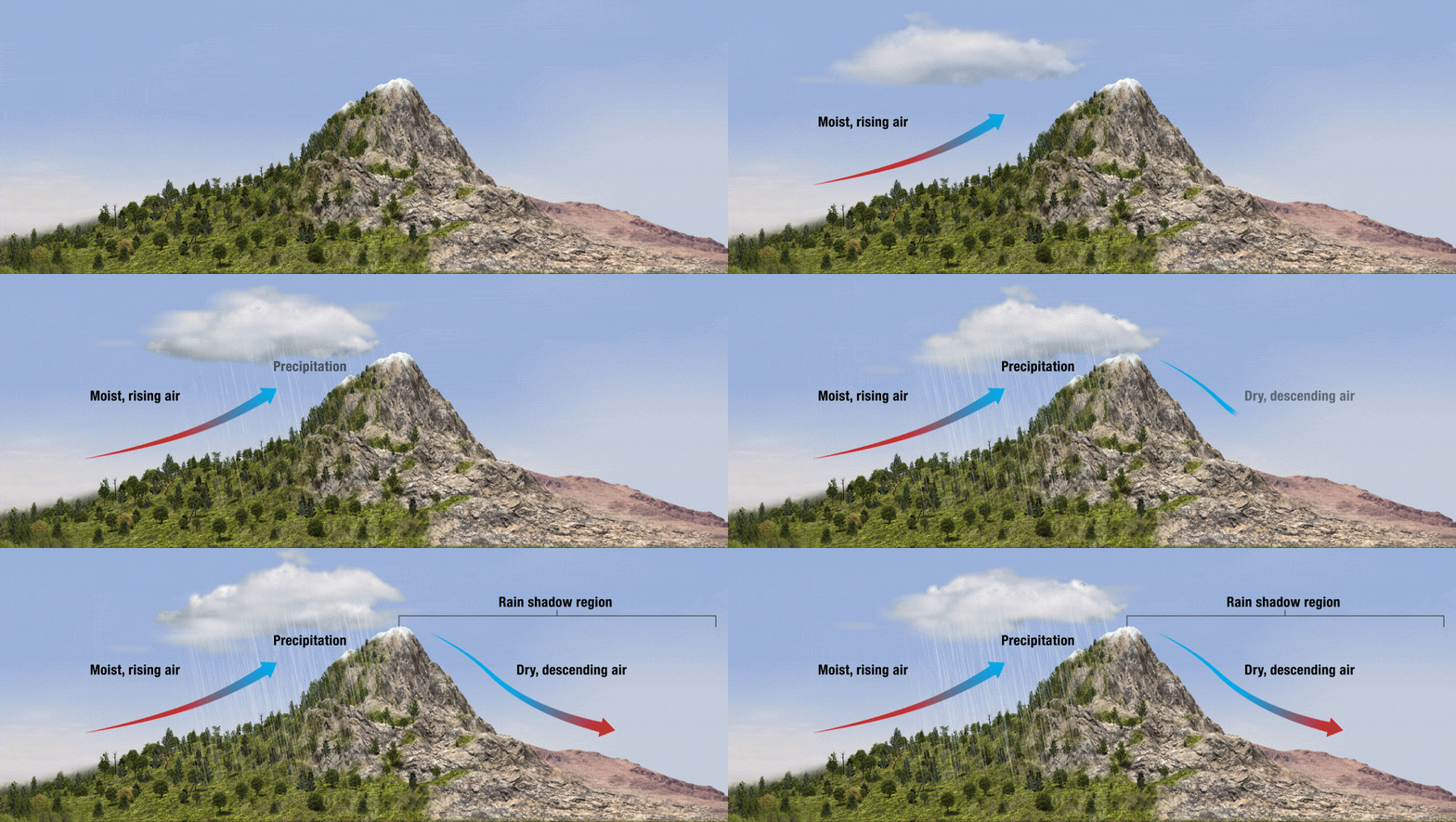
▲ Consider California’s coastal mountain ranges. More rain falls on the western sides of the ranges than on the eastern sides. Why? A lot of water evaporates into the air over the Pacific Ocean. Heavy clouds form and move east over the land. They release rain onto the mountains’ western slopes. The clouds continue until they run up against the high peaks. The dry sides that face the desert are called “rain shadows.” The mountaintops shield them from the rain. So does the warm air pressure.