Free
In 1776, Britain had 13 American colonies. In fact, Britain had more than 13 colonies.
It had 14 mainland colonies—the rebellious 13 plus Canada—and a number of Caribbean colonies. About 2 million colonists lived along the Atlantic coast. If you had traveled through these colonies early in the 1770s, you would have had a hard time finding people who called themselves American. Most colonists thought of themselves as Virginians or Pennsylvanians or New Yorkers. That began to change as the colonists got more and more angry at Britain. As they united to fight against their ruler, the colonists put aside their differences and started to think of themselves as Americans.
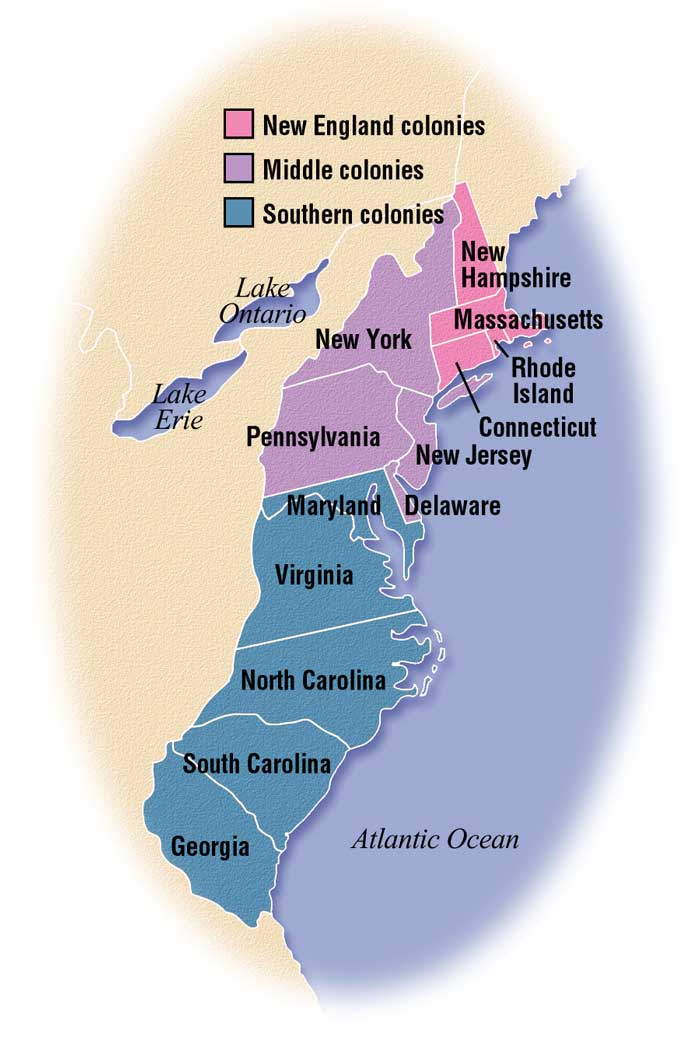
▲ The 13 colonies are often divided into three groups: New England, Middle, and Southern. Because of the climate, land, and the ways they earned a living, people in each of these groups of colonies often had more in common with one another than with colonists in other parts of British America.
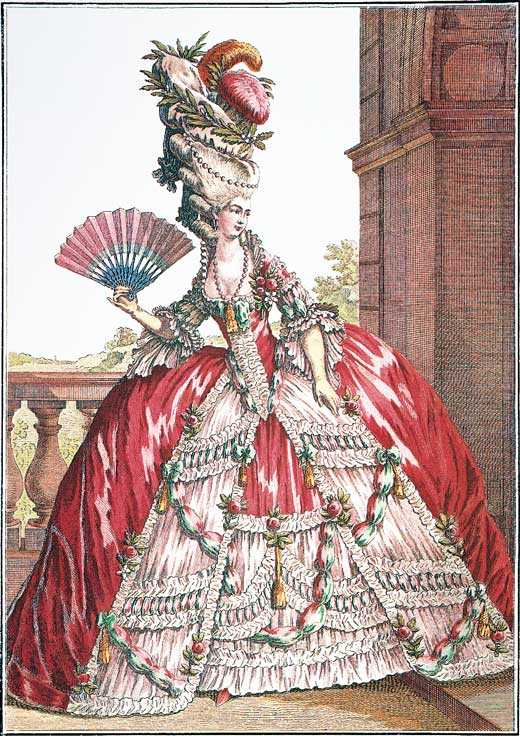
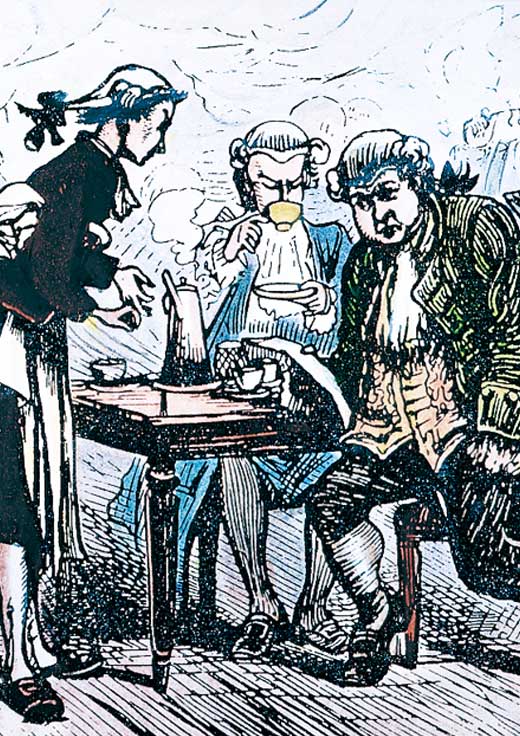
In 1776, only one out of every ten people lived in a city or town. The most important colonial cities were ports that shipped American products to Britain and the West Indies. The largest cities were Philadelphia, New York, Boston, Charleston, and Newport in Rhode Island. Cities were gathering places where people exchanged news and ideas. Men enjoyed going to taverns to drink, read newspapers, and talk politics. While women were not welcome in taverns, they gathered in churchyards and homes to talk about the latest news. ▶
◀ Although some colonists came from other parts of Europe, most came from England. They still had strong ties to their home country. They shared many of the religious beliefs, customs, and ideas of people back home. The rich filled their homes with furniture and fine china ordered from England. They bought their clothes from England and France or had colonial tailors copy the latest European fashions. They copied the latest English and French hairstyles, too.
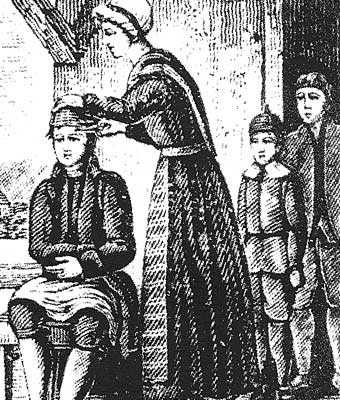
◀ Rural farmers had little time or money for European fashions. The farm wife shown here uses a wooden bowl to help her cut her husband’s hair. Her children wait in line for their turn.
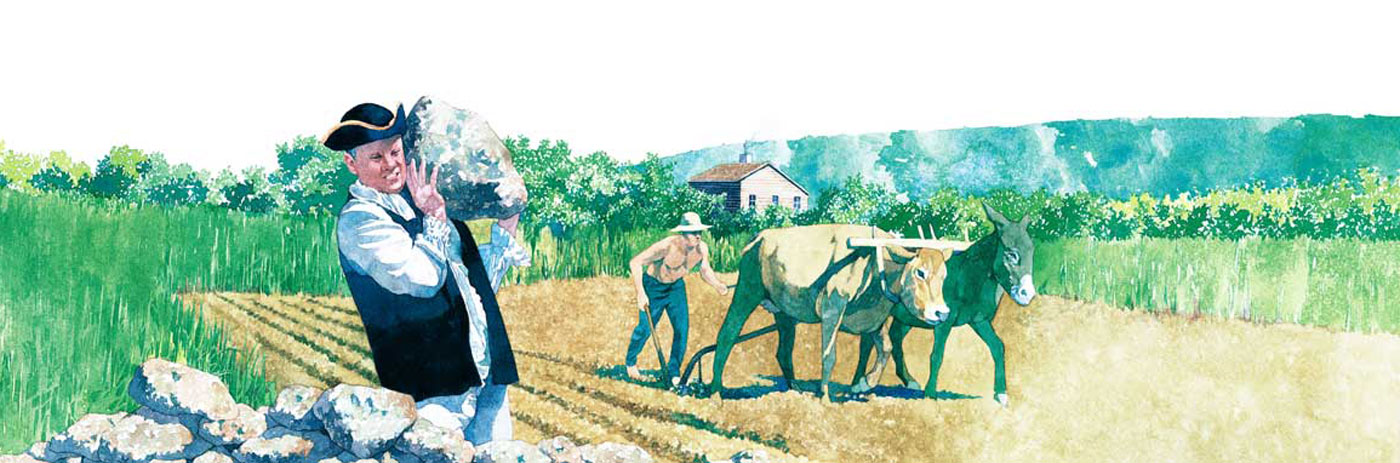
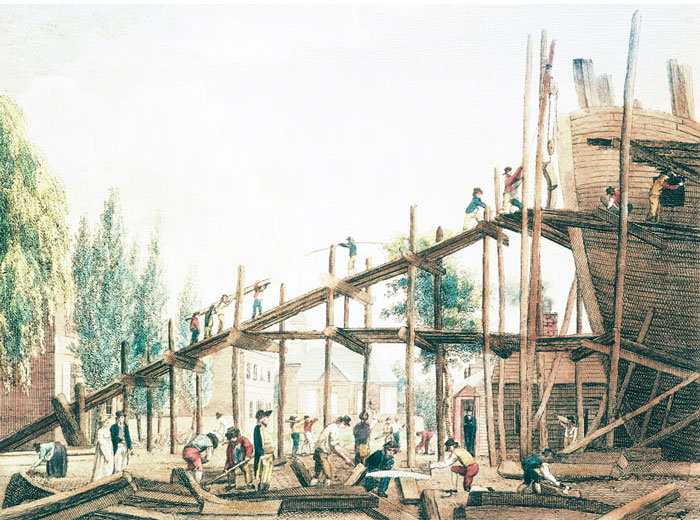
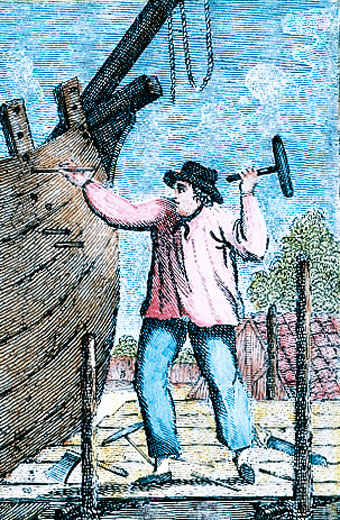
▲ New England winters are long, with plenty of ice and snow. Many New England colonists had small farms where they grew just enough to feed their families. Along the Atlantic coast, some of the colonists fished for a living. New Englanders also used wood from the vast forests to build ships, which they sold or sailed in to trade with other colonies, Britain, and the West Indies.
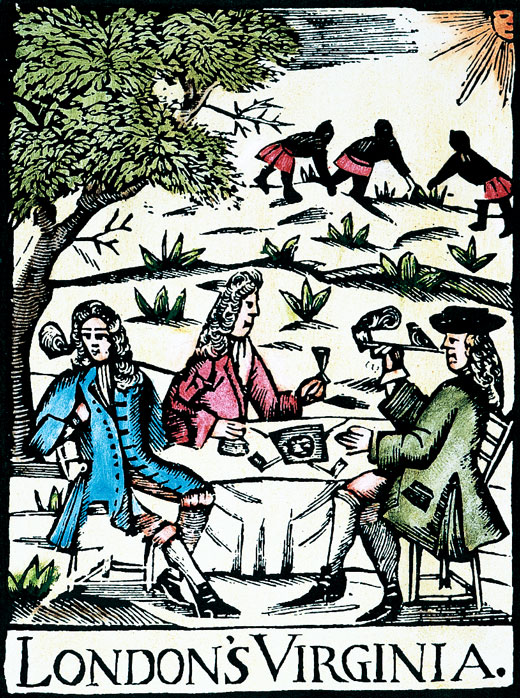
◀ With a warm climate and good soil, the Southern colonies were perfect for farming. Some wealthy families in the South owned huge farms, called plantations. In Virginia, the main cash crop was tobacco, while rice and indigo (a plant that produces a strong blue dye) were key crops in South Carolina and Georgia. On these large plantations, enslaved Africans did the hard, tiring work of clearing land and planting and harvesting crops. Slavery was legal everywhere, but there were more enslaved persons in the Southern colonies than in any other area of British America.