Free
Imagine living in a house where the roof leaks, the walls aren’t plastered, and the “yard” is a large expanse of mud.
That’s what the presidential mansion was like when John and Abigail Adams became its first residents in 1800. Without a yard for drying laundry, Mrs. Adams had wet sheets hung in the large drafty reception hall at the east end of the house.
Construction on the house kept going. By the time James Madison took office in 1809, the house was presentable enough for his charming wife, Dolley, to preside over lavish parties. She often served ice cream at these events, making it a popular treat in the U.S. The Madison parties came to an abrupt end when the British attacked Washington in 1814 and burned the presidential mansion.
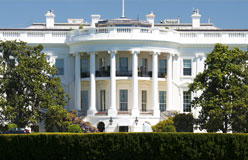
The rebuilt house was painted white to cover the scorched stone. From then on it was unofficially known as the White House. President Theodore Roosevelt, who served from 1901 to 1909, finally made the name official when he had it printed on his stationery.
Over the years, the White House has undergone many changes. Today, it has 132 rooms and 35 bathrooms.
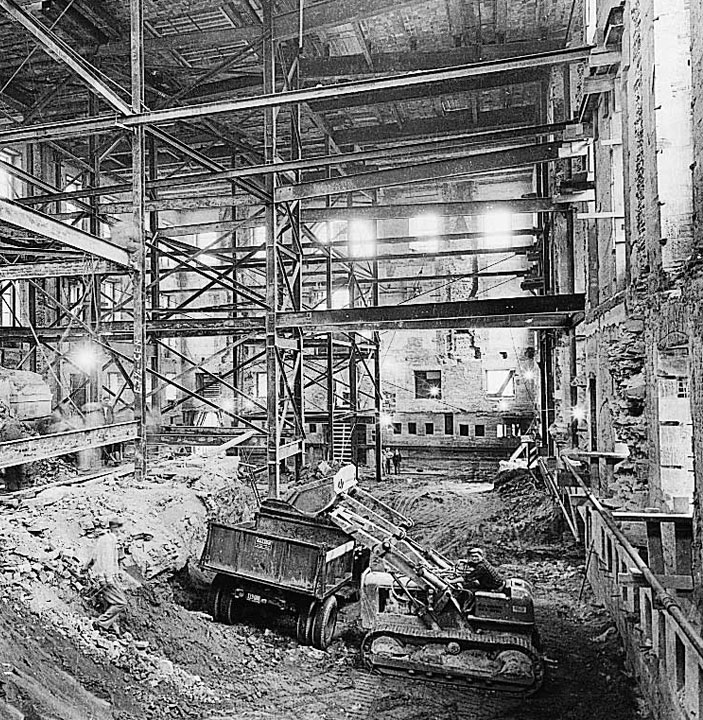
◀ Many presidents added “modern” conveniences to the White House. Andrew Jackson had running water piped in. James Polk installed gaslights, which Benjamin Harrison replaced with electricity. Alexander Graham Bell demonstrated the telephone to President Rutherford B. Hayes, and Thomas Edison showed him a phonograph. Soon the White House boasted these inventions. The many structural changes, however, weakened the building. When Harry S. Truman took office in 1945, engineers found that the White House “was standing up purely by habit.” Between 1948 and 1952, much of the building was gutted and rebuilt.
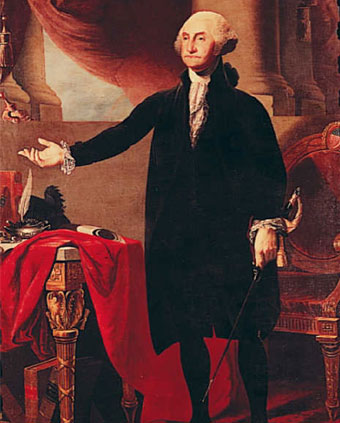
The East Room, where Abigail Adams once hung laundry, is the largest room in the White House. Here hangs the famous Gilbert Stuart portrait of George Washington that was saved from destruction by Dolley Madison. She cut it out of its frame, rolled it up, and spirited it out of the city when British troops attacked in 1814. Used for official receptions, ceremonies, and press conferences, the East Room has also been the scene of several White House weddings. ▶
White House Kids
Many children and grandchildren of presidents have enlivened the White House. ▼
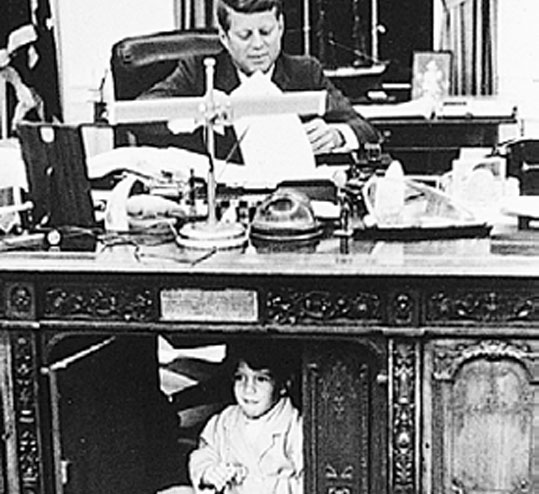
▲ The president’s Oval Office was added to the West Wing of the White House in 1909 by President William Howard Taft. John F. Kennedy’s children liked to visit their father there.
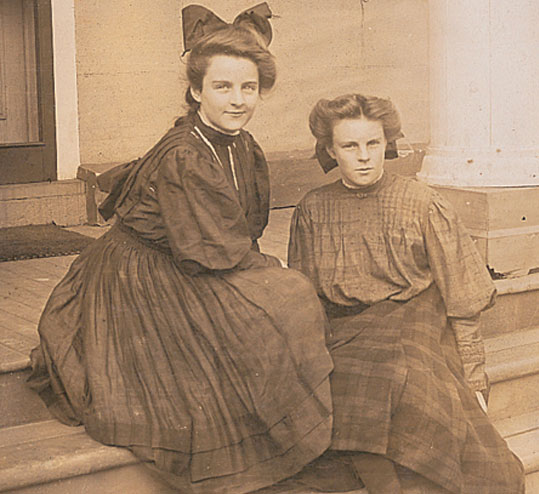
▲ One of Grover Cleveland’s daughters had a candy bar named after her—the Baby Ruth.
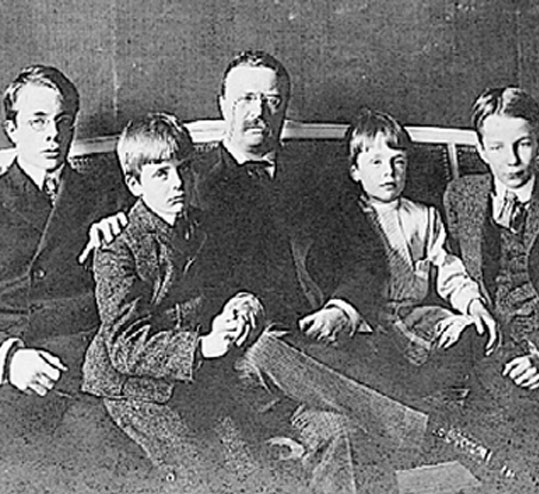
▲ Theodore Roosevelt had a lively brood, known as the White House gang. They roller-skated and bicycled in the East Room. Some of them once snuck a pony onto a White House elevator to visit their sick brother.
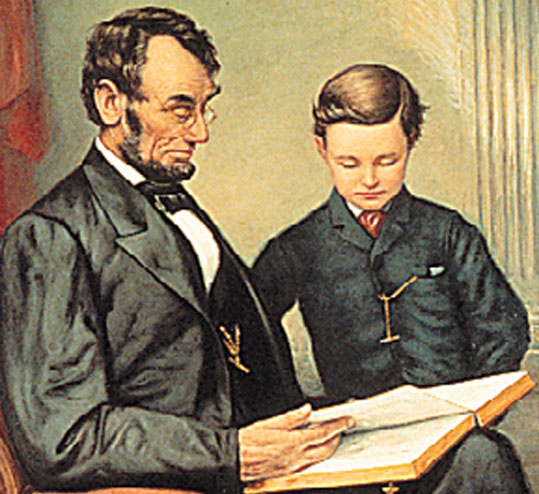
▲ Thomas Lincoln (nicknamed Tad by his father) shot a toy cannon at the door during Cabinet meetings.
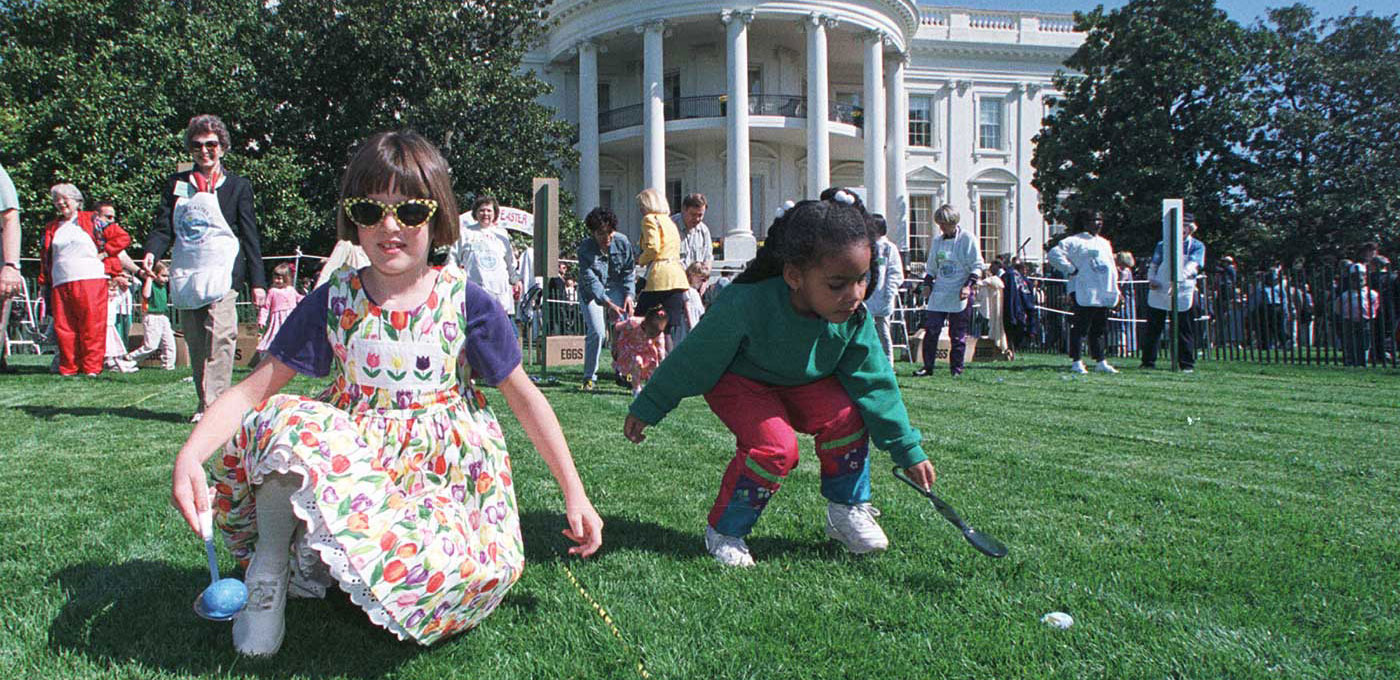
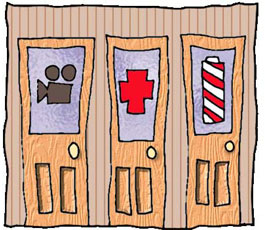
◀ Besides bedrooms, bathrooms, and sitting rooms, the president’s private quarters also include a dentist’s office, a movie theater, a medical clinic, a barbershop, and more.
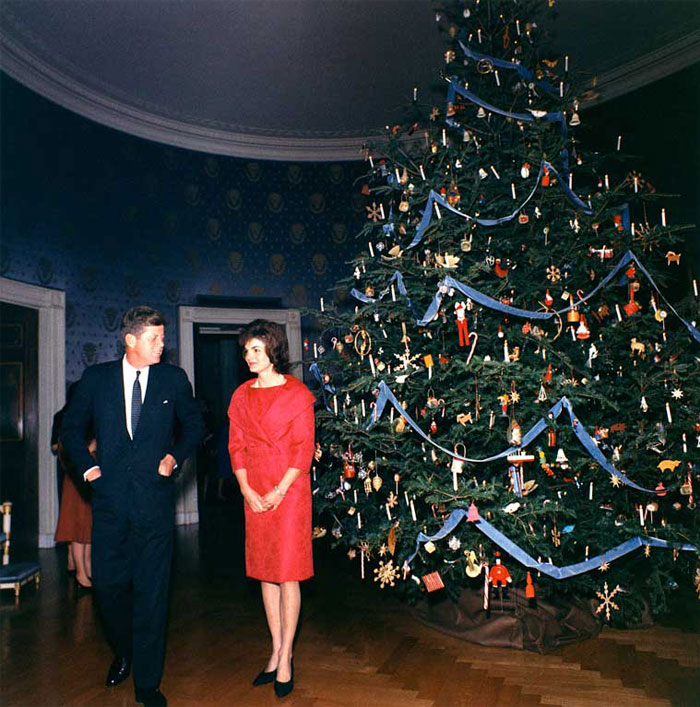
◀ Official rooms include the colorful Red Room, Green Room, and Blue Room. The president often receives guests in the Blue Room. The White House Christmas tree is placed there during the holiday season. In June of 1886, Grover Cleveland became the only president to marry in the White House, in the Blue Room.
Reminders of past presidents fill the White House. In one of the bedrooms stands Abraham Lincoln’s extra-long bed with a coverlet crocheted by Mrs. Calvin Coolidge. A centerpiece in the State Dining Room—a large mirror surrounded by figurines that can be used as candleholders or small vases—was ordered from France by President James Monroe. ▶
Loading the player...