Free
Washington, D.C., was created for one reason and one reason only—to be the seat of the United States government. Government business goes on every day in buildings throughout the city.
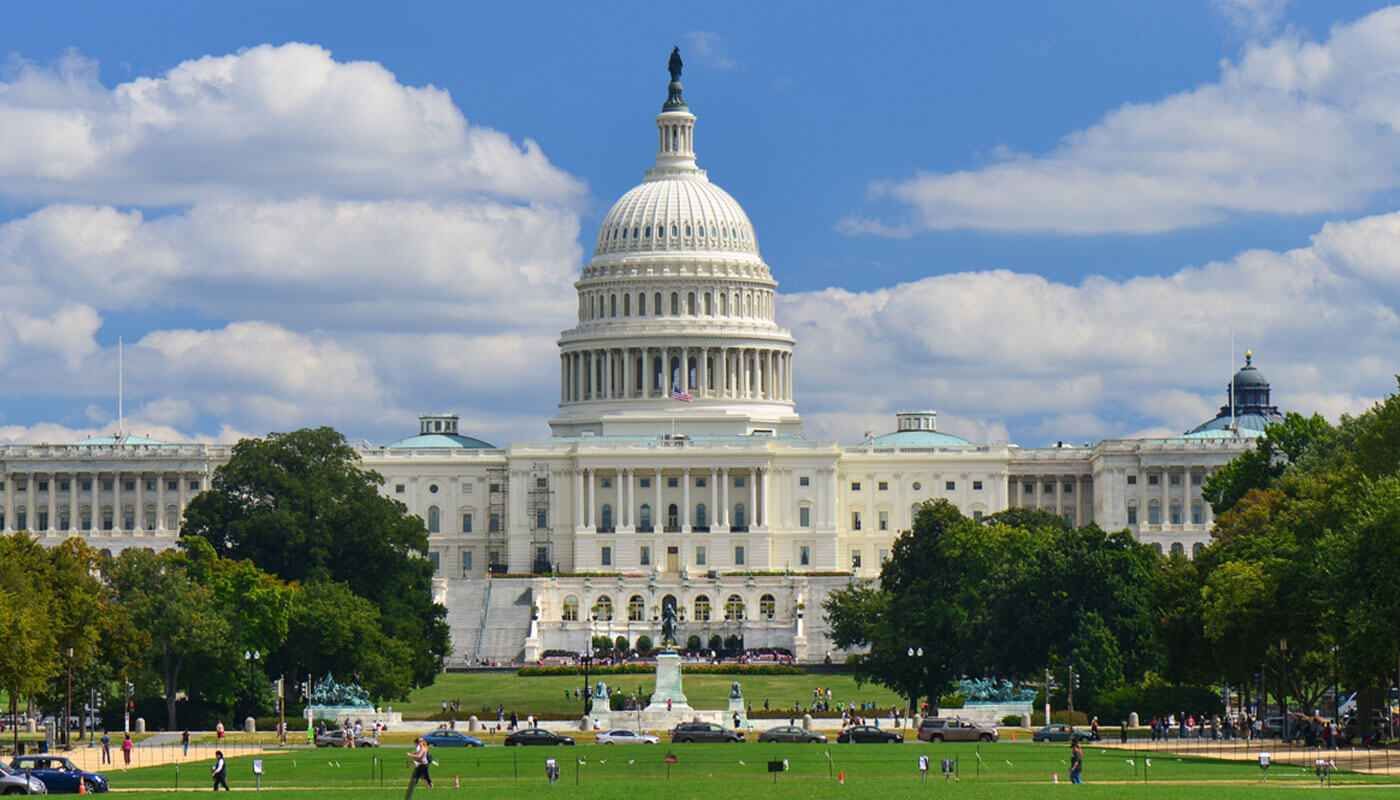
The founders of the United States wanted to make sure that no one leader ever had too much power. So they created a government with three branches and gave each branch checks on the power of the other two. The legislative branch—the two houses of Congress—meets at the Capitol and makes the laws that govern the country. The executive branch—headed by the president, who lives in the White House—is charged with enforcing national laws. The judicial branch—the Supreme Court—makes sure that the laws passed by Congress and the actions taken by the president are legal according to the Constitution, the supreme law of the land.
Washington started out small, a small government for a small nation. But as the nation grew, so did the government. Here are just a few places in Washington, D.C., where government happens every day.
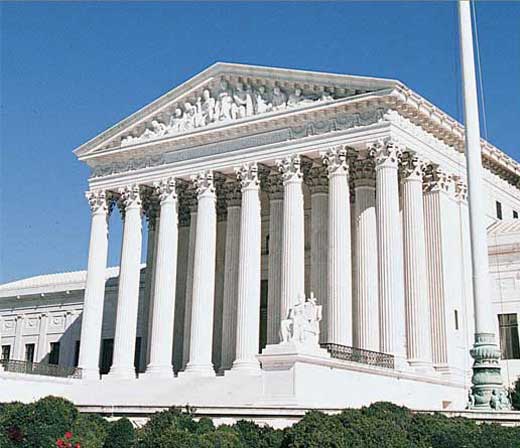
▲ The Supreme Court—consisting of nine justices appointed for life by the president—is head of the judicial branch of the government. For 147 years, the court heard cases in boardinghouses, taverns, and seven different rooms in the Capitol. Finally, in 1935, the court got a home of its own.
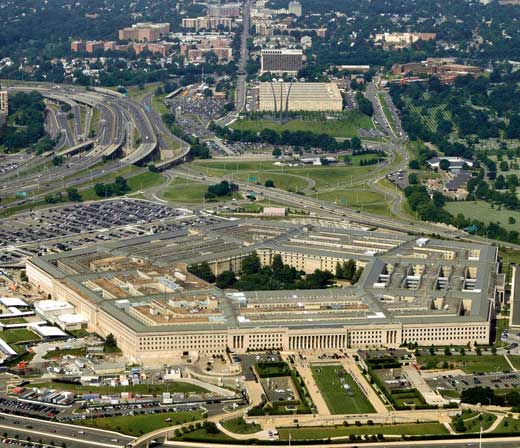
▲ The Pentagon, located outside of Washington near Arlington, Virginia, is the headquarters of the Defense Department, charged with overseeing all matters related to national security. The building’s name refers to the fact that it has five sides. It also has five stories and is built around a five-acre courtyard. It’s one of the largest office buildings in the world, and it houses more than 23,000 employees.
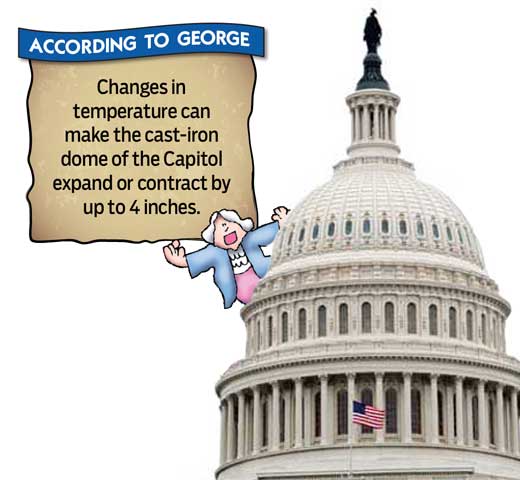
◀ At the Capitol, 100 senators—two from each state—and 435 members of the House of Representatives meet and pass the laws that govern the country. More than 18,000 people work for Congress. The youngest are pages, women and men ages 16 to 18 who run errands, answer phones, and deliver messages. Pages attend Capitol Page School very early in the morning so as not to interfere with their duties.
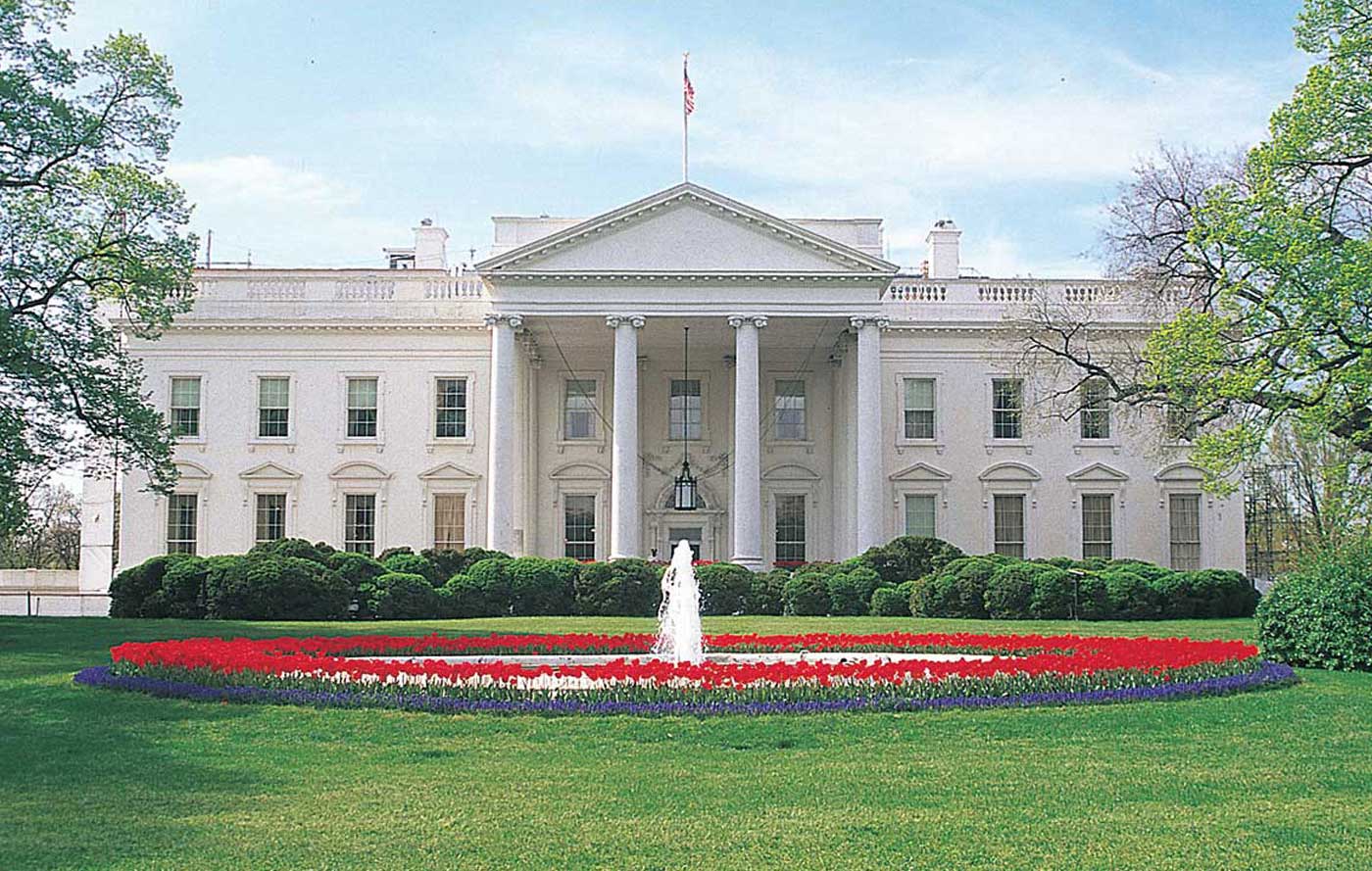
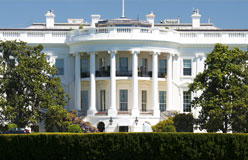
▲ Fifteen executive departments help the president perform the duties of the executive branch—from the State Department, which has overseen relations with other countries since 1789, to the Department of Homeland Security, created in 2002. Heads of the departments form the president’s Cabinet, an advisory group that meets regularly at the White House (above). Votes are seldom taken at Cabinet meetings because the final decision rests with the president. President Lincoln illustrated this when he took a vote at a Cabinet meeting. When all his Cabinet members voted against a measure that he supported, Lincoln announced, “Seven nays, one aye. The aye has it.”
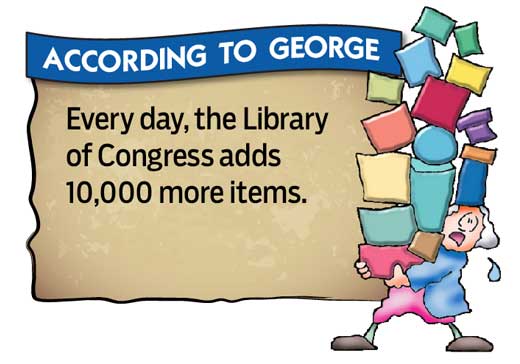
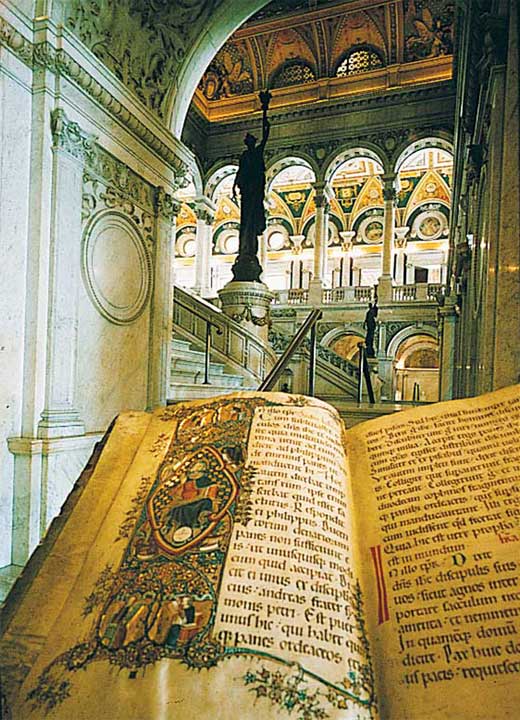
The Library of Congress was started with 3,000 books in 1800. When the British burned the Capitol during the War of 1812, the entire collection was lost. So Congress purchased Thomas Jefferson’s personal library of 6,487 volumes. Some of these books are still on the library’s 838 miles of bookshelves—along with 147 million other items, including the first draft of the Declaration of Independence, one of three remaining copies of the Gutenberg Bible (printed in 1455), the largest collection of comic books in the world, and an exhibit of the first Barbie and Ken dolls. ▶
Loading the player...
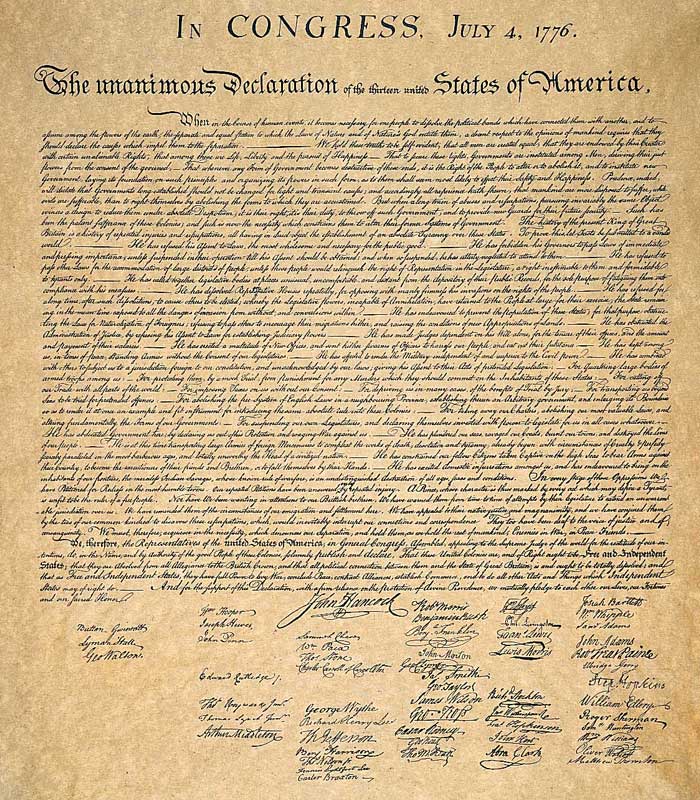
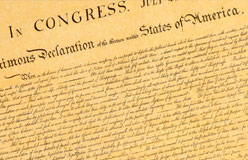
◀ Over the years, the U.S. government has accumulated billions of official documents. The National Archives Building houses many of them, including the original Declaration of Independence, Constitution, and Bill of Rights. These three precious manuscripts are sealed in bronze-and-glass cases filled with helium gas to prevent decay. Beneath them is a burglarproof, fireproof, and shockproof vault. The documents can be lowered into the vault at a moment’s notice.
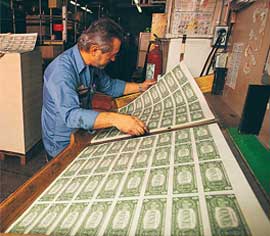
◀ One of the government’s many jobs is to keep money in circulation. At its facilities in Washington, D.C., and Fort Worth, Texas, the Bureau of Engraving and Printing prints 26 million notes a day, with a value of approximately $907 million. Bills of different denominations come off the presses in large sheets and are checked for errors before being cut.