Free
The Spanish were the first to send explorers.
Like Columbus and others, they were looking for a quick route to China, now known as the Northwest Passage. They never did find the passage, but in 1570, Spain’s Father Juan Baptista de Segura set up a mission near the mouth of the Chesapeake Bay. (A mission is a religious community.) Due to conflicts with Indigenous peoples, the mission lasted for less than six months. With its end, Spanish interest in the Chesapeake Bay and control over the Atlantic Coast also ended. It was time for the English to step in. At that point, the history of present-day Virginia became interwoven with the history of the United States.
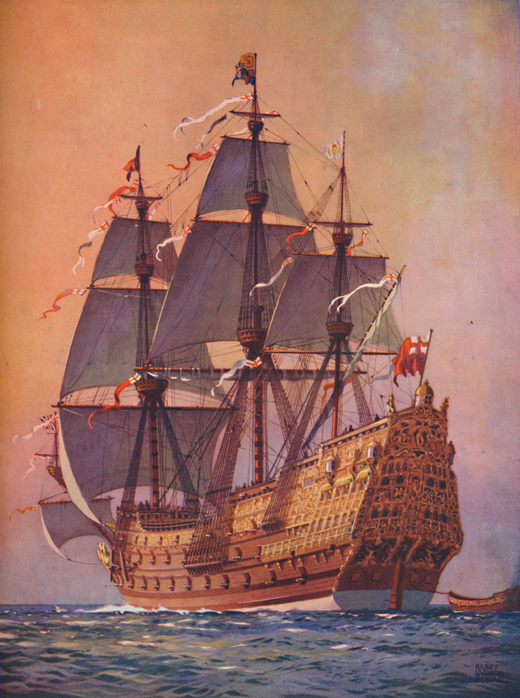
◀ In the 17th century, competition among England, France, and Spain was intense. The reasons were wealth and power. To show its power, England wanted to claim land and set up colonies. Settlements would give England access to raw materials that were not available in Europe. They would also help the English economy by creating new markets for trade and by controlling trade routes. Later, religious freedom, especially for Pilgrims and Puritans, became another reason for settlements.
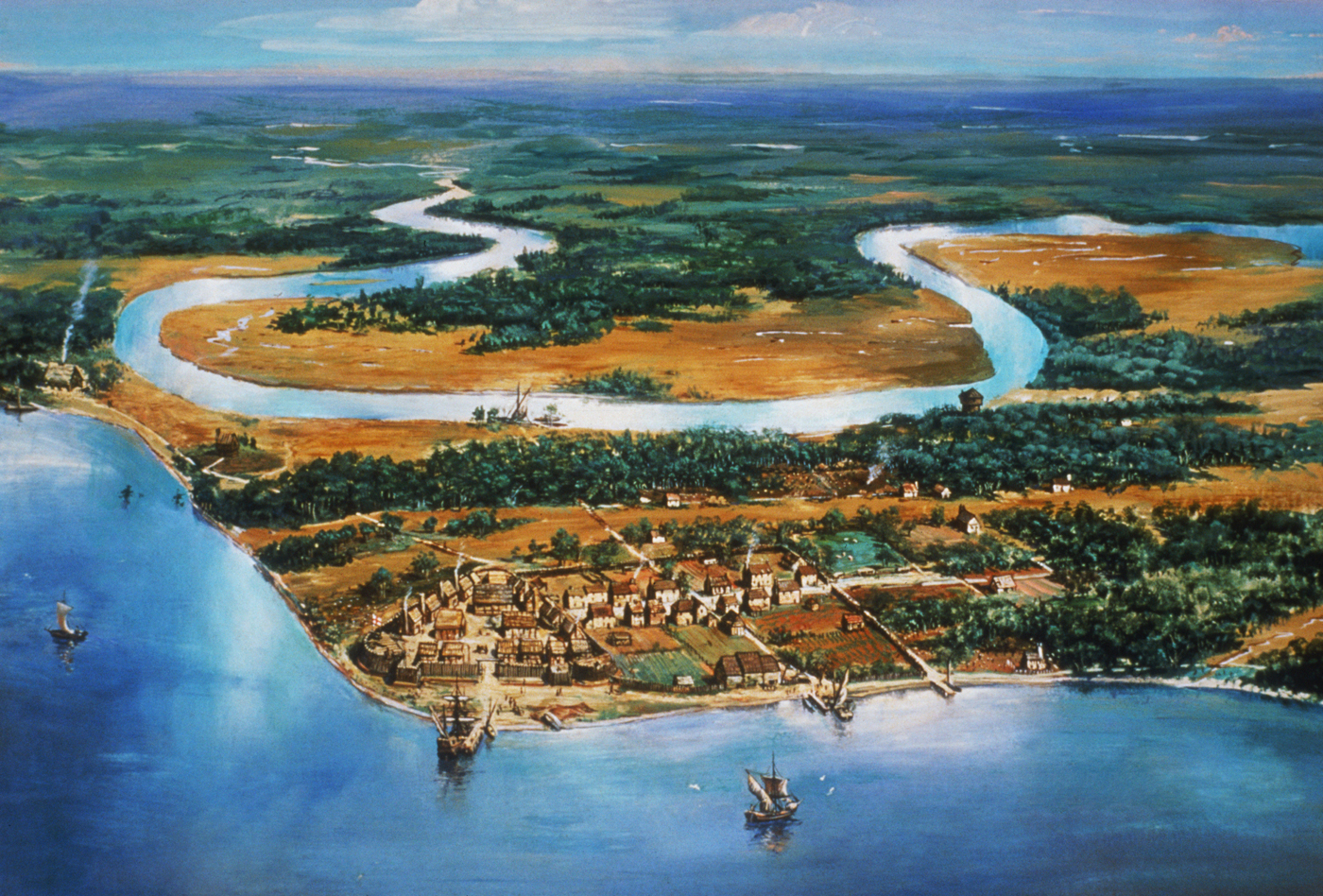
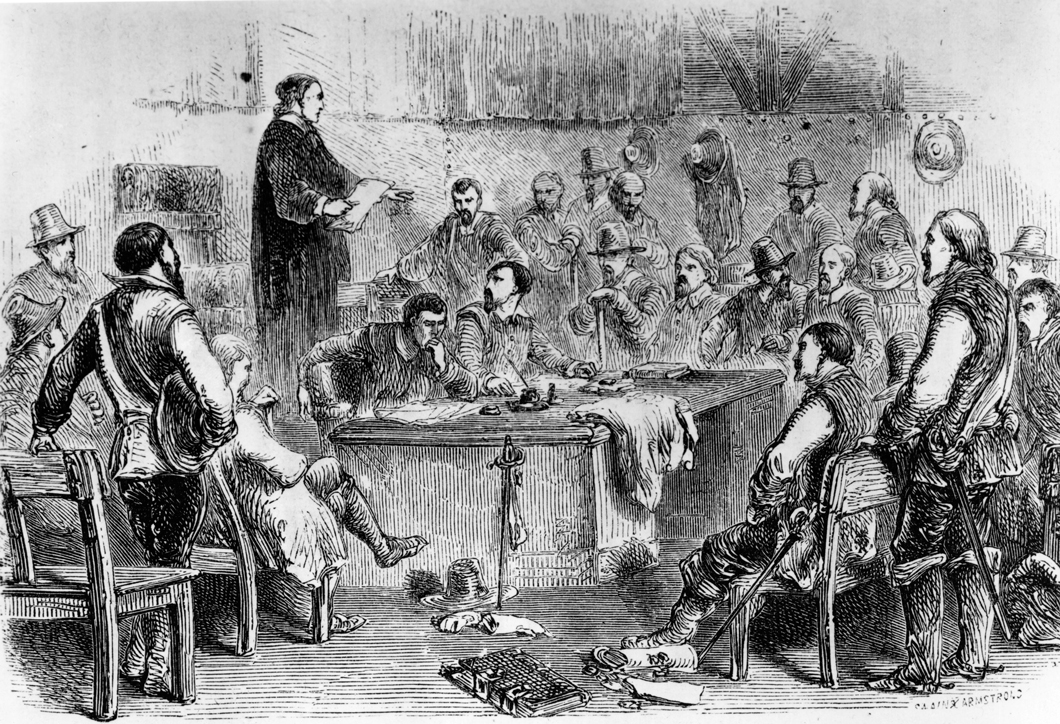
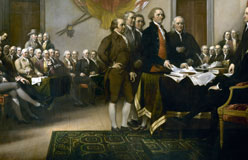
▲ Between 1607 and 1619, 11 major English settlements were established in Virginia. It was time to create a system of government for the Virginia colony. In July 1619, George Yeardley, the governor of Virginia, established the General Assembly in Jamestown. It was also known as the House of Burgesses and included two burgesses, or elected representatives, from each of the 11 settlements. It also included the governor and the governor’s council. The assembly set taxes and made laws. It was the first body of elected representatives in the colonies.
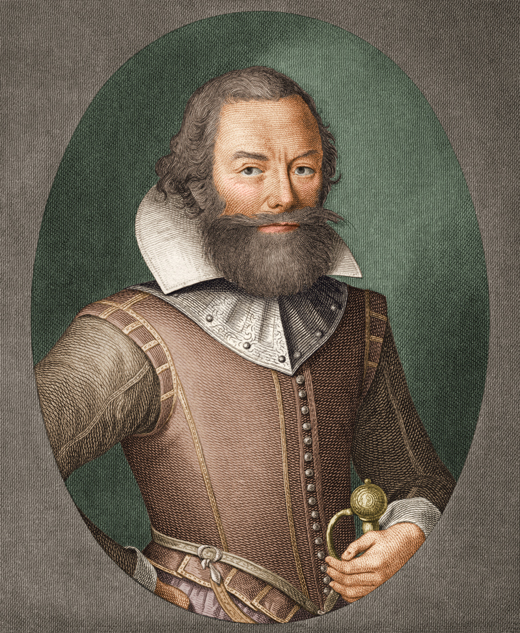
Life in Jamestown was hard. The settlers were short on food. Their water was not safe to drink. Many suffered from disease. Most were focused on finding gold rather than meeting the needs of the settlement. John Smith, one of Jamestown’s leaders, observed, “there was no talk, no work but dig gold, wash gold . . . load gold.” After returning from a 2,500-mile exploration of the Chesapeake Bay in 1608, Smith was elected president of Jamestown. As president, he created rules to get settlers to focus on meeting their needs instead of searching for gold. One of them was “He that will not work shall not eat. . . .” Smith’s system worked: Crops got planted. A well got dug. Fewer people got sick. Lumber and other valuable products were sold to England. The settlement survived. ▶
Think Piece!
What is your opinion about John Smith’s rule?
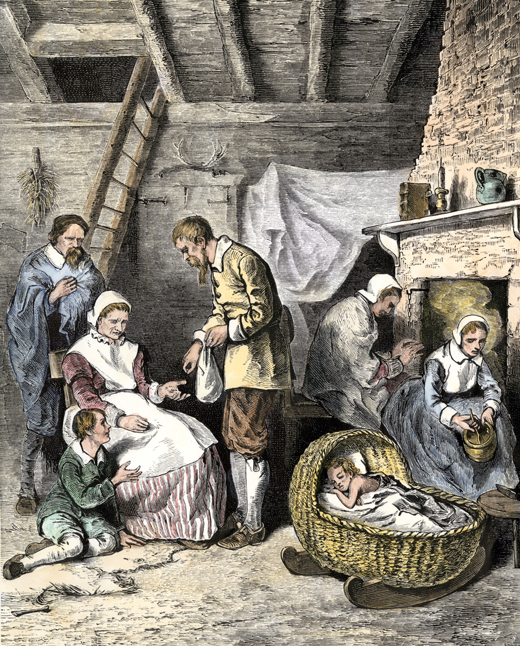
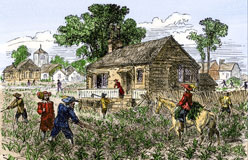
◀ Most settlers lived in simple homes made of wood. Often the homes had only one or two rooms. Many families had only the things they needed for cooking and farming. Tables, beds, chairs, and mattresses were considered comforts or luxuries. Ships from England brought goats and pigs. Cows provided milk, butter, and cheese. When they weren’t helping their parents, children played games like tag, hopscotch, jump rope, hide-and-seek, and marbles.
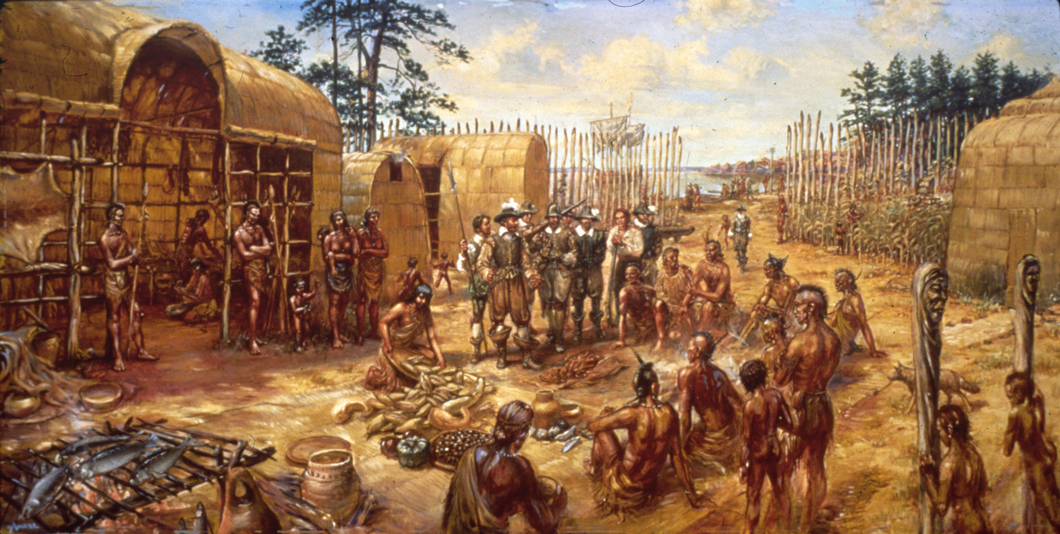
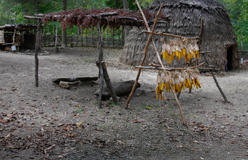
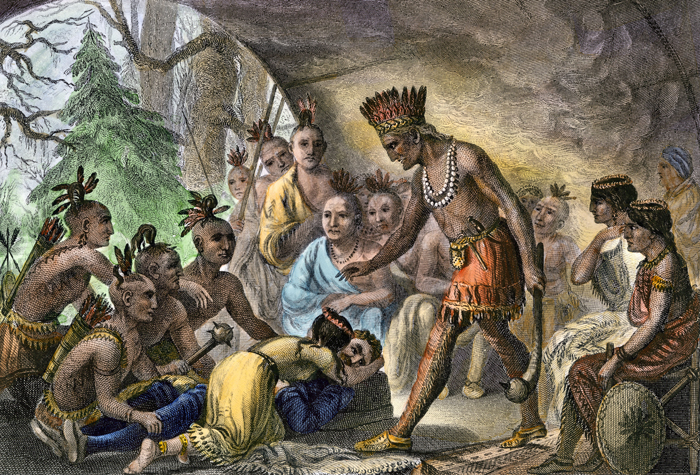
▲ Originally, the Powhatan and the settlers had a relationship that benefitted both of them. The Powhatan helped the settlers survive. They provided food and farming advice. They also shared their knowledge of the land and water in the area. The settlers, for their part, offered metal tools and copper. These were more useful to the Powhatan than their own stone tools.
Pocahontas, daughter of Chief Powhatan, acted as a middle person between the settlers and the Powhatan. She brought food to the settlers and helped keep the peace. She taught John Smith her language, and he taught her some English. It’s said that at one point, Pocahontas even saved Smith’s life by helping him escape a plot to kill him. But the positive relationship between the Powhatan and the settlers was not to last. ▶
Check It Out!
How and why did the relationship between the Powhatan and the settlers change?
The Powhatan and the settlers had different ideas about land. The Powhatan believed land belonged to everyone. The settlers believed that land could be owned, bought, and sold. That’s why the settlers became angry when the Powhatan continued to hunt on land they believed was their own. The Powhatan became angry when they saw more and more settlers arriving and taking more of the land they needed for hunting.
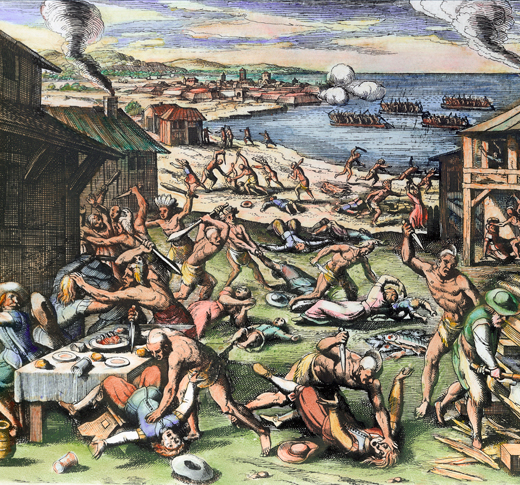
◀ A drought in 1609 made it difficult for the Powhatan to trade as much food as the settlers needed. At the same time, the settlers wanted more land to grow crops. This made the Powhatan angry and suspicious. In October 1609, the Powhatan ambushed the settlers and surrounded Jamestown. During that winter, known as the “Starving Time,” the settlement almost collapsed. Only the arrival of more settlers and supplies saved it from disaster. War with the Powhatan continued on and off until 1646 when the English declared victory. The Powhatan became subjects of King Charles I and were made to move inland and away from their traditional homes along the rivers.
John Rolfe is said to have planted the first tobacco seeds in the Virginia colony. A friend of Rolfe’s tested leaves from the first harvest and found them “pleasant, sweet, and strong.” Rolfe shipped the crop to England, where it was very popular. The Virginia colony needed money, and selling tobacco to the English would be the answer. But who was going to work the fields? Plant the crops? And harvest them? At first, the answer was English indentured servants. These were people who worked in exchange for food, a home, and having their transportation to North America paid for. After a set number of years, they would be free. ▶
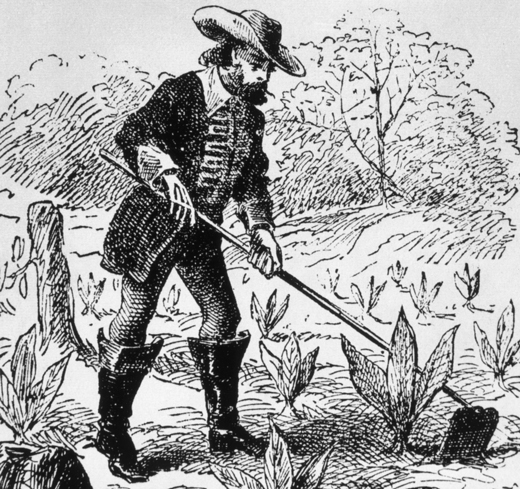
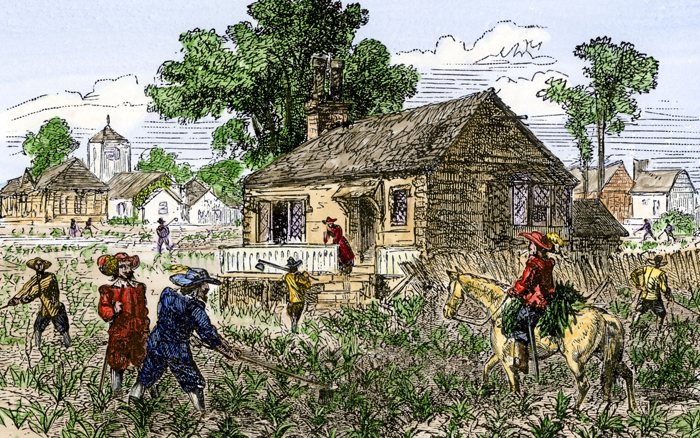
◀ In 1619, the first enslaved Africans arrived in Virginia. They worked the tobacco fields without pay and without the hope of freedom. Their work made growing tobacco profitable and plantation owners very rich. Plantations spread from the Tidewater region to the Blue Ridge Mountains. Tobacco was even used as a kind of currency, or money.
Starting in the 17th century, the Virginia colony began passing laws to give Africans fewer and fewer rights. The Virginia Slave Codes of 1705 were especially harsh: ▶
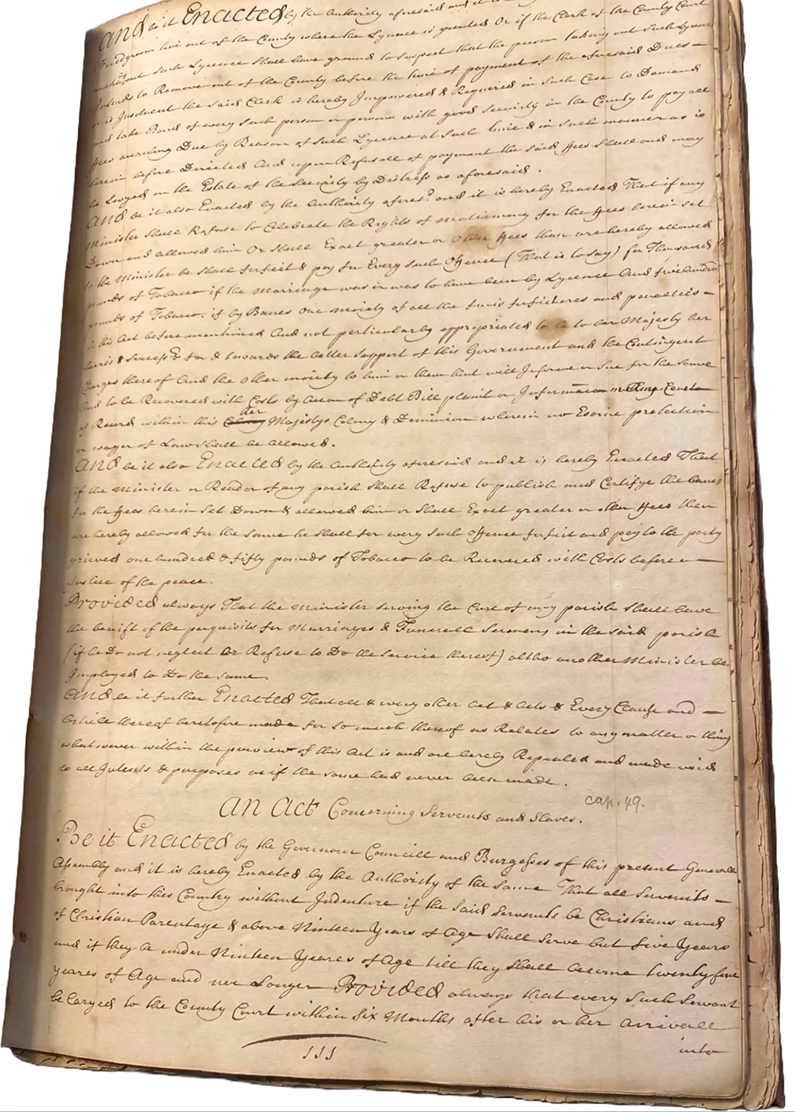
All servants brought into the country . . . who were not Christians in their native country . . . shall be accounted and be slaves. All Negro, mulatto and Indian slaves within this dominion . . . shall be held to be real estate. If any slave resist his master . . . correcting such slave . . . killed in such correction . . . the master shall be free of all punishment . . . as if such incident never happened.
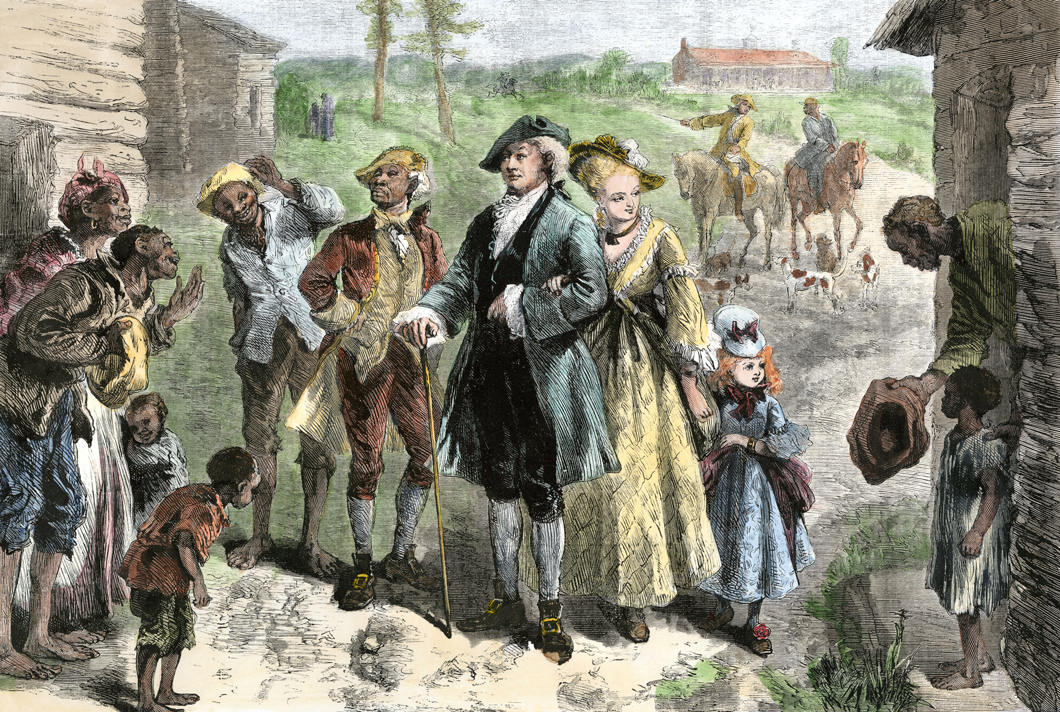
▲ An enslaved family on a plantation may have had their own cabin. Those on a smaller farm often had to live in the kitchen of the main house. Either way, life was hard. Some worked from dawn to dusk in the fields. Some worked as carpenters or blacksmiths. Others worked as cooks or servants in the main house. In the evening, they might do chores for themselves or work in their garden. Children were sometimes hired out as apprentices, or trainees, to learn a trade like weaving or carpentry. Sometimes, they were taught to read by children of the owner’s family. Robert Ellett, an enslaved boy in Virginia, describes one of his experiences:
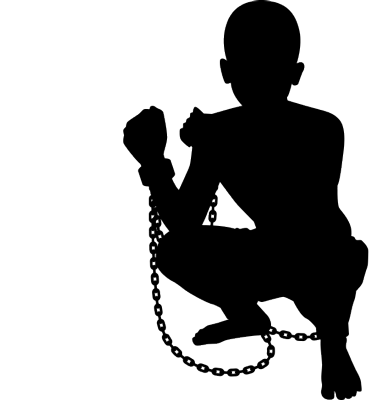
One day the old master carried me in the barn and tied me up and whipped me ’cause I wouldn’t call my young masters, ‘masters.’ He beat me till the blood run down and I wouldn’t say a squeak. Not one word of promise did I give to call either of those two boys I was raised with, ‘master.’ He kept yelling, ‘Call him master! Say master.’ I ain’t said that first word till yet, so finally he untied me an’ turned me loose, and before we could git out of the barn, we, the young master and me, was fighting like dogs. They had to part us again and take me off him. Next day I heard old master telling the mistress that she had to git rid of Emmy’s (my mother’s) boys, because they was too proud and couldn’t be managed.
Reflection
Pause to reflect on Robert Ellett’s experience. What is your reaction to it?
Check It Out!
Who were the free Black people in colonial Virginia?
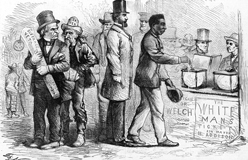
Some Africans who arrived in the 17th century were treated as indentured servants, not enslaved people. They had many of the same rights as White servants. These included the right to vote and the right to own property. But by the 1700s, new laws took freedom away from Black people in Virginia. Many were made to leave the colony altogether.
◀ In 1699, the capital of the Virginia colony was moved from Jamestown to Williamsburg. There were many reasons: Jamestown was located on a swampy peninsula. The water wasn’t safe to drink. There were mosquitoes and disease. Then the statehouse burned down. That was the last straw. The capital was moved west to higher ground, in Williamsburg. But it didn’t stay there either. In 1780, during the American Revolution, the capital was moved again. This time to Richmond (where it is today). Richmond was in a more central location, and it was easier to defend against threats from British warships.