Free
Children grow up speaking the language they hear at home. Those who grow up in an English-speaking household speak English.
The same is true for speakers of any language, including people who speak Indigenous (Native) languages. According to historians, the first peoples of Virginia belonged to one of three language groups – Algonquian, Siouan, and Iroquoian.

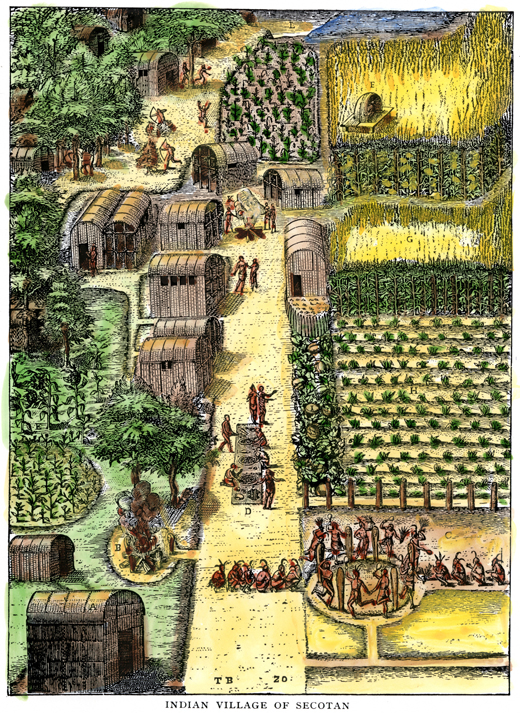
▲ The Eastern Woodland Indians spoke an Algonquian language and lived along the large rivers in the Tidewater region. Powhatan was the name the English gave to the people as a whole and also to their chief. Wahunsenacawh was the Algonquian word for “chief.” Modern English words like moccasin and tomahawk come from the Algonquian language.
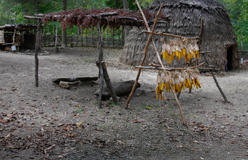
◀ Powhatan life changed with the seasons. In the spring, they planted beans, corn, and squash (also known as the “three sisters”), as well as pumpkins, and harvested the crops in the fall. Summer and fall were a time for catching fish. In late fall and winter they hunted, especially for deer and turkey. Children contributed all year round. They helped maintain the gardens in the spring and summer, helped with harvesting in the fall, and gathered nuts and firewood in the winter.
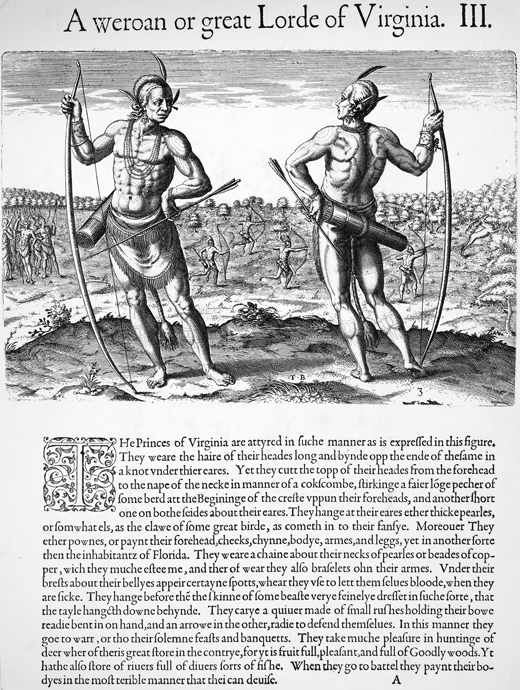
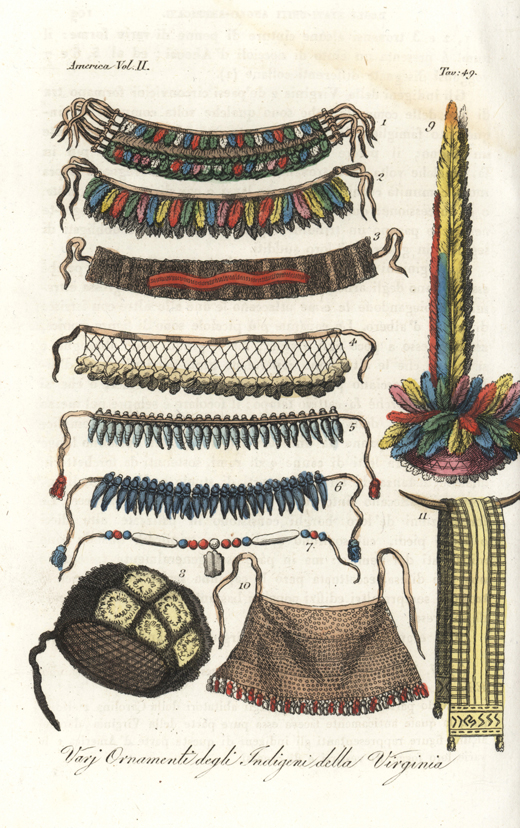
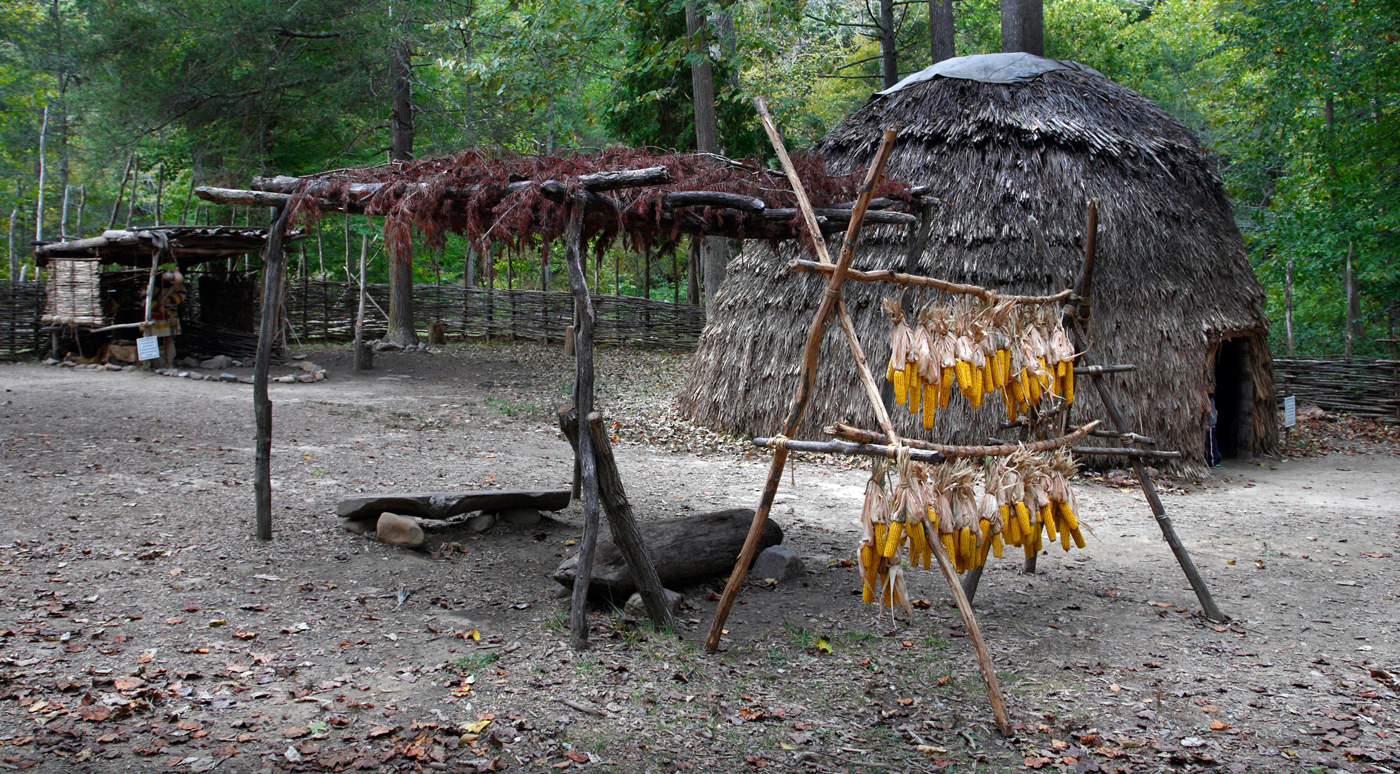
The Powhatan depended on the resources in their environment for practically everything. Their houses, called yehakin, were made from saplings, or young trees, covered in mats made from bark or reeds. They included a firepit in the center and a smoke hole in the roof to help keep the air inside fresh. Deer provided meat, but also clothing, beds, and blankets. Their hoofs were used to make glue and needles as well as fish hooks. Bear fat rubbed on the skin repelled mosquitoes in summer and kept people warm in winter. Shells, copper, freshwater pearls, and feathers were used to make jewelry. ▶
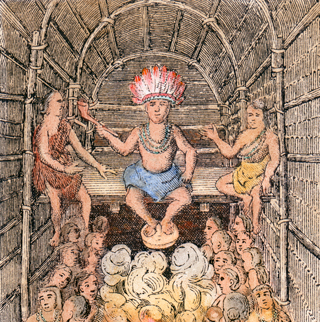
◀ The capital of the Powhatan, known as Werowocomoco, was on a high cliff overlooking the York River. In Algonquian, Werowocomoco means “place of leadership.” Ceremonies, trade, and politics took place there, including meetings between Chief Powhatan and the English. Today, Werowocomoco is an historic site.
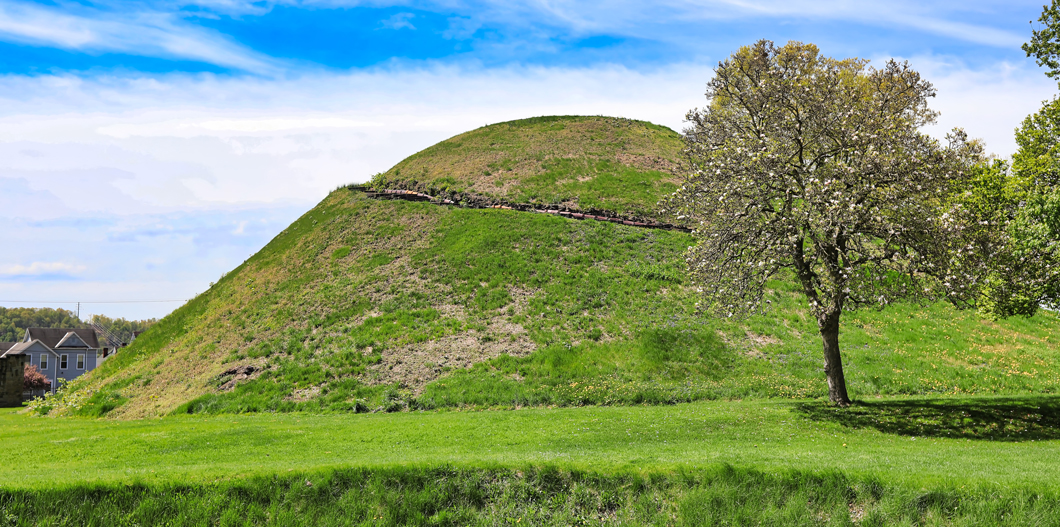
▲ Similar to the Powhatan, the Monacan grew corn, beans, and squash, as well as grapes and nuts. They hunted deer, elk, and small game like squirrels and rabbits. Unlike other Indigenous peoples of the region, the Monacan created burial mounds of earth. So far, 13 mounds have been found.
The Cherokee were speakers of an Iroquoian language. They lived in the Appalachian Mountains of southwest and southern Virginia as well as other areas in the region. Like other Indigenous peoples, the Cherokee planted beans, corn, and squash. They hunted deer and trapped small animals. Their people were organized into seven clans, or groups. Each clan was responsible for a different part of life, such as healing, peacemaking, and hunting. ▶
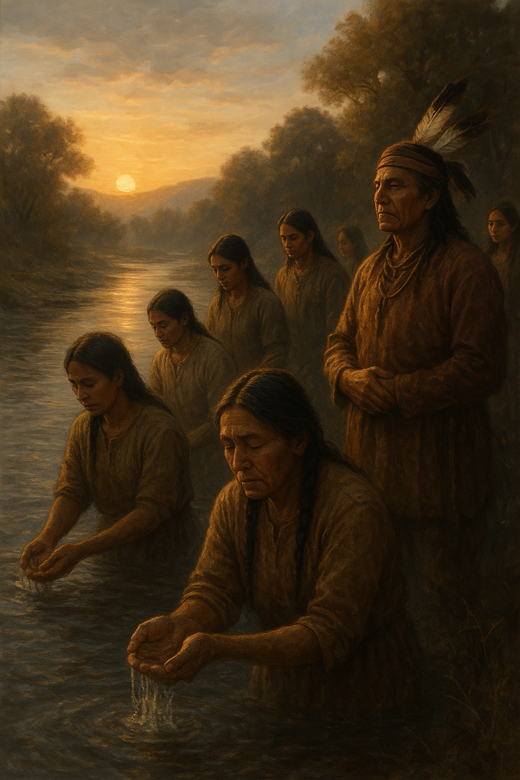
◀ The Cherokee have a saying, “We begin in water and we return to water.” It’s no wonder then that a ceremony called “going to water” was an important part of their lives. The ceremony involved groups of people going to a river or stream at sunrise and dipping themselves into it. People had many reasons for participating. They included wanting to recover from an illness, giving thanks for good things that had happened, and washing away negative feelings. . . even if those feelings had resulted from something small, like losing a game of stickball.