Free
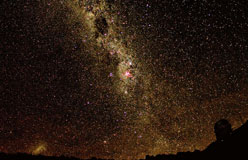
On a clear night, you might be able to see more than 3,000 stars. You wouldn’t even need a telescope! But there are billions of other stars we can’t see with the naked eye.
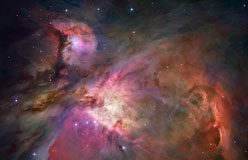
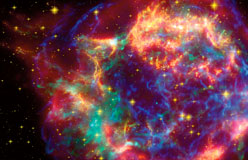
The night sky holds clues about the life and death of stars. The clues are found in clouds of glowing gas sprinkled with black dust. These clouds are called nebulae (NEB-u-lie). The word nebula is the singular form of nebulae. It comes from the Latin word for cloud. Seen through a low-power telescope, nebulae look like cotton balls. But high-power telescopes show they are huge formations of many shapes and colors. Some nebulae show that stars are being born. Others are left over from the death of stars.

▲ How Stars Burn
A star is a burning blob of gas held together by its own gravity. What does it burn? It burns hydrogen, the lightest element. Hydrogen atoms each have one proton. Energy is released when two hydrogen atoms join. They form a heavier atom called helium, which has two protons. What else happens when the two hydrogen atoms combine? There’s a big burst of energy.
Stars Need Fuel
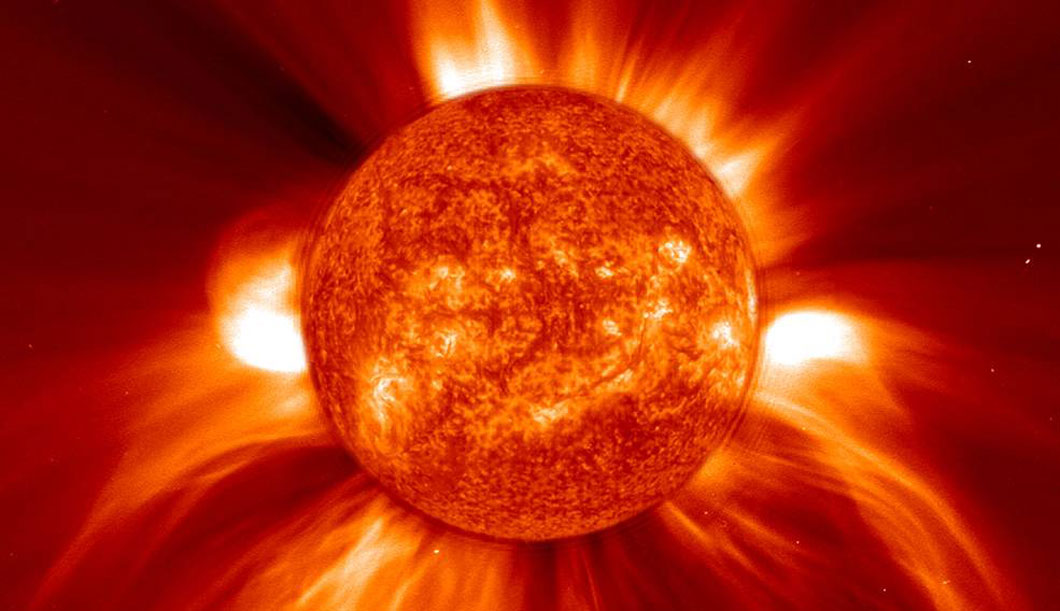
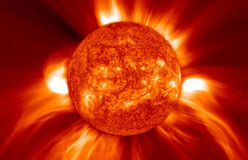
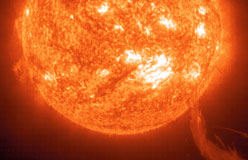
▲ To make energy, stars need fuel. When the fuel is used up, the star fades. Stars that weigh more than the Sun (above) burn out fast and even explode. Our Sun will not burn out for another 5 billion years.
◀ Mapping Where Stars Are
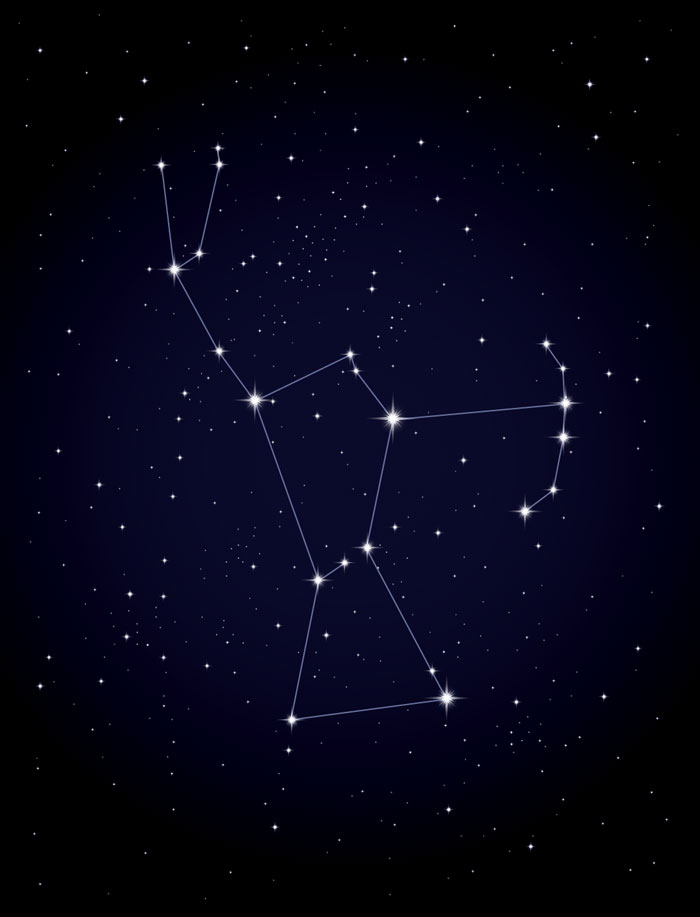
To keep track of the sky, astronomers divide it into 88 regions. These are tied to imaginary stick-figure pictures called the constellations. Many cultures have their own versions of these figures. We use mythological characters made up by the ancient Greeks and Egyptians. Orion, the Hunter, is one of the best-known constellations. It is easy to find his shoulders, legs, and waist.

▲ Light-Years Away
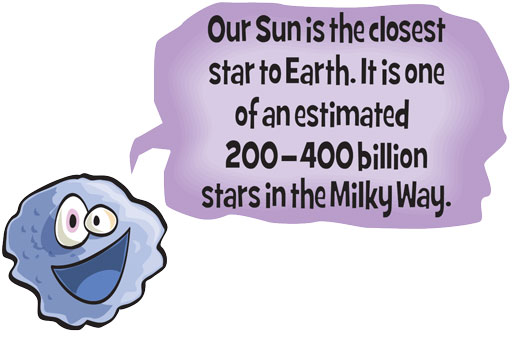
Stars are much farther away from Earth than the planets are. Our Sun is 93 million miles away. Proxima Centauri is the closest star to our Sun. And it’s 24 trillion miles away from it! It takes a lot of zeros to write numbers in the trillions. So, scientists use light-years to measure these long distances. A light-year is the distance a beam of light travels in a year (nearly 6 trillion miles). A beam of light takes 1.3 seconds to travel from the Moon to Earth. It takes 8.3 minutes to go the 93 million miles from the Sun to Earth. We can’t travel to the stars. They are too far away to visit, even with spacecraft. So we use powerful telescopes to look at them instead.
Jewel Box of Stars
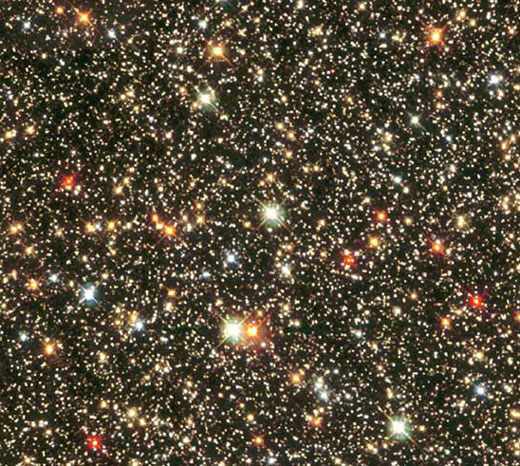
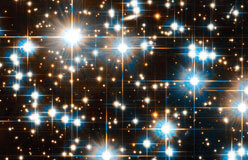
This is a telescope view of the dense heart of our galaxy. It shows that stars come in many colors. Most blue stars are young and hot. They are up to ten times hotter than our Sun! Red stars are cooler, only half as hot as the Sun. ▶