Free
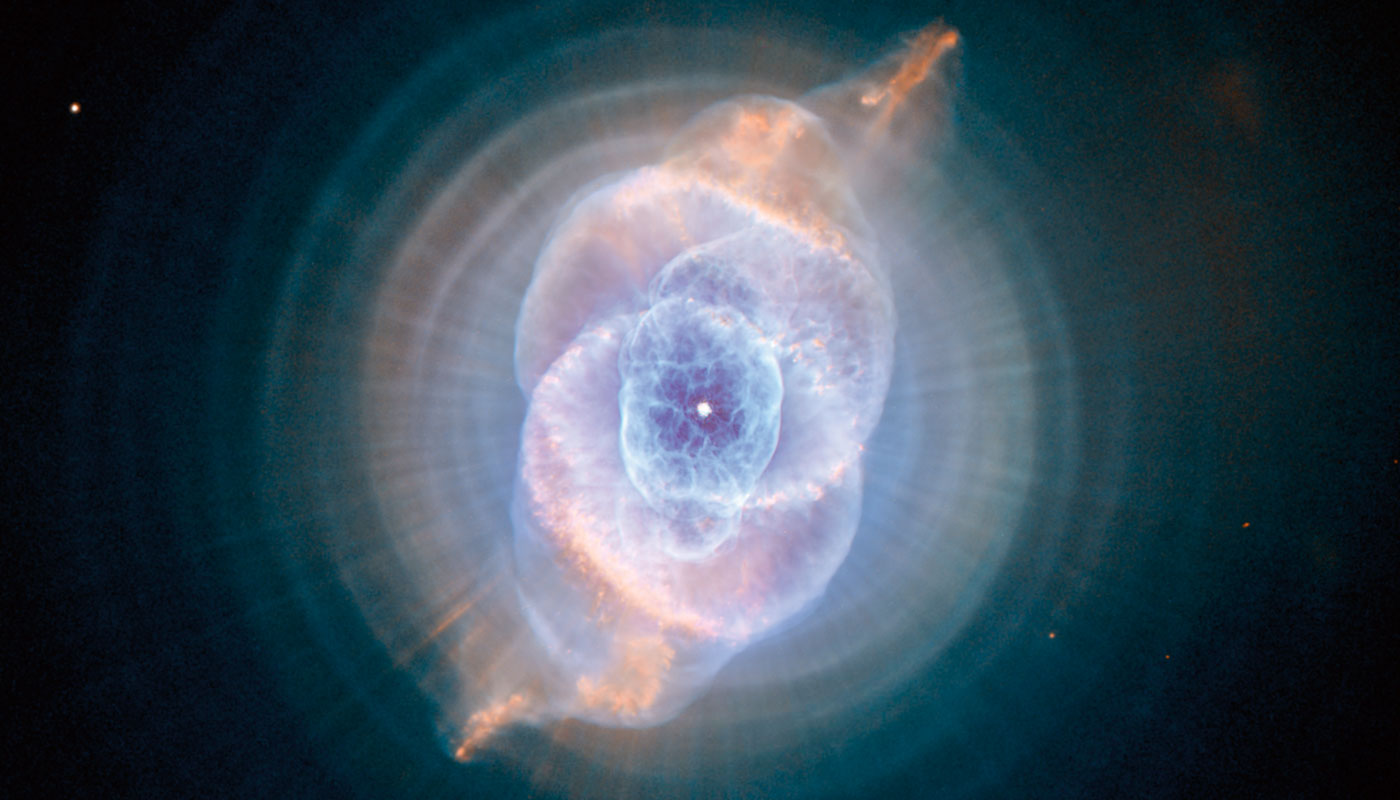
When a star like our Sun burns out, it doesn’t fade away quietly. Instead, it has a colorful, glorious “last hurrah.” It puffs off glowing clouds of gas, called a planetary nebula.
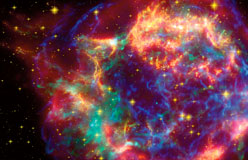
The outflowing gases, driven by the spinning and wobbling star, sculpt shapes that look like a carnival spin-art game. Stars ten times bigger than our Sun go out with a bang. The star’s nuclear furnace suddenly shuts down, and the star collapses. This collapse is so violent that the star explodes with energy equal to blowing up a hundred thousand trillion trillion of the biggest nuclear bombs all at once! This is called a supernova.
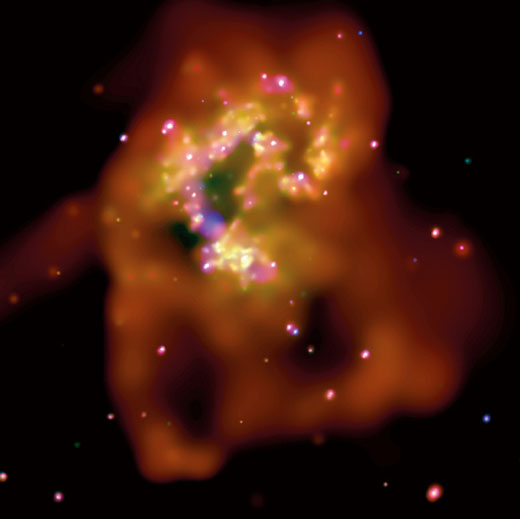
◀ Star Corpses
When massive stars explode, they leave behind remnants that are crushed by gravity. One remnant is a black hole, an object with such strong gravity that no light can escape from it. Another remnant is a neutron star, whose density is 100,000 times greater than steel. We can’t directly see black holes and neutron stars. However, the hot gas around them glows in the X-ray light of a telescope camera. Their locations appear as bright points in the Antennae Galaxies (left). These objects will keep radiating energy long after the last star in the universe has burned out, about 10 trillion years from now.
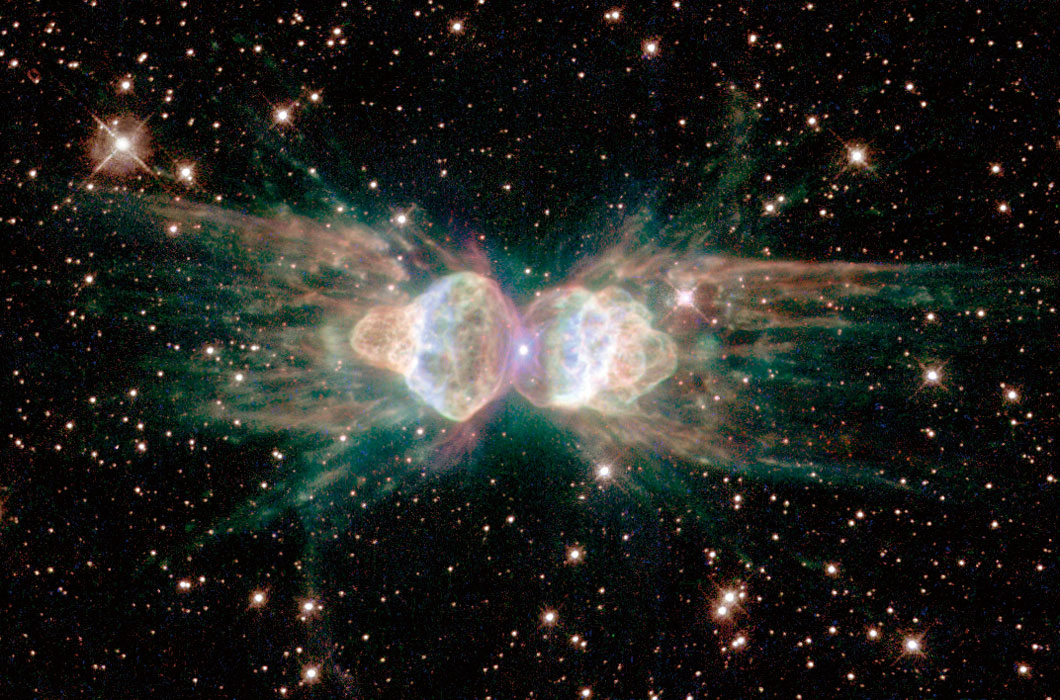
▲ Ant Nebula
This planetary nebula is so nicknamed because it resembles the head and thorax of an ant. Why is the pattern symmetrical? One possible cause is the gravitational influence of a closely orbiting companion star. Another is the spinning action of the dying star itself. By observing dying Sun-like stars, such as this one, astronomers are beginning to discover what our Sun’s fate will be.
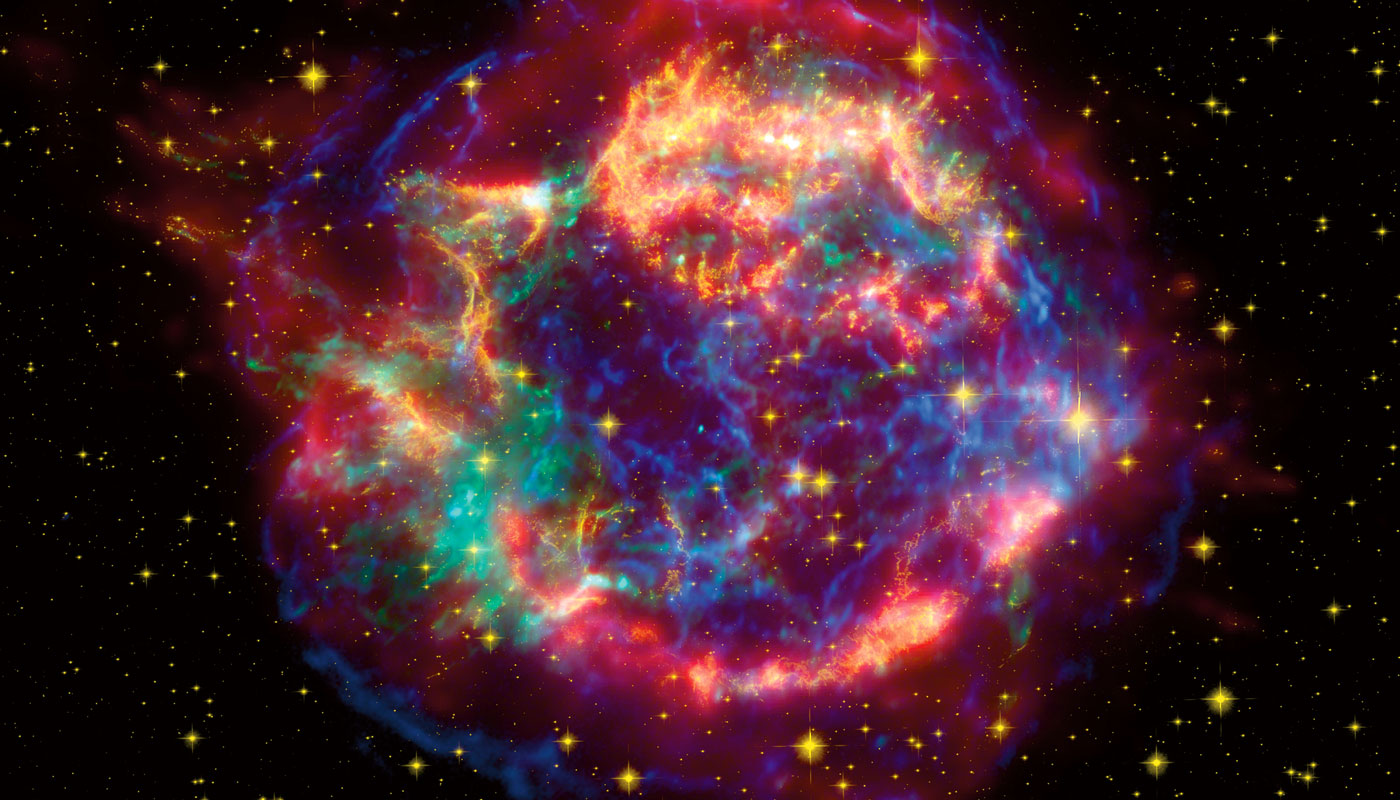
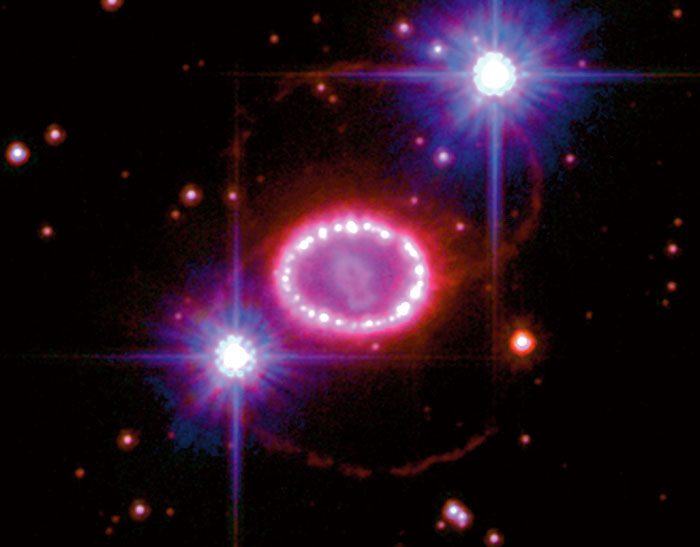
◀ Supernova Ring
On February 23, 1987, a supernova appeared in the southern sky. It was so bright that it could be seen without a telescope. The Hubble Space Telescope’s sharp vision revealed an eerie glowing ring of gas around the explosion. The ring began to brighten again in 2002 as a shockwave from the explosion finally smashed into the ring. This shockwave caused the gases in the ring to light up.
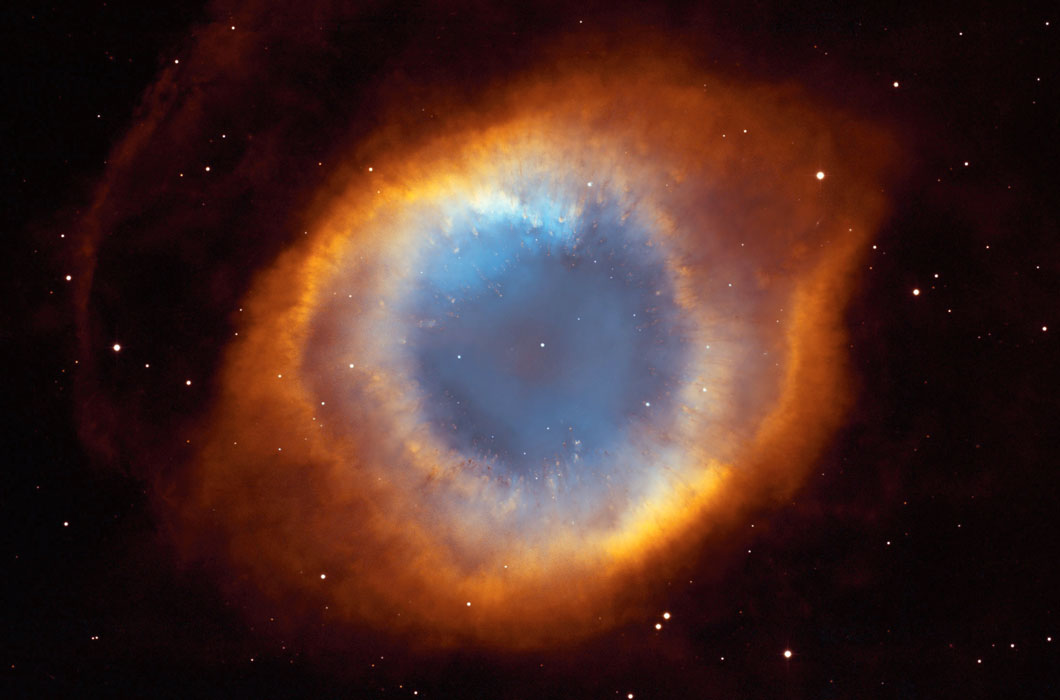
▲ Helix Nebula
At first glance, this nebula looks like a ring. It is in reality a trillion-mile-long tunnel made up of material given off by the central star before it collapsed to become a white dwarf. The white dot at the center is the hot white dwarf. Its ultraviolet light causes the gases in the helix (spiral) to glow.