Free
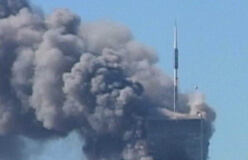
On September 11, 2001, people in the United States became aware of international terrorism in a way they may not have understood before.
The same could be said about the United States as a nation. Along with the international community of U.S. allies. Some responses to the attacks were immediate. Some took place weeks later. Some took years. September 11, 2001, changed the United States forever. It also changed its people and the world.

◀ After 9/11, people all over the country were nervous. Would there be another attack? What would it be like? Was my city next? People in lower Manhattan were very worried. The area reopened less than a month after the attacks. People disagreed about it. Some worried about all the dust and debris. Was the air safe to breathe? How would people be able to stay in touch if there were another attack? For many, the answer to this last question was cell phones. Sales of cell phones shot up in the days after the attacks. That was true throughout the country. Not just in the northeast.
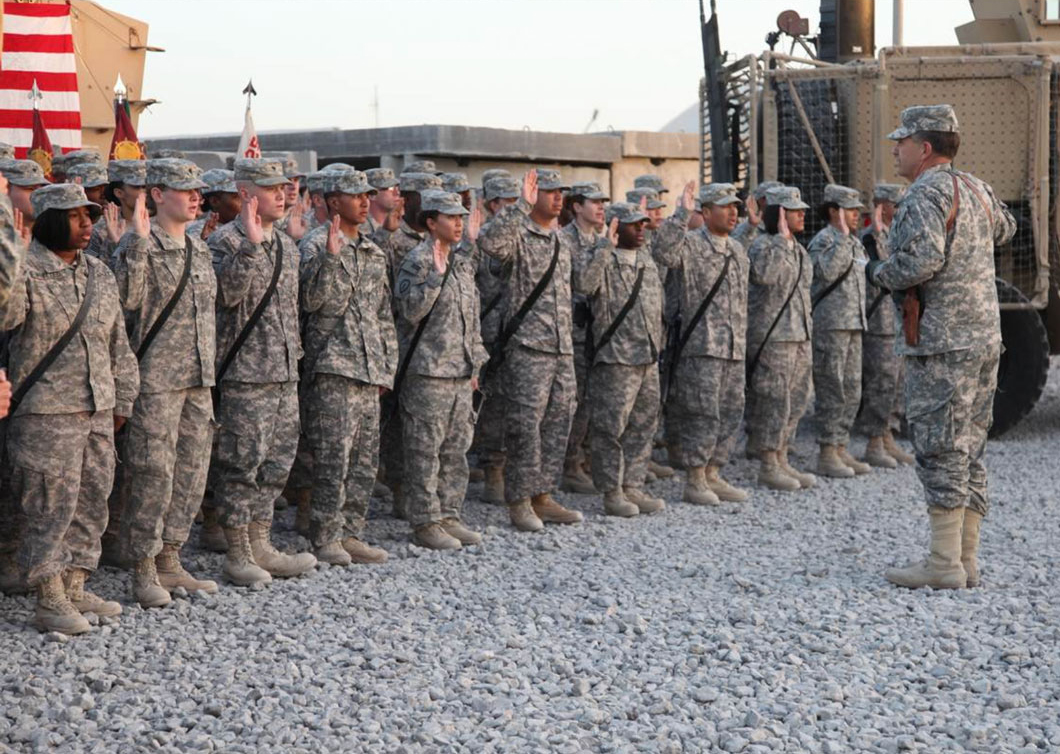
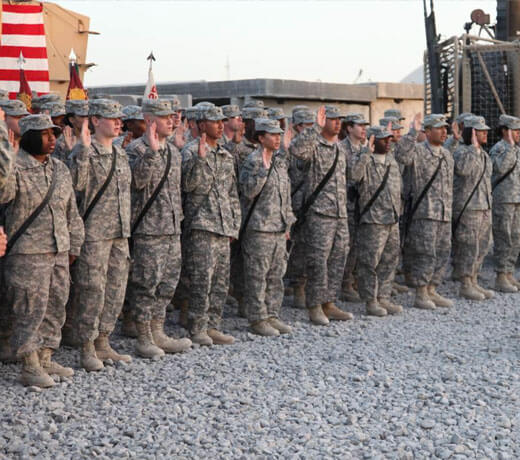
▲ Almost 200,000 Americans joined the military in the year following September 11. Tatchie Manso was one of them. Manso was a 20-year-old college student. He was living in lower Manhattan at the time. “Prior to [9/11], I never considered joining the military.” This is what he told a reporter from army.mil. “It was at that moment I realized that there was something I needed to be part of that was greater than myself.” Manso joined the army after he graduated college. That was in 2004.
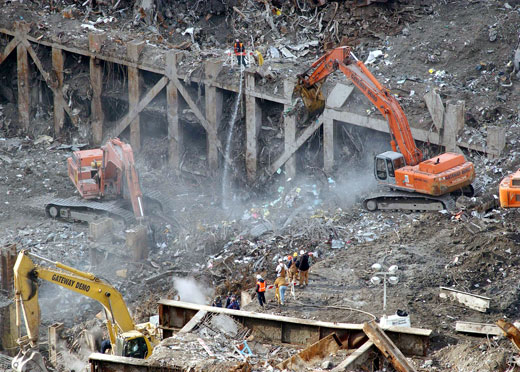
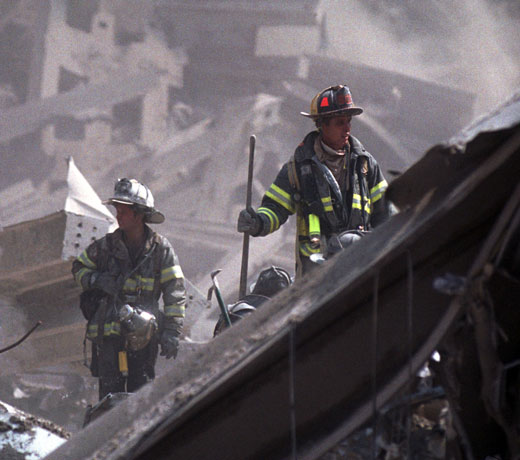
◀ September 11 affected everyone and everything. That included people in the area when the towers collapsed. It also included people working to clean up the site afterward. So many suffered serious illnesses. In some cases, even death. Why? Because they were breathing harmful air. Congress set up the Victim Compensation Fund in 2001. The fund gives financial help to people severely affected by the attacks. It was closed in 2004. But then brought back again in 2011 and 2015. In 2019, Congress passed a permanent authorization of the fund. It can keep helping people who qualify until October 1, 2090.
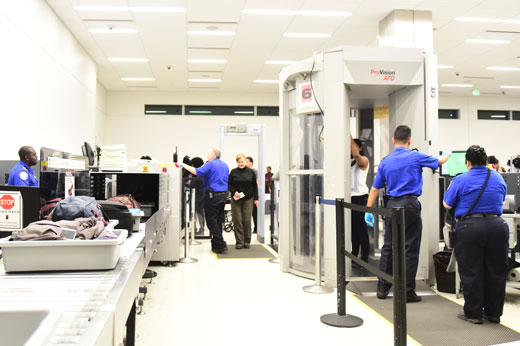
Airport security became tighter. For example, everyone over 18 must now have valid identification. Before being allowed to go to the gate, passengers must take off their shoes. They are scanned for weapons and other dangerous objects. Large amounts of a liquid are not allowed in carry-on luggage. ▶
◀ Government agencies like the Department of Homeland Security were formed. (The Department of Homeland Security combined other government agencies. The goal was to improve communications.) Congress passed the Patriot Act. This gave the government more freedom to find terrorists and prevent terrorism.
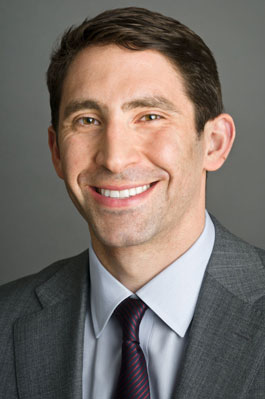
Khalil Tawil is a first-generation Lebanese American and army veteran. He was “especially affected by the perverted and cynical interpretation of Islam that al-Qaeda used to justify the attacks.” Like others, Tawil was inspired to attend West Point and join the military after the attacks. His idea was to bridge the gap between the Arab and U.S. worlds. Tawil’s decision was based on what he saw as an increase of violence against Muslims in the U.S. after 9/11. Statistics show that hate crimes against Muslims have increased by 500 percent since the attacks. Many Muslims in the United States find life more difficult since September 11. ▶
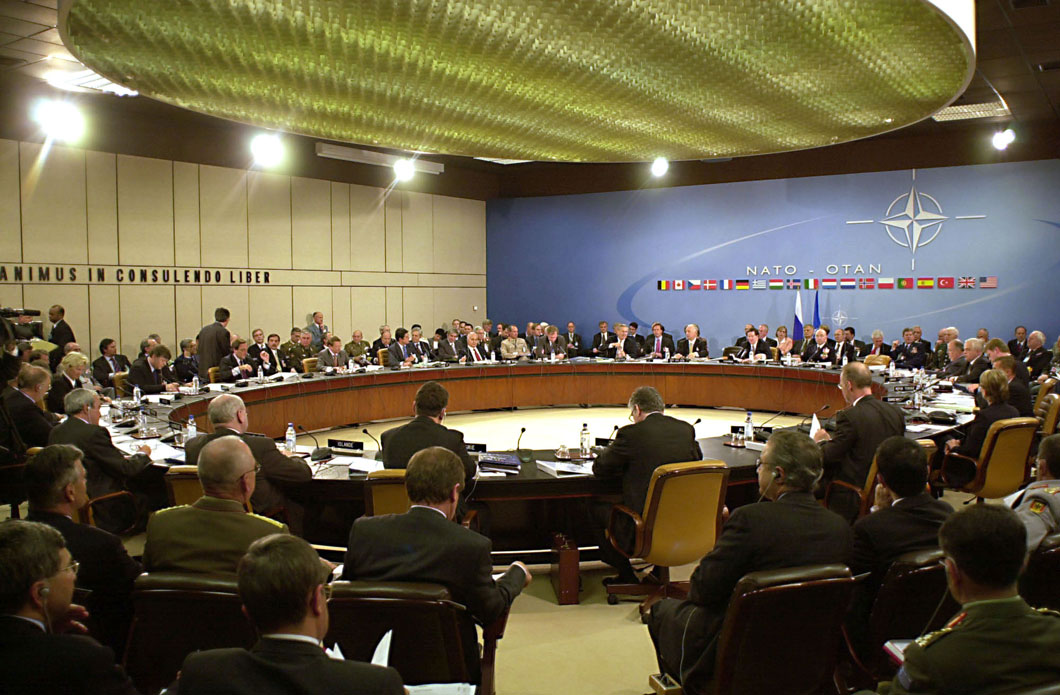
▲ NATO, the North Atlantic Treaty Organization, was formed in 1949. It is a pact between 30 countries in North America and Europe. The goal of the pact, called an alliance, is for the member nations to work together. Their aim is to defend freedom, democracy, and the rule of law. The pact has 14 articles, or parts. Article 5 says that “The Parties agree that an armed attack against one or more of them in Europe or North America shall be considered an attack against them all.” Article 5 has been officially used only once. That was the evening of September 12, 2001. At that moment, members of NATO pledged to participate in the defense of the United States. And they did.
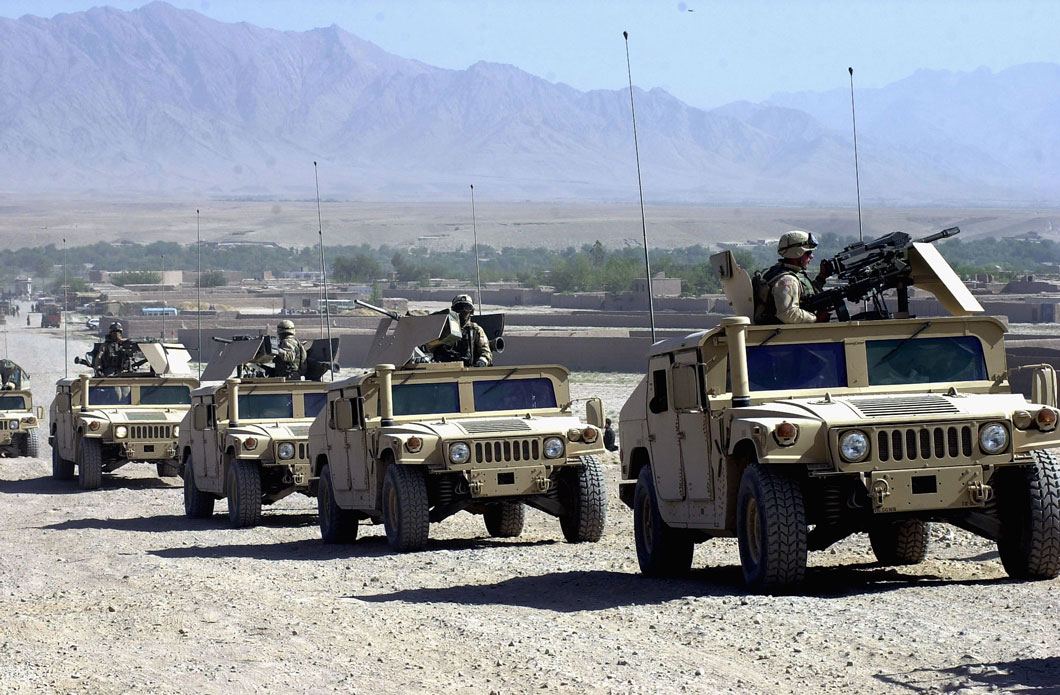
▲ On October 7, 2001, President Bush made an announcement. He said U.S. and British forces had started airstrikes against al-Qaeda and the Taliban. The strikes were in Afghanistan. The operation was called Enduring Freedom. It had two goals. One was to keep the Taliban from giving al-Qaeda protection. The other was to keep al-Qaeda from using Afghanistan as a place to plan terrorist attacks like those on 9/11. By November 22, Turkey, Germany and Italy had also sent soldiers to Afghanistan. The Netherlands, France, and Poland did as well. This was to support the U.S. effort as per Article 5 of the NATO treaty.
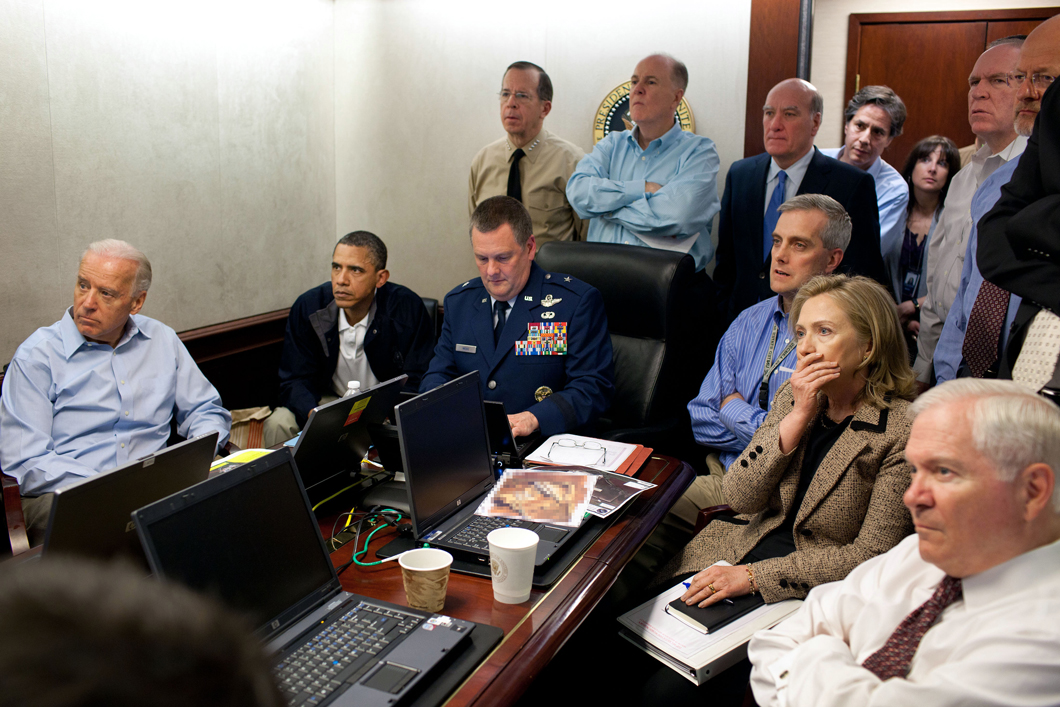
▲ The CIA had found and arrested Khalid Sheikh Mohammad in 2003. But it took 10 years of hunting for U.S. intelligence officers to finally find where Osama bin Laden was hiding. He was in a compound, or group of buildings surrounded by a wall. The compound was in Pakistan, near its border with Afghanistan. On May 2, 2011, U.S. forces raided the compound. They found and killed Osama bin Laden. President Barack Obama and others watched on a monitor at the White House.
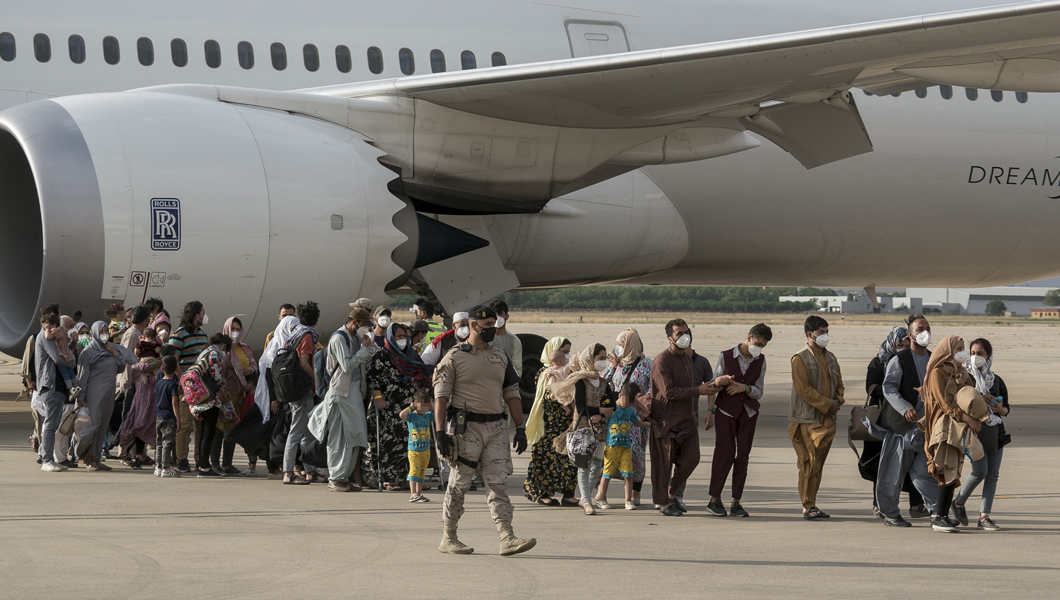
▲ In July 2021, the U.S. began the gradual withdrawal of the 2,500 troops that remained in Afghanistan. The Taliban seized the opportunity of a shrinking U.S. military presence. Its fighters swept across Afghanistan. They captured city after city. On August 15, they reached the capital, Kabul. They took control of the city and the government. The U.S. and other countries quickly sent military planes to airlift their citizens out of Kabul. In the following weeks, the planes also evacuated more than 100,000 Afghans. These people feared life under Taliban rule. They also feared revenge for having worked with the United States and its allies. By August 30, all U.S. troops had left Afghanistan. This ended the longest war in U.S. history. The future of Afghanistan under Taliban rule is uncertain. So is the fate of its people.