Free
Women were not allowed to serve in George Washington’s Continental Army.
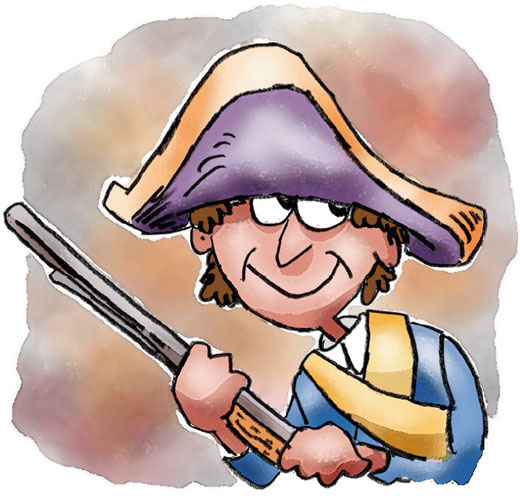
But evidence shows that at least four women became part of the fighting force. Boys as young as 14 joined the army. So a woman could wear loose clothing and pretend she was a boy. One woman from Maine joined up with her brother in 1775. She served until the war ended in 1781. In 1776, an unidentified Cherokee woman was found dead on a battlefield. She wore face paint like male Cherokee warriors did, and she had a bow and arrows.
Sally St. Clair was part French and part African-American. Some say she joined the army in disguise to be near her boyfriend. Her identity was not discovered until she died at the British siege of Savannah, Georgia, in 1779. ▶
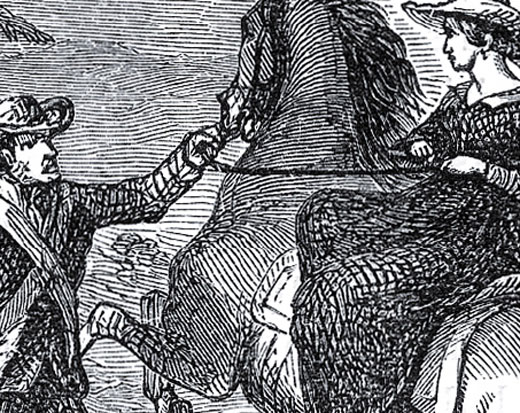
◀ In the summer of 1781, the commander of the Continental Army in South Carolina was camped near the home of 16-year-old Emily Geiger. He needed more troops. But the nearest ones were far away. The countryside was full of Loyalists. Emily volunteered to carry a message, knowing that a girl wouldn’t draw as much attention as a man. But, just to be safe, she memorized the message before she hid it in her clothing. Sure enough, British soldiers stopped her. When they went to get a woman to search Emily, she ripped up the message and swallowed the pieces. The British soon let her go, and she delivered the message aloud.
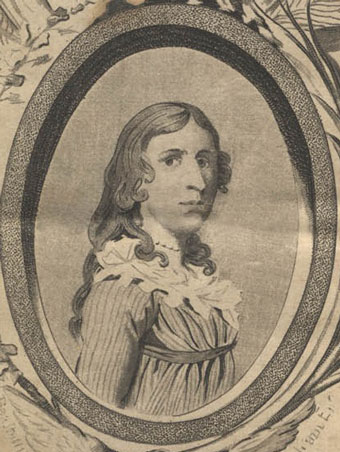
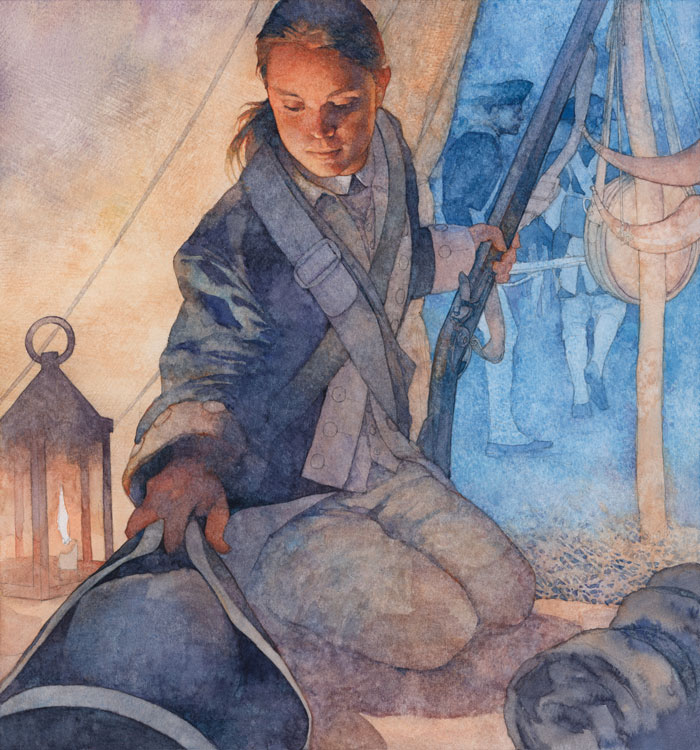
Deborah Sampson was a Massachusetts farm worker who loved adventure. In 1782, after the last battle of the war but while there was still some fighting, she joined the Continental Army as Robert Shurtliff. She served for one and a half years. According to one story, she was hit by a musket ball. She cut the ball out of her own leg to avoid being looked at by a doctor. Later, a doctor discovered her secret while treating her for a fever. Sampson was given an honorable discharge in October 1783. ▶
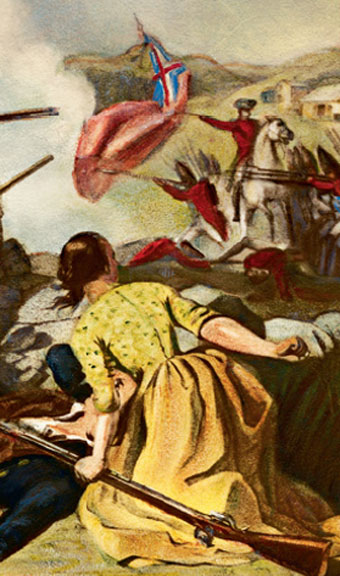
◀ Militias were local fighting units. They operated in backwoods areas away from large settlements. Women who lived in these places were used to firing weapons to defend against Indian attacks. Some put these skills to use against the enemy. Nancy Morgan Hart of Wilkes County, Georgia, took on five Loyalists who attacked her home while her husband was away. She shot two and captured them all.
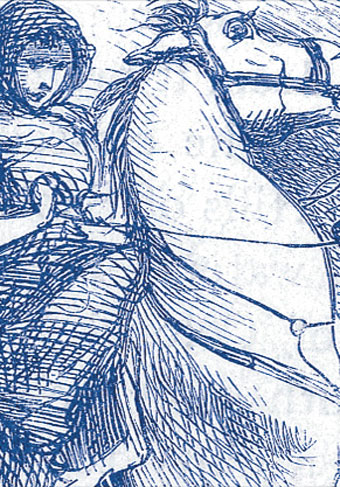
Another brave Patriot messenger was also a teenage girl. Sybil Ludington, 16, was the daughter of a New York militia commander. In 1777, he asked her to get on a horse and call out his militiamen. They were needed to defend a British attack near Danbury, Connecticut. On a rainy night, Sybil rode her horse about 40 miles to remote farmhouses to alert her father’s men. ▶
▲ Ann Bailey’s military career did not go as well as Deborah Sampson’s. In 1777, Bailey enlisted in the army as “Samuel Gay.” Within three weeks, she was promoted to corporal, but soon her disguise was discovered and she ran away. A few months later, Bailey was captured and tried in court. She was fined, sentenced to two months in jail, and discharged from the army.