Free
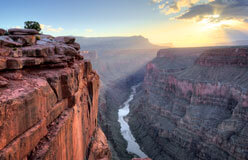
The rocky walls of the Grand Canyon look like a box of melted crayons.
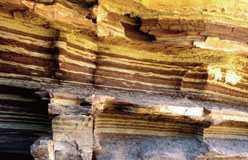
They have layers of red, pink, purple, brown, green, gray, and yellow. No huge cranes, noisy drills, or giant shovels dug the canyon. It was created by the mighty Colorado River. Of course, the river had help from small streams and tributaries, plus wind, rain, snow, and ice. The Earth’s moving tectonic plates also helped.
The canyon is a slow and steady work in progress. Its development began more than 6 million years ago and continues to this day.
The Mighty Colorado
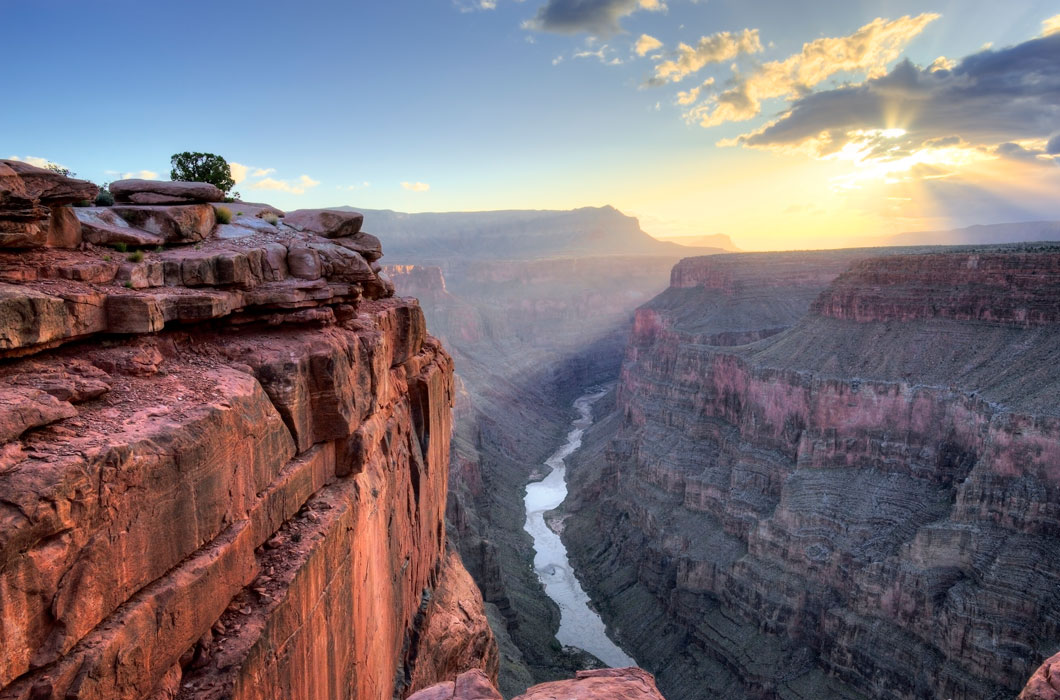
The strong waters of the Colorado and its branches carried billions of gritty fragments. The grit, called sediment, was made of gravel, mud, sand, and silt, or powdered rock. There was ice in the water too. The river acted like a powerful tool. It scoured away the rock layers and created the canyon’s basic form. The moving sediment is still making the canyon deeper by about six inches every thousand years.
Explore the Grand Canyon
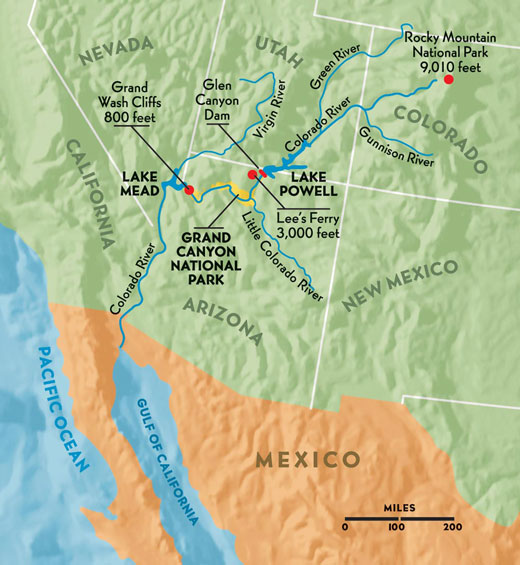
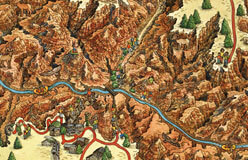
At 9,010 feet above sea level, the Colorado River begins in Rocky Mountain National Park in Colorado. The river is 1,450 miles long. It enters the Grand Canyon at Lee’s Ferry. There, it sits at an altitude of just over 3,000 feet. By the lower end of the canyon, at the Grand Wash Cliffs, the river has dropped another 2,200 feet.
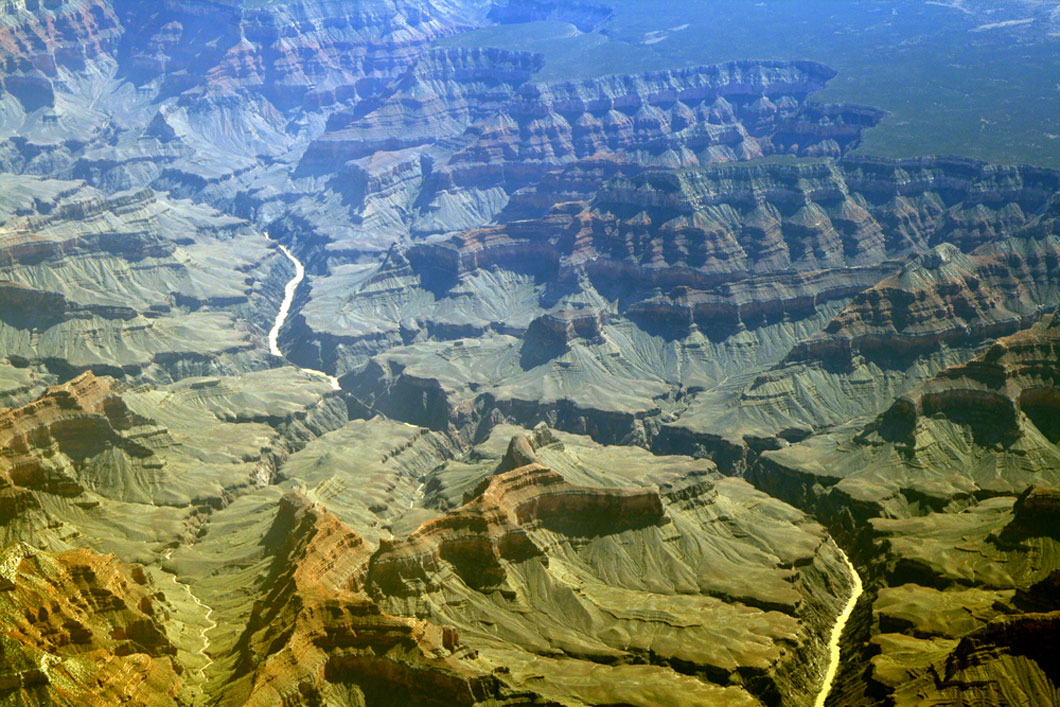
▲ Earth’s crust is made up of huge slabs of rock, called plates. At one time, western North America was at or below sea level. About 70 million years ago, the Pacific plate smashed into the North American plate. The Pacific plate slid underneath its neighbor. That created a 130,000-square-mile area a mile high, called the Colorado Plateau. Aftershocks created the Rocky Mountains. The Colorado River’s ancestor had wandered over the plateau before that collision. Then the water began running downhill toward an outlet in the Gulf of California. That’s how the Grand Canyon got its start.
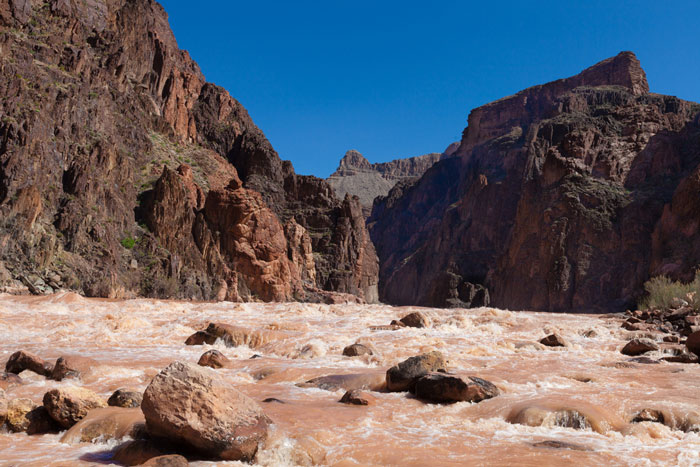
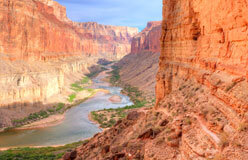
▲ The Colorado River can be as deep as 90 feet and as shallow as 6 feet. Its average depth is around 20 feet. The river has sections of rapids and of calm waters. The rapids are usually in shallow areas, and the calm waters are usually where it’s deeper.
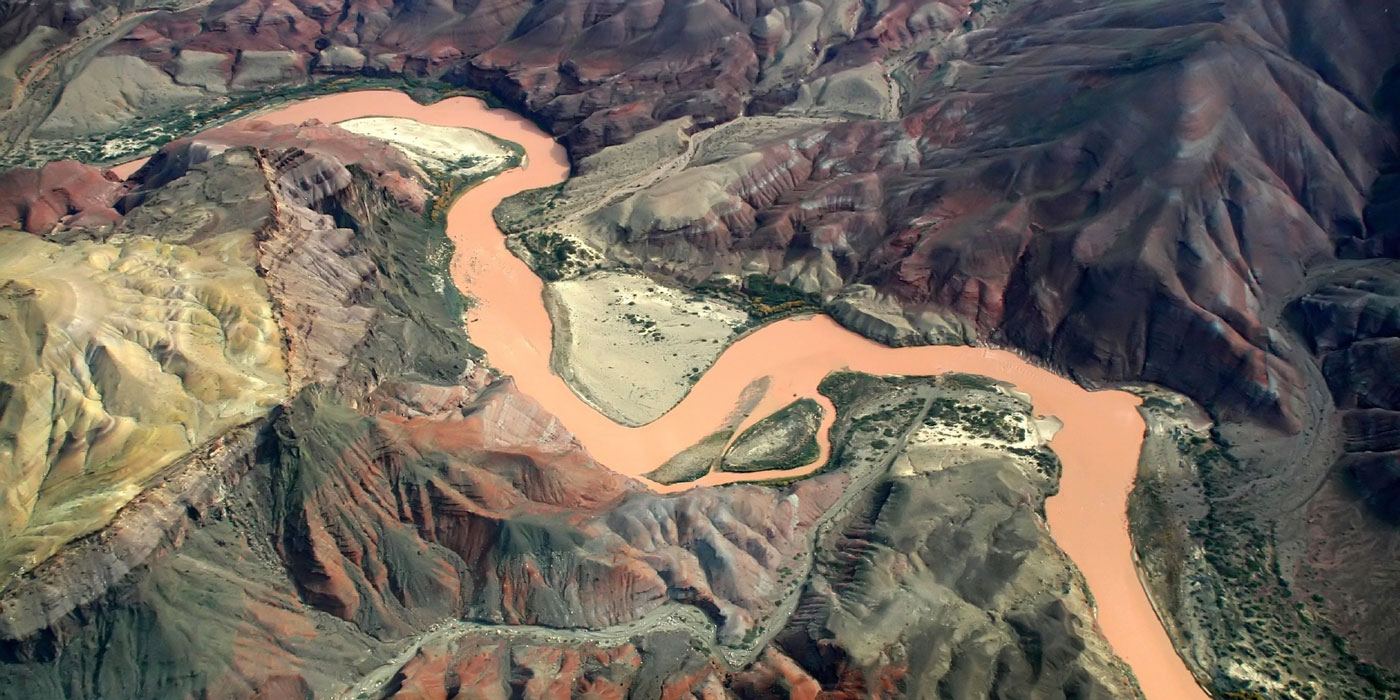
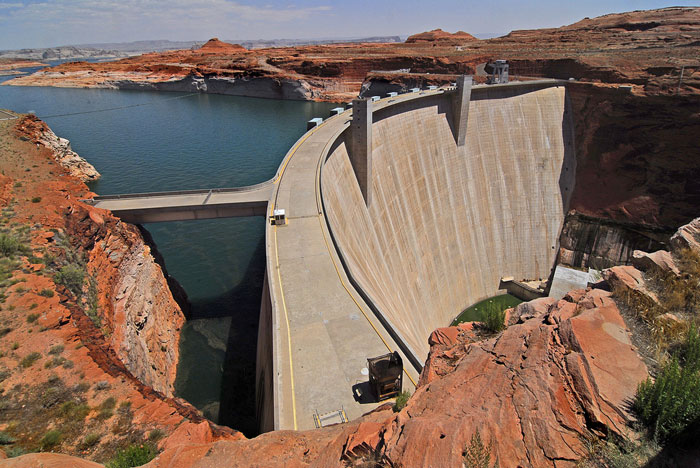
◀ Today, the river is bluish-green. Sediment and silt stay trapped behind the Glen Canyon Dam in Lake Powell. The dam was completed in 1963. It has reduced the amount of water that flows into the Colorado River by about 90 percent.