Free
On July 4, 1776, when the Second Continental Congress adopted the Declaration of Independence, the American Revolutionary War was in its second year.
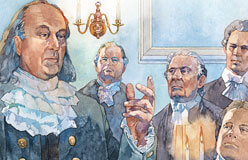
The 56 men who signed the Declaration had put their lives on the line. If the United States lost the war, they could be executed as traitors by the British government. As Benjamin Franklin supposedly put it, “Now we must all hang together, or most assuredly we will all hang separately.” They would have to wait until the war’s end to know their fate.
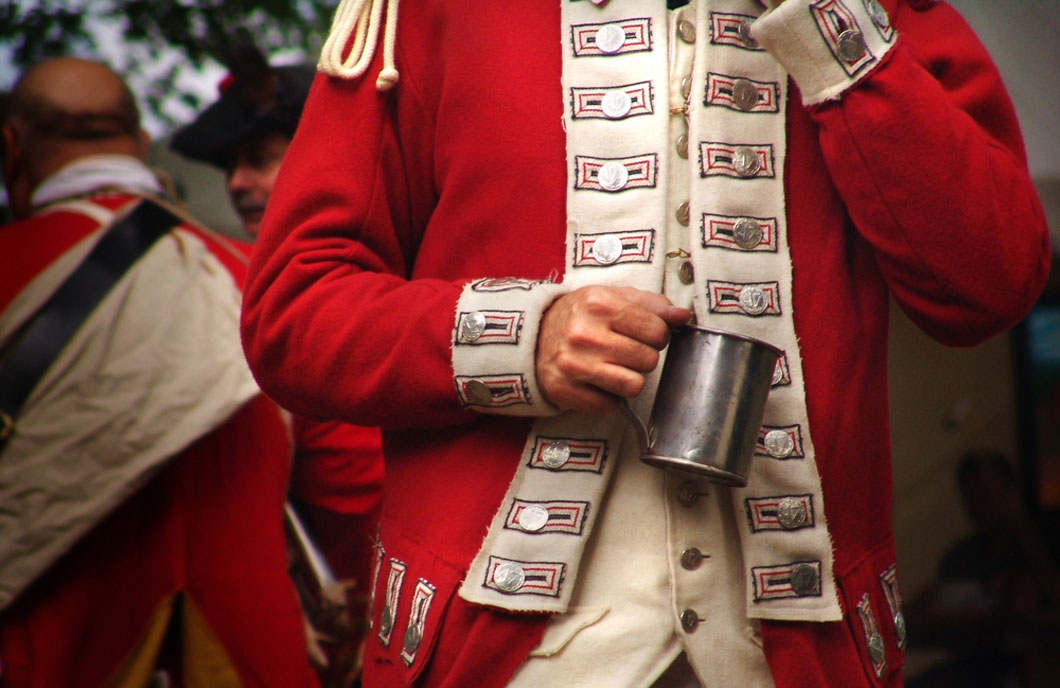
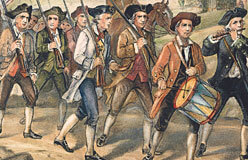
▲ The bright red jackets British soldiers wore earned them the nickname Redcoats. Men from all the colonies joined the Continental Army, led by General George Washington. These new and often poorly trained and armed soldiers faced the hard and dangerous task of having to fight the large and well-trained British Army.
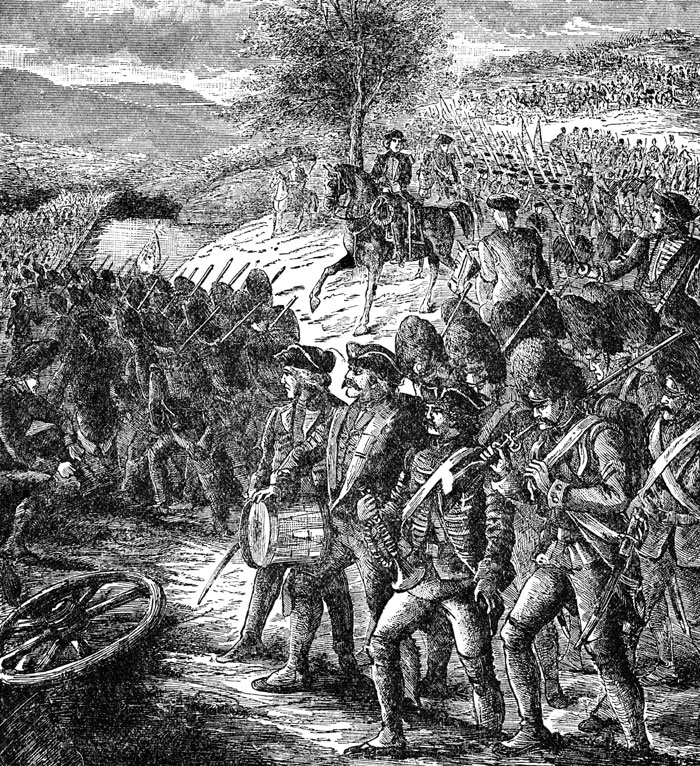
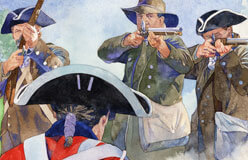
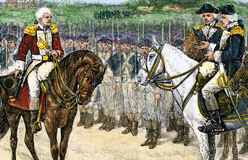
◀ In 1777, the outnumbered and exhausted Continental Army badly needed a victory. British forces had captured New York and pushed Washington’s army for a while all the way through New Jersey into Pennsylvania. A new British force of 6,000 men led by General John Burgoyne marched south from Canada to Albany, New York, to meet the larger British Army in New York City. During the long march through heavily forested areas, American militia forces attacked Burgoyne’s men from all sides. American troops surrounded Burgoyne’s tired fighters near Saratoga, New York, and forced them to surrender. The Battle of Saratoga was a turning point in the war. It gave Americans hope that they could defeat the British.
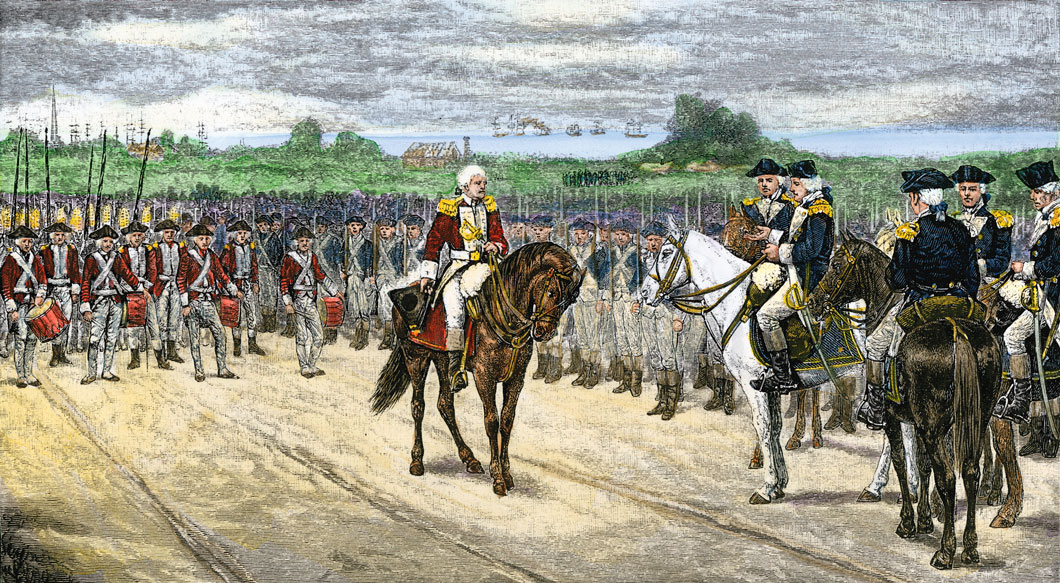
▲ In 1781, an American army accepted the surrender of most British forces in the field. Two years later, the final peace agreement was signed. At last the colonies were free. Now the tough work of creating a new nation could begin.
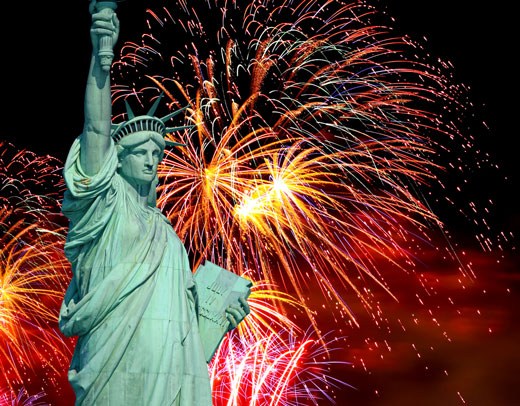
◀ Are we lighting fireworks on the wrong day? On July 2, 1776, members of the Second Continental Congress voted and passed a resolution declaring independence from Britain. John Adams wrote to his wife, Abigail, that July 2 would become the great American holiday “commemorated as the Day of Deliverance” by future generations. However, Congress debated for two days before accepting the actual wording of the Declaration, on July 4. On August 2, a final copy was brought to Congress for signing.
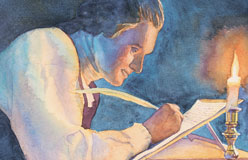
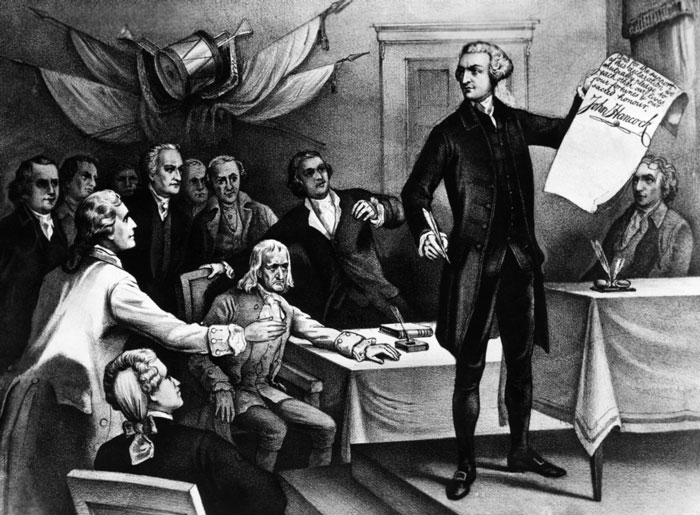
John Hancock was an early supporter of independence. The British offered a large reward for the capture of Hancock and other leading rebels. According to an old story, on signing the Declaration, Hancock joked: “The British Ministry can read that name without spectacles. Let them double their reward.” Today, “John Hancock” is another word for a signature. ▶
Loading the player...
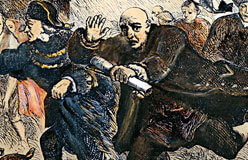
▲ On July 8, 1776, the clanging of the Liberty Bell drew people to the steps of Independence Hall in Philadelphia for the first public reading of the Declaration. Readings like this took place throughout the country. The Liberty Bell, created in 1751, later became a symbol of freedom. People opposed to slavery in the 1800s adopted the bell as a symbol for their cause.