Free
In the centuries after Christopher Columbus first reached America, European governments raced to build empires around the world.
An empire is a group of countries ruled by a single power. The British controlled slave-trading “castles” (forts where enslaved people were held) and colonies. These stretched from Africa to the Caribbean to Canada. The British took natural resources from these places to make goods. Then they made money by selling and trading these goods. Britain, Spain, the Netherlands (Holland), Sweden, and France all had colonies in North America.
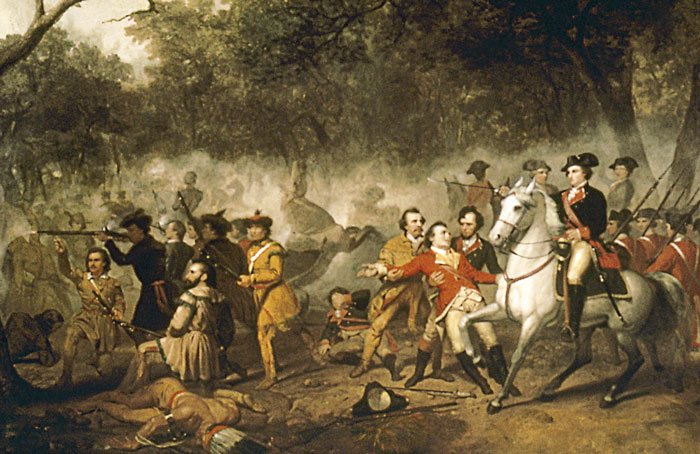
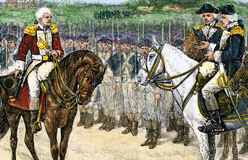
▲ Both Britain and France wanted bigger empires. In May 1754, French troops met a group of armed Virginians in the Ohio Valley. A young George Washington led the group. They were fighting for the British. The French forced them back from the Ohio River. It was the first battle of a decade of conflict. This included the Seven Years’ War, which actually lasted from 1754 until 1763 in America. It also included Pontiac’s War (1763–1764). That was between the British, the French, and the Ohio Valley Indians. These wars were for control of what’s now the Midwest—and the power to shape North America’s future. Many Native American groups fought for the French. But the Iroquois League members sided with the British and helped them win.
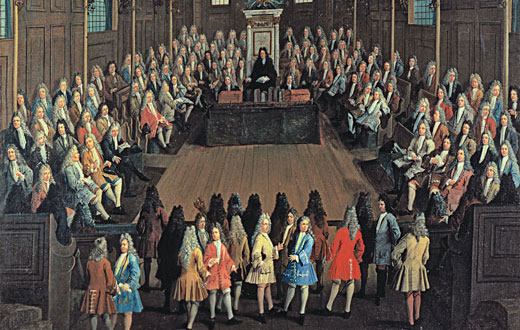
◀ In 1763, the British won the nine-year North American part of the Seven Years’ War. It’s known as the French and Indian War. It left Britain with huge debts. To help pay for the war and the cost of governing the colonies, King George III and the British Parliament decided to tax the colonies. A tax is money that people must pay to support a government. The British had fought to protect the colonists from the French and Native Americans. Even so, the taxes made many colonists mad.
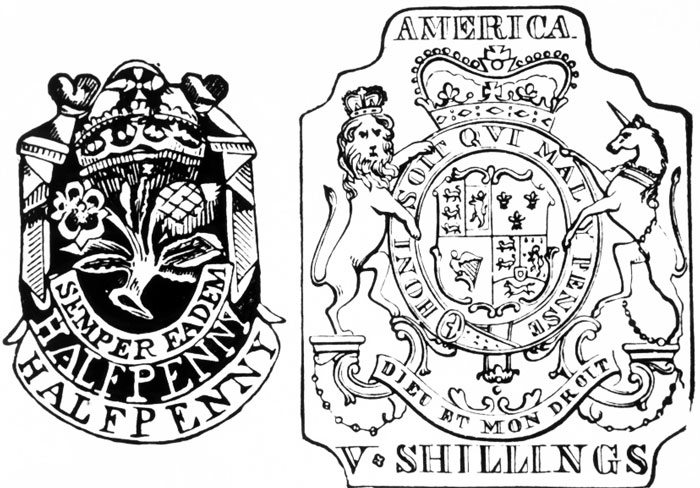
▲ In 1765, parliament passed the Stamp Act. It forced colonists to buy special stamps for all kinds of papers. These included wills, diplomas, and newspapers. The colonists protested. Many quit buying things that needed stamps. Many stopped buying British imports. They wanted to hurt the British economy. They thought that would force parliament to change its policy.
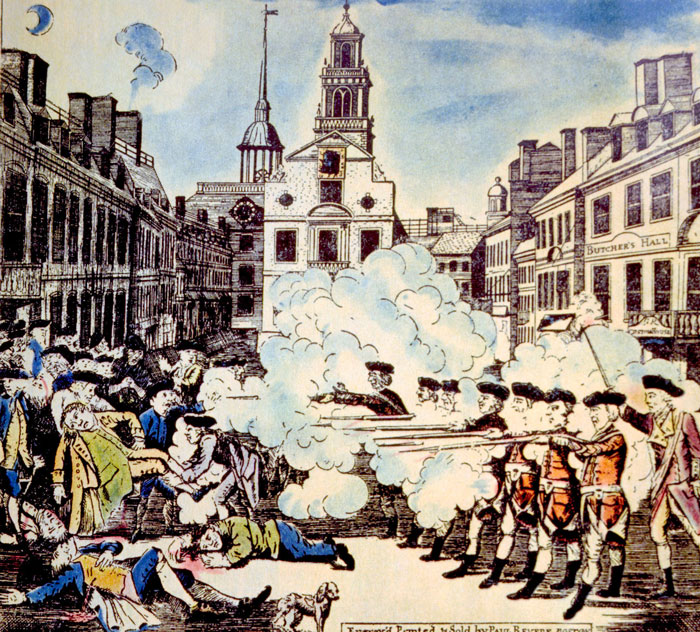
◀ Parliament worried that Britain was losing control of the colonies. In 1768, it sent 1,000 British soldiers to Boston. They made things worse. In 1770, a crowd of colonists argued with the soldiers. They even threw ice balls at them. The soldiers got nervous and fired on the crowd, killing five. Rebellious colonists spread the news, calling the event a massacre. Later, it became known as the Boston Massacre.
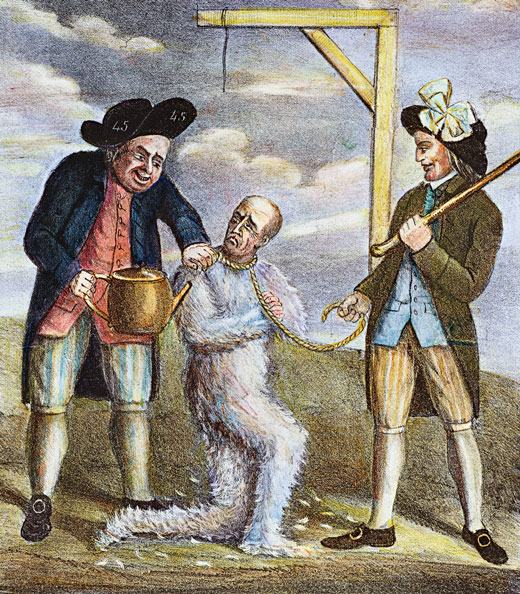
Anger over the Stamp Act united many colonists who were against parliament’s attempts to create new taxes. Some joined the Sons of Liberty, whose members took both peaceful and violent action. For example, they rallied mobs to burn down the houses of tax collectors. This British political cartoon shows a tax collector who’s covered in tar and feathers. He’s also being forced to drink tea, a product taxed by the British. One year after passing the Stamp Act, parliament ended it. ▶
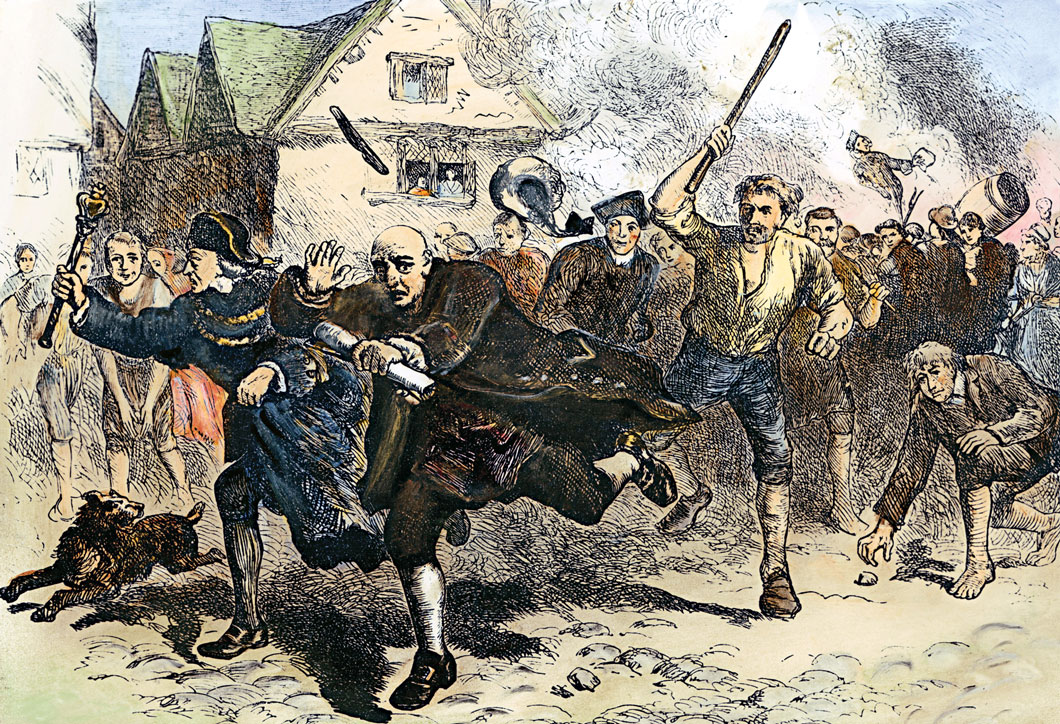
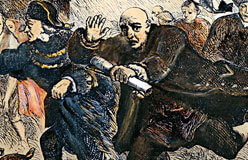
▲ Many colonists thought the taxes were unfair. They had to pay taxes, but they had no voice in parliament. So they had no say about the laws that affected their lives. They said it was “taxation without representation.” That brought people together. And it was a big reason for the colonists’ conflict with Britain during the 1700s. Above, a mob riots against a governor who was loyal to the British.