Free
In Boston, men like Samuel Adams and John Hancock kept the colonists in a constant state of anger over British rule. In the surrounding countryside, groups of colonists got ready to fight.
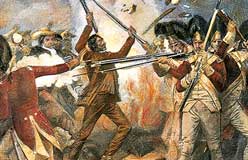
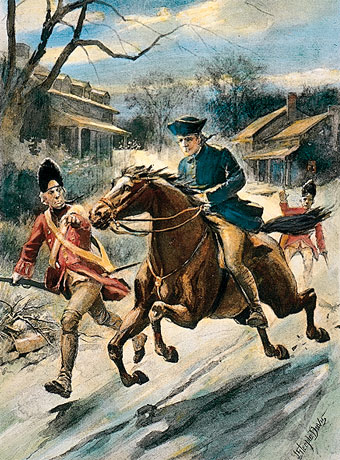
They stored gunpowder and other supplies in Concord, a village northwest of Boston. On April 18, 1775, British soldiers quietly marched out of Boston. Colonial leaders thought the soldiers meant to take Concord’s military supplies. Riders Paul Revere and William Dawes took separate routes to tell people in the countryside the British were coming. Revere stopped in Lexington to warn Adams and Hancock that the British might be looking for them. When the British got to Lexington on April 19, the minutemen were waiting. As the two groups faced off, a shot rang out. No one knows for sure who fired. It was called “the shot heard ’round the world.” The American Revolution had begun!
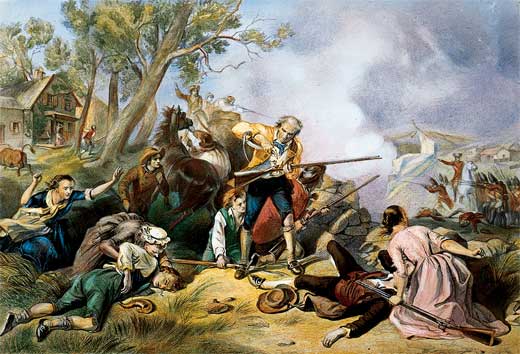
◀ April 19, 1775
The Battles of Lexington and Concord are fought.
May 1775 ▶
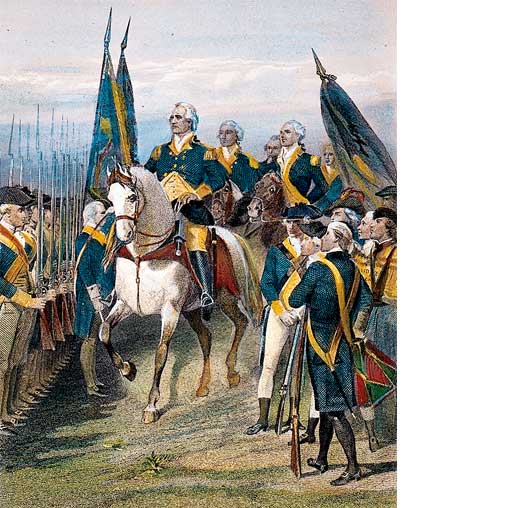
The Second Continental Congress meets in Philadelphia to draw up war plans. It sets up an army and names George Washington commander-in-chief.
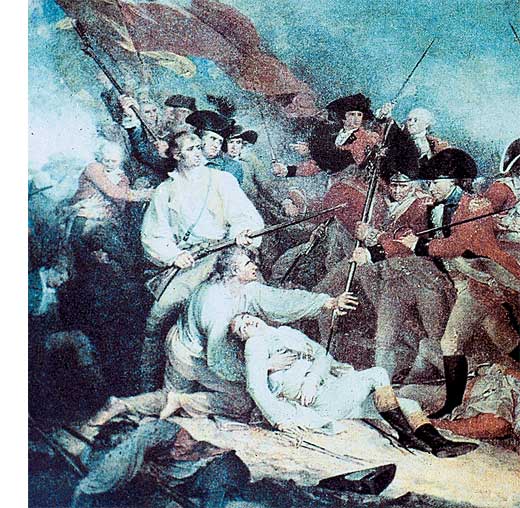
◀ June 17, 1775
The Americans make a bold stand at the Battle of Bunker Hill, in Charlestown, Massachusetts. The British win but suffer huge casualties.
March 17, 1776 ▶
The British leave Boston, taking 1,000 Loyalists with them to Nova Scotia.
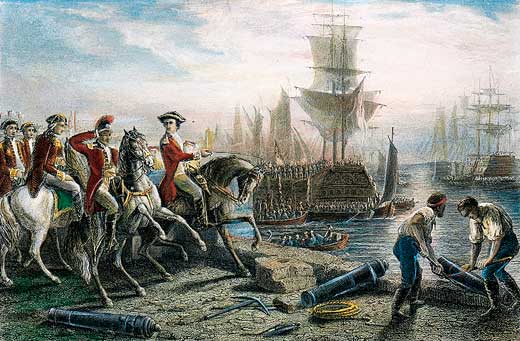
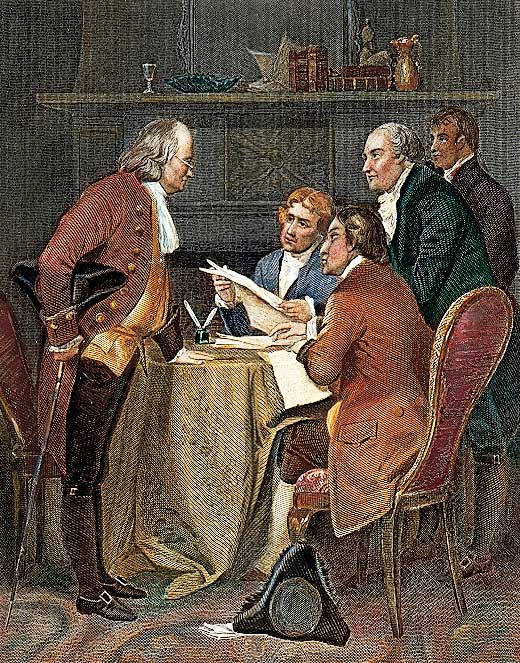
◀ July 4, 1776
The Declaration of Independence is signed in Philadelphia.
August 1776 ▶
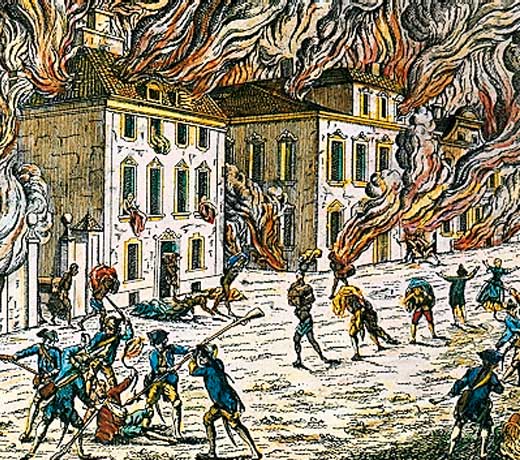
After defeating Washington’s troops, the British control New York City for the rest of the war.
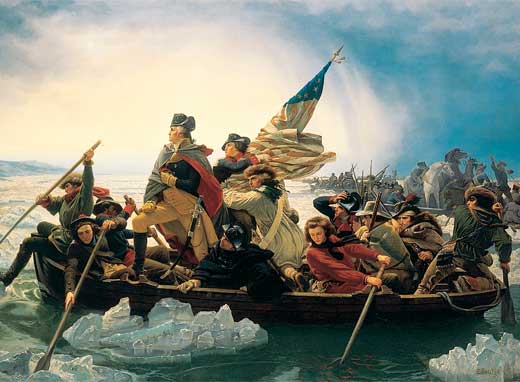
◀ December 25–26, 1776
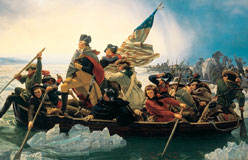
Washington and some 400 scruffy, poorly equipped soldiers cross the Delaware River. They surprise the British and their Hessian mercenaries (hired soldiers) at Trenton, New Jersey. This gives the American cause new hope.
August 1777 ▶
British General Howe defeats Washington’s troops at Brandywine Creek and Germantown, Pennsylvania. Then he captures Philadelphia.
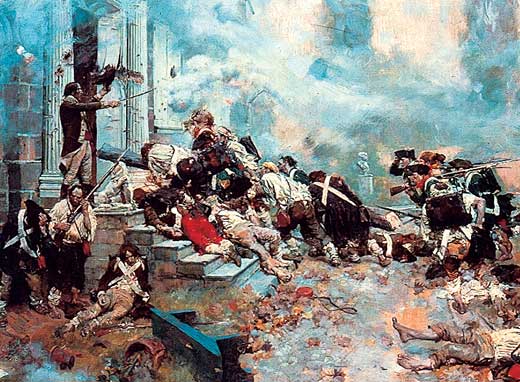
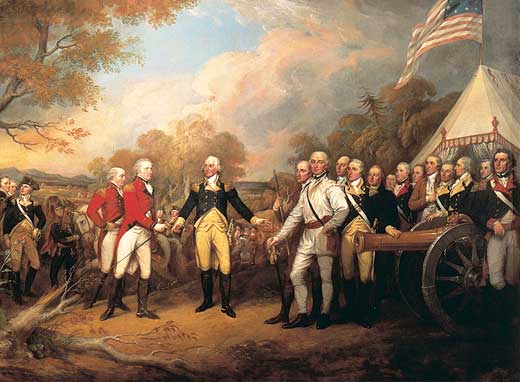
◀ October 17, 1777
British General Burgoyne surrenders at Saratoga, New York. This ends a British effort to separate New England from the other colonies. This American victory is considered the turning point of the war.
February 1778 ▶
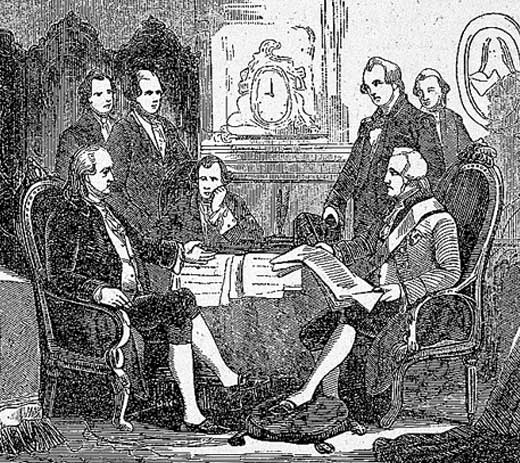
The Americans sign military and political treaties with France. That puts Britain’s longtime enemy on the Americans’ side in the war.
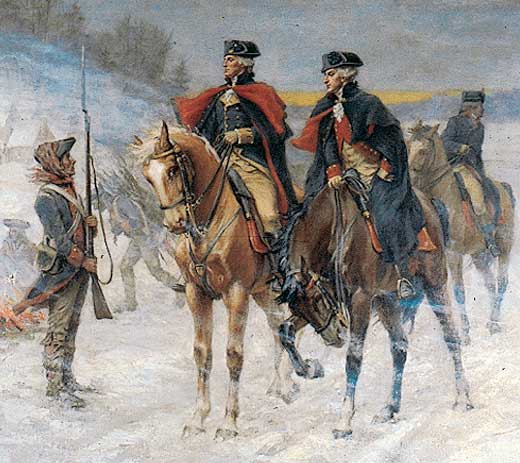
◀ Winter 1778
Washington and his troops spend a harsh winter at Valley Forge, Pennsylvania.
June 28, 1778
Neither side wins a clear victory at the Battle of Monmouth, New Jersey. But the British give up on holding the North. They turn their attention to the South, where there are more Loyalists.
1780
The British gain control of Georgia and South Carolina. But they fail to take North Carolina. British General Cornwallis fights his way to Yorktown, Virginia.
1781
A French fleet defeats British ships coming to Cornwallis’s aid. The French enter Chesapeake Bay. That keeps Cornwallis from leaving Yorktown.
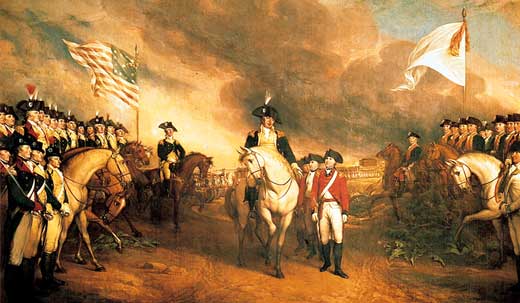
◀ October 19, 1781
Cornwallis surrenders at Yorktown.
September 3, 1783 ▶
The British and Americans sign a peace treaty in Paris, France.
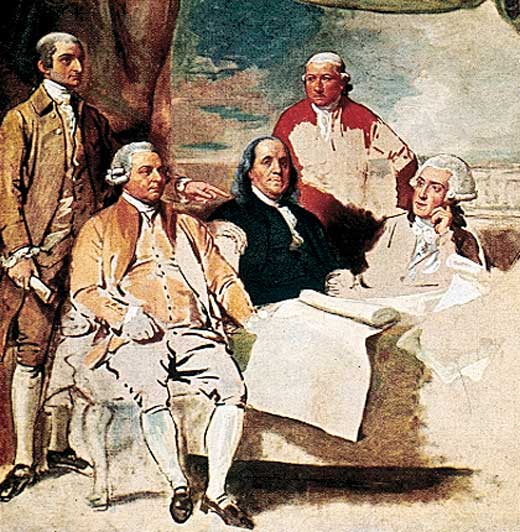
◀ November 1783
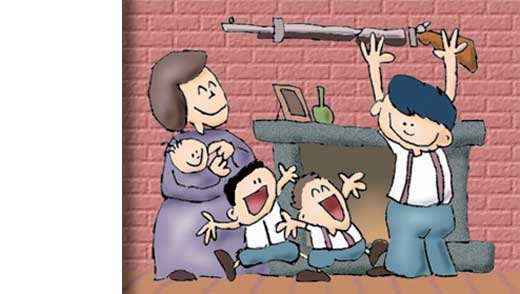
The Continental Army is officially disbanded.
Poet Henry Wadsworth Longfellow made a hero of Paul Revere in a poem called Paul Revere's Ride. It’s often mistakenly called “The Midnight Ride of Paul Revere.” But in fact, Revere never finished his ride. He and Dawes met in Lexington and set out for Concord with a Dr. Prescott, who was on his way home. Some British officers surprised them between Lexington and Concord. Revere was captured and Dawes was thrown from his horse. Dr. Prescott was the one who warned the Concord minutemen to prepare for a British attack. ▶
Loading the player...
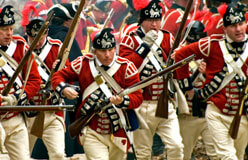
▲ During the war, British Royal Navy ships patrolled coastal waters, supplying the redcoats with whatever was needed, including more troops.