Free
On May 21, 1884, the statue was finished. The journey from idea to reality had taken almost 20 years.
A ceremony took place at the French foundry where the statue had been built. The U.S. minister to France and the French Prime Minister Jules Ferry were both there. The president of the Franco-American Union said: “We commit it to your care, Mr. Minister, that it may remain forever the pledge of the bonds which should unite France and the great American nation.”
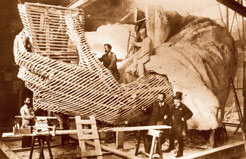
During the spring of 1885, workmen took the statue apart. It was packed into 214 crates and shipped to the United States. On June 17, 1885, crowds cheered as the ship Isère entered New York Harbor.
But more than a year went by before the statue was dedicated to the people of America.
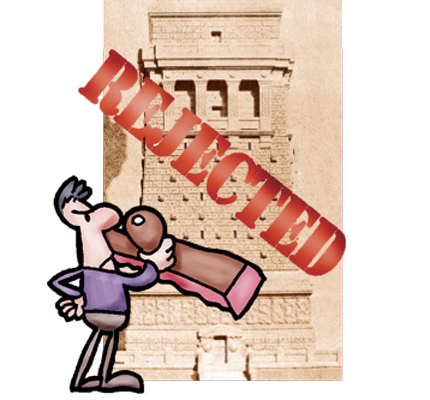
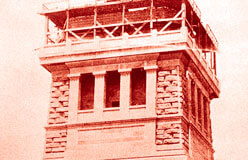
There were several reasons for the delay. Before the statue could be placed on Bedloe’s Island, a foundation and a pedestal had to be built. Richard Hunt’s first design for the pedestal (left) was around 115 feet tall. By 1883, however, the American Committee, which was in charge of raising funds for the pedestal, had raised only about a third of the needed money. Hunt was asked to change his design. He settled on a pedestal 89 feet high.
In May 1884, the pedestal’s foundation was completed. Then work on the pedestal began. However, before even half of it was built, the money ran out. Some people felt that since Liberty was to stand in New York, New Yorkers should pay for it. Others felt that because it was a gift from France, the French ought to pay for all of it. ▶
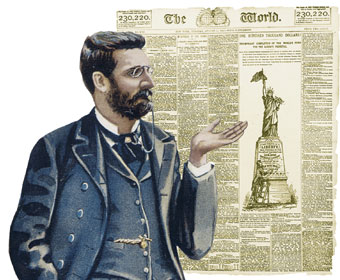
◀ Newspaperman Joseph Pulitzer, among others, was deeply embarrassed that Americans were not getting behind this important symbol and gift. He went after the rich, saying, “Let us not wait for the millionaires.... Give something, however little, we will publish the name of every giver....” And he did, in his newspaper The World. In five months, 121,000 people contributed $102,000. One gift was only five cents! Construction on the pedestal resumed and was completed in April 1886.
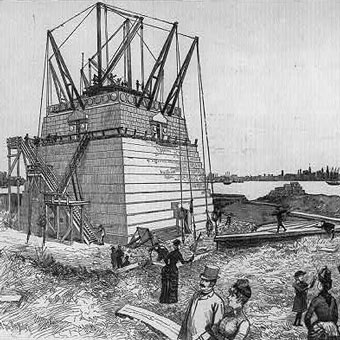
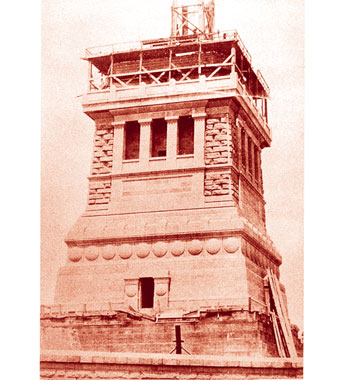
Untouched for nearly a year, the 214 crates could now be opened. Each day, people watched as the pedestal, the skeleton, and then the statue itself rose higher and higher. At right is the completed pedestal. ▶
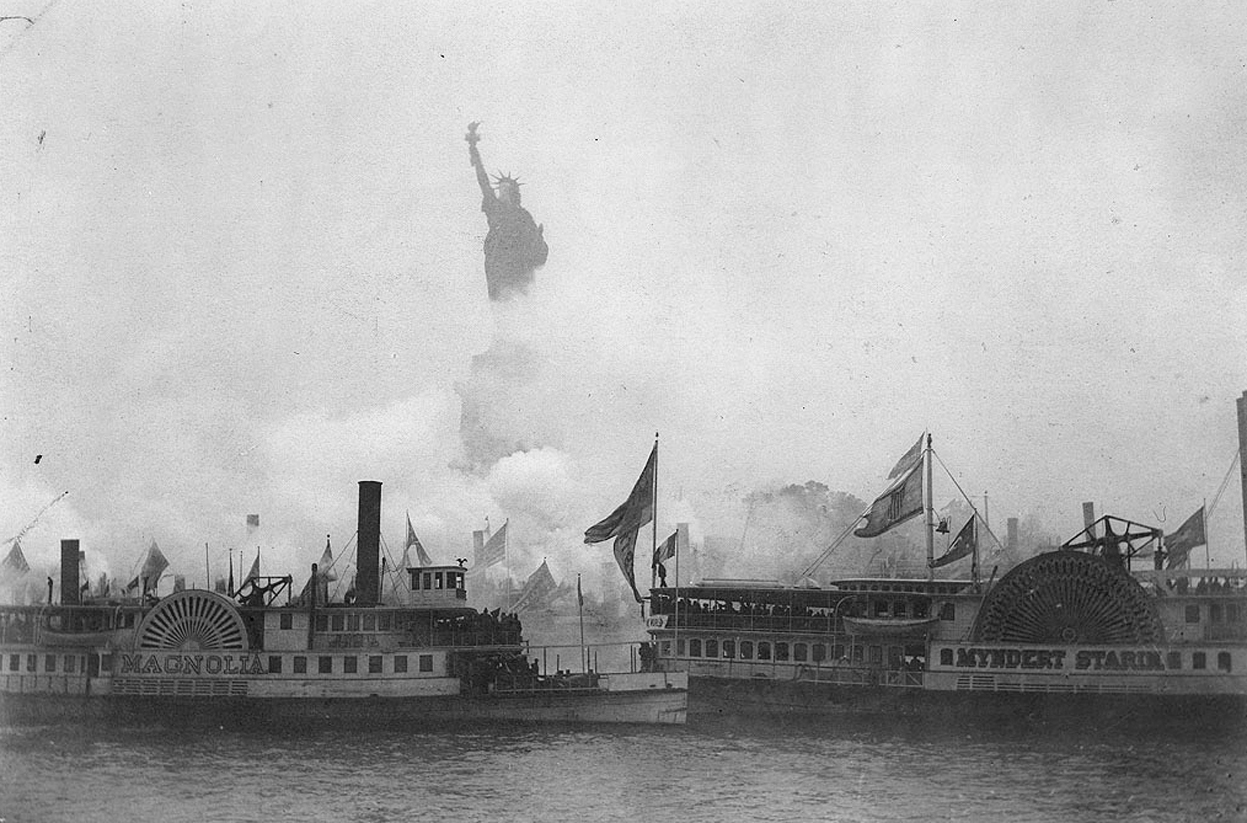
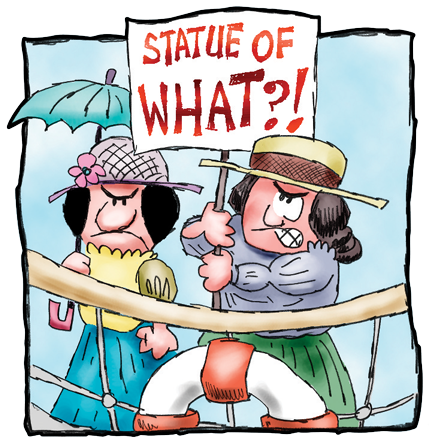
◀ A boatload of suffragists campaigning for women’s rights placed themselves right in front of the viewing stand. They were angry that the only women at the ceremony were the wives of high-ranking men. They felt that putting up a statue of a woman dedicated to liberty was an insult. This was because women in the U.S. and France didn’t have the right to vote! U.S. women didn’t win that right until 1920.