Free
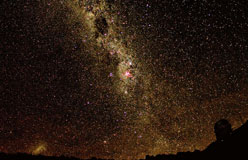
Looking along the Milky Way, you can see many billions of stars. A dark dust lane stands out against the stars.
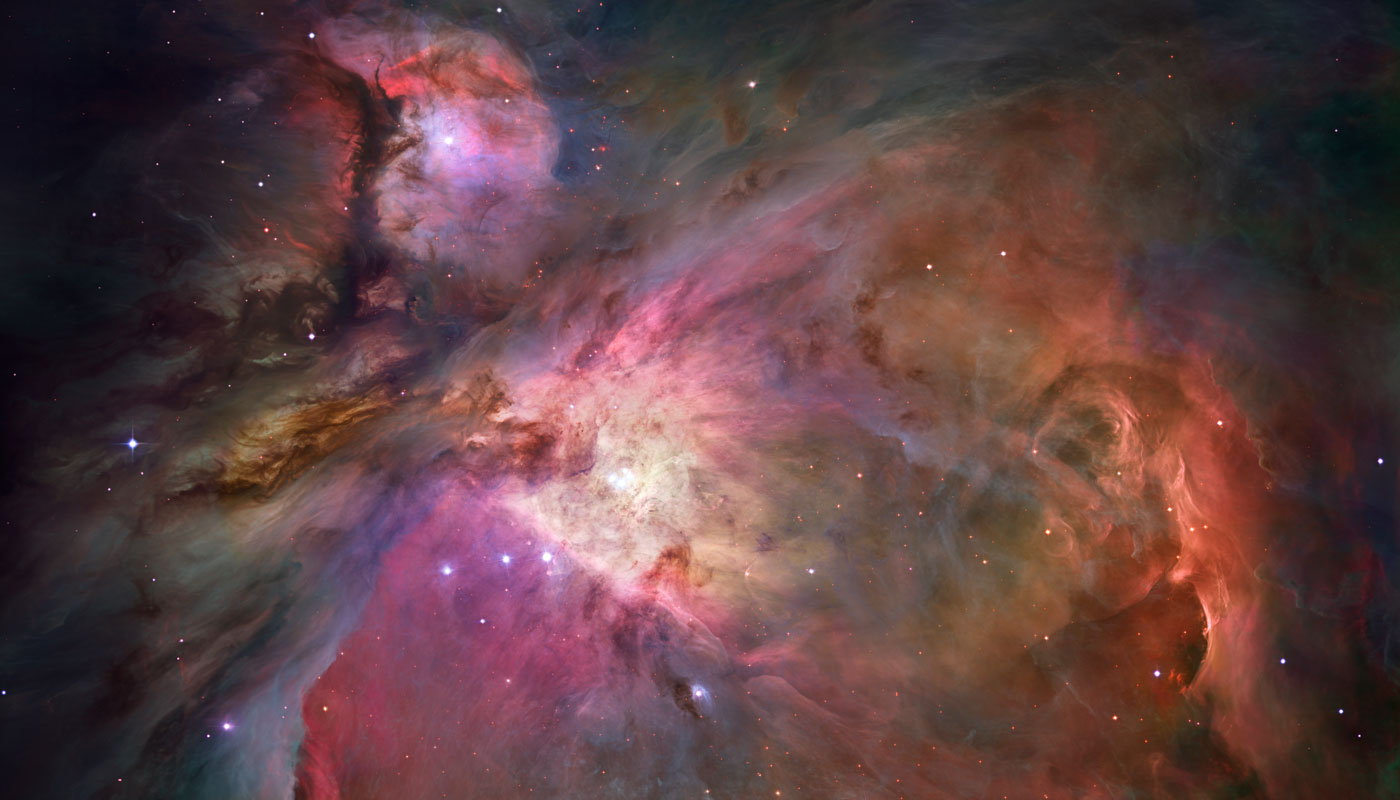
It provides the raw material for new stars. They are born inside these dark nebulae. Stars are not born alone but in groups. The energy released from their birth bursts out the side of the dark nebula. It creates a glowing emission nebula.
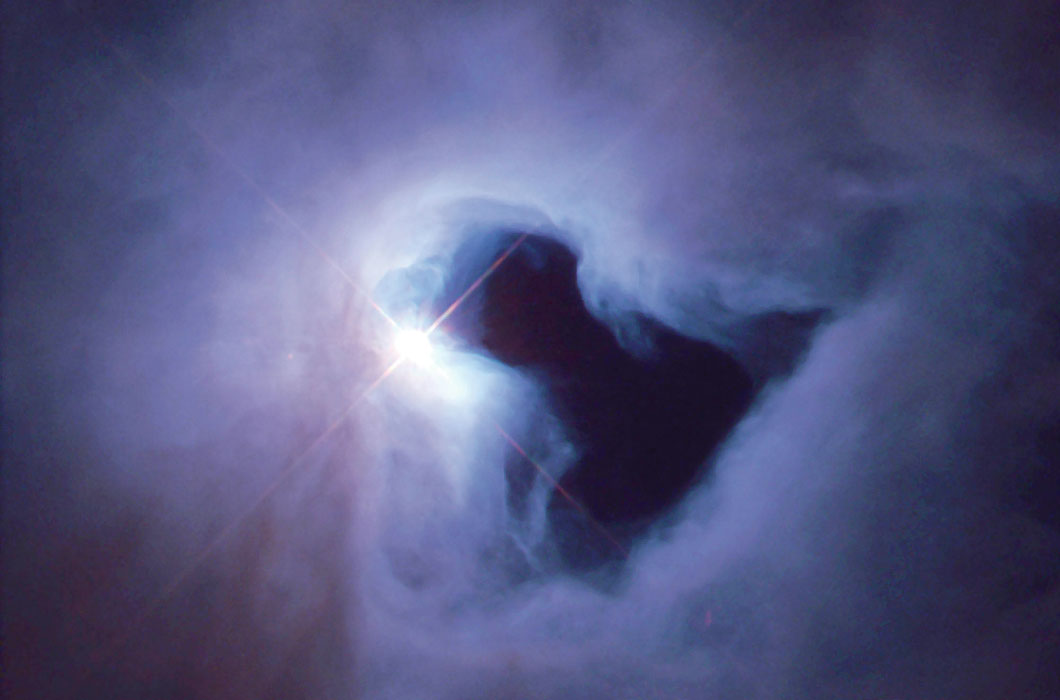
▲ Star Cocoon
A cocoon is the shell a butterfly grows in. Sometimes, stars form inside things like cocoons, but these are made of dust and gas. A Bok globule (above) is a dark cloud of thick dust and gas. Stars sometimes form inside it. These globules are named after Dutch astronomer Bart Bok. He discovered them in the 1940s. A basic Bok globule is trillions of miles wide. It holds enough gas to make about a dozen stars like our Sun. Not all Bok globules will form stars. Some break up before they can do that.
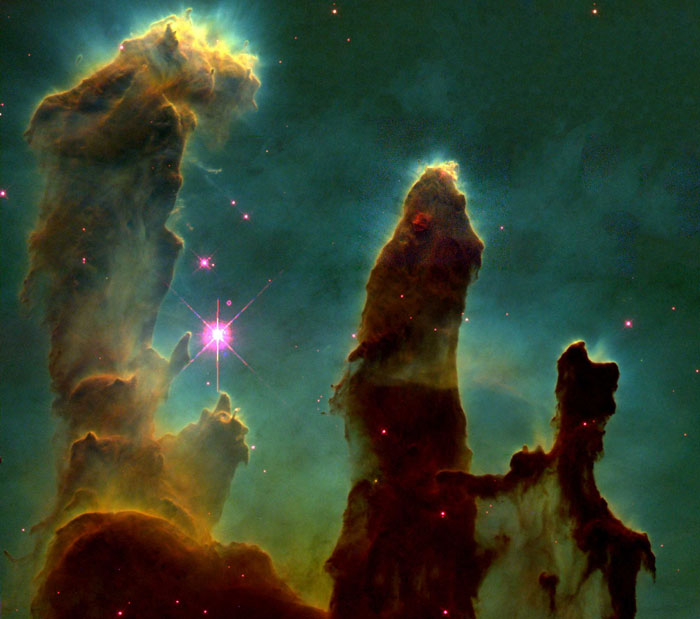
▲ Pillars of Creation
What does this picture look like? Elephant trunks, coral, or even fairy castles? These dark pillarlike shapes are columns of cool hydrogen gas and dust. They are places for growing new stars. The pillars stick out of the inside wall of a dark nebula. They sort of look like stalagmites on a cavern floor.
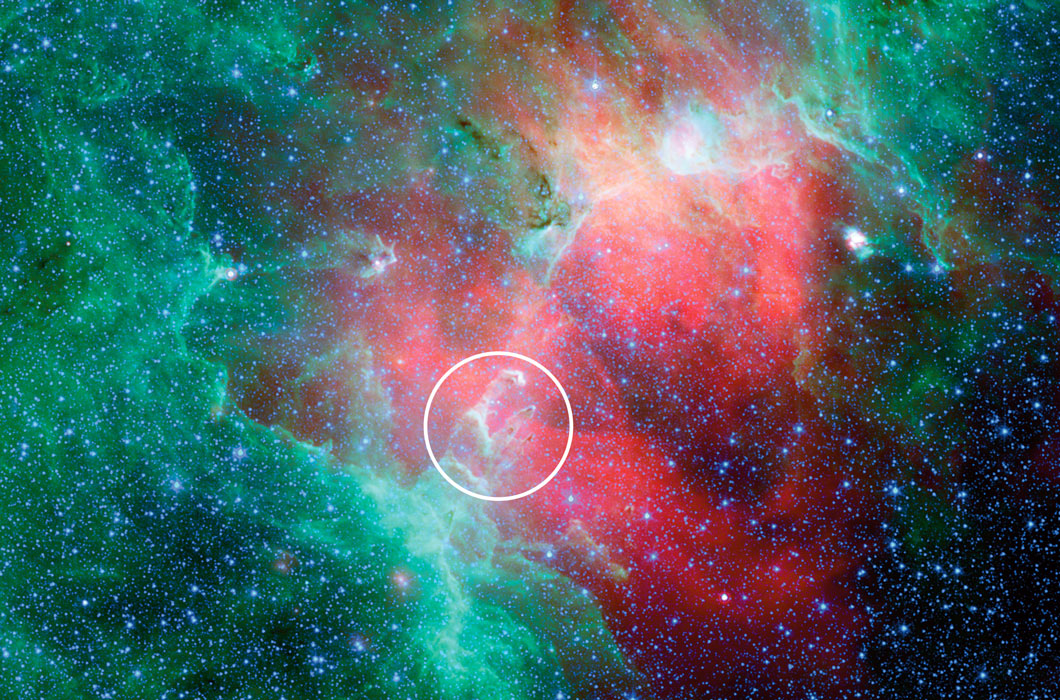
▲ Infrared Vision
Astronomers can look inside the Eagle Nebula pillars. They use infrared, light-sensitive telescopes to do that. Infrared pictures show the whole network of stormy clouds and newborn stars. Towers of cool gas and space dust look green. These towers include the famous Pillars of Creation. The red areas show hotter dust. A massive star explosion heated it up. That was about 9,000 years ago.
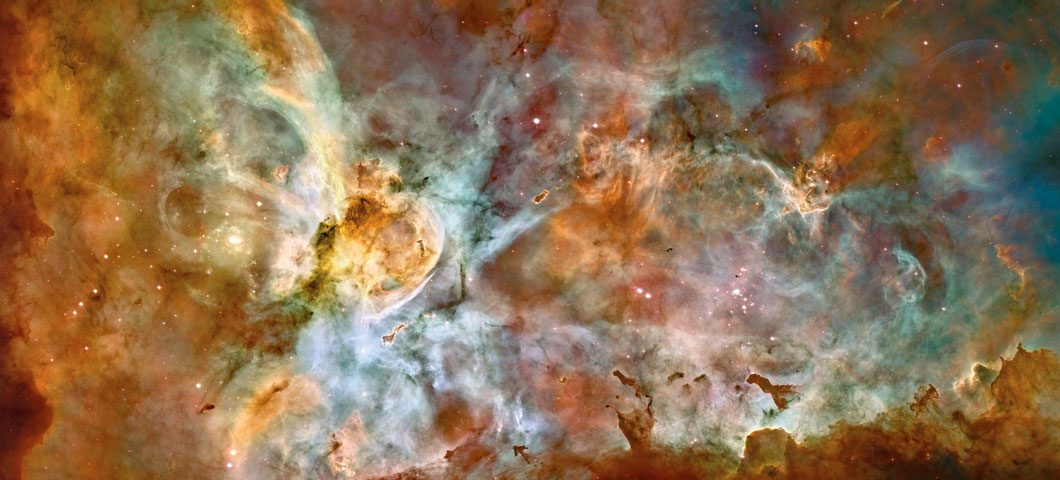
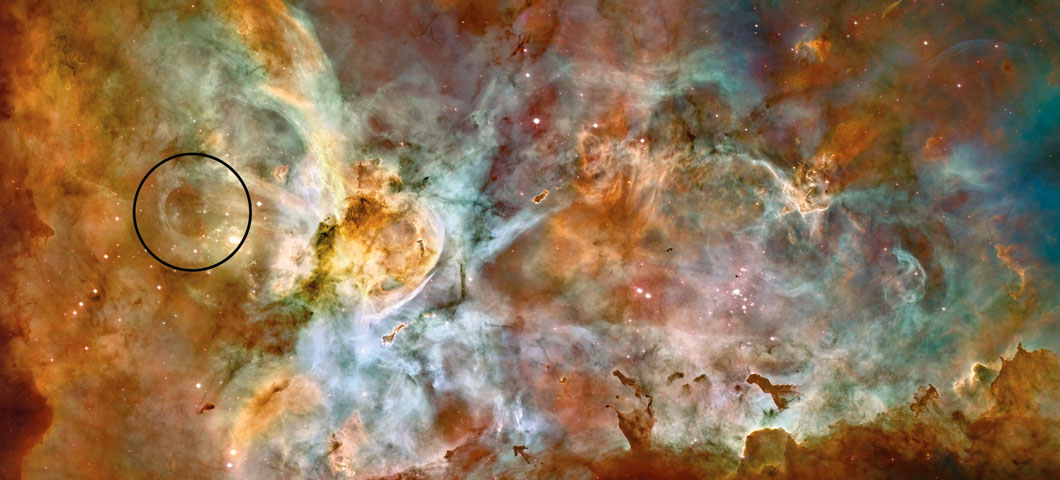
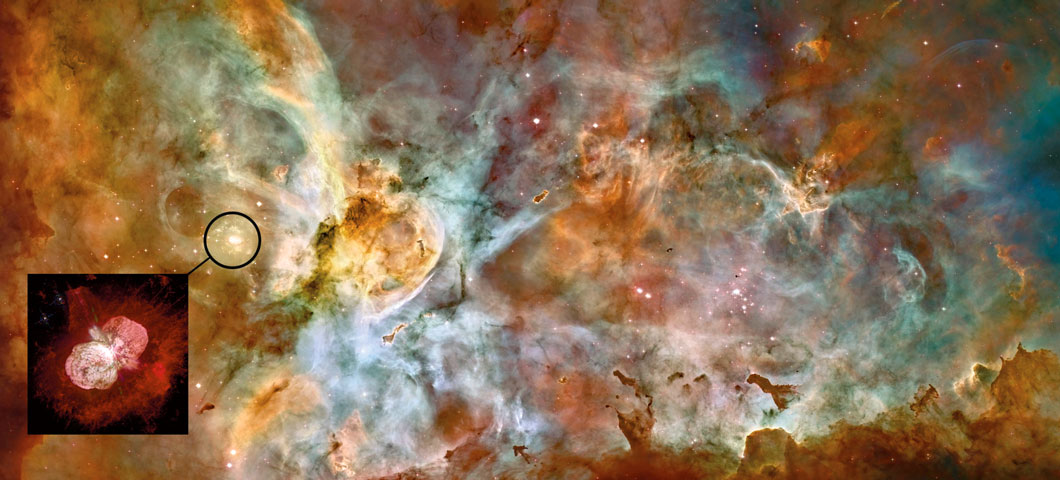
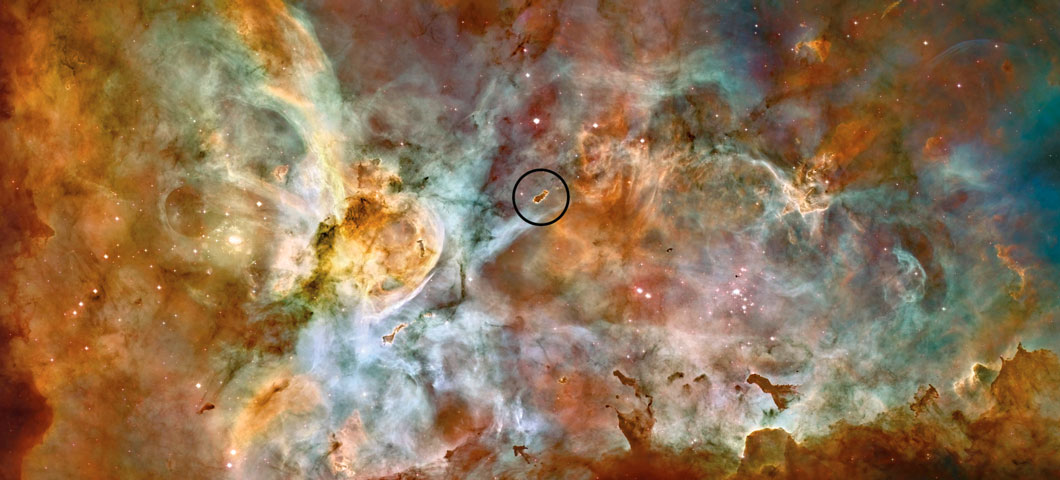
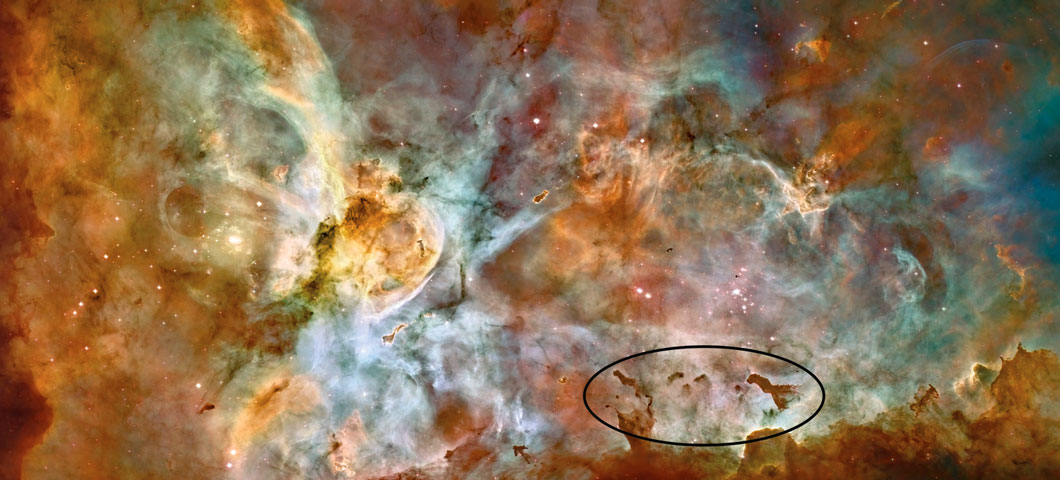
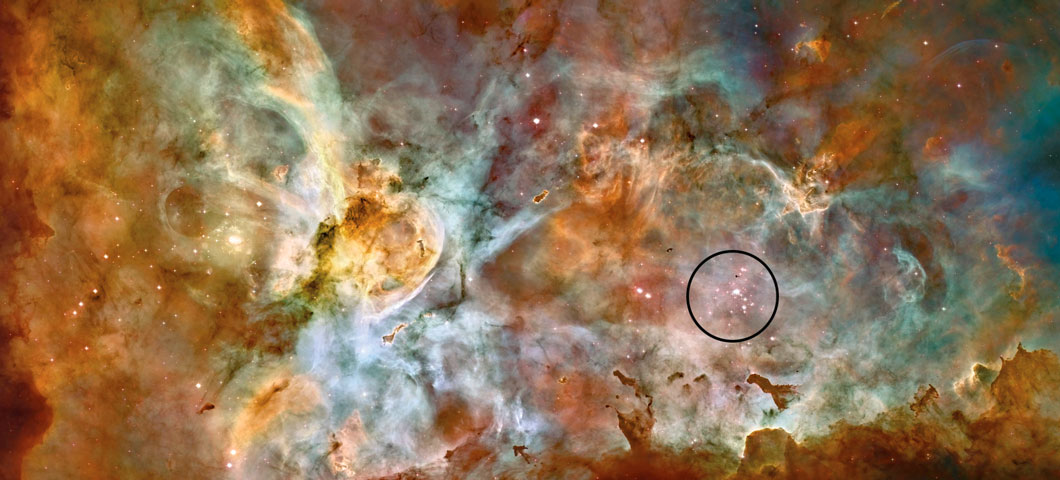
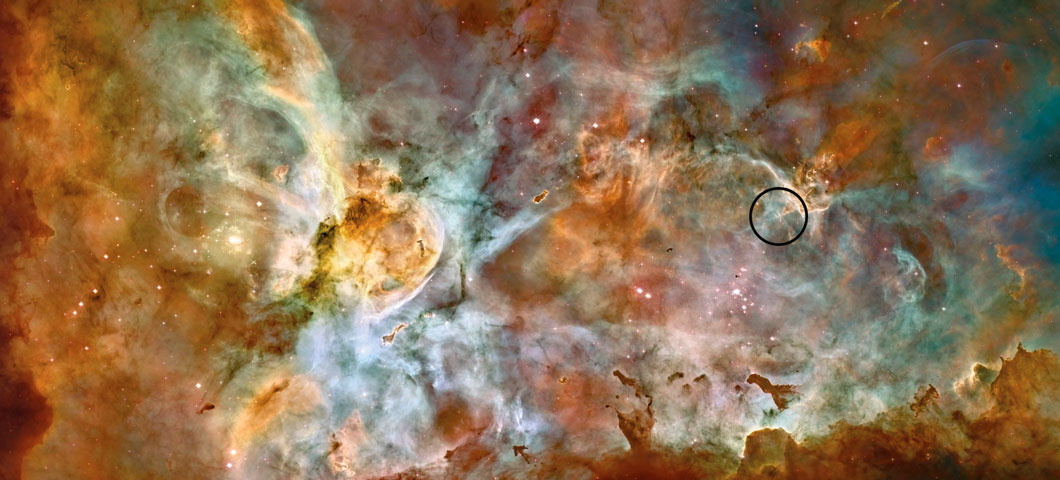
Carina Nebula
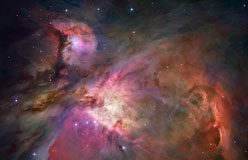
This is where a lot of stars are born. It’s the biggest star-birth area we can see in our galaxy! Different forces shape the glowing gases. Those include blazing ultraviolet radiation. They also include the pressure of light from hot, blinding stars. Blasts from supernova (dying star) explosions also shape this scene.
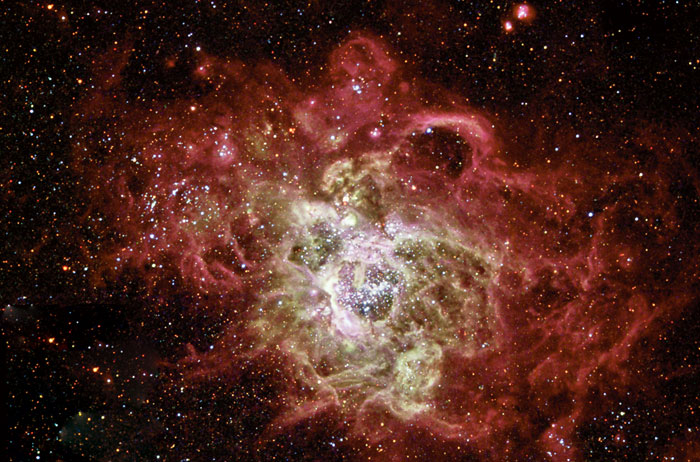
◀ Giant Star Factory
Here, in nebula NGC 604, new stars are being born. It’s happening in a spiral arm of a galaxy beyond our Milky Way. Nebulae are common in galaxies. But this one is really big. It’s nearly 1,500 light-years wide! At its heart are over 200 hot stars. They heat and light up the gaseous walls of the nebula, like searchlights on clouds.
Superbubble
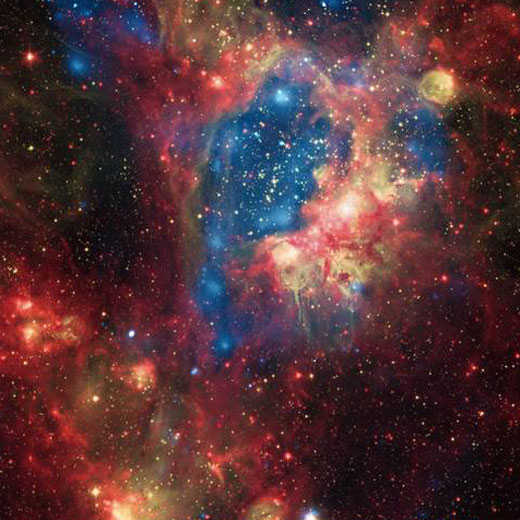
This expanding bubble of hot gas shows how stars begin to form. There are very hot stars near the center of the bubble. They caused it to expand into the cooler gas and dust around it. This expansion compressed the gas. That started the formation of new star groups along the bubble’s edge. The result was a superbubble—70 light-years wide! ▶