Free
The birth of a star is a mysterious process.
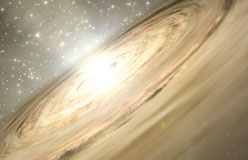
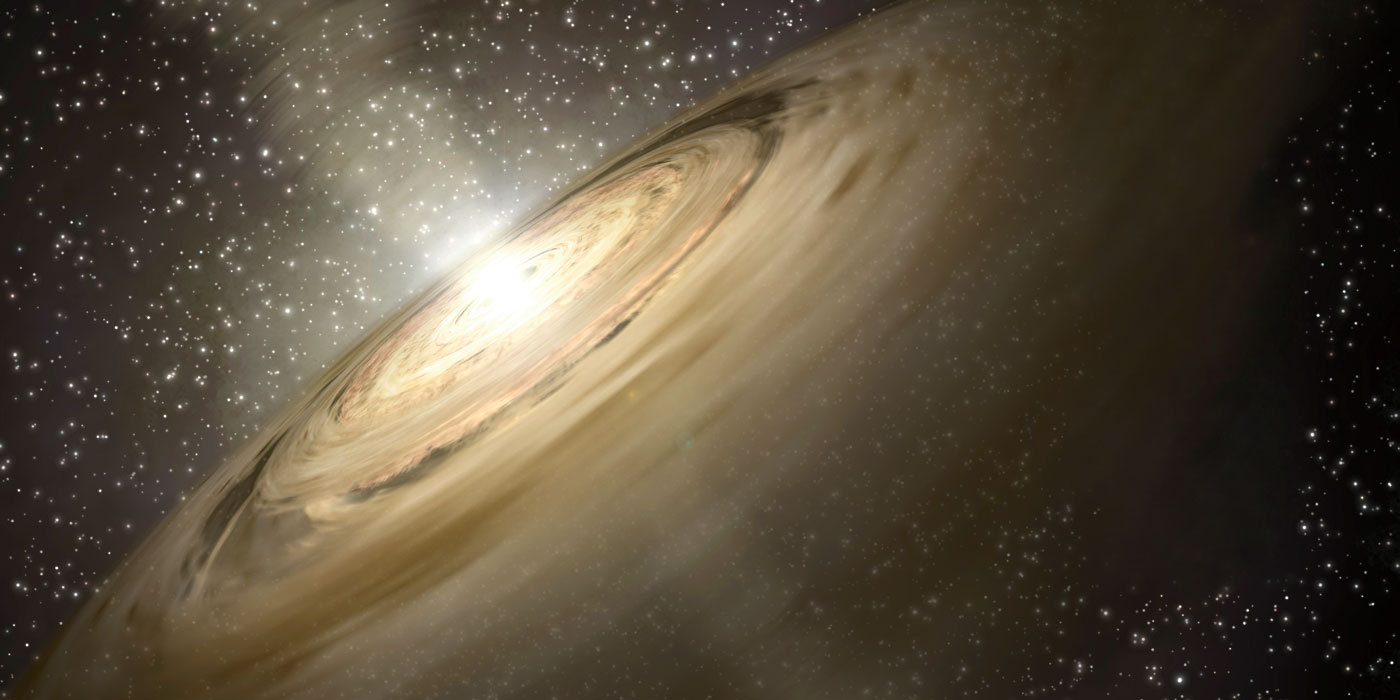
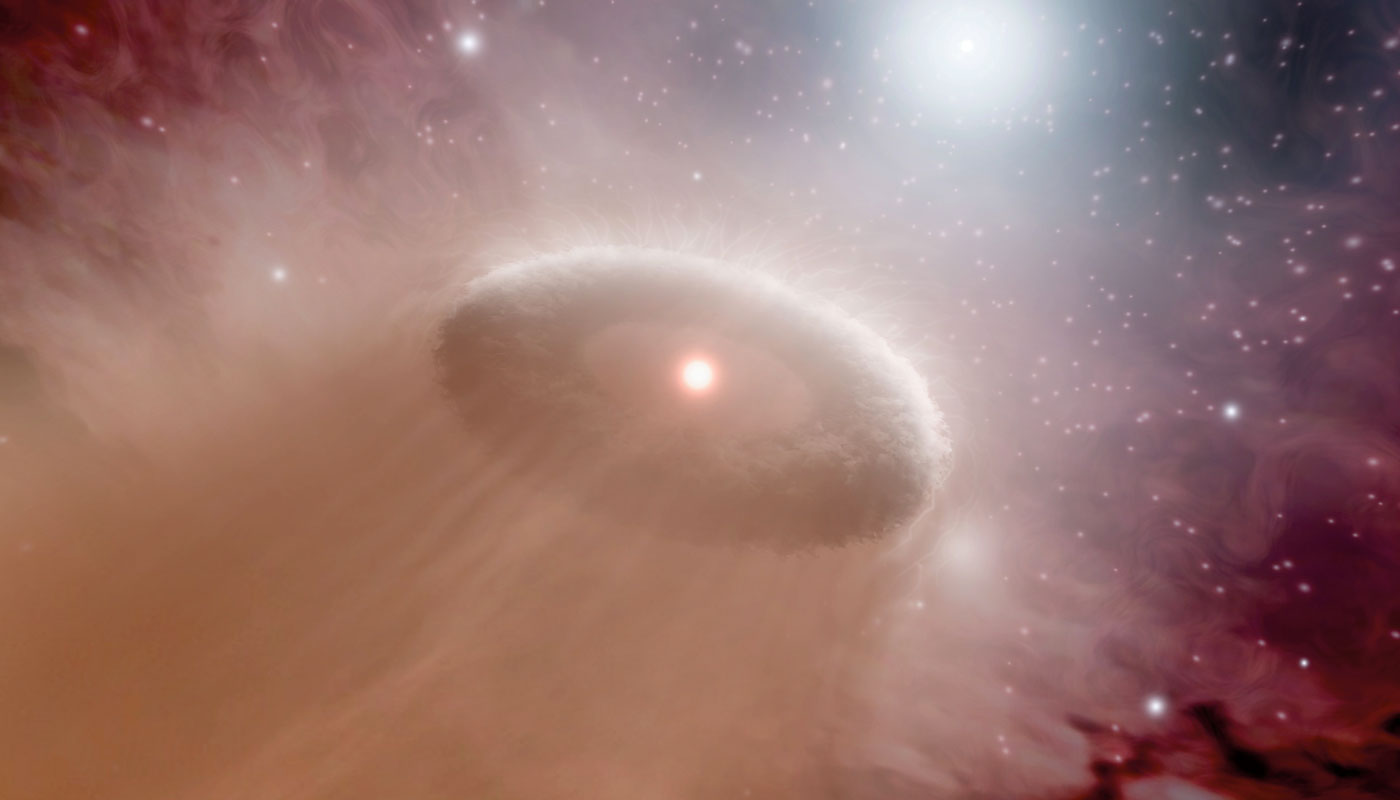
Hydrogen gas collapses into a tight knot to build the star. A swirling pancake disk of dust and gas encircles the newly forming star. The disk is not smooth but clumpy and turbulent. The clumps pull in more dust, through gravity, and grow in size until they become planets around the star. Scientists don’t know for sure if all stars have planets, but it seems unlikely that only certain kinds of stars would have planets.
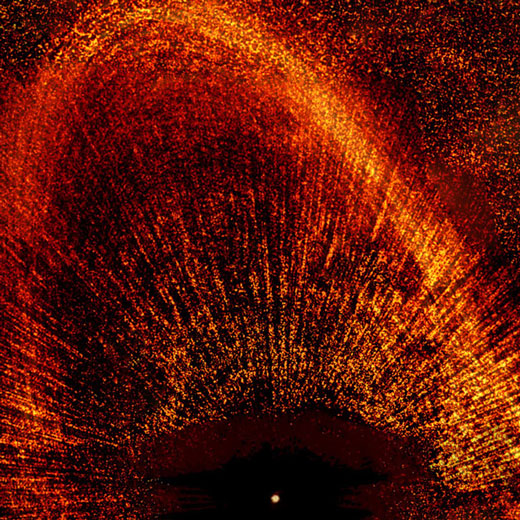
▲ Stellar Hula Hoop
Newborn planets around a star play a game of bumper cars in superslow motion. They run into one another, making huge puffs of dust. You can see the evidence in the narrow, dusty ring around the star Fomalhaut (above). The gravity of an unseen planet may be tugging on the ring. This would pull it off-center from the star, like a hula hoop twirling around someone’s waist.

▲ Star Power
This image shows part of the Pelican Nebula, in the constellation Cygnus, the Swan. The “mountains” are formed by an area of denser gas and dust that is slowly being eaten away. It is being consumed by ultraviolet radiation from nearby young, hot stars. Star formation takes place in the dusty and opaque interior of the nebula.
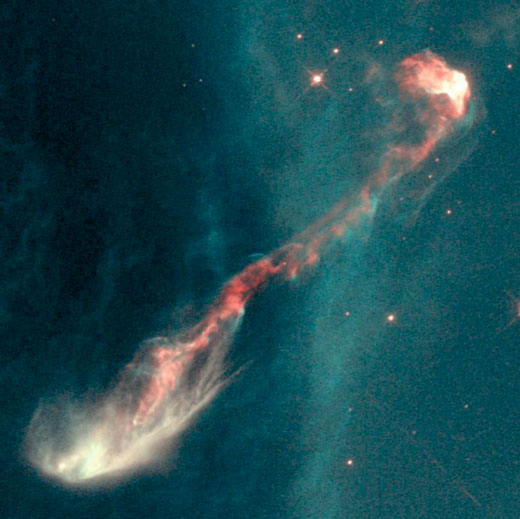
◀ Snakelike Jets
This half-light-year-long jet of gas has burst out of a dark cloud of gas and dust that hides the newly forming star. The jet is coiled, meaning that the star forming the jet is wobbling like a top. The star is forming in a dense gas cloud at the edge of the Gum Nebula. This nebula is the expanding remnant of an exploded star.
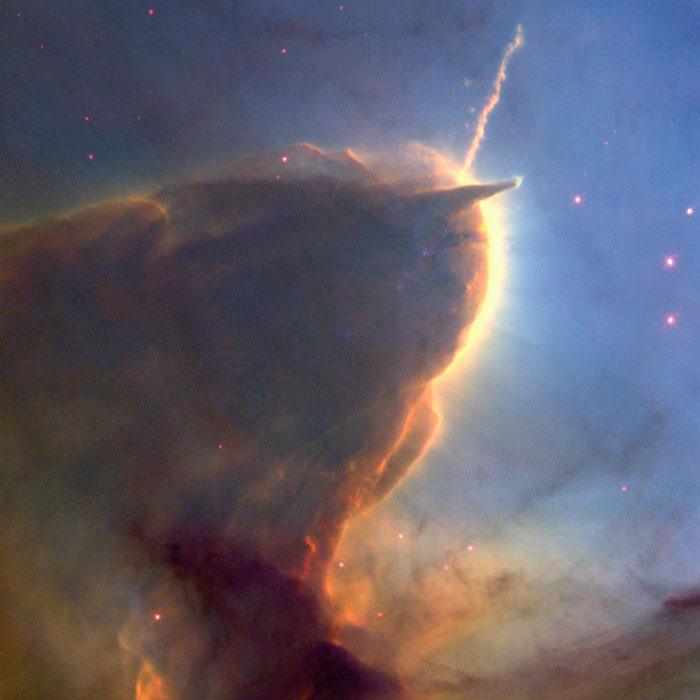
▲ Jet Set
They look like two antennae on the head of a snail. A pair of trillion-mile-long stellar jets rocket out of the tip of a huge gaseous pillar in the Trifid Nebula. The jets have a corkscrew shape, indicating that the stars launching them are spinning.
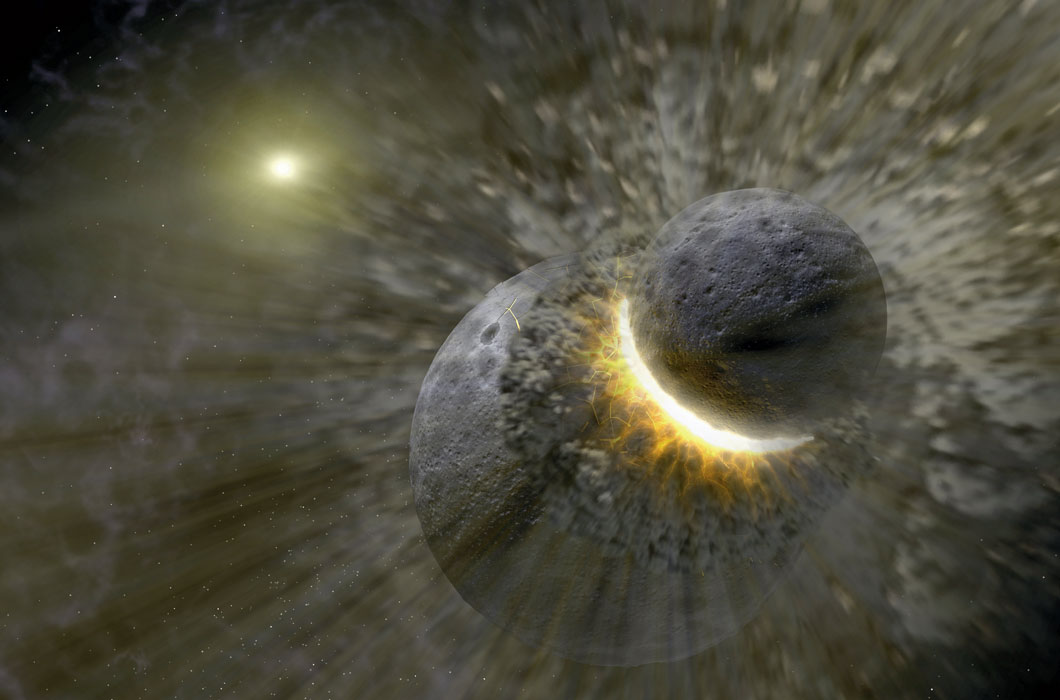
▲ Grinding Up Planets
This illustration shows how a collision of two rocky, planet-size objects makes the dust ring around stars. Astronomers believe that asteroids, comets, and newly forming planets smash together and break into pieces. The pieces continue crashing into other fragments. This process creates ever finer debris, which circles the star.