Free
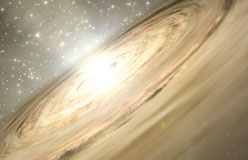
A spiral galaxy is a star factory. Its arms are lanes where dust and gas pile up.
Raw dust and gas go into one side of a spiral arm. Newborn stars come out the other. The last step in star birth is an open star cluster. That’s where a group of young stars drift through space. They slowly spread apart, like autumn leaves in the wind.
Two Types of Clusters
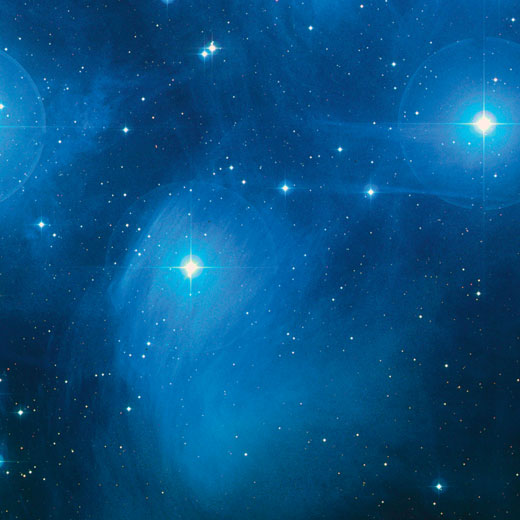
▲ Open Clusters
Young stars are found in open star clusters. The stars in an open star cluster all formed at about the same time, in the same cloud of dust and gas. Because they are young, these stars burn hot and bright. The clusters they form are loose. One of the easiest open clusters to see is the Pleiades (above). It’s also called the Seven Sisters. Seven stars can be seen with the naked eye. But telescopes let us see more than 3,000 stars.
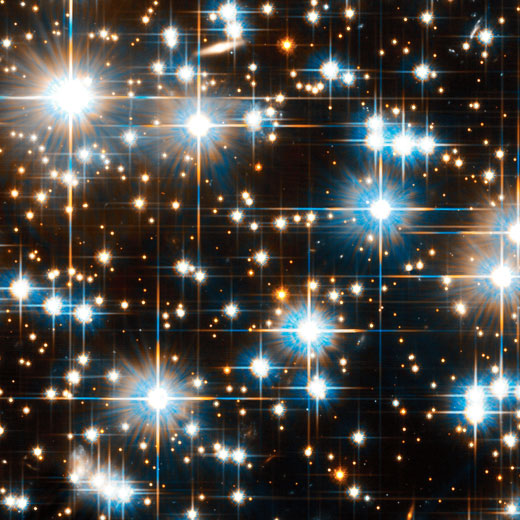
▲ Globular Clusters
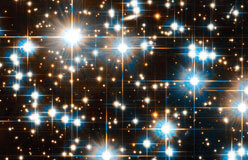
Older stars usually make up what are known as globular clusters. They contain as many as 1 million stars. They have enough gravity to hold together over billions of years. Stars in these clusters are packed into the core of the clusters. Sometimes they even run into each other. One of the closest globular clusters is NGC 6397 (above). Its core looks like a treasure chest of gems.
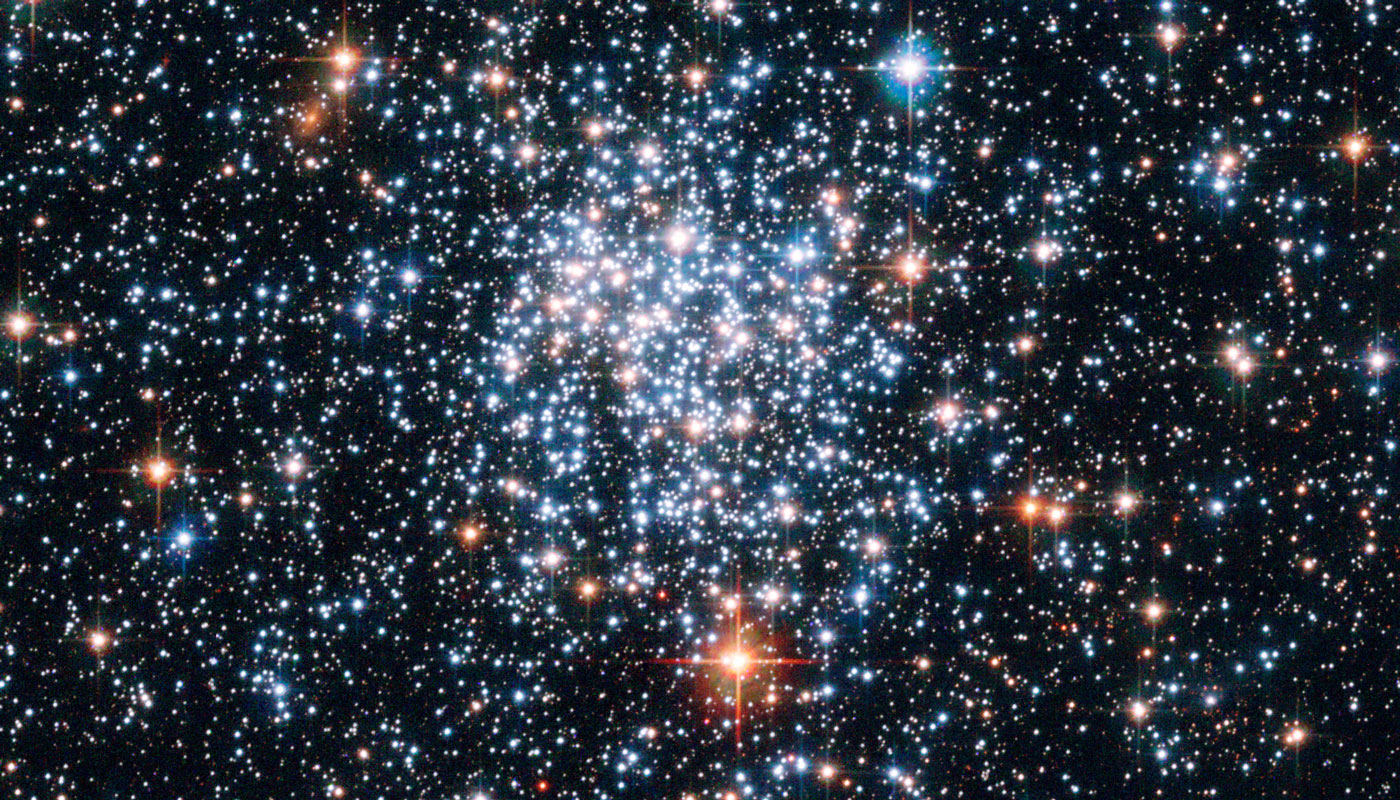
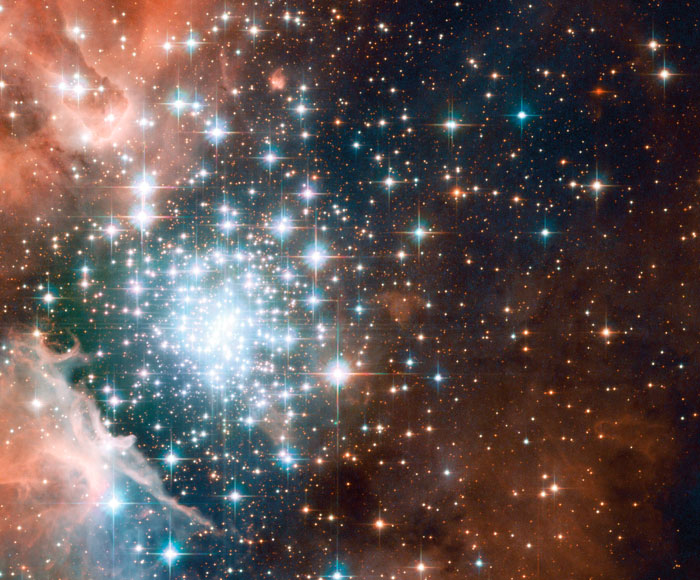
▲ Star Power
This jewel box in space is in the Milky Way. It is one of the most massive young open star clusters in our galaxy. It lives inside the giant nebula NGC 3603. The main open cluster has thousands of stars more massive than the Sun. They likely were born in one burst. That probably happened only 1 or 2 million years ago.
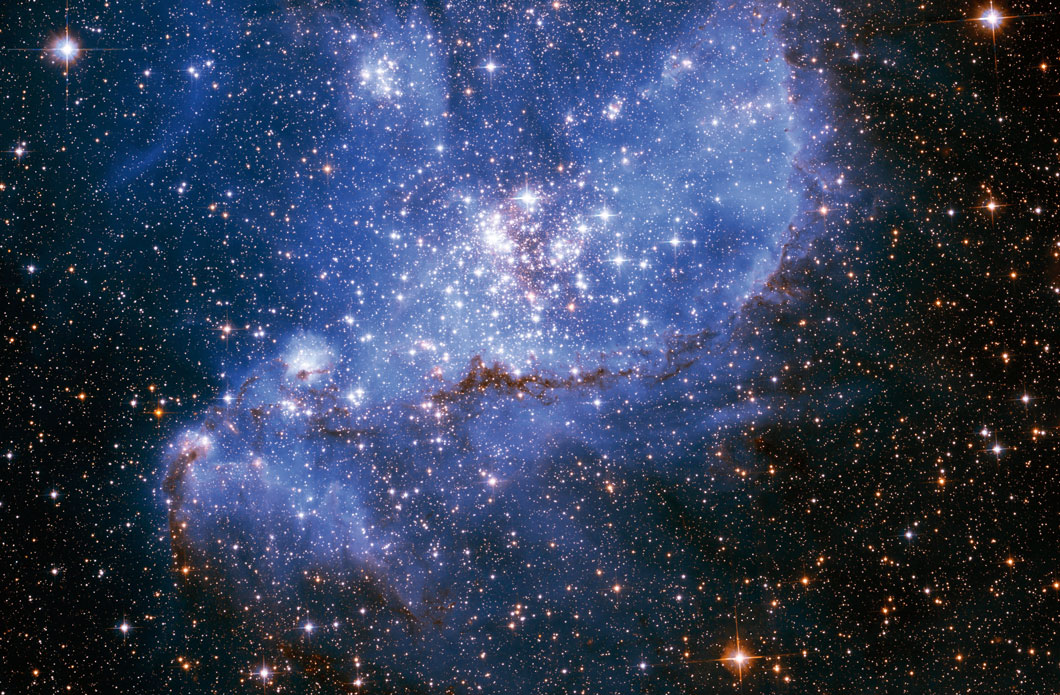
▲ Cluster Generations
This is the star cluster NGC 346. It holds more than 2,500 newborn stars! It is in the center of one of the biggest star-forming areas of the Small Magellanic Cloud. That’s a small galaxy near the Milky Way.
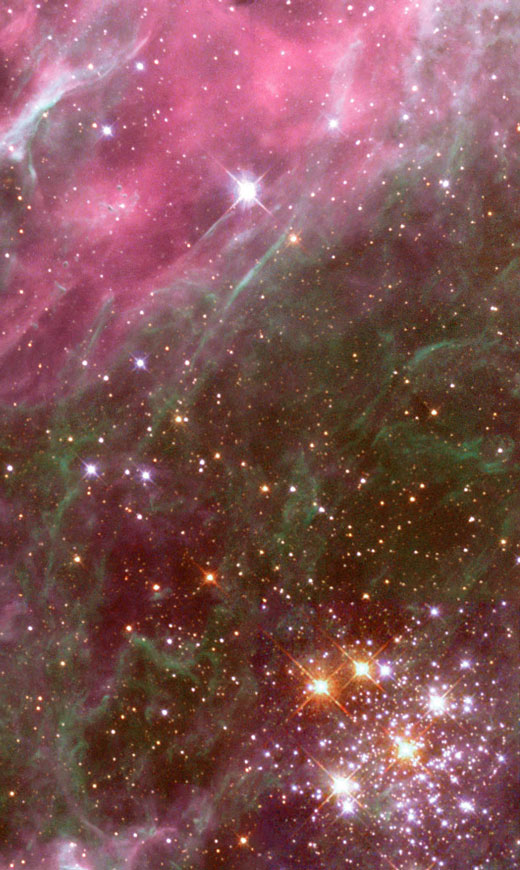
◀ A Firecracker Cluster
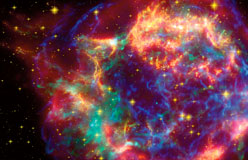
The star cluster Hodge 301 is in the Tarantula Nebula. The nebula is in our galactic neighbor, the Large Magellanic Cloud. Many of the stars in Hodge 301 are so old they have exploded. They are blasting material into the area around them. The material is zooming out at speeds of almost 200 miles per second! The speedy matter plows into the nebula. It squashes the gas into long strands.