Free
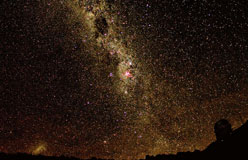
If you stand outside on a clear night, you’ll see that the stars are more concentrated along the Milky Way (shown above).
Our galaxy looks like a fuzzy gray ribbon of light across the sky. A look through a low-power telescope shows that the Milky Way is actually made up of countless stars. They are too far away to be seen individually by the naked eye.
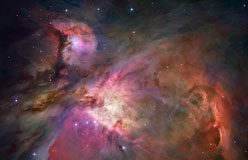
Astronomers have looked along the Milky Way with high-power telescopes for the last 200 years. They have found nebulae in many different colors and shapes, from circular to irregular. Spiral-shaped nebulae were later discovered to be whole distant cities of stars, called galaxies. Nebulae offer clues to the evolution of stars because they accompany the birth and death of stars.
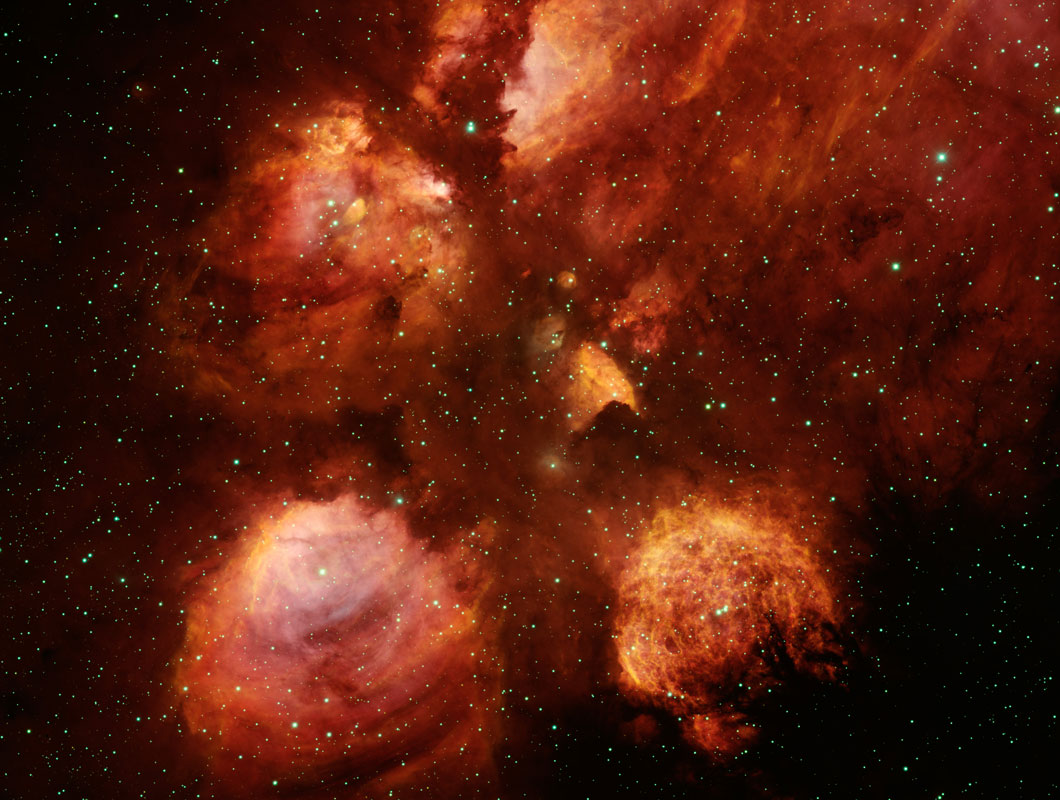
▲ Emission Nebula
An emission nebula is a collection of gases that glow, like the gas in a fluorescent light bulb. The Cat’s Paw Nebula (above) resembles a huge paw print on the sky. The bright blobs are where clusters of young stars are blowing bubbles into the cloud. This causes the gases around them to light up and glow in reddish hues. Red is the emission color of hot hydrogen gas.
Use your mouse or finger to scrub through the animation below.
0%
▲ An artist’s illustration of a nebula
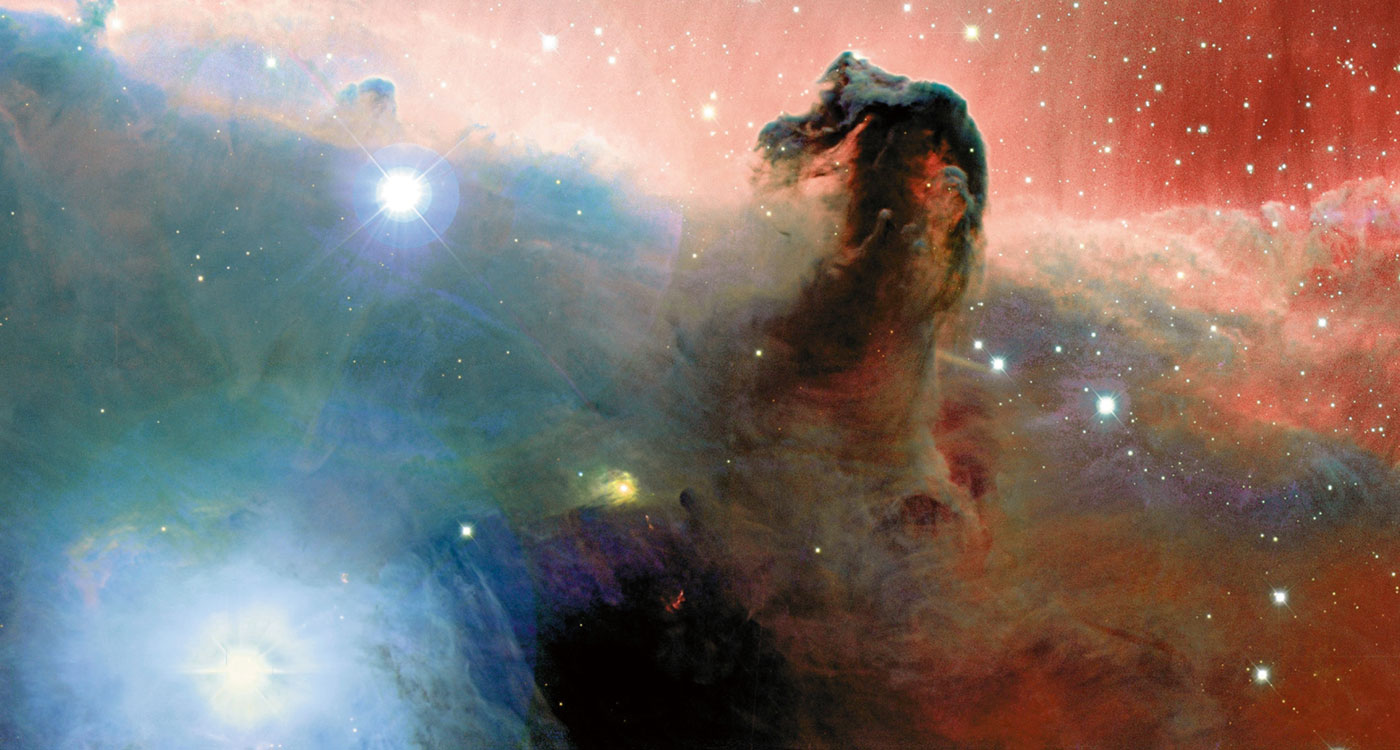
Use your mouse or finger to scrub through the animation below.
0%
▲ An artist’s illustration of a nebula
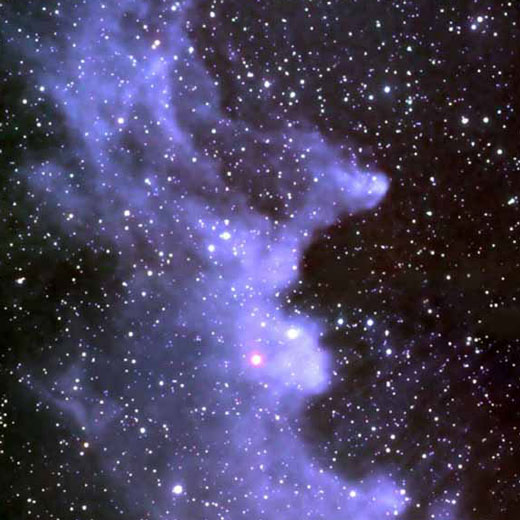
◀ Reflection Nebula
A reflection nebula is made of dust that can be seen only because light from nearby stars bounces off the nebula. The Witch Head Nebula (left) glows mainly from light reflected by the bright star Rigel. Rigel is located in the Orion constellation. The nebula has a blue color partly because Rigel is blue. It is also because the dust grains reflect blue light more efficiently than red.
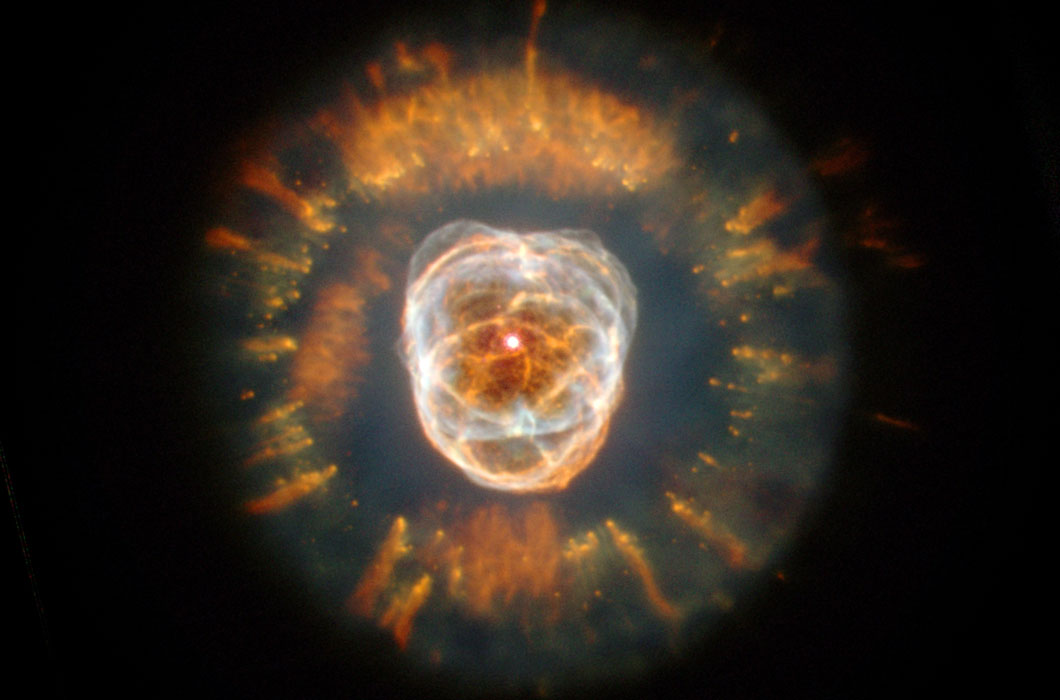
▲ Planetary Nebula
A planetary nebula is typically round and looks like the disk of a planet when seen through a low-power telescope. It is actually an expanding shroud of gas around a dying star. To some observers, the Eskimo Nebula (above) looks like a person’s head surrounded by a parka. Planetary nebulae are the expanding remains of a star that is burning out.
▲ Supernova Remnant
When a massive star runs out of fuel, it explodes. It leaves behind a collection of newly formed elements. This leftover debris is known as a supernova remnant, and the blast is called a supernova. All elements heavier than iron are forged in supernova explosions. The Crab Nebula (above), discovered in 1731, lies where a mysterious bright object briefly appeared in 1054. Astronomers later concluded that the Crab Nebula is the expanding debris from a star explosion in 1054.
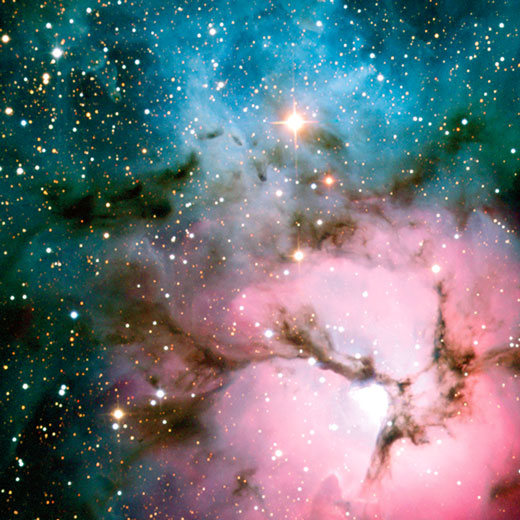
▲ Combo Nebula
Resembling rose petals in deep-space photographs, the Trifid Nebula (above) gets its name from the dark lanes of dust that divide it into three (tri) pieces. The pink area is an emission nebula. The blue area is a reflection nebula. A bright cluster of stars lies in the center, illuminating the nebula.
Use your mouse or finger to scrub through the animation below.
0%
▲ An artist’s illustration of a nebula